World Food Books' programme is largely produced on Kulin Nation land. We acknowledge the Wurundjeri people of the Kulin Nation as the first and continuing custodians of this land, and pay respect to their Elders past, present, and emerging.
World Food Books is an arts and special interests bookshop in Naarm / Melbourne. Founded in 2010, World Food Books is devoted to the presentation of a rotating, hand-selection of international art, design, literary and counterculture publications with an emphasis on the anti-traditional, the experimental, the avant-garde, the heretic, the marginal.
Presenting new titles alongside rare and out-of-print books, catalogues and journals spanning the fields of modern and contemporary art, design, photography, illustration, film, literature, poetry, cultural theory, philosophy, sexuality, popular and underground culture in its many radical forms, World Food Books wishes to encourage adventurous, thoughtful and open-minded reading, looking, writing, and exchange of publishing and ideas, both current and historical.
As well as our bookshop, located in Melbourne's historical Nicholas Building, all of our inventory is available internationally via our online mail-order service.
World Food Books semi-regularly co-ordinates "Occasions", a programme of exhibits and events at the bookshop and in partnership with other hosts (such as museums and art galleries) that develop out of the activities, relationships and content of the bookshop itself.
World Food Books
The Nicholas Building
37 Swanston Street
Room 5, Level 6
Melbourne 3000
Australia
SHOP HOURS:
Thu–Fri 12–6, Sat 12–5
WEB-SHOP OPEN 24/7
World Food Books
Postal Address:
PO Box 435
Flinders Lane
Victoria 8009
Australia
Art
Theory / Essay
Architecture / Interior
Graphic Design / Typography
Photography
Fashion
Eros
LGBTQ+
Fiction / Poetry
Weird / Speculative / Science Fiction / Horror
Transgressive / Visceral / Abject
Symbolism / Decadence / Fin de siècle
Film / Video
Painting
Sculpture / Installation
Performance / Dance / Theater
Drawing
Sound / Music
Curatorial
Group Shows / Collections
Periodicals
Out-of-print / Rare
Posters / Ephemera / Discs
Signed Books
World Food Books Gift Voucher
World Food Book Bag
Australian Art
Australian Fiction
Australian Science Fiction / Speculative Fiction
Australian Poetry
Australian Photography
Japanese Photography
Conceptual Art
Minimal Art
Dada
'Pataphysics / Oulipo
Fluxus
Concrete Poetry
Pop Art
Surrealism
Arte Povera
Arte Informale / Haute Pâte / Tachism
Nouveau Réalisme / Zero / Kinetic
Situationism / Lettrism
Collage / Mail Art / Xerox Art
Art Brut / Folk / Visionary / Fantastic
Illustration / Graphic Art / Bandes Dessinées
Furniture
Italian Radical Design / Postmodernism
Textiles
Ceramics / Glass
Counterculture
Protest / Revolt
Philosophy
Psychoanalysis
Anthropology
Anarchism
Socialism / Anarchism / Communism / Capitalism
Literary Theory / Semiotics / Language
Feminism / Women's Studies
Gender Studies / Sexuality
Anthropology
Fetishism / BDSM
Drugs / Psychedelia
Crime / Violence
Animal Rights / Veganism
Occult / Esoterica
Ecology / Earth / Alternative Living
Whole Earth / Crafts
All prices in AUD (Australian dollars)
Pick-Ups
Pick-up orders can be collected in our bookshop during opening hours after order date. Please collect any Pick-up orders within 2 weeks of ordering as we have limited storage space. Orders will be released back into stock if not collected within this time. No refunds can be made for pick-ups left un-collected. If you cannot make it in to the bookshop in this time-frame, please choose postage option.
Return Policy
All sales are final. We do accept returns (for refund or exchange) for items received in error. All our orders are packed with special care using heavy-duty padding and cardboard book-mailers or bubble mailers (for smaller books), using reinforcement where required. We cannot take responsibility for any lost, stolen or damaged parcels.
Insurance
Should you wish to insure your package, please email us directly after placing your order and we can organise this at a small extra expense. Although all standard/express tracked packages are very safe and dependable, we cannot take responsibility for any lost, stolen or damaged parcels. We recommend insurance on valuable orders.
Interested in selling your old books, catalogues, journals, magazines, comics, fanzines, ephemera? We are always looking for interesting, unusual and out-of-print books to buy. We only buy books in our fields of interest and specialty, and that we feel we can resell.
We base these prices on desirability, market value, in-print prices, condition and our current stock levels. We offer cash, store credit, and can take stock on consignment. All
about 25% of the price we expect to get when we sell them, or 30% in store credit. We base these prices on desirability, market value, in-print prices, condition and our current stock levels.
Sell your books any day of the week. You can drop them off and return later. If you have a lot of books, we can visit your Sydney home.
We buy books that we feel we can resell. We offer about 25 % of the price we expect to get when we sell them, or 30% in store credit. We base these prices on desirability, market value, in-print prices, condition and our current stock levels.
Philadelphia Wireman
03 August - 01 September, 2018
World Food Books is proud to announce our next Occasion, the first presentation of sculptures by Philadelphia Wireman in Australia.
The Philadelphia Wireman sculptures were found abandoned in an alley off Philadelphia’s South Street on trash night in 1982. Their discovery in a rapidly-changing neighbourhood undergoing extensive renovation, compounded with the failure of all attempts to locate the artist, suggests that the works may have been discarded after the maker’s death. Dubbed the "Philadelphia Wireman" during the first exhibition of this work, in 1985, the maker’s name, age, ethnicity, and even gender remain uncertain. The entire collection totals approximately 1200 pieces, all intricately bound together with tightly-wound heavy-gauge wire (along with a few small, abstract marker drawings, reminiscent both of Mark Tobey and J.B. Murry). The dense construction of the work, despite a modest range of scale and materials, is singularly obsessive and disciplined in design: a wire armature or exoskeleton firmly binds a bricolage of found objects including plastic, glass, food packaging, umbrella parts, tape, rubber, batteries, pens, leather, reflectors, nuts and bolts, nails, foil, coins, toys, watches, eyeglasses, tools, and jewellery.
Heavy with associations—anthropomorphic, zoomorphic, and socio-cultural responses to wrapped detritus—the totemic sculptures by Philadelphia Wireman have been discussed in the context of work created to fulfil the shamanistic needs of alternative religions in American culture. Curators, collectors, and critics have variously compared certain pieces to sculpture from Classical antiquity, Native American medicine bundles, African-American memory jugs, and African fetish objects. Reflecting the artist’s prolific and incredibly focused scavenging impulse, and despite—or perhaps enhanced by—their anonymity, these enigmatic objects function as urban artefacts and arbiters of power, though their origin and purpose is unknown. Philadelphia Wireman, whatever their identity, possessed an astonishing ability to isolate and communicate the concepts of power and energy through the selection and transformation of ordinary materials. Over the course of the past two decades, this collection has come to be regarded as an important discovery in the field of self-taught art and vernacular art.
Presented in collaboration with Fleisher-Ollman Gallery, Philadelphia, and Robert Heald, Wellington.
Susan Te Kahurangi King
02 February - 10 March, 2018
Susan Te Kahurangi King (24 February 1951 - ) has been a confident and prolific artist since she was a young child, drawing with readily available materials - pencils, ballpoint pens and felt-tip markers, on whatever paper is at hand. Between the ages of four and six Susan slowly ceased verbal communication. Her grandparents William and Myrtle Murphy had developed a special bond with Susan so they took on caring responsibilities for extended periods. Myrtle began informally archiving her work, carefully collecting and storing the drawings and compiling scrapbooks. No drawing was insignificant; every scrap of paper was kept. The King family are now the custodians of a vast collection containing over 7000 individual works, from tiny scraps of paper through to 5 meter long rolls.
The scrapbooks and diaries reveal Myrtle to be a woman of great patience and compassion, seeking to understand a child who was not always behaving as expected. She encouraged Susan to be observant, to explore her environment and absorb all the sights and sounds. Myrtle would show Susan’s drawings to friends and people in her community that she had dealings with, such as shopkeepers and postal workers, but this was not simply a case of a grandmother’s bias. She recognised that Susan had developed a sophisticated and unique visual language and sincerely believed that her art deserved serious attention.
This was an unorthodox attitude for the time. To provide some context, Jean Dubuffet coined the term Art Brut in 1945 to describe work created by self-taught artists – specifically residents of psychiatric institutions and those he considered to be visionaries or eccentrics. In 1972 Roger Cardinal extended this concept by adopting the term Outsider Art to describe work made by non-academically trained artists operating outside of mainstream art networks through choice or circumstance. Susan was born in Te Aroha, New Zealand in 1951, far from the artistic hubs of Paris and London that Dubuffet and Cardinal operated in. That Myrtle fêted Susan as a self-taught artist who deserved to be taken seriously shows how progressive her attitudes were.
Susan’s parents Doug and Dawn were also progressive. Over the years they had consulted numerous health practitioners about Susan’s condition, as the medical establishment could not provide an explanation as to why she had lapsed into silence. Dawn educated herself in the field of homeopathy and went on to treat all twelve of her children using these principles – basing prescriptions on her observations of their physical, mental and emotional state.
Doug was a linguist with an interest in philosophy who devoted what little spare time he had to studying Maori language and culture. To some extent their willingness to explore the fringes of the mainstream made them outsiders too but it was their commitment to living with integrity and their respect for individuality that ensured Susan’s creativity was always encouraged.
Even though Susan’s family supported her artistic pursuits, some staff in schools and hospitals saw it as an impediment to her assimilation into the community and discouraged it in a variety of ways. Her family was not always aware of this and therefore did not fully understand why Susan stopped drawing in the early 1990s. However, rather than dwell on the challenges that Susan faced in pursuit of her artistic practice, they prefer to highlight her achievements. In 2008 Susan began drawing again in earnest, after an almost 20 year interruption, and her work is now shown in galleries around the world.
Susan grew up without television and has been heavily influenced by the comics she read as a child. She is absolutely fearless in the appropriation of recognizable characters, such as Donald Duck and Mickey Mouse, in her work. She twists their limbs, contorts their faces, compresses them together, blends them into complex patterned backgrounds - always imbuing them with an incredible energy. Although Susan often used pop culture characters in her work they are not naive or childlike. These are drawings by a brilliant self-taught artist who has been creating exceptional work for decades without an audience in mind.
Mladen Stilinović
"Various Works 1986 - 1999"
02 February 16 - September 10, 2016
Various works 1986 - 1999, from two houses, from the collections of John Nixon, Sue Cramer, Kerrie Poliness, Peter Haffenden and Phoebe Haffenden.
Including: Geometry of Cakes (various shelves), 1993; Poor People’s Law (black and white plate), 1993; White Absence (glasses, ruler, set square, silver spoon, silver ladel with skin photograph and wooden cubes), 1990-1996; Exploitation of the Dead (grey and red star painting, wooden painting, black spoon with red table, red plate), 1984-1990; Money and Zeros (zero tie, paintings made for friends in Australia (Sue, John, Kerrie), numbers painting), 1991-1992; Words - Slogans (various t-shirts) - “they talk about the death of art...help! someone is trying to kill me”, “my sweet little lamb”, “work is a disease - Karl Marx”; Various artist books, catalogues, monographs, videos; Poster from exhibition Insulting Anarchy; "Circular" Croatian - Australian edition; Artist book by Vlado Martek (Dostoyevsky); more.
Thanks to Mladen Stilinović and Branka Stipančić.
Jonathan Walker
Always Will Need To Wear Winter Shirt Blue + Ochre Small Check Pattern
21 August - 21 September, 2015
Untitled
I am not a great reader of poetry but I always return to the work of Melbourne poet, Vincent Buckley (1925- 1988). Perhaps I find his most tantalising piece to be not a finished poem but a fragment left on a scrap of paper discovered on his desk after the poet’s death.
The poetry gathers like oil
In the word-core, and spreads
It has its music meet,
Its music is in movement.
This fragment is more the shell left behind from a volatile thought than a finished poem. I find the last two lines honest but awkward whereas the first two lines work like an arrow. Most likely he could not find a resolution so it was left. Still, in its present form, it remains an eloquent testimony to the ultimate failure of a medium to express mobile thought and sensation, in Buckley’s case, through verbal language. It’s an important matter because this is something all artists have to deal with regardless of the medium.
I have never written a poem, however, I am forever copying fragments from books on paper scraps in a vain effort to fix certain notions in my head. At first, they function as bookmarks that are sometimes returned to when I open the book. But before long, as they accumulate, they fall out littering the table interspersed with A4 photocopies, bills, books and medications.
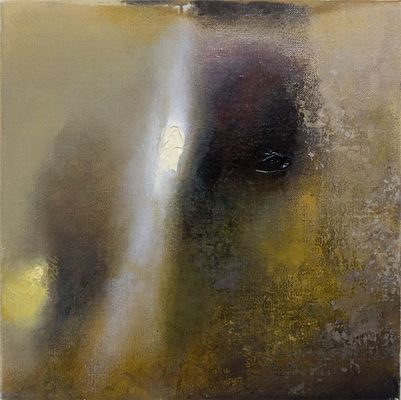
To return to Buckley’s fragment, the first two lines very much evoke how I paint nowadays. As you age, detail diminishes and patches of light become more luminous and float. I feel the most honest way of dealing with this is by smearing the oil paint on the canvas with the fingers and working close-up, blind. Only if the patches coalesce into an approaching image can the work gain a life.
-
Jonathan Walker was born in Melbourne, Australia and brought up on a dairy farm in Gippsland. In the 1970’s he studied painting at RMIT and won the Harold Wright Scholarship to the British Museum, London. During the 1980’s he exhibited at Pinacotheca Gallery, Richmond and had work shown at the NGV and Heidi City Art Gallery. Over the same period he designed the cover for the “Epigenesi” LP by Giancarlo Toniutti, Italy and conducted a mail exchange work with Achim Wollscheid, Germany. The work with artists through the post resulted in an article published in the bicentenary issue of Art and Australia 1988. He showed in artist run spaces such as WestSpace in the 90’s and 2000’s, and until 2012, taught painting at Victoria University, which is where we (Colleen Ahern and Lisa Radford) as organisers of the exhibition, among many others, had the privilege of being his student.
Walker’s knowledge was imparted to students through the careful selection of music, literature, and artists found in books that he himself had ordered for the library. Walker’s strategy was the generosity of sharing his vast knowledge with references specific to each student and their context.
Walker’s paintings share a similar focus and intimacy.
This exhibition presents a small selection of recent paintings alongside a publication that includes Walker’s writing. Observational and analytical, Walker’s work is a type of material notation — the time of day, colour and how it is blended, the both specific and fleeting location of a reflection on lino or the question of whether a chair leg should be included in a painting.
Please join us on Friday August 21 between 6-8pm to celebrate the opening of the exhibition.
Curated by Colleen Ahern and Lisa Radford.
B. Wurtz
Curated by Nic Tammens
March 26 - April 4, 2015
B.Wurtz works from a basement studio in his home on Manhattan’s Lower East Side.
This local fact is attested to by the plastic shopping bags and newsprint circulars that appear in his work. As formal objects, they don’t make loud claims about their origins but nonetheless transmit street addresses and places of business from the bottom of this long thin island. Like plenty of artists, Wurtz is affected by what is local and what is consumed. His work is underpinned by this ethic. It often speaks from a neighborhood or reads like the contents of a hamper:
“BLACK PLUMS $1.29 lb.”
“Food Bazaar”
“USDA Whole Pork Shoulder Picnic 99c lb.”
“RITE AID Pharmacy, with us it’s personal.”
“H. Brickman & Sons.”
“Sweet Yams 59c lb."
Most of the work in this exhibition was made while the artist was in residence at Dieu Donne, a workshop dedicated to paper craft in Midtown. Here Wurtz fabricated assemblages with paper and objects that are relatively lightweight, with the intention that they would be easily transportable to Australia. This consideration isn’t absolute in Wurtz’s work, but was prescriptive for making the current exhibition light and cheap. Packed in two boxes, these works were sent from a USPS post office on the Lower East Side and delivered to North Melbourne by Australia Post.
Wurtz appears courtesy of Metro Pictures, New York.
Thanks to Rob Halverson, Joshua Petherick, Sari de Mallory, Matt Hinkley, Helen Johnson, Fayen d'Evie, Ask Kilmartin, Lisa Radon, Ellena Savage, Yale Union, and "Elizabeth".
John Nixon
"Archive"
December 15 - January 20, 2014
The presentation of John Nixon's archive offered a rare showcase of this extensive collection of the artist's own publications, catalogues, posters, ephemera, editions and more, from the mid 1980s onwards, alongside a selection of his artworks.
Organized by John Nixon, Joshua Petherick and Matt Hinkley.
<a href=http://wfb.public-office.info/artist/john-nixon>All titles by John Nixon
"Habitat"
at Minerva, Sydney (organised by Joshua Petherick and Matt Hinkley)
November 15 - December 20, 2014
Lupo Borgonovo, Janet Burchill & Jennifer McCamley,
Lewis Fidock, HR Giger, Piero Gilardi, Veit Laurent Kurz,
Cinzia Ruggeri, Michael E. Smith, Lucie Stahl, Daniel Weil, Wols
Press Release:
“...It contained seven objects. The slender fluted bone, surely formed for flight, surely from the wing of some large bird. Three archaic circuitboards, faced with mazes of gold. A smooth white sphere of baked clay. An age-blackened fragment of lace. A fingerlength segment of what she assumed was bone from a human wrist, grayish white, inset smoothly with the silicon shaft of a small instrument that must once have ridden flush with the surface of the skin - but the thing’s face was seared and blackened.”
William Gibson, “Count Zero”, 1986
"Autumn Projects Archive"
Curated by Liza Vasiliou
March 6 - March 15, 2014
World Food Books, in conjunction with the Virgin Australia Melbourne Fashion Festival 2014, presented the Autumn Projects archive, consisting of a selection of early examples in Australian fashion with a particular interest in collecting designers and labels from the period beginning in the 1980’s, who significantly influenced the discourse of Australian Fashion.
Curated by Liza Vasiliou, the exhibition provided a unique opportunity to view pieces by designers Anthea Crawford, Barbara Vandenberg, Geoff Liddell and labels CR Australia, Covers, Jag along with early experimental collage pieces by Prue Acton and Sally Browne’s ‘Fragments’ collection, suspended throughout the functioning World Food Books shop in Melbourne.
H.B. Peace
presented by CENTRE FOR STYLE
November 14, 2013
"Hey Blinky, you say chic, I say same"
Anon 2013
H.B. Peace is a clothing collaboration between great friends Blake Barns and Hugh Egan Westland. Their pieces explore the divergences between 'character’ and ‘personality’ in garments....etc
Special Thanks to Joshua Petherick and Matt Hinkley of WFB and Gillian Mears
and a Very Special Thank you to Audrey Thomas Hayes for her shoe collaboration.
Janet Burchill & Jennifer McCamley
"Aesthetic Suicide"
May 10 - June 8, 2013
The first of our occasional exhibitions in the World Food Books office/shop space in Melbourne, "Aesthetic Suicide" presented a body of new and older works together by artists Janet Burchill & Jennifer McCamley, including videos, prints, a wall work, and publications.
During shop open hours videos played every hour, on the hour.
1996, English
Softcover, 400 pages, 2.8 x 2.8 cm
1st Edition, Out of print title / used / very good
Published by
Lars Müller / Zürich
$290.00 - Out of stock
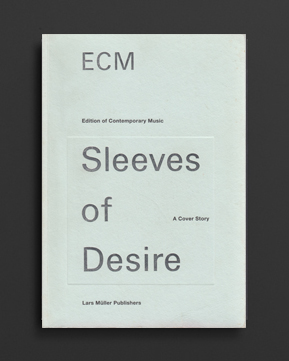
First and only 1996 printing of the stunning and very collectible book on the important design history of the incredible ECM record label, "ECM : Sleeves of Desire".
The ECM recording label's contribution to the fields of jazz and contemporary classical music is unparalleled, and its success story has been visually enhanced by the striking covers designed under Manfred Eicher's art direction by Barbara Wojirsch and Dieter Rehm.
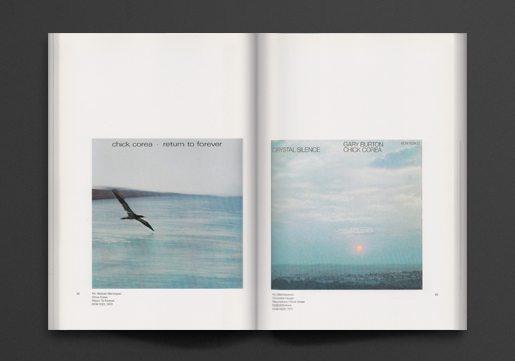
A delight for music and design fans alike, the book presents chronologically ordered color reproductions of over 500 covers from the innovative ECM label. Sleeves of Desire also contains a comprehensive picture essay that provides a detailed look at over 100 album covers. Additionally, renowned jazz essayist Peter Ruedi relates the history of the ECM label and designer Lars Muller comments on the evolution of the covers and on ECM's unmistakable aesthetic signature.
Features the cover art of releases by Jan Garbarek, Don Cherry, Nana Vasconcelos, Eberhard Weber, Gary Burton, Meredith Monk, Chick Corea, Wolfgang Dauner, Carla Bley, Keith Jarrett, Paul Bley, Pat Metheny, John McLaughlin, Evan Parker, Annette Peacock, Gary Peacock, Terje Rypdal, Ralph Towner, and so many more.
Very Good, clean copy throughout. A must.
2000, English
Softcover (many various stocks and inlayed, cropped pages), 80 pages, 18 x 11 cm
1st Edition, Out of print title / used / fine
Published by
Alleged Press / New York
$65.00 $30.00 - Out of stock
First edition of this scarce early Chris Johanson artist's book, You Are There, published in 2000 by Alleged Press, New York. Illustrated throughout with Johanson's paintings, drawings, and images of his early exhibitions, texts, etc. all printed on various stocks in colour and b/w, with many fold-out pages and cropped pages all bound into this nice pocket book format.
Chris Johanson was born in San Jose, California in 1968 and currently lives and works in Portland, Oregon and Los Angeles, California. He has been the subject of numerous solo exhibitions at galleries and museums including Mitchell-Innes & Nash (New York City), Altman Siegel Gallery (San Francisco), Galleri Nicolai Wallne (Copenhagen), The Modern Institute (Glasgow), and MOCA Pacific Design Center (Los Angeles).
Fine copy.
1979, German
Softcover, 360 pages, 22 x 22 cm
1st Edition, Out of print title / used / fine
Published by
Akademie der Künste / Berlin
$65.00 - Out of stock
First edition of Heinz Trökes : Bilder, Zeichnungen, Collagen uns Skizzenbücher 1938-1979, published on the occasion of the major survey exhibition at the Akademie der Künste in Berlin in 1980. Profusely illustrated throughout with the paintings, collages, and drawings of German artist Heinz Trökes (1913–1997), whose work, obliged to a surrealist tendency, oscillate between biomorphic landscapes and geometrical abstraction. Trökes, who had received artistic training from, among others, Johannes Itten and Georg Muche, started his career with his first solo exhibition in 1938 at the Berlin Galerie Nierendorf being shut down by the Nazis. Banned from working as an artist and from exhibiting, he left Germany for Zurich where he earned a living designing textiles. Ordered by the authorities to return to Germany when the war broke out, Trökes was forced to work secretly and no longer signed his works with his full name. He co-founded of the Berlin gallery Gerd Rosen, the first private art gallery in Germany after the war, where he was artistic director between 1945-1946. In 1947 he was called to teach at the Bauhaus together with the painter Mac Zimmermann. A close friend of the artist Wols, Trökes lived in Paris in the 1950s and joined the Rixes group alongside Roberto Matta, Jaroslaw Serpan, Jean-Paul Riopelle, etc., a group associated with the surrealists and founded by critic Edouard Jaguer, Max Clarac-Serou and Iaroslav Serpan. He also participated in the regular meeting group, Jour fixe, around André Breton, alongside Benjamin Péret, Marcel Duchamp, Toyen, Max Ernst, Rufino Tamayo and Jacques Hérold.
Catalogues many works, with an introduction by Rolf Szymanski and a text by Eberhard Roters, biography, bibliography, photographic portraits, and more.
Texts in German.
Very Good - Fine copy.
2019, English
Hardcove (w. dust jacket), 428 pages, 24.1 x 27.9 cm
Published by
Hauser & Wirth / Zurich
$120.00 - Out of stock
This monumental tome contains the entirety of the important German artist’s drawings held in the collection of the Allen Memorial Art Museum, Oberlin College, Ohio. The AMAM was the first museum to purchase a sculpture by Hesse, Laocoon, in 1970. In gratitude for its recognition of Hesse's work, and following the artist's untimely death, her sister Helen Hesse Charash generously donated the artist's notebooks, diaries, sketchbooks, photographs and letters to the museum.
Hesse’s drawings played a crucial role in her work, which in turn gave way to an array of highly innovative techniques and styles that today still defy classification. As she commented in 1970: “I had a great deal of difficulty with painting but never with drawing ... the translation or transference to a large scale and in painting was always tedious.... So I started working in relief and with line.” Hesse’s custom of introducing sculptural materials into drawing and painting continues to influence artmaking today.
Edited by Barry Rosen. Foreword by Helen Hesse Charash, Andria Derstine. Text by Briony Fer, Gioia Timpanelli, Manuela Ammer, Andrea Gyorody, Jörg Daur.
Eva Hesse (1936–70) was one of the foremost artists of the 20th century. Her work combined the seriality and reductionism of 1960s minimalism with emotion, sensuousness and physicality. Her work is in the collections of the Museum of Modern Art, Tate, Guggenheim and many others.
2020, English
Softcover, 100 pages, 10.5 x 14.8 cm
Published by
Self-Published / Melbourne
$20.00 - Out of stock
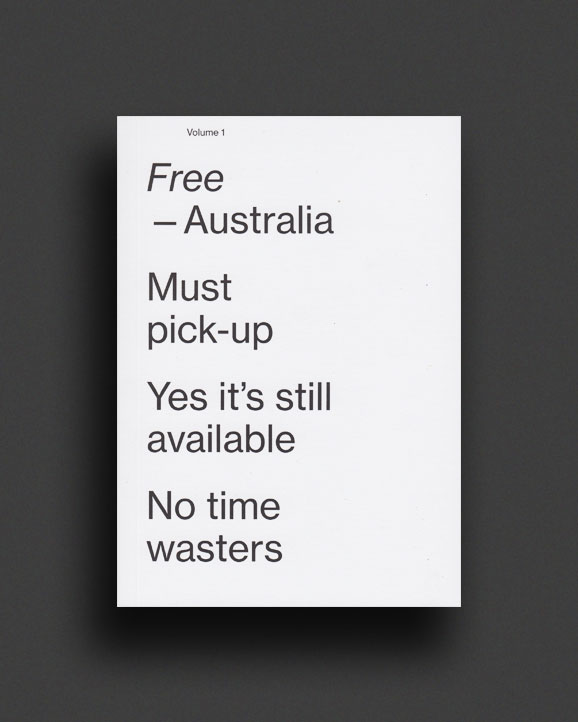
This book is a collection of images and corresponding texts advertising free items found on Facebook Marketplace during March, 2019. Using location filters the content was sourced from every state in Australia.
Published in Narrm/Melbourne, 2020 in an open edition.
Designed by Dominic Forde.
All publishers proceeds donated to the Victorian Bushfire Appeal.
2017, English
Softcover (hand-finished, staple-bound), 24 pages, 16 x 13 cm
Ed. of 50,
Published by
Self-Published / Melbourne
$14.00 - Out of stock
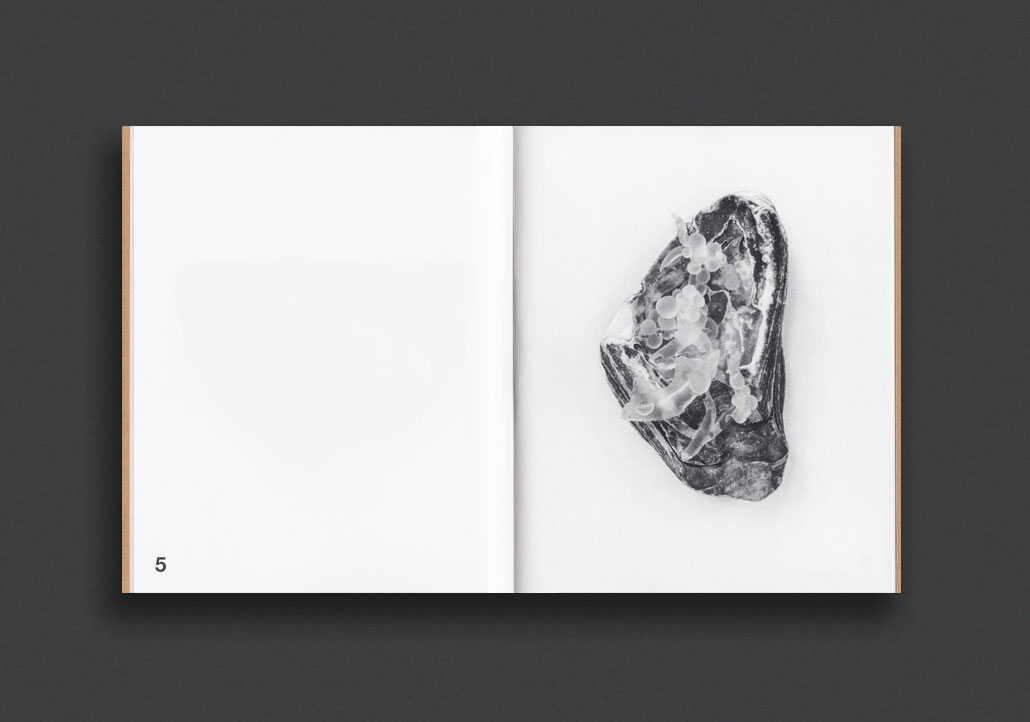
"Ears (with Tinnitus)" is an artist's pocket-book/work catalogue published in 2017 in an edition of 50 copies (and not distributed until now) documenting a central sculptural series of Australian artist Joshua Petherick (b. Adelaide, 1979). Petherick's 'Ears' began in Summer 2014. Combining abstract wax-cast fragments of translucent polyurethane with seashells collected on the artists' trips to the ocean, Petherick formed an accidental auto-portrait in ongoing variation. Floating at head-height against gallery walls, these cradled assemblages "evoke a microscopic thicket of corporeal and fantastical horror-form." This title collates a small selection of these works exhibited between 2015-2017 in Australia, New Zealand and the United States. Illustrated throughout in b/w with a work list in hand-numbered edition.
1970 / 1984, English / German / French
Hardcover (w. dust jacket), 228 pages, 25 x 28 cm
Out of print title / used / fine
Published by
ABC Verlag / Zürich
$140.00 - Out of stock
1984 expanded edition of this important and comprehensive survey of over 2,000 trademarks, brands, logos, symbols, and monograms from around the world, arranged according to subject and published by ABC Verlag, Zürich. A classic volume in the field of graphic design. This iconic and wonderful "Swiss design" visual reference book further provides an analysis of sign competitions and the development of the sign as a universal language. Compiled, edited, and with texts by legendary typographer Walter Diethelm (1913-1986) and further contributions by Eugenio Carmi, Adrian Frutiger, Masaru Katzumie, Hans Kauer, Hans Neuburg, Ryszard Otreba, Paul Rand, and Hans Weckerle.
Over 500 designers are represented including Primo Angeli, Walter Ballmer, Walter Bangerter, Saul Bass, Lester Beall, Felix Beltran, Emil Biemann, Rudolf Bircher, Giovanni Brunazzi, Paul Bühlmann, Chermayeff & Geismar, Seymour Chwast, Wim Crouwel, Alan Fletcher, Adolf Flückiger, Piero Fornasetti, Adrian Frutger, Roger-Virgile Geiser, Robert Geisser, Milton Glaser, Morton Goldsholl, Fritz Gottschalk, Joseph Graber, Jörg Hamburger, Erich Hänzi, Rudolph de Harak, Hans Hartmann, Armin Hofmann, Yusaku Kamekura, Stefan Kantscheff, Tetsuo Katayama, Christian Lang, Raymond Loewy, George Nelson, Rémy Peignot, Paul Rand, Hansruedi Scheller, Anton Stankowski, Henry Steiner, Hans Thöni, Massimo Vignelli, Carlo Vivarelli, Franz Wagner, Hansruedi Widmer, Kurt Wirth, and Marcel Wyss.
All texts in English, German, and French.
Fine copy in Very Good-Fine dust jacket! Beautifully preserved in mylar wrap.
1986, English / Italian
2 hardcover volumes (in illustrated hardcover box), 600 pages, 24 x 34 cm
1st Edition, Out of print title / used / very good
Published by
Coneditor / Rome
$180.00 - Out of stock
First edition of the most elaborate, visually-dazzling, analytical monograph ever produced on the work of Michelangelo Antonioni. Published in this lavish 2-volume boxset edition in 1986 in Rome, Architetture della Visione was conceived and edited by film critics Michele Mancini and Giuseppe Perrella, only 5 years after their ground-breaking Pier Paolo Pasolini: Corpi e Luoghi (1981). Like Corpi e Luoghi (Bodies and Places), Architetture della Visione is an indispensable reference on the films of Michelangelo Antonioni, one of the leading protagonists of post-war Italian cinema. Profusely illustrated with countless colour and b/w frames extracted from Antonioni's films (L'Avventura (1960), La Notte (1961), L'Eclisse (1962), The Red Desert (1964), Blowup (1966), The Passenger (1975), etc.), alongside illustrations, diagrams and artworks by leading Italian artists such as Luigi Serafini, Ugo La Pietra, Bruno Munari, Giuseppe Perrone, Alessandro Mendini, and many more, Architetture della Visione is not just an illustrated book-set but a unique model of film research and critique. Using a gridded, archeological "filing system" it comprehensively documents the creative process and iconographic imagery of Antonioni through the sequences and the specific themes of his work: the architecture of uneasiness, metropolitan deserts, metaphysical cities, eclipses, phantoms, the dissolved set, natural landscapes, passages, telephones, attire, the weather... with many never-before-published archival materials contributed by Antonioni himself. Includes an exhaustive filmography, chronology, bibliography, credits, technical information and much more. Heavy in every sense of the word.
First edition of the scarce bilingual Italian-English version!
Very Good. Gorgeously preserved throughout.
2015, English / French
Softcover (w. dustjacket), 204 pages, 22 x 29 cm
$64.00 - Out of stock
Out of print.
Over the course of a year, The Registry of Promise consisted of four interrelated exhibitions, which are represented as chapters in this book. In these chapters, Chris Sharp reflects on our increasingly fraught relationship with what the future may or may not hold, and the work engages with and plays upon the various readings and mutability of promise, along with the inevitability of what may come, whether positive or negative. Such polyvalence is particularly topical, as we have shifted from the anthropocentric promise of modernity to a negative faith in the post-human. Richly illustrated with works and installation views, and an archive of previously published articles by Chris Sharp.
With: Becky Beasley, Patrick Bernatchez, Juliette Blightman, Peter Buggenhout, Nina Canell, Michael Dean, Alexander Gutke, Jochen Lempert, Jean-Luc Moulène, Marlie Mul, Matt Mullican, Rosalind Nashashibi, Antoine Nessi, Jean-Marie Perdrix, Reto Pulfer, Mandla Reuter, Hans Schabus, Lucy Skaer, Michael E. Smith, Carlo Gabriele Tribbioli, Francisco Tropa, Andy Warhol and Anicka Yi.
Texts in English and French.
Design: Roger Willems
1991, English
8 gloss postcards in gloss, foiled card envelope, 18.5 x 14 cm
1st Edition, Out of print title / used / very good
Published by
Yohji Yamamoto / Tokyo
$140.00 - Out of stock
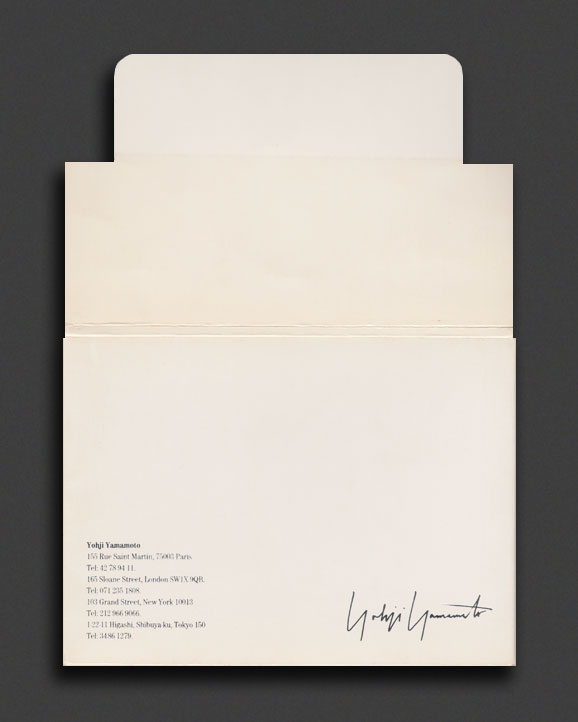
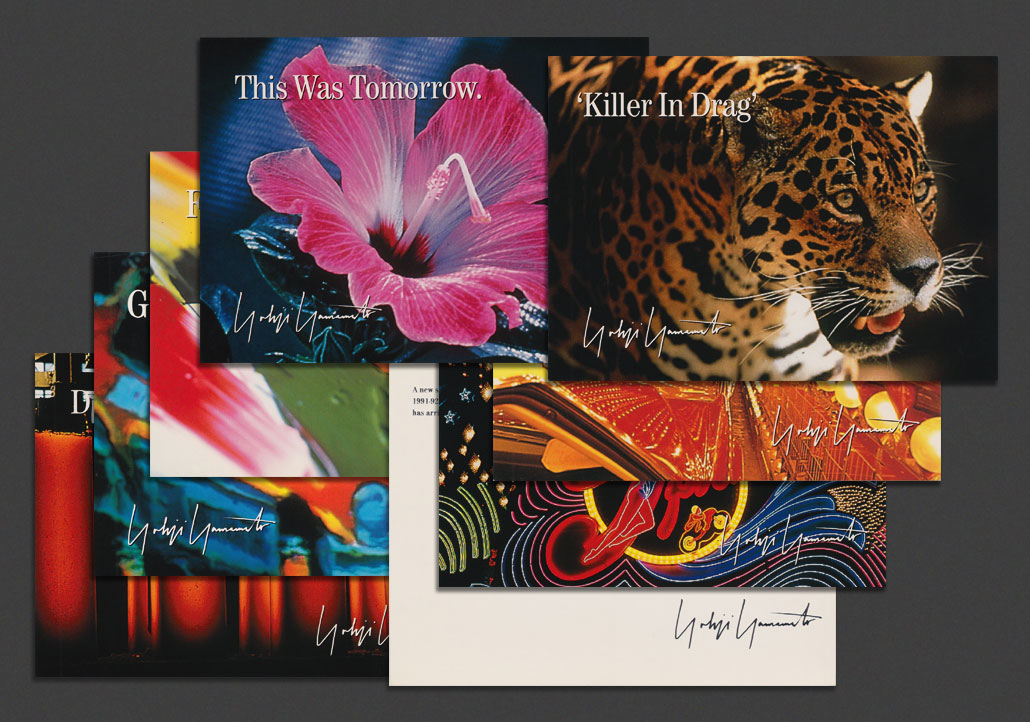
Rare Yohji Yamamoto Autumn-Winter 1991-1992 Collection postcard set. This scarcely seen piece of promotional ephemera (never seen another) was issued for the Sopporo Yohji Yamamoto store in 1991 a silver-foil stamped signature gloss card envelope with matte-black lining, containing eight gloss postcards; seven "Advertisement Pour Homme" photographic postcards by Yohji Yamamoto, and one foil stamped signature introductory announcement card.
Very Good copy with perfectly preserved cards.
1969, English / Dutch
Softcover, 140 pages, 41 x 31 cm
1st Edition, Out of print title / used / good
Published by
Stedelijk Museum / Amsterdam
Moderna Museet / Stockholm
$450.00 - Out of stock
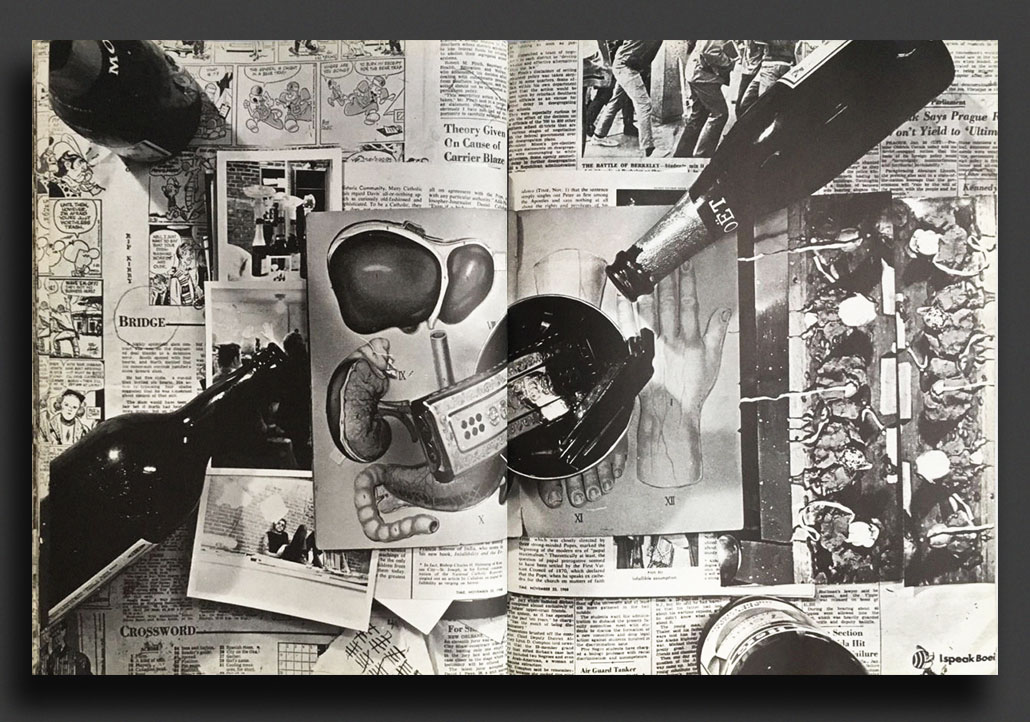
An extremely rare and well-preserved copy of one of the greatest artist books of our time. "A Document Made By Paul Thek and Edwin Klein" is an immensely important collaborative work created and published in 1969 by the American artist Paul Thek (1933-1988) and the Dutch photographer and designer Edwin Klein (1946-) for the Pauk Thek and the Artist's Co-op installations at the Stedelijk Museum, Amsterdam, and the Moderne Museet, Stockholm. Thek’s wish was to turn his diary into artworks: three-dimensional albums, each double page a full-bleed photograph shot from above of a still life of pictures, drawings, books, postcards, magazine clippings, objects (ashtrays, wine bottles, rope, garments, plaster mushrooms, and various other detritus from Thek's studio), the artist's themselves, photographs by friends and colleagues, all printed at 100% scale of the original newspaper sheets that provide the backdrop throughout the entire book. Manipulated by Thek and Klein, the pictures and the objects change from one page spread to the next, all in constant movement, capturing the personal and magical nature of Thek's work and the spontaneous and joyous nature of Thek's collaborations with Klein.
"The document follows my concept of what a book should be like, and Paul’s wish to turn his diary into a kind of catalogue – a three-dimensional album, each double page a photograph of a still life with pictures, drawings, books, cards, and objects…The book has the dimensions of an open newspaper, actual size. Turning the pages of the document, one turns the pages of a diary. The pictures and the objects placed on the newspaper keep changing and seem to be in constant movement. Most of the photographs are from the studio, documenting works in progress created for the Stedelijk Museum exhibition. There are pictures from other exhibitions, porno magazines, whatever was lying around, everything that surrounded us in our daily life." - Edwin Klein
Good over-sized copy of the first edition with general handling wear, creasing and tanning to cover and pages. Overall a wonderful copy of this highly sought after publication.
1978, Japanese
Softcover (w. dist jacket), 324 pages, 10.5 x 15.3 cm
1st Edition, Out of print title / used / very good
Published by
Hayakawa Books / Tokyo
$60.00 - Out of stock
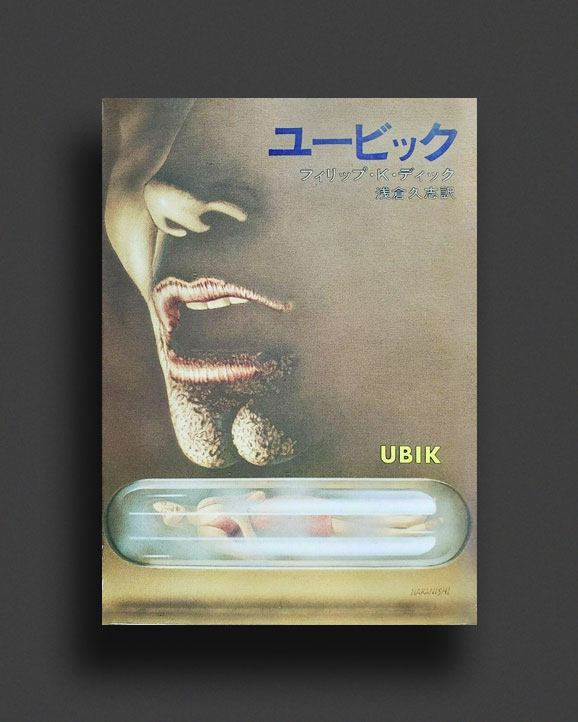
First Japanese paperback edition of Ubik by Philip K. Dick, published in translated Japanese in 1978 by Hayakawa Books. Translation to Japanese by Hisashi Asakura. Ubik is a 1969 science fiction novel by American writer Philip K. Dick. The story is set in a future 1992 where psychic powers are common and utilized in corporate espionage. It follows Joe Chip, a technician at a psychic agency who begins to experience strange alterations in reality that can be temporarily reversed by a mysterious store-bought substance called Ubik. Ubik is one of Dick's most acclaimed novels.
Very Good copy w. light handling/edge tanning.
1972/74, Japanese
Softcover (6 vols), 21 x 14.8 cm
1st Edition, Out of print title / used / good
Published by
Taiyo books / Japan
$140.00 - Out of stock
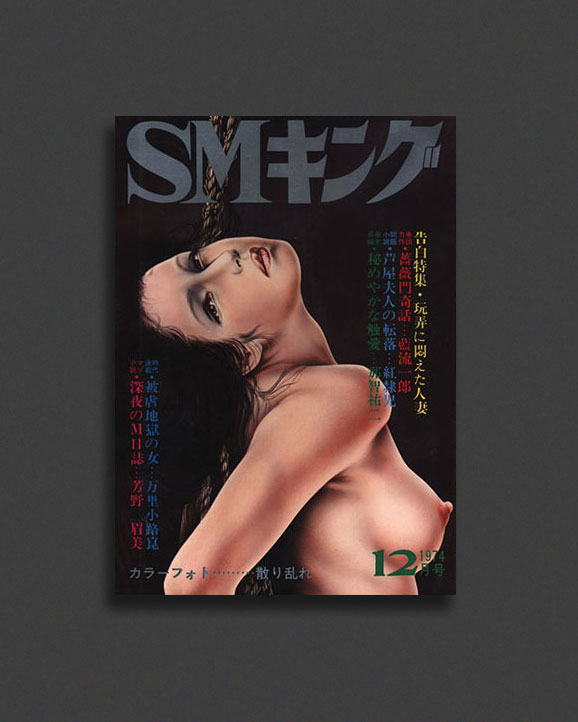
Lot of 6 issues of SM KING, 3 issues from1972, three from 1974. A legendary Japanese magazine in the world of BDSM, published exclusively in Japan by Taiyo books, with each issue featuring many colour and b/w photographs, illustrations, and stories on the subject of bondage in Japan. All texts in Japanese.
All issues Good-Very Good condition.
2020, English
Hardcover (w. dust jacket), 240 pages, 22.2 x 14.4cm
Published by
Reaktion books / London
$39.00 $20.00 - Out of stock
Marking a return for Laura Mulvey to questions of film theory and feminism, as well as a reconsideration of new and old film technologies, this urgent and compelling collection of essays is essential reading for anyone interested in the power and pleasures of moving images.
Its title, Afterimages, alludes to the dislocation of time that runs through many of the films and works it discusses as well as to the way we view them. Beginning with a section on the theme of woman as spectacle, a shift in focus leads to films from across the globe, directed by women and about women, all adopting radical cinematic strategies. Mulvey goes on to consider moving image works made for art galleries, arguing that the aesthetics of cinema have persisted into this environment.
Structured in three main parts, Afterimages also features an appendix of ten frequently asked questions on her classic feminist essay ‘Visual Pleasure and Narrative Cinema’, in which Mulvey addresses questions of spectatorship, autonomy and identity that are crucial to our era today.
2018, English
Softcover, 48 pages, 14 x 20.2 cm
Published by
Nightboat Books / New York
$28.00 - Out of stock
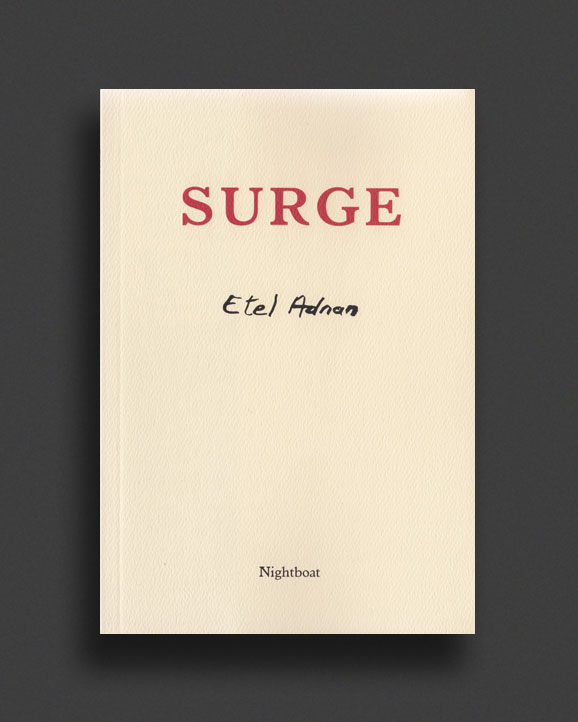
A new volume of aphoristic prose and philosophical poetry from Etel Adnan, whose work The New York Times recently described as the "meditative heir to Nietzsche's aphorisms, Rilke's Book of Hours and the verses of Sufi mysticism." She writes: "Reality is messianic/ apocalyptic/ my soul is my terror."
Etel Adnan was born in Beirut, Lebanon in 1925. She studied philosophy at the Sorbonne, U.C. Berkeley, and at Harvard, and taught at Dominican College in San Rafael, California, from 1958–1972. In solidarity with the Algerian War of Independence (1954–1962), Adnan began to resist the political implications of writing in French and became a painter. Then, through her participation in the movement against the Vietnam War (1959–1975), she began to write poetry and became, in her words, “an American poet.” In 1972, she returned to Beirut and worked as cultural editor for two daily newspapers—first for Al Safa, then for L’Orient le Jour. Her novel Sitt Marie-Rose, published in Paris in 1977, won the France-Pays Arabes award and has been translated into more than ten languages. In 1977, Adnan re-established herself in California, making Sausalito her home, with frequent stays in Paris. Adnan is the author of more than a dozen books in English, including Journey to Mount Tamalpais (1986), The Arab Apocalypse (1989), In the Heart of the Heart of Another Country (2005), and Sea and Fog (2012), winner of the Lambda Literary Award for Lesbian Poetry and the California Book Award for Poetry. In 2014, she was awarded one of France’s highest cultural honors: l’Ordre de Chevalier des Arts et Lettres.
2014, English
Softcover, 162 pages, 12.6 x 21.6 cm
Published by
City Lights Books / San Francisco
$29.00 - Out of stock
Thousand Times Broken brings together three extraordinary, previously untranslated books in which Henri Michaux's art and poetry merge in ways never seen before, composing a journey in which we----with the great visionary Michaux as our guide----are invited to hover between reading and looking, between the ineffable and the known, between body and spirit into a realm where it is possible to perceive "what one otherwise doesn't perceive, what one hardly suspects at all."
Composed between 1956-1959, during Michaux's mescaline experiments, all three books engage a dynamic struggle between the mark and the word as Michaux searches for a medium up to the task of expressing the inexpressible. Included are Four Hundred Men on the Cross, a ghostly, enigmatic contemplation of Michaux's loss of faith, Peace in the Breaking, written under the influence of mescaline, its title poem of pure ascension sent flowing into the same spine-like furrows of Michaux's India ink drawings, and Watchtowers on Targets, a singular, automatic collaboration with surrealist and abstract expressionist painter Roberto Matta. Translated from the French by noted poet Gillian Conoley.
Through travel journals, prose poems, and incantatory exorcisms, Henri Michaux (1899–1984) built an unsettling world of aggression, fear, hostility, and paranoia, whose fantastical landscapes and fabulist beings delineate a space of psychological and cognitive discomfort all too contemporary. In 1956 he continued his controlled explorations of the self with a series of mescaline experiments, which he documented in a series of books over the next decade. Michaux’s writing was paralleled by his lifelong commitment to painting and drawing.
2019, English
Hardcover, 256 pages, 24 x 29 cm
Published by
Lecturis / Eindhoven
$80.00 - Out of stock
This is the first complete overview of Ed van der Elsken’s work in colour. Although the Dutch photographer became world-renowned for his black-and-white images, much of his body of work was actually made in colour. He began with colour photos in the early 1950s in Paris, and by the late ’60s he almost exclusively took pictures in colour, such as for his travel reportages. ‘Lust for Life’ follows Van der Elsken’s evolution as a “colour photographer” and places this work in an art historical context. Besides relatively unknown and previously unpublished images, it also details the massive, two-year project to restore Van der Elsken’s slides by the Nederlands Fotomuseum.
2020, English
Hardcover, 224 pages, 24.6 x 28.5 cm
Published by
Skira / Milan
$98.00 - Out of stock
Edited with text by Antonio Sergio Bessa.
Text by Douglas Crimp.
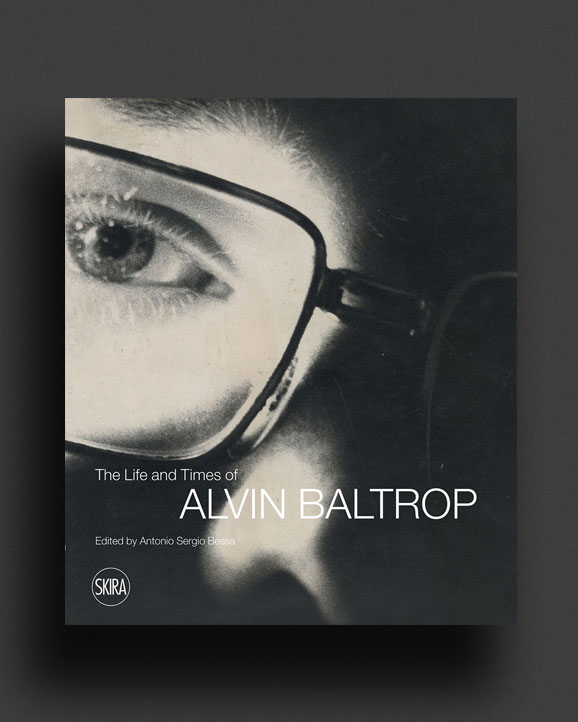
For 11 years in 1970s and '80s Manhattan, the Bronx-born photographer Alvin Baltrop obsessively documented cruisers, sunbathers, fornicators and friends around the city's piers, in that brief moment after the Stonewall riots and before the explosion of the AIDS epidemic. The largest book yet published on the photographer, The Life and Times of Alvin Baltrop presents those photographs and others, including many that have never been seen in public, and is published on the occasion of Baltrop's first-ever retrospective at the Bronx Museum of the Arts.
"Although initially terrified of the piers, I began to take these photos as a voyeur [and] soon grew determined to preserve the frightening, mad, unbelievable, violent, and beautiful things that were going on at that time," Baltrop wrote in the preface to an unfinished book of these photographs. "To get certain shots, I hung from the ceilings of several warehouses utilizing a makeshift harness, watching and waiting for hours to record the lives that these people led (friends, acquaintances, and strangers), and the unfortunate ends that they sometimes met."
2019, English
Softcover, 128 pages, 20 x 15 cm
Published by
Dark Entries Editions / San Fransisco
$53.00 - Out of stock
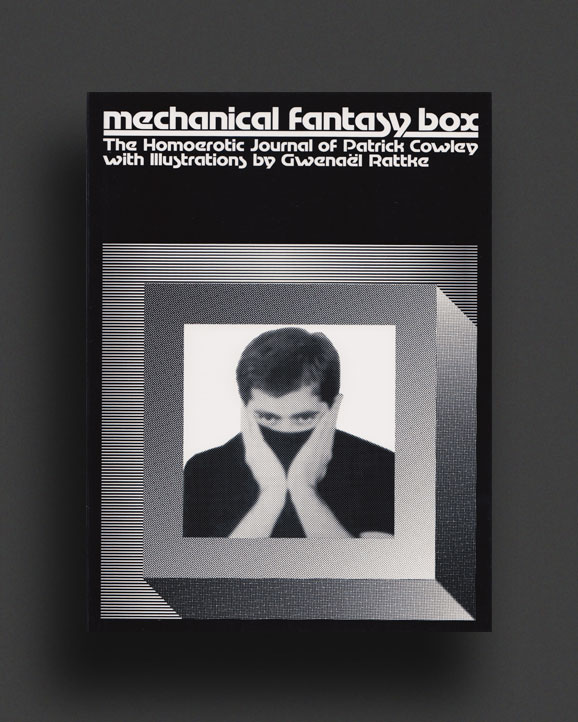
Patrick Cowley (1950–82) was one of the most revolutionary and influential figures in electronic dance music. Born in Buffalo, Cowley moved to San Francisco in 1971 to study music at the City College of San Francisco. By the mid '70s, his synthesizer techniques landed him a job composing and producing songs for disco diva Sylvester, including hits such as "You Make Me Feel (Mighty Real)." Cowley created his own brand of peak-time party music known as Hi-NRG, dubbed "the San Francisco Sound." His life was cut short on November 12, 1982, when he died shortly after his 32nd birthday from AIDS-related illness. Mechanical Fantasy Box is Cowley's homoerotic journal, or, as he called it, "graphic accounts of one man's sex life." The journal begins in 1974 and ends in 1980 on his 30th birthday. It chronicles his slow rise to fame from lighting technician at the City Disco to crafting his ground-breaking 16-minute remix of Donna Summer's "I Feel Love" to performing with Sylvester at the SF Opera House. Vivid descriptions are told of cruising in '70s SoMA sex venues, ecstatic highs in Buena Vista Park and composing "pornophonics" in his Castro apartment. For this book, artist Gwenaël Rattke created 25 original illustrations inspired by selected entries, three street maps documenting locations mentioned herein, and four collages of photos, ephemera and notes that Cowley had inserted in the journal. This book shows a very out-front, alive person going through the throes of gay liberation post-Stonewall.
2019, English
Hardcover, 136 pages, 14.5 x 10.9 cm
Published by
Verlag fur moderne Kunst / Nuremberg
$62.00 - Out of stock
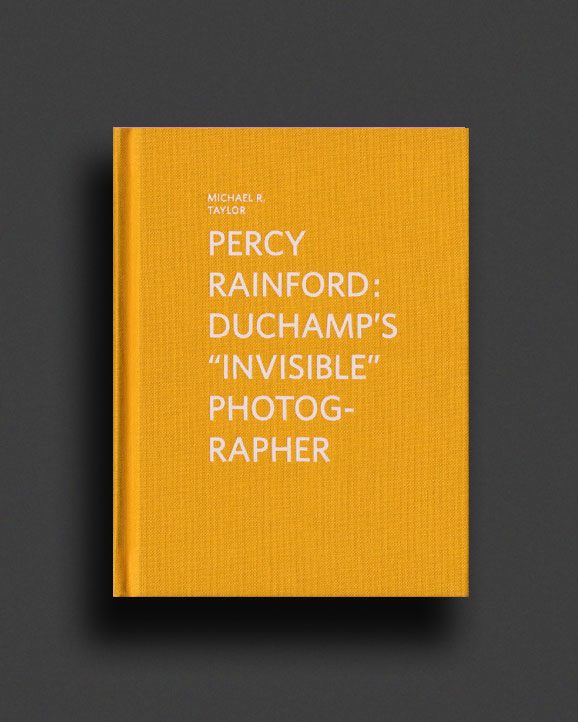
Offering the first study of Jamaican-born American photographer Percy Rainford, this book draws from extensive archival research and interviews with the artist's family, showcasing his work and shedding light on his collaborations with Duchamp for View and Le Surréalisme.
Edited by Stefan Banz.
Text by Michael R. Taylor.
2018, English
Hardcover, 148 pages,
Published by
Verlag für moderne Kunst / Vienna
$48.00 - Out of stock
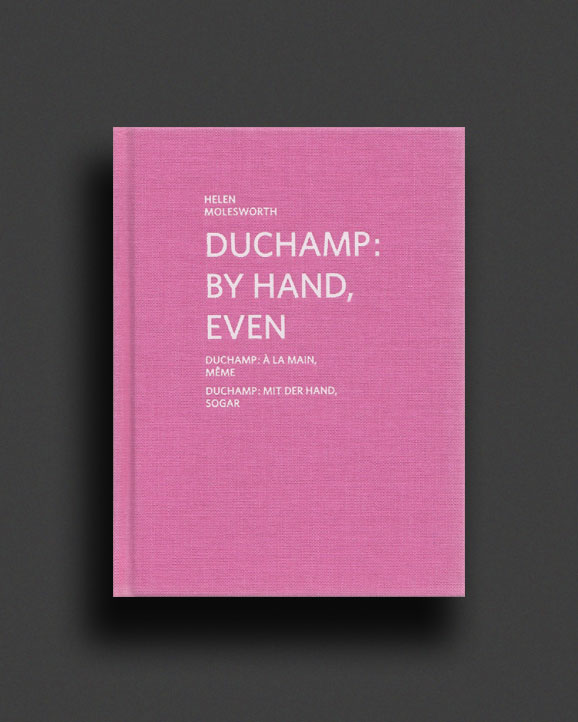
In this essay, curator Helen Molesworth pinpoints the significance of the return of the handmade in the later years of Duchamp’s oeuvre, positioning this paradigmatic shift away from the readymade as the focal point of academic debate for the very first time.
By Helen Molesworth.
Edited with preface by Stefan Banz.
2019, English
Softcover, 136 pages, 17 x 24 cm
Published by
Warehouse / Amsterdam
$30.00 - Out of stock
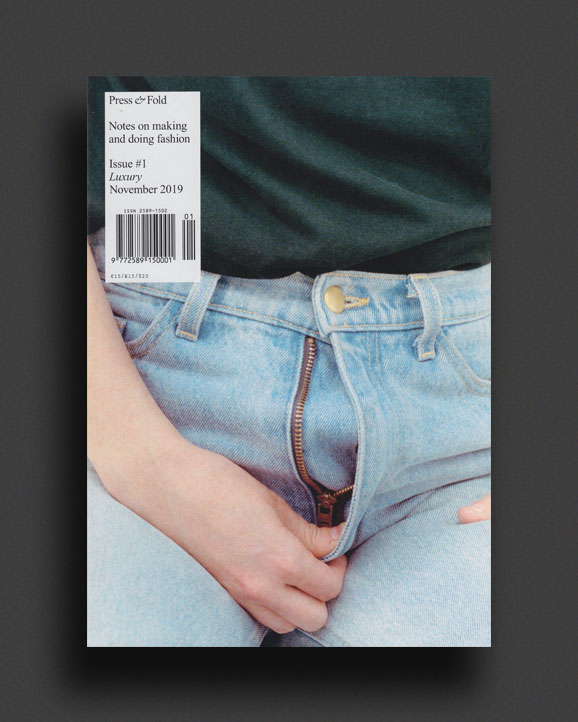
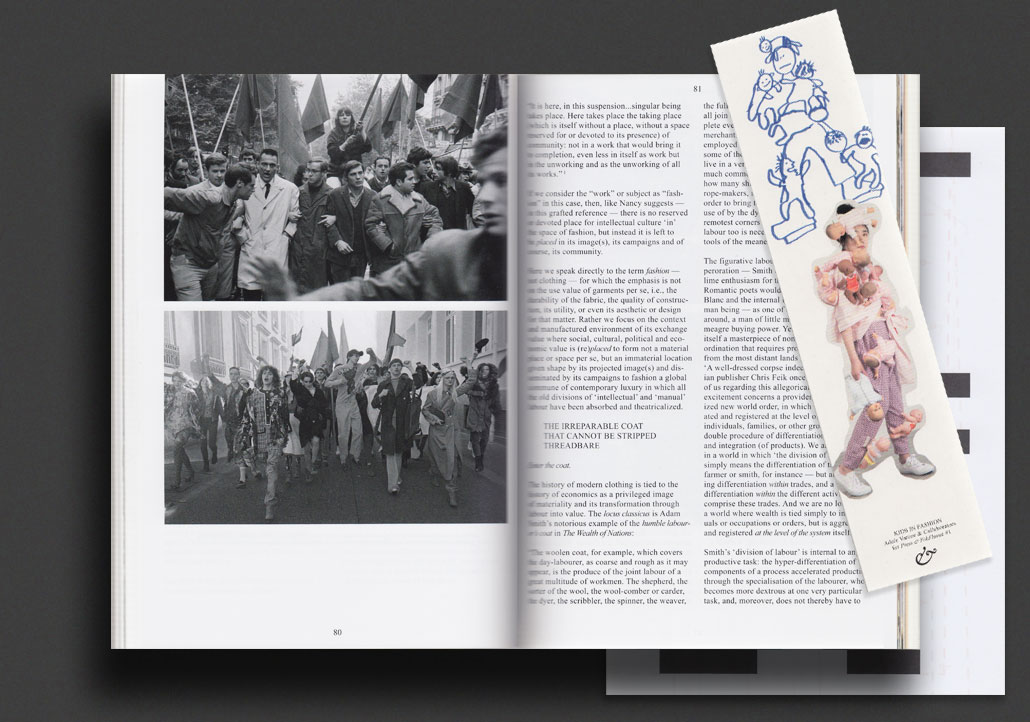
Contributors: Beau Bertens, Danielle Bruggeman, Aimée Zito Lema & Elisa van Joolen, Maria Kley, JOIN Collective Clothes, Johannes Reponen, Adele Varcoe & Collaborators, Colby Vexler & Justin Clemens, Articles of Clothing : Annie Wu, Agnieszka Chabros & Amelia Winata, Jessica Buie, Storage Solutions, Chet Bugter, Shanzhai Lyric, Rowan McNaught & Laura Gardner, Femke de Vries.
From luxury characterised as uniqueness created by lowly and anonymous artisans in pre-democratic times, to made-to-measure haute couture and the cult of the star designer at the end of the 19th century, from the merging of mass market and prestige into ‘masstige’ (a term coined by Karl Lagerfeld, introducing his H&M collaboration in 2004) to the hunger for street credibility by luxury fashion houses causing them to sell 2000 euro hoodies, and from the conspicuous consumption showcased on Instagram to the explosion of wellness and self-care culture; luxury has had many faces over the past few decades.
Among a new generation of fashion designers, researchers, writers and curators, very different views on luxury, and fashion in general, exist. Motivated by the sorry state of the current fashion system and its exploitative labour practices, environmental pollution, depletion of resources and exclusionary marketing language among other things, this generation is not only critiquing the system, its individualistic approach and its limiting views on the concept of luxury (among other things), but also seeking to create alternative, more inclusive ways of defining luxury. In this issue of Press Fold, we give voice to these new ideas and propositions on contemporary luxury and its material and immaterial characteristics.
These new imaginations on luxury show a radical departure from the classical interpretation of the concept; a concept that is firmly rooted in the idea that luxury is above all about abundance and indulgence, and therefore is not absolutely necessary, but a privilege for the happy few. But what actually is a ‘necessity’ in contemporary society, and what do we define as ‘abundance’? In the context of late capitalism and its inequities and growing political polarization, the ideas on what luxury constitutes are rapidly shifting. Self-care is making way for a collective form of care: for creating together, performing together, learning together, regaining agency together.
In this issue of Press Fold, you’ll find the views of our contributors on the meaning of ‘luxury’ in the context of today’s and tomorrow’s fashion world and society at large. We aim to show a plurality of perspectives, but all seem to have its root in the common understanding that change is required, not just within the fashion industry, but beyond. And as fashion can be regarded as a social practice – something we all participate in – why not start here?
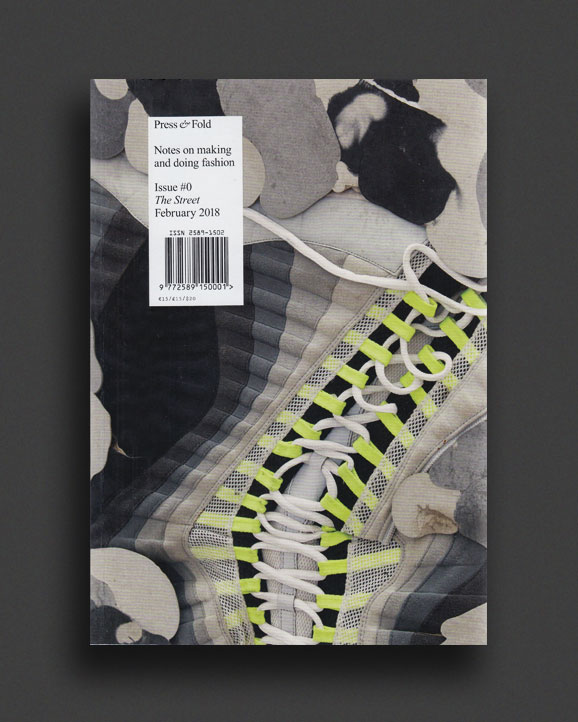
2018, English
Softcover, 136 pages, 17 x 24 cm
Published by
Press & Fold / Amsterdam
$30.00 - Out of stock
(Notes on Making and Doing Fashion)
Press & Fold is a new independent fashion magazine that aims to explore alternative fashion forms and narratives. The bi-annual magazine provides a platform for critical fashion practitioners who do not obey the rules the fashion system is currently dictating.
ISSUE #0 includes: SHOPPING - Beau Bertens; FASHIONING STREETS WITH GIVE AND TAKE - Johannes Reponen; BREAKING THROUGH THE FAÇADE: Collective critique on fashion in the 1990s - Laura Gardner; NO SUGAR COATING ALLOWED - an interview with Camiel Fortgens by Renee van der Hoek; THE EXTRAS - D&K (Ricarda Bigolin); ON THE STREETS OF SOUTH AFRICA - Duran Lantink; ETHICS SYNTHETICS AVOIDSTREET THE RAG-PICKERS DISCOURSE - A selected guide by Tenant of Culture; LOST AND COLLECTED - Ruby Hoette; STREET FASHION, SELF-DEFENCE, FEARLESS - Femke de Vries; ONE–TO–ONE (R. MARIZ) - Elisa van Joolen
In a time where everything in fashion is in flux so little of it seems to be discussed on the pages of fashion magazines, forever trying to sell us more things we do not actually need. Ever since the first fashion magazine appeared the goal has been to show and sell – some more explicit than others – the latest fashions. This obsession with ‘the new’ has had a constraining influence on the development of an independent fashion media and a serious fashion critique. Press & Fold wants to discuss, but more importantly, imagine what fashion would look like if we take away advertising and editorials, take away the need to sell something through the magazine, and instead focus on having conversations on the production, presentation, consumption of clothes and the contexts in which this takes place. Press & Fold focuses on a fashion reality that isn’t based solely on consuming the latest fashions but on our experiences through fashion, seeking an alternative fashion discourse that goes beyond treating fashion as a commodity.
Press & Fold | Notes on making and doing fashion is initiated by Hanka van der Voet in collaboration with Beau Bertens. The magazine is a collaborative research project that connects critical fashion practitioners from all over the world.
2019, English
Softcover (elastic band bound in bag), 176 loose-leaf pages, 20 x 14.5 cm
Ed. of 250,
Published by
Warehouse / Amsterdam
Onomatopee / Eindhoven
$23.00 - Out of stock
Published in a hand-numbered edition of 250 copies, A Magazine Reader is the result of a workshop in which a fashion magazine is dissected, critically analyzed from various perspectives and put together again in an alternative form. The material from the magazine is used to create a new zine that gives insight into the cultural power and forms of value production that's at the core of fashion media.
A Magazine Reader 03 dissects Harper's Bazaar UK October 2019 and is a collaboration between Warehouse, Zuzana Kostelanská and Onomatopee.
Warehouse is an Amsterdam-based collective existing of Elisa van Joolen, Femke de Vries and Hanka van der Voet aiming to provide a platform for critical fashion practitioners through organizing exhibitions, reading groups, workshops, performances and book presentations among other things, in order to create an engaging environment that facilitates critical dialogue and the creation of an alternative fashion discourse that goes beyond seeing fashion as a commodity.