World Food Books' programme is largely produced on Kulin Nation land. We acknowledge the Wurundjeri people of the Kulin Nation as the first and continuing custodians of this land, and pay respect to their Elders past, present, and emerging.
World Food Books is an arts and special interests bookshop in Naarm / Melbourne. Founded in 2010, World Food Books is devoted to the presentation of a rotating, hand-selection of international art, design, literary and counterculture publications with an emphasis on the anti-traditional, the experimental, the avant-garde, the heretic, the marginal.
Presenting new titles alongside rare and out-of-print books, catalogues and journals spanning the fields of modern and contemporary art, design, photography, illustration, film, literature, poetry, cultural theory, philosophy, sexuality, popular and underground culture in its many radical forms, World Food Books wishes to encourage adventurous, thoughtful and open-minded reading, looking, writing, and exchange of publishing and ideas, both current and historical.
As well as our bookshop, located in Melbourne's historical Nicholas Building, all of our inventory is available internationally via our online mail-order service.
World Food Books semi-regularly co-ordinates "Occasions", a programme of exhibits and events at the bookshop and in partnership with other hosts (such as museums and art galleries) that develop out of the activities, relationships and content of the bookshop itself.
World Food Books
The Nicholas Building
37 Swanston Street
Room 5, Level 6
Melbourne 3000
Australia
SHOP HOURS:
Thu–Fri 12–6, Sat 12–5
WEB-SHOP OPEN 24/7
World Food Books
Postal Address:
PO Box 435
Flinders Lane
Victoria 8009
Australia
Art
Theory / Essay
Architecture / Interior
Graphic Design / Typography
Photography
Fashion
Eros
LGBTQ+
Fiction / Poetry
Weird / Speculative / Science Fiction / Horror
Transgressive / Visceral / Abject
Symbolism / Decadence / Fin de siècle
Film / Video
Painting
Sculpture / Installation
Performance / Dance / Theater
Drawing
Sound / Music
Curatorial
Group Shows / Collections
Periodicals
Out-of-print / Rare
Posters / Ephemera / Discs
Signed Books
World Food Books Gift Voucher
World Food Book Bag
Australian Art
Australian Fiction
Australian Science Fiction / Speculative Fiction
Australian Poetry
Australian Photography
Japanese Photography
Conceptual Art
Minimal Art
Dada
'Pataphysics / Oulipo
Fluxus
Concrete Poetry
Pop Art
Surrealism
Arte Povera
Arte Informale / Haute Pâte / Tachism
Nouveau Réalisme / Zero / Kinetic
Situationism / Lettrism
Collage / Mail Art / Xerox Art
Art Brut / Folk / Visionary / Fantastic
Illustration / Graphic Art / Bandes Dessinées
Furniture
Italian Radical Design / Postmodernism
Textiles
Ceramics / Glass
Counterculture
Protest / Revolt
Philosophy
Psychoanalysis
Anthropology
Anarchism
Socialism / Anarchism / Communism / Capitalism
Literary Theory / Semiotics / Language
Feminism / Women's Studies
Gender Studies / Sexuality
Anthropology
Fetishism / BDSM
Drugs / Psychedelia
Crime / Violence
Animal Rights / Veganism
Occult / Esoterica
Ecology / Earth / Alternative Living
Whole Earth / Crafts
All prices in AUD (Australian dollars)
Pick-Ups
Pick-up orders can be collected in our bookshop during opening hours after order date. Please collect any Pick-up orders within 2 weeks of ordering as we have limited storage space. Orders will be released back into stock if not collected within this time. No refunds can be made for pick-ups left un-collected. If you cannot make it in to the bookshop in this time-frame, please choose postage option.
Return Policy
All sales are final. We do accept returns (for refund or exchange) for items received in error. All our orders are packed with special care using heavy-duty padding and cardboard book-mailers or bubble mailers (for smaller books), using reinforcement where required. We cannot take responsibility for any lost, stolen or damaged parcels.
Insurance
Should you wish to insure your package, please email us directly after placing your order and we can organise this at a small extra expense. Although all standard/express tracked packages are very safe and dependable, we cannot take responsibility for any lost, stolen or damaged parcels. We recommend insurance on valuable orders.
Interested in selling your old books, catalogues, journals, magazines, comics, fanzines, ephemera? We are always looking for interesting, unusual and out-of-print books to buy. We only buy books in our fields of interest and specialty, and that we feel we can resell.
We base these prices on desirability, market value, in-print prices, condition and our current stock levels. We offer cash, store credit, and can take stock on consignment. All
about 25% of the price we expect to get when we sell them, or 30% in store credit. We base these prices on desirability, market value, in-print prices, condition and our current stock levels.
Sell your books any day of the week. You can drop them off and return later. If you have a lot of books, we can visit your Sydney home.
We buy books that we feel we can resell. We offer about 25 % of the price we expect to get when we sell them, or 30% in store credit. We base these prices on desirability, market value, in-print prices, condition and our current stock levels.
Philadelphia Wireman
03 August - 01 September, 2018
World Food Books is proud to announce our next Occasion, the first presentation of sculptures by Philadelphia Wireman in Australia.
The Philadelphia Wireman sculptures were found abandoned in an alley off Philadelphia’s South Street on trash night in 1982. Their discovery in a rapidly-changing neighbourhood undergoing extensive renovation, compounded with the failure of all attempts to locate the artist, suggests that the works may have been discarded after the maker’s death. Dubbed the "Philadelphia Wireman" during the first exhibition of this work, in 1985, the maker’s name, age, ethnicity, and even gender remain uncertain. The entire collection totals approximately 1200 pieces, all intricately bound together with tightly-wound heavy-gauge wire (along with a few small, abstract marker drawings, reminiscent both of Mark Tobey and J.B. Murry). The dense construction of the work, despite a modest range of scale and materials, is singularly obsessive and disciplined in design: a wire armature or exoskeleton firmly binds a bricolage of found objects including plastic, glass, food packaging, umbrella parts, tape, rubber, batteries, pens, leather, reflectors, nuts and bolts, nails, foil, coins, toys, watches, eyeglasses, tools, and jewellery.
Heavy with associations—anthropomorphic, zoomorphic, and socio-cultural responses to wrapped detritus—the totemic sculptures by Philadelphia Wireman have been discussed in the context of work created to fulfil the shamanistic needs of alternative religions in American culture. Curators, collectors, and critics have variously compared certain pieces to sculpture from Classical antiquity, Native American medicine bundles, African-American memory jugs, and African fetish objects. Reflecting the artist’s prolific and incredibly focused scavenging impulse, and despite—or perhaps enhanced by—their anonymity, these enigmatic objects function as urban artefacts and arbiters of power, though their origin and purpose is unknown. Philadelphia Wireman, whatever their identity, possessed an astonishing ability to isolate and communicate the concepts of power and energy through the selection and transformation of ordinary materials. Over the course of the past two decades, this collection has come to be regarded as an important discovery in the field of self-taught art and vernacular art.
Presented in collaboration with Fleisher-Ollman Gallery, Philadelphia, and Robert Heald, Wellington.
Susan Te Kahurangi King
02 February - 10 March, 2018
Susan Te Kahurangi King (24 February 1951 - ) has been a confident and prolific artist since she was a young child, drawing with readily available materials - pencils, ballpoint pens and felt-tip markers, on whatever paper is at hand. Between the ages of four and six Susan slowly ceased verbal communication. Her grandparents William and Myrtle Murphy had developed a special bond with Susan so they took on caring responsibilities for extended periods. Myrtle began informally archiving her work, carefully collecting and storing the drawings and compiling scrapbooks. No drawing was insignificant; every scrap of paper was kept. The King family are now the custodians of a vast collection containing over 7000 individual works, from tiny scraps of paper through to 5 meter long rolls.
The scrapbooks and diaries reveal Myrtle to be a woman of great patience and compassion, seeking to understand a child who was not always behaving as expected. She encouraged Susan to be observant, to explore her environment and absorb all the sights and sounds. Myrtle would show Susan’s drawings to friends and people in her community that she had dealings with, such as shopkeepers and postal workers, but this was not simply a case of a grandmother’s bias. She recognised that Susan had developed a sophisticated and unique visual language and sincerely believed that her art deserved serious attention.
This was an unorthodox attitude for the time. To provide some context, Jean Dubuffet coined the term Art Brut in 1945 to describe work created by self-taught artists – specifically residents of psychiatric institutions and those he considered to be visionaries or eccentrics. In 1972 Roger Cardinal extended this concept by adopting the term Outsider Art to describe work made by non-academically trained artists operating outside of mainstream art networks through choice or circumstance. Susan was born in Te Aroha, New Zealand in 1951, far from the artistic hubs of Paris and London that Dubuffet and Cardinal operated in. That Myrtle fêted Susan as a self-taught artist who deserved to be taken seriously shows how progressive her attitudes were.
Susan’s parents Doug and Dawn were also progressive. Over the years they had consulted numerous health practitioners about Susan’s condition, as the medical establishment could not provide an explanation as to why she had lapsed into silence. Dawn educated herself in the field of homeopathy and went on to treat all twelve of her children using these principles – basing prescriptions on her observations of their physical, mental and emotional state.
Doug was a linguist with an interest in philosophy who devoted what little spare time he had to studying Maori language and culture. To some extent their willingness to explore the fringes of the mainstream made them outsiders too but it was their commitment to living with integrity and their respect for individuality that ensured Susan’s creativity was always encouraged.
Even though Susan’s family supported her artistic pursuits, some staff in schools and hospitals saw it as an impediment to her assimilation into the community and discouraged it in a variety of ways. Her family was not always aware of this and therefore did not fully understand why Susan stopped drawing in the early 1990s. However, rather than dwell on the challenges that Susan faced in pursuit of her artistic practice, they prefer to highlight her achievements. In 2008 Susan began drawing again in earnest, after an almost 20 year interruption, and her work is now shown in galleries around the world.
Susan grew up without television and has been heavily influenced by the comics she read as a child. She is absolutely fearless in the appropriation of recognizable characters, such as Donald Duck and Mickey Mouse, in her work. She twists their limbs, contorts their faces, compresses them together, blends them into complex patterned backgrounds - always imbuing them with an incredible energy. Although Susan often used pop culture characters in her work they are not naive or childlike. These are drawings by a brilliant self-taught artist who has been creating exceptional work for decades without an audience in mind.
Mladen Stilinović
"Various Works 1986 - 1999"
02 February 16 - September 10, 2016
Various works 1986 - 1999, from two houses, from the collections of John Nixon, Sue Cramer, Kerrie Poliness, Peter Haffenden and Phoebe Haffenden.
Including: Geometry of Cakes (various shelves), 1993; Poor People’s Law (black and white plate), 1993; White Absence (glasses, ruler, set square, silver spoon, silver ladel with skin photograph and wooden cubes), 1990-1996; Exploitation of the Dead (grey and red star painting, wooden painting, black spoon with red table, red plate), 1984-1990; Money and Zeros (zero tie, paintings made for friends in Australia (Sue, John, Kerrie), numbers painting), 1991-1992; Words - Slogans (various t-shirts) - “they talk about the death of art...help! someone is trying to kill me”, “my sweet little lamb”, “work is a disease - Karl Marx”; Various artist books, catalogues, monographs, videos; Poster from exhibition Insulting Anarchy; "Circular" Croatian - Australian edition; Artist book by Vlado Martek (Dostoyevsky); more.
Thanks to Mladen Stilinović and Branka Stipančić.
Jonathan Walker
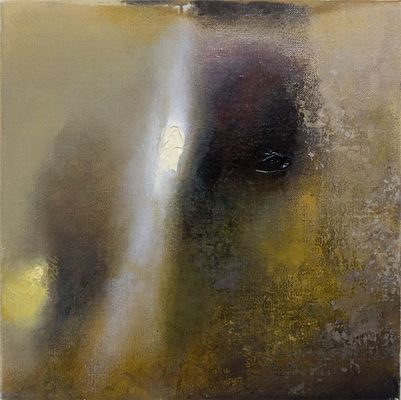
Always Will Need To Wear Winter Shirt Blue + Ochre Small Check Pattern
21 August - 21 September, 2015
Untitled
I am not a great reader of poetry but I always return to the work of Melbourne poet, Vincent Buckley (1925- 1988). Perhaps I find his most tantalising piece to be not a finished poem but a fragment left on a scrap of paper discovered on his desk after the poet’s death.
The poetry gathers like oil
In the word-core, and spreads
It has its music meet,
Its music is in movement.
This fragment is more the shell left behind from a volatile thought than a finished poem. I find the last two lines honest but awkward whereas the first two lines work like an arrow. Most likely he could not find a resolution so it was left. Still, in its present form, it remains an eloquent testimony to the ultimate failure of a medium to express mobile thought and sensation, in Buckley’s case, through verbal language. It’s an important matter because this is something all artists have to deal with regardless of the medium.
I have never written a poem, however, I am forever copying fragments from books on paper scraps in a vain effort to fix certain notions in my head. At first, they function as bookmarks that are sometimes returned to when I open the book. But before long, as they accumulate, they fall out littering the table interspersed with A4 photocopies, bills, books and medications.
To return to Buckley’s fragment, the first two lines very much evoke how I paint nowadays. As you age, detail diminishes and patches of light become more luminous and float. I feel the most honest way of dealing with this is by smearing the oil paint on the canvas with the fingers and working close-up, blind. Only if the patches coalesce into an approaching image can the work gain a life.
-
Jonathan Walker was born in Melbourne, Australia and brought up on a dairy farm in Gippsland. In the 1970’s he studied painting at RMIT and won the Harold Wright Scholarship to the British Museum, London. During the 1980’s he exhibited at Pinacotheca Gallery, Richmond and had work shown at the NGV and Heidi City Art Gallery. Over the same period he designed the cover for the “Epigenesi” LP by Giancarlo Toniutti, Italy and conducted a mail exchange work with Achim Wollscheid, Germany. The work with artists through the post resulted in an article published in the bicentenary issue of Art and Australia 1988. He showed in artist run spaces such as WestSpace in the 90’s and 2000’s, and until 2012, taught painting at Victoria University, which is where we (Colleen Ahern and Lisa Radford) as organisers of the exhibition, among many others, had the privilege of being his student.
Walker’s knowledge was imparted to students through the careful selection of music, literature, and artists found in books that he himself had ordered for the library. Walker’s strategy was the generosity of sharing his vast knowledge with references specific to each student and their context.
Walker’s paintings share a similar focus and intimacy.
This exhibition presents a small selection of recent paintings alongside a publication that includes Walker’s writing. Observational and analytical, Walker’s work is a type of material notation — the time of day, colour and how it is blended, the both specific and fleeting location of a reflection on lino or the question of whether a chair leg should be included in a painting.
Please join us on Friday August 21 between 6-8pm to celebrate the opening of the exhibition.
Curated by Colleen Ahern and Lisa Radford.
B. Wurtz
Curated by Nic Tammens
March 26 - April 4, 2015
B.Wurtz works from a basement studio in his home on Manhattan’s Lower East Side.
This local fact is attested to by the plastic shopping bags and newsprint circulars that appear in his work. As formal objects, they don’t make loud claims about their origins but nonetheless transmit street addresses and places of business from the bottom of this long thin island. Like plenty of artists, Wurtz is affected by what is local and what is consumed. His work is underpinned by this ethic. It often speaks from a neighborhood or reads like the contents of a hamper:
“BLACK PLUMS $1.29 lb.”
“Food Bazaar”
“USDA Whole Pork Shoulder Picnic 99c lb.”
“RITE AID Pharmacy, with us it’s personal.”
“H. Brickman & Sons.”
“Sweet Yams 59c lb."
Most of the work in this exhibition was made while the artist was in residence at Dieu Donne, a workshop dedicated to paper craft in Midtown. Here Wurtz fabricated assemblages with paper and objects that are relatively lightweight, with the intention that they would be easily transportable to Australia. This consideration isn’t absolute in Wurtz’s work, but was prescriptive for making the current exhibition light and cheap. Packed in two boxes, these works were sent from a USPS post office on the Lower East Side and delivered to North Melbourne by Australia Post.
Wurtz appears courtesy of Metro Pictures, New York.
Thanks to Rob Halverson, Joshua Petherick, Sari de Mallory, Matt Hinkley, Helen Johnson, Fayen d'Evie, Ask Kilmartin, Lisa Radon, Ellena Savage, Yale Union, and "Elizabeth".
John Nixon
"Archive"
December 15 - January 20, 2014
The presentation of John Nixon's archive offered a rare showcase of this extensive collection of the artist's own publications, catalogues, posters, ephemera, editions and more, from the mid 1980s onwards, alongside a selection of his artworks.
Organized by John Nixon, Joshua Petherick and Matt Hinkley.
<a href=http://wfb.public-office.info/artist/john-nixon>All titles by John Nixon
"Habitat"
at Minerva, Sydney (organised by Joshua Petherick and Matt Hinkley)
November 15 - December 20, 2014
Lupo Borgonovo, Janet Burchill & Jennifer McCamley,
Lewis Fidock, HR Giger, Piero Gilardi, Veit Laurent Kurz,
Cinzia Ruggeri, Michael E. Smith, Lucie Stahl, Daniel Weil, Wols
Press Release:
“...It contained seven objects. The slender fluted bone, surely formed for flight, surely from the wing of some large bird. Three archaic circuitboards, faced with mazes of gold. A smooth white sphere of baked clay. An age-blackened fragment of lace. A fingerlength segment of what she assumed was bone from a human wrist, grayish white, inset smoothly with the silicon shaft of a small instrument that must once have ridden flush with the surface of the skin - but the thing’s face was seared and blackened.”
William Gibson, “Count Zero”, 1986
"Autumn Projects Archive"
Curated by Liza Vasiliou
March 6 - March 15, 2014
World Food Books, in conjunction with the Virgin Australia Melbourne Fashion Festival 2014, presented the Autumn Projects archive, consisting of a selection of early examples in Australian fashion with a particular interest in collecting designers and labels from the period beginning in the 1980’s, who significantly influenced the discourse of Australian Fashion.
Curated by Liza Vasiliou, the exhibition provided a unique opportunity to view pieces by designers Anthea Crawford, Barbara Vandenberg, Geoff Liddell and labels CR Australia, Covers, Jag along with early experimental collage pieces by Prue Acton and Sally Browne’s ‘Fragments’ collection, suspended throughout the functioning World Food Books shop in Melbourne.
H.B. Peace
presented by CENTRE FOR STYLE
November 14, 2013
"Hey Blinky, you say chic, I say same"
Anon 2013
H.B. Peace is a clothing collaboration between great friends Blake Barns and Hugh Egan Westland. Their pieces explore the divergences between 'character’ and ‘personality’ in garments....etc
Special Thanks to Joshua Petherick and Matt Hinkley of WFB and Gillian Mears
and a Very Special Thank you to Audrey Thomas Hayes for her shoe collaboration.
Janet Burchill & Jennifer McCamley
"Aesthetic Suicide"
May 10 - June 8, 2013
The first of our occasional exhibitions in the World Food Books office/shop space in Melbourne, "Aesthetic Suicide" presented a body of new and older works together by artists Janet Burchill & Jennifer McCamley, including videos, prints, a wall work, and publications.
During shop open hours videos played every hour, on the hour.
2010, English
Softcover, 332 pages, 18.4 x 14.6 cm
1st Edition, Out of print title / used / very good
Published by
Dedalus / Cambs
$25.00 - In stock -
This is the eighth volume in Dedalus's highly acclaimed European literary fantasy series and follows volumes from Austrian, Dutch, Finnish, Greek, Polish Portuguese and Spanish.
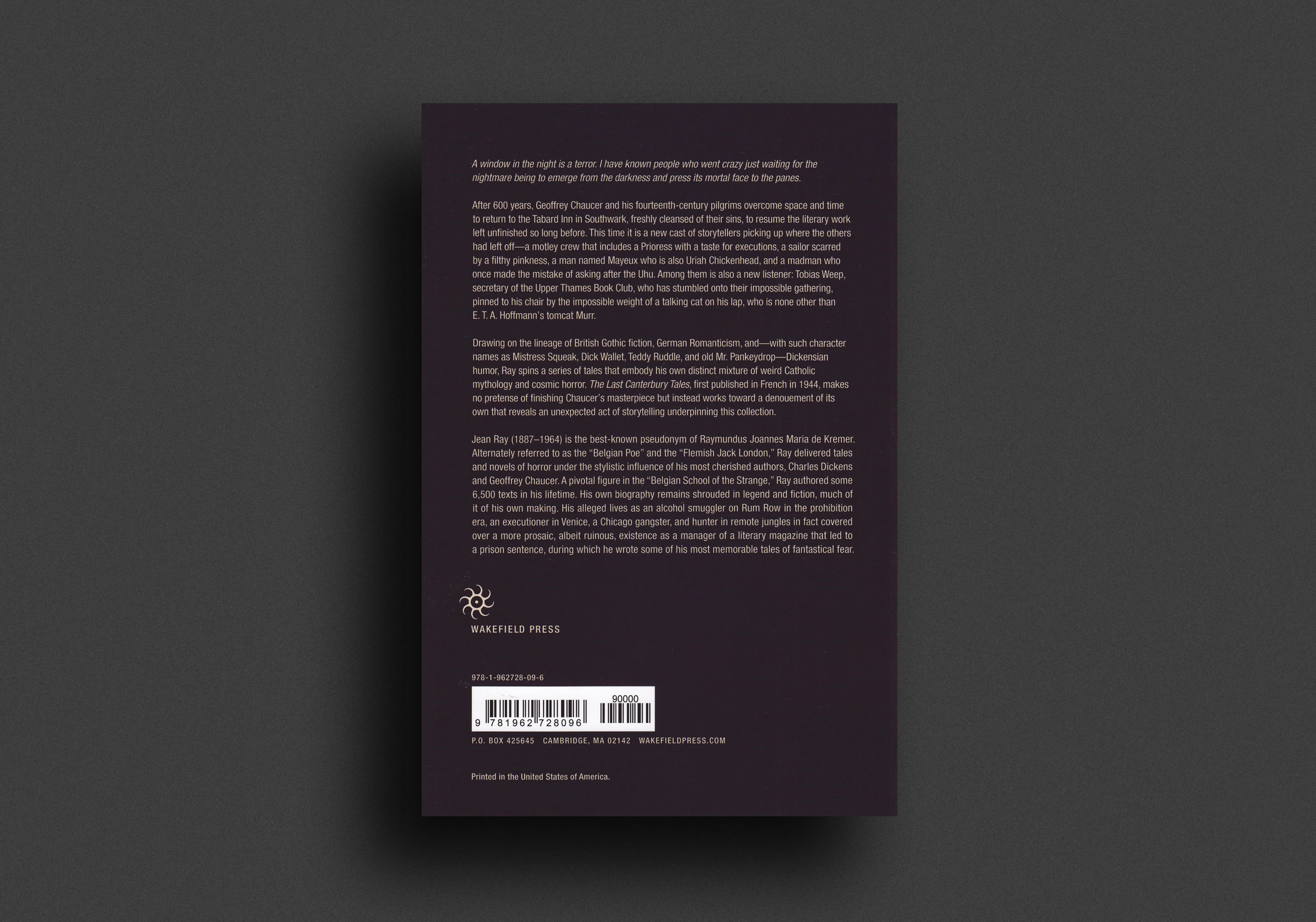
During the nineteenth-century, Belgian literature was still largely written in the language of education, French. Then the Flemings, who inhabit the northern half of Belgium, became aware of the value of their own language, whose standardised form is, to all intents and purposes, Dutch. Modern Flemish literature was born. This anthology incorporates fantasy stories from the early twentieth century to the present day. The types of fantasy are various: horror, mysticism and magical realism being the dominant ones. One of the early authors is Felix Timmermans who started out with horror stories, but later ended up writing his inimitable Vitalist novels. Two magic realist authors stand out: Johan Daisne and Hubert Lampo. And horror is well represented by several authors including Hugo Claus, Hugo Raes and Ward Ruyslinck - all household names in Flanders. Interesting new authors include Annelies Verbeke and Peter Verhelst.
Eric Dickens (born 1953) is a literary translator who takes an interest in the literature some of the smaller countries of Europe. These include that of the Estonians, the Finland-Swedes, the speakers of Nynorsk in Norway, and the Flemings. For him Flemish literature is more experimental, avant garde, groundbreaking than that of the Netherlands; he attributes this to its minority status. Eric is from an Anglo-Dutch family. He is also the translator of the texts for The Dedalus Book of Estonian Literature.
Paul Vincent taught Dutch at London University for many years, and since 1989 has been a freelance translator from Dutch and German. In fiction he has translated numerous modern classics from the Low Countries, including work by Couperus, Elsschot, Mulisch, Boon and Van den Brink. In addition he specialises in non-fiction, had has translated a wide range of poetry from the seventeenth century on. In 2007 he co-edited an anthology of twentieth-century stories, In Praise of Navigation . He is a member of the Society of Dutch Literature.
VG copy.
1977, German
Hardcover (clothbound w. dust jacket), 422 pages, 27.5 x 21 cm
Out of print title / used / very good
Published by
VEB / Dresden
$65.00 - Out of stock
1977 printing of this definitive monographic study of German painter and printmaker, Otto Dix (1891—1969). Written by Fritz Löffler in the original German language, the books presents a large plate section of reproduced paintings and drawings in colour and b/w, including fold-out panels, spanning his entire career. One of the most important artists of the Neue Sachlichkeit (New Objectivity), which also attracted George Grosz and Max Beckmann in the mid 1920s. Dix was noted for his ruthless and harshly realistic depictions of German society during the Weimar Republic and the brutality of war. A veteran haunted by his experiences of WWI, his first great subjects were crippled soldiers, but during the height of his career he also painted nudes, prostitutes, and often savagely satirical portraits of celebrities from Germany's intellectual circles. His work became even darker and more allegorical in the early 1930s, and he became a target of the Nazis, defining Dix as one of Germany's most 'degenerate' artists. Through his art, he had committed a 'violation of the moral sensibilities' of the nation and forced to promise to paint only inoffensive landscapes. His paintings that were considered "degenerate" were discovered in 2012 among the 1500+ paintings hidden away by the son of Hitler's looted-art dealer Hildebrand Gurlitt.
Very Good copy in VG dust jacket, light wear to extremities (preserved under mylar wrap).
2010, English
Hardcover (clothbound), 56 pages, 37.5 x 30 cm
1st Edition, Out of print title / used / very good
Published by
Last Gasp / San Fransisco
$680.00 - In stock -
"The Godfather of Japanese Erotica"
Rare, over–sized hardcover volume of Toshio Saeki's erotic works, published in 2010 by Last Gasp, San Fransisco in a full edition of 3000 copies worldwide. Long out–of–print.
Onikage presents a magnificent selection of Toshio Saeki's previously unseen works, uniquely printed in a large, lush format. Throughout, paper vellum overlays reproduce Saeki's unique method for adding color to his black and white artwork. He does not apply color directly, but instead uses overlays to indicate the exact colors he wants. He calls this method chinto printing - the picture is complete only after it has been printed - a modern version of the ukiyo-e, a genre of Japanese woodcut prints. Though Onikage contains nearly two-dozen full color and seven black and white images, the viewer is not allowed to see every image in all stages. Like the artist, the viewer must use his or her imagination to complete these peculiar pictures.
Includes introduction by Toshio Saeki in English.
Very Good copy with only light marking/wear to boards. Complete with publisher's illustrated slip.
2011, Japanese / Czech
Softcover (w. dust jacket), 180 pages, 23 x 21 cm
1st Edition, Out of print title / used / fine
Published by
Access / Japan
$90.00 - Out of stock
Scarce exhibition catalogue surveying the work of Czech Surrealist artists Jan and Eva Švankmajer, published to accompany a major retrospective in Japan in 2011. Eva Švankmajerová (1940 – 2005, b. Eva Dvořáková in Kostelec nad Černými lesy), was a renowned painter, ceramicist, and writer active in the Czech and Slovak Surrealist Group who's poetry and prose regularly appeared in the journal Analogon. Švankmajerová was married to the Surrealist filmmaker Jan Švankmajer (b. Prague, 1934) and collaborated on many of his award-winning animated masterpieces, including Alice (1988), Faust (1994), Conspirators of Pleasure (1996) and Otesánek (2000). Lavishly illustrated throughout, this catalogue includes chapters on Jan and Eva Švankmajer's independent and collaborative works, spanning painting, objects, collage, ceramics, poetry, graphics, and their highly acclaimed animated film works. Also includes Jan Švankmajer's collaboration with Japanese photographer Eikoh Hosoe. Includes detailed history, list of works and accompanying texts, alongside production insights and studio photography.
As New copy.
2009, English
Softcover, 136 pages, 114 x 178 mm
Published by
Semiotext(e) / Los Angeles
$30.00 - In stock -
Thirty years of “crisis,” mass unemployment, and flagging growth, and they still want us to believe in the economy. . . . We have to see that the economy is itself the crisis. It’s not that there’s not enough work, it’s that there is too much of it.—from The Coming Insurrection
The Coming Insurrection is an eloquent call to arms arising from the recent waves of social contestation in France and Europe. Written by the anonymous Invisible Committee in the vein of Guy Debord—and with comparable elegance—it has been proclaimed a manual for terrorism by the French government (who recently arrested its alleged authors). One of its members more adequately described the group as “the name given to a collective voice bent on denouncing contemporary cynicism and reality.” The Coming Insurrection is a strategic prescription for an emergent war-machine to “spread anarchy and live communism.”
Written in the wake of the riots that erupted throughout the Paris suburbs in the fall of 2005 and presaging more recent riots and general strikes in France and Greece, The Coming Insurrection articulates a rejection of the official Left and its reformist agenda, aligning itself instead with the younger, wilder forms of resistance that have emerged in Europe around recent struggles against immigration control and the “war on terror.”
Hot-wired to the movement of ’77 in Italy, its preferred historical reference point, The Coming Insurrection formulates an ethics that takes as its starting point theft, sabotage, the refusal to work, and the elaboration of collective, self-organized forms-of-life. It is a philosophical statement that addresses the growing number of those—in France, in the United States, and elsewhere—who refuse the idea that theory, politics, and life are separate realms.
2008, English
Softcover, 100 pages, 14 x 22 cm
Published by
Wingspan Classics / California
$28.00 - In stock -
In 1971 Dr. Theodore Kaczynski rejected modern society and moved to a primitive cabin in the woods of Montana. There, he began building bombs, which he sent to professors and executives to express his disdain for modern society, and to work on his magnum opus, Industrial Society and Its Future, a 1995 anti-technology essay, forever known to the world as the Unabomber Manifesto. The manifesto contends that the Industrial Revolution began a harmful process of natural destruction brought about by technology, while forcing humans to adapt to machinery, creating a sociopolitical order that suppresses human freedom and potential. The 35,000-word manifesto formed the ideological foundation of Kaczynski's 1978–1995 mail bomb campaign, designed to protect wilderness by hastening the collapse of industrial society. Responsible for three deaths and more than twenty casualties over two decades, he was finally identified and apprehended when his brother recognized his writing style while reading the "Unabomber Manifesto." The piece, written under the pseudonym FC (Freedom Club) was published in the New York Times after his promise to cease the bombing if a major publication printed it in its entirety. Kaczynski believed that his violence, as direct action when words were insufficient, would draw others to pay attention to his critique. He wanted his ideas to be taken seriously.
The manifesto argues against accepting individual technological advancements as purely positive without accounting for their overall effect, which includes the fall of small-scale living, and the rise of uninhabitable cities. While originally regarded as a thoughtful critique of modern society, with roots in the work of academic authors such as French philosopher Jacques Ellul, British zoologist Desmond Morris, and American psychologist Martin Seligman, Kaczynski's 1996 trial polarized public opinion around the essay, as his court-appointed lawyers tried to justify their insanity defense around characterizing the manifesto as the work of a madman, and the prosecution lawyers rested their case on it being produced by a lucid mind.
While Kaczynski's actions were generally condemned, his manifesto expressed ideas that continue to be generally shared among the American public. A 2017 Rolling Stone article stated that Kaczynski was an early adopter of the concept that: "We give up a piece of ourselves whenever we adjust to conform to society's standards. That, and we're too plugged in. We're letting technology take over our lives, willingly."
1982, English
Softcover, 262 pages, 21 x 14.5 cm
1st Edition, Out of print title / used / good
Published by
University of Exeter / IK
$65.00 - In stock -
Very rare first 1982 edition of the first collection published by the University of Exeter, "The Medieval Mystical Tradition in England: Papers Read at Dartington Hall, July 1982", collecting scholarly essays exploring medieval mysticism through diverse academic disciplines. It covers significant figures and topics such as Henry Suso, the sources for The Cloud of Unknowing, and the contemplative traditions of figures like Julian of Norwich. The contributors approach medieval mysticism from a range of perspectives, including literary, historical, theological and psychological points of view.
G—VG copy with light wear/foxing to spine edge, back cover. Original volume from 1982, not the print–on–demand version from the 2006 (Liverpool) or the later collections from 1984 of the 1990s. This first Exeter issue is rarely seen.
1986, English
Softcover, 337 pages, 23 x 15.3 cm
1st Edition, Out of print title / used / good
Published by
Syracuse University Press / Syracuse
$40.00 - Out of stock
First 1986 edtion.
Our understanding of lycanthropy is limited by our association of it with contemporary portrayals of werewolves in horror films and gothic fiction. No rational person today believes that a human being can literally be metamorphosed into a wolf; therefore, in the absence of an historical context, the study of werewolves can appear to be a wayward pursuit of the perversely irrational and the sensational. This "Reader" provides the historical context. Drawing on primary sources, it is a comprehensive survey of all aspects of lycanthropy, with a focus on the medieval and Renaissance periods. Lycanthropes were on trial in the courtrooms of Europe, and on examination in medical offices and mental hospitals; they were the objects of communal fear and pity, and the subjects of sermons and philosophical treatises. In the Introduction to the "Reader," Charlotte Otten shows that the study of lycanthropy uncovers basic issues in human life the significance of violence and criminality, the role of the demonic in aberrant behavior, and ultimately the nature of good and evil. The implications for modern life are immediately apparent. The "Reader" is divided into six sections: (I) Medical Cases, Diagnoses, Descriptions; (2) Trial Records, Historical Accounts, Sightings; (3) Philosophical and Theological Approaches to Metamorphosis; (4) Critical Essays on Lycanthropy (Anthropology, History, and Medicine); (5) Myths and Legends; and (6) Allegory. Each section has an introduction that summarizes and interprets the materials.
Good copy with heavy foxing to block edges, some wear to extremities and spine.
1980, English
Hardcover (w. dust jacket), 394 pages, 23.5 x 16 cm
1st Edition, Out of print title / used / very good
Published by
Cambridge University Press / Cambridge
$80.00 - In stock -
Scarce first 1990 hardcover edition.
The Book of Memory is a magisterial and beautifully illustrated account of the workings and function of memory in medieval society. Memory was the psychological faculty valued above all others in the period stretching from late antiquity through the Renaissance. The prominence given to memory has profound implications for the contemporary understanding of all creative activity, and the social role of literature and art. Drawing on a range of fascinating examples from Dante, Chaucer, and Aquinas to the symbolism of illuminated manuscripts, this unusually wide-ranging book offers new insights into the medieval world.
Very Good—Near Fine copy in Very Good dust jacket. A crisp copy preserved in archival mylar wrap.
2013, English
Hardcover, 396 pages, 35 x 23.5 cm
Out of print title / used / very good
Published by
Rizzoli / New York
$200.00 - Out of stock
An extraordinary and surreal art book, this edition has been redesigned by the author and includes new illustrations. Ever since the Codex Seraphinianus was first published in 1981, the book has been recognized as one of the strangest and most beautiful art books ever made. This visual encyclopedia of an unknown world written in an unknown language has fueled much debate over its meaning. Written for the information age and addressing the import of coding and decoding in genetics, literary criticism, and computer science, the Codex confused, fascinated, and enchanted a generation, including Roland Barthes and Italo Calvino.
While its message may be unclear, its appeal is obvious: it is a most exquisite artifact. Blurring the distinction between art book and art object, this anniversary edition-redesigned by the author and featuring new illustrations-presents this unique work in a new, unparalleled light. With the advent of new media and forms of communication and continuous streams of information, the Codex is now more relevant and timely than ever.
Complete with the additional Decodex illustrated booklet insert.
Very Good copy, very light wear/marking to covers/extremities. Light rippling to spine laminate from production. Well preserved.
1973, English
Hardcover (w. dust jacket), 64 pages, 30.5 x 24.5 cm
1st Edition, Out of print title / used / very good
Published by
Hutchinson / London
$45.00 - Out of stock
First 1973 hardcover edition of the first book devoted to the work of Australian artist and stage and costume designer, Loudon Sainthill (1918—1969), illustrated throughout with colour and b/w reproductions Sainthill's incredible designs. Appreciation by Bryan Robertson. Edited by Harry Tatlock Miller.
"Loudon Sainthill was one of the most imaginative designers in the theatre of his time, an artist whose canvas was the stage. He loved the theatre, could never accept the limiting confines of the stereotyped division into classical theatre and light entertainment, and showed his extraordinary imagination, creativity and style in a wide diversity which could range from Shakespeare to Tennessee Williams. Loudon Sainthill's first London exhibition was of paintings of the Russian Ballet at the Redfern Gallery in 1939, when he was nineteen. Later he steadfastly refused to allow his designs to be exhibited, for he regarded his work for the theatre as belonging to the theatre, insisting that it should be seen only framed by the proscenium arch. It was not until 1973, four years after his death, that a new exhibition was mounted. This selection of designs and drawings shows the essential magic and mystery that were Sainthill's own: the very particular quality of enchantment, mixed so often with a haunting sadness, that was characteristic of both the artist and his work.
Australian by birth, Loudon Sainthill died in London in 1969 at the age of fifty, having created an international reputation derived from more than fifty productions of theatre, opera, ballet, revue, pantomimes and musicals.
Very Good copy w. VG dust jacket.
2026, English
Softcover, 264 pages, 21 x 15 cm
Published by
Posthuman Press / Naarm
$45.00 - In stock -
Divergences does not approach neurodivergence as diagnosis or identity, but instead becomes a lens through which the norm itself turns strange—an alternate perceptual logic capable of reshaping how we think about intimacy, infrastructure, technology, and care.
Across essays, poems, stories, memoir, and hybrid texts, Divergences asks what happens when perception runs on different circuitry: when language fractures into vibration and pulse, when politeness and coherence reveal themselves as imposed postures rather than neutral baselines. This collection resists sentimental narratives of difference. There is no recovery arc here. Nervous systems appear instead as sites of conflict and capacity—hyper-attentive, analytical, erotically charged, exhausted, lucid.
Form carries the argument. Some pieces pulse in fragments and diaristic rupture; others move in tidal repetition, inviting skimming and sensory drift; while theory and confession coexist without hierarchy. The self appears composite—collaged and choral—language broken open to reveal the seams of diagnosis, gender, pain, and survival.
Throughout, the human is decentered. Bodies leak into animals, machines, landscapes. Stimming becomes cosmology; overload becomes method. The result is less a statement than a field recording: overlapping frequencies, friction and harmony in equal measure. Divergences does not explain neurodissidence from a distance. It inhabits it—rigorous, volatile, and formally alive.
2025, English
Softcover, 160 pages, 21 x 15 cm
Published by
Posthuman Press / Naarm
$38.00 - In stock -
Entanglements is a groundbreaking anthology that plunges subjectivity beyond the human realm. Roses, fungi, shit, algorithms, jays and other weird beings people this experimental biopoetic, where a polyphony of new voices (human and more-than) explore our oldest ethical inquiry—the question on how to live—in an estranged present.
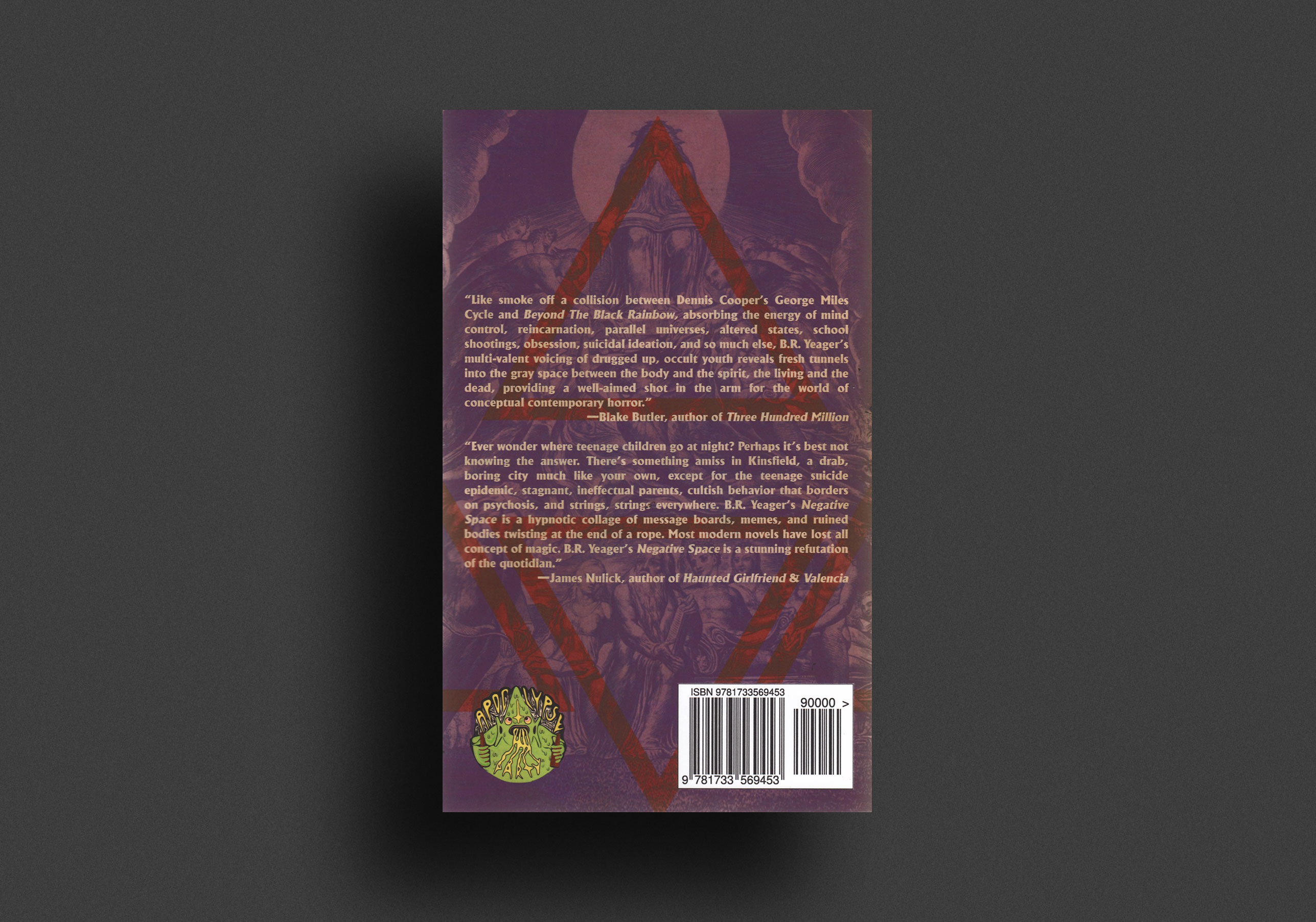
A pornodelirium where an urban multiplicity, a deceased eros, materialises into a suffocating, technological macro-organism; a golden creature cracks the self parallel to the mass production of animals; a multispecied nurse narrates her relationship with ravens, jays and an orphaned kestrel in a Wild Animal Rescue Station; a drain technician is contaminated by fatbergs; extinction is conceived as a kinky burial party in an erotic elegy; while a love algorithm's technical malfunctions represents an existential threat to users. From erotic prose to programming, the multimodal tales and illustrations in this volume invite the reader to dive into posthuman co-existence.
2017, English
Hardcover (clothbound), 230 pages, 32 x 24.5 cm
1st Edition, Out of print title / used / fine
Published by
Koenig Books / London
$55.00 - In stock -
On the occasion of a mid-career survey presented in Warsaw, Tehran, Istanbul and Vilnius, Mouth to Mouth is the first monograph on the collective, with documentation of all eight cycles of work. This monograph offers a critical inventory of Slavs and Tatars’ lecture-performances, exhibitions and publications across ten years of activity. Edited by Pablo Larios with essays by Susan Babaie, Jörg Haiser, and David Joselit.
NF—As New copy.
1942, German
Hardcover, unpaginated, 28 x 19 cm
1st Edition, Out of print title / used / very good
Published by
Kiepenheuer Verlag / Berlin
$55.00 - Out of stock
1942 hardcover volume devoted to Francisco Goya's Los Caprichos, a near unrivalled technical and satirical masterpiece. The graphic series is reproduced with full–page illustrations, accompanied by text from Dr. Leopold Zahn (1890-1970) an Austrian writer and art historian who was an expert on the works of Paul Klee. In original German language.
In 1792 Goya developed a debilitating illness which ultimately left him deaf. His recuperation took over five years, a period of withdrawal that had a profound and depressing impact on his life. In 1792 Goya developed a debilitating illness which ultimately left him deaf. His recuperation took over five years, a period of withdrawal that had a profound and depressing impact on his life. Distress and anxiety found expression in new subjects: witches, banditos, gaols and moon-lit mad-houses. In his isolation, he began to draw with a frequency and conviction he had not previously experienced. The resulting sketches, informed by the Enlightenment philosophies of Rousseau and Voltaire, birthed the extraordinary Los Caprichos. The word ‘caprice’ normally suggests whimsical fancy, but Goya’s Caprichos are as wickedly vulgar as they come. First printed in 1799, Los Caprichos is a landmark series of 80 aquatint etchings that serves as a biting and deeply cynical critique of 18th-century Spanish society, targeting ignorance, superstition, corruption, and moral decay. Departing from traditional court portraiture, Goya utilized a groundbreaking, dark style featuring sharp contrasts to expose the vices of the clergy, nobility, and general public through allegorical imagery, including witches, donkeys, and fantastical creatures. More than a satirical tour-de-force, the Caprichos masterfully employed a new printmaking method called aquatint, which involves dusting and melting fine particles of resin into a minutely pock-marked ground on the plate. Where in the past large areas of darkness could only be achieved in etching with dense cross-hatching, aquatint enabled tones comparable to an ink wash. Goya was among the first artists to make use of it, and the results were astonishing. Drunkards and lecherous priests leer from the shadows while demons wheel in night skies specked with stars. Los Caprichos were quickly withdrawn from sale due to fear of the Inquisition. As a pioneering work of modernism, Los Caprichos influenced generations of artists, from Romantics like Delacroix to Surrealists, for its intense, free, and subjective exploration of the human condition.
VG copy with some tanning to covers and page edges, light wear, without dust jacket.
1947, Germand
Hardcover (clothbound), 78 pages + 106 plates, 32 x 24 cm
1st Edition, Out of print title / used / very good
Published by
Urs Graf Verlag / Bern-Olten
$45.00 - Out of stock
Original German language clothbound 1947 volume of Henry Fuseli's drawings authored by Paul Ganz, published by Urs Graf Verlag, Bern-Olten. Johann Heinrich Füssli (1741–1825) was a Swiss-born British Romantic painter, draughtsman, and art critic known for his dramatic, fantastical, and often gothic themes, frequently exploring scenes from Shakespeare, Milton, and ancient mythology, as well as nightmarish or supernatural imagery. Over 100 plates of his drawing are reproduced within.
Henry Fuseli (1741—1825) was a Swiss painter, draughtsman, and writer on art who spent much of his life in Britain. Many of his successful works depict supernatural experiences, such as The Nightmare. He produced painted works for John Boydell's Shakespeare Gallery and his own "Milton Gallery". He held the posts of Professor of Painting and Keeper at the Royal Academy. His style had a considerable influence on many younger British artists, including William Blake.
VG copy with some tanning to cloth and page edges, light wear, without dust jacket.
2024, English
Softcover, 510 pages, 28 x 21 cm
Published by
Rickmoe Publishing / US
$72.00 - In stock -
The most comprehensive, all-inclusive look at the history and evolution of shot on video horror films. In 1982, "Boardinghouse" became the first shot on video feature-length horror film ever made. Totally lensed on videotape, the film was later transferred to 16mm and blown-up to 35mm for theatrical exhibition. In 1983, David A. Prior shot "Sledgehammer" on video and eventually released the film on videotape. For the first time, analog video became the format used in motion picture productions. It was smeary, messy and it wasn't film... but it was cheap. In 1985, United Home Video boldly released "Blood Cult" with the claim it was "the first movie made for the home video market." The booming popularity of video stores coupled with a never-satisfied demand for content ensured these films longevity. Soon hundreds of titles followed, all video-created features by independent unknowns. They weren't from Hollywood. They weren't trained. But they had a lot of heart and a love for horror. And they made their own movies against the odds. For the first time EVER - "ANALOG NIGHTMARES" has brought these films together. Everything from "Boardinghouse" to "Zombie Holocaust" individually reviewed, categorized and presented chronologically by production year. Over 260 films! Featuring in-depth interviews with the filmmakers themselves - some speaking for the very first time! TIM BOGGS! MARK POLONIA! DONALD FARMER! TIM RITTER! JOEL D. WYNKOOP! DOUG STONE! ANDREA ADAMS! GARY WHITSON! DAVE CASTIGLIONE! PHIL HERMAN! ERIC STANZE! JAMES L. EDWARDS! WALTER RUETHER! TODD JASON COOK! NICK MILLARD! DAVID "THE ROCK" NELSON! RON BONK!
1975, English
Softcover, 78 pages ea., 27 x 21 cm
1st Edition, Out of print title / used / very good
Published by
Dallruth Publishing / London
$300.00 - Out of stock
Lot of three very rare and collectible issues (of only four issues ever produced) of this short–lived 1970s British occult magazine, published by Dallruth Publishing (World of Horror) and edited by Brian Netscher. Published in 1975, New Witchcraft developed out an earlier magazine simply titled Witchcraft, and emerged during the 1970s boom of occult-focused magazines dealing with themes of modern witchcraft, magic, weird fiction, and the supernatural, catering to a growing mainstream interest in Wicca, neo-paganism, and the proliferation of Black Magic. New Witchcraft is an incredible time capsule of this newly liberated society — an incredibly visual magazine, full of lush glossy full–colour photography, illustrations and graphics, heavy with provocative sexual material. It featured grimoires, rituals, lost worlds, legend and lore, fantastic/weird/horror fiction, exclusive articles and interviews filled with rare insights into the secret world of the occult directly from the practitioners, with contributions from notable figures in the UK and international occult scene, including David Farrant, Aleister Crowley, Robert Bloch, Catherine Crowe, Patrick Sean Manchester, Alex Sanders, Emile C. Schurmacher, Gent Shaw, and many others, covering everything from Charles Manson to Alexandrian Witches, Rasputin to the Mau Mau witchcraft terrorists, Zombies to nazi occultism.
All Very Good copies, only light wear/rubbing to extremities/covers.
2020, English
Hardcover (w. dust jacket), 248 pages, 28.7 x 23.83 cm
Published by
Rizzoli / New York
Electa / Milan
$105.00 - In stock -
This long-overdue new look at the life and work of Albert Pinkham Ryder (1847-1917) explores the artist's deeply visionary paintings and the powerful and enduring paths he forged for generations of American modernists.
The brooding spirituality of his works, coupled with formal innovation decades ahead of its time, have long made Ryder a favourite of innovators like Jackson Pollock, Marsden Hartley, and Robert Rauschenberg. And yet, the artist's biography and practices remain elusive.
A Wild Note of Longing – whose title is taken from a Ryder poem – takes up the challenge, bringing a new generation of scholarship to the most comprehensive collection of Ryder masterworks assembled to date.
Ryder is considered a seminal artist for both the late-nineteenth-century Gilded Age and for the emerging modernism of the early twentieth century. This publication presents research from the last ten years including William Agee's recent work on Ryder's influence and context within modernism. New evidence has also debunked some of the historical myths around Ryder, such as the degree of his elusiveness and social eccentricities and the lack of deliberateness with which he experimented with colour and luminosity. New perspectives include a deep focus on Ryder from the perspective of his hometown of New Bedford, Massachusetts. This monumental project will represent multiple voices from leaders in the field on the continuing and ever evolving relevance of Albert Pinkham Ryder on modern art.
"With color illustrations as well as insightful essays by Christina Connett Brophy, Elizabeth Broun, and William C. Agee that analyze, respectively, Ryder’s historical context, his elusive painterly ideas, and his outsize influence on generations of artists, A Wild Note of Longing: Albert Pinkham Ryder and a Century of American Artoffers us the exceedingly welcome chance to reflect on this austere, stirring, and wholeheartedly strange painter." —THE NEW CRITERION
2022, English
Hardcover (w. dust jacket), 192 pages, 24 x 17 cm
1st Edition, Out of print title / as new
Published by
Cornelius / Paris
$65.00 - Out of stock
A cult artist, Toshio Saeki is the inventor of a unique style in a field he has totally transformed: ero guro, which can be translated as "erotico-grotesque scenes". Attributed to the writer Edogawa Ranpo, this genre is rooted in the origins of classical Japanese drawing, feeding monsters and nightmarish scenes into numerous prints throughout the ages.
By combining traditional motifs with his own obsessions, Saeki echoes the anxieties of his generation, the youth of the 1970s, who believed they could free themselves from the conventions of a paternalistic society, only to be disillusioned.
Human society, with its violence and shortcomings, is the setting for scenes whose cruelty provokes terror or laughter, pushing the mechanics of fantasy to its limits. Here, sadomasochism covers up no reality, relying on onirism to create a form of macabre poetry. Stimulated by Japanese censorship - it is forbidden to show the sexes - Saeki turns the forbidden into an artistic constraint, transforming the world's oldest subject into absurdity and onirism. His precise style, which reminds Europeans of the famous "clear line" of Hergé and Joost Swarte, remains strange to Japanese and Western readers alike, each finding in this perfectly simple line a new form of exoticism. This perception can only be explained by the absolute originality of an extravagant imagier, straight from the pen of an artist who devoted his life to tracing as closely as possible "what goes on in his head when he closes his eyes".
This second volume of the anthology follows the work Scarlet Dream and compiles illustrations published between 1972 and 1974 in the magazine SM Selecto .
PLEASE NOTE: This illustrated book has a preface translated into three languages (French, English and Japanese).
NF—As New copy.
2010, English
Softcover, 232 pages, 15 x 22.5 cm
Published by
Semiotext(e) / Los Angeles
$45.00 - Out of stock
Long ago, in childhood, when Summer reverberates and feels and throbs all over, it begins to circumscribe my body along with my self, and my body gives it shape in turn: the "joy" of living, of experiencing, of already foreseeing dismembers it, this entire body explodes, neurons rush toward what attracts them, zones of sensation break off almost in blocks that come to rest at the four corners of the landscape, at the four corners of Creation. --from Coma
The novelist and playwright Pierre Guyotat has been called the last great avant-garde visionary of the twentieth century, and the near-cult status of his work--because of its extreme linguistic innovation and its provocative violence--has made him one of the most influential of French writers today. He has been hailed as the true literary heir to Lautreamont and Arthur Rimbaud, and his "inhuman" works have been mentioned in the same breath as those by Georges Bataille and Antonin Artaud.
Winner of the 2006 prix Decembre, Coma is the deeply moving, vivid portrayal of the artistic and spiritual crisis that wracked Guyotat in the 1980s when he reached the physical limits of his search for a new language, entered a mental clinic, and fell into a coma brought on by self-imposed starvation. A poetic, cruelly lucid account, Coma links Guyotat's illness and loss of subjectivity to a broader concern for the slow, progressive regeneration of humanity. Written in what the author himself has called a "normalized writing," this book visits a lifetime of moments that have in common the force of amazement, brilliance, and a flash of life. Grounded in experiences from the author's childhood and his family's role in the French Resistance, Coma is a tale of initiation that provides an invaluable key to interpreting Guyotat's work, past and future.
2017, English
Softcover, 502 pages, 20 x 13 cm
Out of print title / used / very good
Published by
Faber & Faber / London
$25.00 - In stock -
Punk, pornographer, pioneer, provocateur: the incredible story of Cosey Fanni Tutti, the performer whose art and music inspired a generation and rocked the establishment to its core.
A new edition as part of the Faber Greatest Hits - books that have taken writing about music in new and exciting directions for the twenty-first century.
Musician and artist Cosey Fanni Tutti has continually challenged boundaries and conventions for four decades. As a founding member of the hugely influential avant-garde band Throbbing Gristle, as one half of electronic pioneers Chris and Cosey, and as an artist channelling her experience in pornographic modelling and striptease, her work on the margins has come to reshape the mainstream. Shocking, wise and life-affirming, Art Sex Music is the fascinating memoir of an inspirational woman.
Very Good copy, light wear to covers.
2026, English
Hardcover, 212 pages, 22 x 26 cm
Published by
Spector Books / Leipzig
$105.00 - Out of stock
The reputation as an auteur that Paul Virilio (1932–2018) enjoys today derives from the work he did for his Bunker Archeology. When, in the second half of the 1950s, he began photographing abandoned Second World War bunkers along France’s Atlantic coast, he was working with glass as an artistic medium. In 1966, he presented his photographs to the public for the first time in the magazine architecture principe, which he co-edited. At the time, he was particularly interested in the architectural aspects of these wartime installations. He saw the bunkers as 'harbingers of a new architecture', which he sought to capture in the term 'cryptic architecture'. The first exhibition of Virilio’s Bunker Archeology was staged at the Centre Pompidou in 1975, while the museum was still in the process of being established. His seminal book was published in conjunction with this. It laid out all the motifs of his philosophical thinking: military space and communications warfare, camouflage and acceleration, a scrupulous reading of the present coupled with a desire for philosophical speculation. Although it is almost fifty years since the work was first published, Bunker Archeology is still full of connections to the present. To coincide with an exhibition at the Centre Pompidou, a new edition of the book is being published in French, English, and German.
Paul Virilio (1932–2018), French philosopher, urbanist and critic of the media society. His most important works include War and Cinema: The Logistics of Perception (1984) and Polar Inertia (1990).
2026, English
Hardcover, 116 pages, 24 x 24 cm
Published by
M.33 / Melbourne
$66.00 - In stock -
California, sometime in the early 1970s. It’s hot, light pulsates. The air hums with a sexy, sun-soaked transcendence—blissed out and tripping on its own sense of freedom… Christine Godden ...is attending the San Francisco Art Institute (SFAI) and living in Larkspur, Marin County, outside San Francisco, a ferry or a Golden Gate Bridge car trip away. …It’s hip. Janis Joplin had lived up the road. Californian culture might be dismissed by the buttoned-up European-facing East Coast as hedonistic and all surface with no substance, but who cares: with that comes freedom, and from freedom possibility. It’s a time and a place to be young, idealistic. Godden leans in.
This extract from Anne O’Hehir’s introduction to her essay in Light Touch captures perfectly the atmosphere of Christine Godden’s images in M.33’s latest publication.
A milestone in Australian photographic publishing, this exceptionally printed hard cover book brings together Godden’s timeless images made almost 50 years ago. Collected by major Australian institutions late in the 20th century, many of these evocative and often gently erotic images have – with some notable exceptions – largely disappeared from general circulation, no doubt as a result of Godden stepping away from her photographic practice in the mid 1980s.
Light Touch is an opportunity to engage with these often fragmentary yet intimate and beautifully photographed images of people, animals, and domestic objects – all treated with the same curiosity and tenderness.
Christine Godden’s images in Light Touch are complemented by essays from Helen Ennis and Anne O’Hehir which together offer an historical context for Godden’s work and also highlight her unique contribution to feminist art making, her historical significance as a photographer and her continuing relevance.