World Food Books' programme is largely produced on Kulin Nation land. We acknowledge the Wurundjeri people of the Kulin Nation as the first and continuing custodians of this land, and pay respect to their Elders past, present, and emerging.
World Food Books is an arts and special interests bookshop in Naarm / Melbourne. Founded in 2010, World Food Books is devoted to the presentation of a rotating, hand-selection of international art, design, literary and counterculture publications with an emphasis on the anti-traditional, the experimental, the avant-garde, the heretic, the marginal.
Presenting new titles alongside rare and out-of-print books, catalogues and journals spanning the fields of modern and contemporary art, design, photography, illustration, film, literature, poetry, cultural theory, philosophy, sexuality, popular and underground culture in its many radical forms, World Food Books wishes to encourage adventurous, thoughtful and open-minded reading, looking, writing, and exchange of publishing and ideas, both current and historical.
As well as our bookshop, located in Melbourne's historical Nicholas Building, all of our inventory is available internationally via our online mail-order service.
World Food Books semi-regularly co-ordinates "Occasions", a programme of exhibits and events at the bookshop and in partnership with other hosts (such as museums and art galleries) that develop out of the activities, relationships and content of the bookshop itself.
World Food Books
The Nicholas Building
37 Swanston Street
Room 5, Level 6
Melbourne 3000
Australia
SHOP HOURS:
Thu–Fri 12–6
Sat 12–5
WEB-SHOP OPEN 24/7
World Food Books
Postal Address:
37 Swanston Street
Room 5, Level 6
Melbourne 3000
Australia
Art
Theory / Essay
Architecture / Interior
Graphic Design / Typography
Photography
Fashion
Eros
LGBTQ+
Fiction / Poetry
Weird / Speculative / Science Fiction / Horror
Transgressive / Visceral / Abject
Symbolism / Decadence / Fin de siècle
Film / Video
Painting
Sculpture / Installation
Performance / Dance / Theater
Drawing
Sound / Music
Curatorial
Group Shows / Collections
Periodicals
Out-of-print / Rare
Posters / Ephemera / Discs
Signed Books
World Food Books Gift Voucher
World Food Book Bag
Australian Art
Australian Fiction
Australian Science Fiction / Speculative Fiction
Australian Poetry
Australian Photography
Japanese Photography
Conceptual Art
Minimal Art
Dada
'Pataphysics / Oulipo
Fluxus
Concrete Poetry
Pop Art
Surrealism
Arte Povera
Arte Informale / Haute Pâte / Tachism
Nouveau Réalisme / Zero / Kinetic
Situationism / Lettrism
Collage / Mail Art / Xerox Art
Art Brut / Folk / Visionary / Fantastic
Illustration / Graphic Art / Bandes Dessinées
Furniture
Italian Radical Design / Postmodernism
Textiles
Ceramics / Glass
Counterculture
Protest / Revolt
Philosophy
Psychoanalysis
Anthropology
Anarchism
Socialism / Anarchism / Communism / Capitalism
Literary Theory / Semiotics / Language
Feminism / Women's Studies
Gender Studies / Sexuality
Anthropology
Fetishism / BDSM
Drugs / Psychedelia
Crime / Violence
Animal Rights / Veganism
Occult / Esoterica
Ecology / Earth / Alternative Living
Whole Earth / Crafts
All prices in AUD (Australian dollars)
Pick-Ups
Pick-up orders can be collected in our bookshop during opening hours after order date. Please collect any Pick-up orders within 2 weeks of ordering as we have limited storage space. Orders will be released back into stock if not collected within this time. No refunds can be made for pick-ups left un-collected. If you cannot make it in to the bookshop in this time-frame, please choose postage option.
Return Policy
All sales are final. We do accept returns (for refund or exchange) for items received in error. All our orders are packed with special care using heavy-duty padding and cardboard book-mailers or bubble mailers (for smaller books), using reinforcement where required. We cannot take responsibility for any lost, stolen or damaged parcels.
Insurance
Should you wish to insure your package, please email us directly after placing your order and we can organise this at a small extra expense. Although all standard/express tracked packages are very safe and dependable, we cannot take responsibility for any lost, stolen or damaged parcels. We recommend insurance on valuable orders.
Interested in selling your old books, catalogues, journals, magazines, comics, fanzines, ephemera? We are always looking for interesting, unusual and out-of-print books to buy. We only buy books in our fields of interest and specialty, and that we feel we can resell.
We base these prices on desirability, market value, in-print prices, condition and our current stock levels. We offer cash, store credit, and can take stock on consignment. All
about 25% of the price we expect to get when we sell them, or 30% in store credit. We base these prices on desirability, market value, in-print prices, condition and our current stock levels.
Sell your books any day of the week. You can drop them off and return later. If you have a lot of books, we can visit your Sydney home.
We buy books that we feel we can resell. We offer about 25 % of the price we expect to get when we sell them, or 30% in store credit. We base these prices on desirability, market value, in-print prices, condition and our current stock levels.
Philadelphia Wireman
03 August - 01 September, 2018
World Food Books is proud to announce our next Occasion, the first presentation of sculptures by Philadelphia Wireman in Australia.
The Philadelphia Wireman sculptures were found abandoned in an alley off Philadelphia’s South Street on trash night in 1982. Their discovery in a rapidly-changing neighbourhood undergoing extensive renovation, compounded with the failure of all attempts to locate the artist, suggests that the works may have been discarded after the maker’s death. Dubbed the "Philadelphia Wireman" during the first exhibition of this work, in 1985, the maker’s name, age, ethnicity, and even gender remain uncertain. The entire collection totals approximately 1200 pieces, all intricately bound together with tightly-wound heavy-gauge wire (along with a few small, abstract marker drawings, reminiscent both of Mark Tobey and J.B. Murry). The dense construction of the work, despite a modest range of scale and materials, is singularly obsessive and disciplined in design: a wire armature or exoskeleton firmly binds a bricolage of found objects including plastic, glass, food packaging, umbrella parts, tape, rubber, batteries, pens, leather, reflectors, nuts and bolts, nails, foil, coins, toys, watches, eyeglasses, tools, and jewellery.
Heavy with associations—anthropomorphic, zoomorphic, and socio-cultural responses to wrapped detritus—the totemic sculptures by Philadelphia Wireman have been discussed in the context of work created to fulfil the shamanistic needs of alternative religions in American culture. Curators, collectors, and critics have variously compared certain pieces to sculpture from Classical antiquity, Native American medicine bundles, African-American memory jugs, and African fetish objects. Reflecting the artist’s prolific and incredibly focused scavenging impulse, and despite—or perhaps enhanced by—their anonymity, these enigmatic objects function as urban artefacts and arbiters of power, though their origin and purpose is unknown. Philadelphia Wireman, whatever their identity, possessed an astonishing ability to isolate and communicate the concepts of power and energy through the selection and transformation of ordinary materials. Over the course of the past two decades, this collection has come to be regarded as an important discovery in the field of self-taught art and vernacular art.
Presented in collaboration with Fleisher-Ollman Gallery, Philadelphia, and Robert Heald, Wellington.
Susan Te Kahurangi King
02 February - 10 March, 2018
Susan Te Kahurangi King (24 February 1951 - ) has been a confident and prolific artist since she was a young child, drawing with readily available materials - pencils, ballpoint pens and felt-tip markers, on whatever paper is at hand. Between the ages of four and six Susan slowly ceased verbal communication. Her grandparents William and Myrtle Murphy had developed a special bond with Susan so they took on caring responsibilities for extended periods. Myrtle began informally archiving her work, carefully collecting and storing the drawings and compiling scrapbooks. No drawing was insignificant; every scrap of paper was kept. The King family are now the custodians of a vast collection containing over 7000 individual works, from tiny scraps of paper through to 5 meter long rolls.
The scrapbooks and diaries reveal Myrtle to be a woman of great patience and compassion, seeking to understand a child who was not always behaving as expected. She encouraged Susan to be observant, to explore her environment and absorb all the sights and sounds. Myrtle would show Susan’s drawings to friends and people in her community that she had dealings with, such as shopkeepers and postal workers, but this was not simply a case of a grandmother’s bias. She recognised that Susan had developed a sophisticated and unique visual language and sincerely believed that her art deserved serious attention.
This was an unorthodox attitude for the time. To provide some context, Jean Dubuffet coined the term Art Brut in 1945 to describe work created by self-taught artists – specifically residents of psychiatric institutions and those he considered to be visionaries or eccentrics. In 1972 Roger Cardinal extended this concept by adopting the term Outsider Art to describe work made by non-academically trained artists operating outside of mainstream art networks through choice or circumstance. Susan was born in Te Aroha, New Zealand in 1951, far from the artistic hubs of Paris and London that Dubuffet and Cardinal operated in. That Myrtle fêted Susan as a self-taught artist who deserved to be taken seriously shows how progressive her attitudes were.
Susan’s parents Doug and Dawn were also progressive. Over the years they had consulted numerous health practitioners about Susan’s condition, as the medical establishment could not provide an explanation as to why she had lapsed into silence. Dawn educated herself in the field of homeopathy and went on to treat all twelve of her children using these principles – basing prescriptions on her observations of their physical, mental and emotional state.
Doug was a linguist with an interest in philosophy who devoted what little spare time he had to studying Maori language and culture. To some extent their willingness to explore the fringes of the mainstream made them outsiders too but it was their commitment to living with integrity and their respect for individuality that ensured Susan’s creativity was always encouraged.
Even though Susan’s family supported her artistic pursuits, some staff in schools and hospitals saw it as an impediment to her assimilation into the community and discouraged it in a variety of ways. Her family was not always aware of this and therefore did not fully understand why Susan stopped drawing in the early 1990s. However, rather than dwell on the challenges that Susan faced in pursuit of her artistic practice, they prefer to highlight her achievements. In 2008 Susan began drawing again in earnest, after an almost 20 year interruption, and her work is now shown in galleries around the world.
Susan grew up without television and has been heavily influenced by the comics she read as a child. She is absolutely fearless in the appropriation of recognizable characters, such as Donald Duck and Mickey Mouse, in her work. She twists their limbs, contorts their faces, compresses them together, blends them into complex patterned backgrounds - always imbuing them with an incredible energy. Although Susan often used pop culture characters in her work they are not naive or childlike. These are drawings by a brilliant self-taught artist who has been creating exceptional work for decades without an audience in mind.
Mladen Stilinović
"Various Works 1986 - 1999"
02 February 16 - September 10, 2016
Various works 1986 - 1999, from two houses, from the collections of John Nixon, Sue Cramer, Kerrie Poliness, Peter Haffenden and Phoebe Haffenden.
Including: Geometry of Cakes (various shelves), 1993; Poor People’s Law (black and white plate), 1993; White Absence (glasses, ruler, set square, silver spoon, silver ladel with skin photograph and wooden cubes), 1990-1996; Exploitation of the Dead (grey and red star painting, wooden painting, black spoon with red table, red plate), 1984-1990; Money and Zeros (zero tie, paintings made for friends in Australia (Sue, John, Kerrie), numbers painting), 1991-1992; Words - Slogans (various t-shirts) - “they talk about the death of art...help! someone is trying to kill me”, “my sweet little lamb”, “work is a disease - Karl Marx”; Various artist books, catalogues, monographs, videos; Poster from exhibition Insulting Anarchy; "Circular" Croatian - Australian edition; Artist book by Vlado Martek (Dostoyevsky); more.
Thanks to Mladen Stilinović and Branka Stipančić.
Jonathan Walker
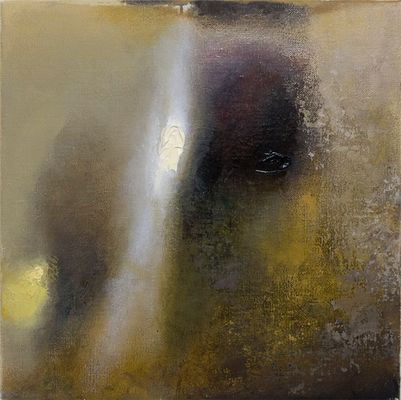
Always Will Need To Wear Winter Shirt Blue + Ochre Small Check Pattern
21 August - 21 September, 2015
Untitled
I am not a great reader of poetry but I always return to the work of Melbourne poet, Vincent Buckley (1925- 1988). Perhaps I find his most tantalising piece to be not a finished poem but a fragment left on a scrap of paper discovered on his desk after the poet’s death.
The poetry gathers like oil
In the word-core, and spreads
It has its music meet,
Its music is in movement.
This fragment is more the shell left behind from a volatile thought than a finished poem. I find the last two lines honest but awkward whereas the first two lines work like an arrow. Most likely he could not find a resolution so it was left. Still, in its present form, it remains an eloquent testimony to the ultimate failure of a medium to express mobile thought and sensation, in Buckley’s case, through verbal language. It’s an important matter because this is something all artists have to deal with regardless of the medium.
I have never written a poem, however, I am forever copying fragments from books on paper scraps in a vain effort to fix certain notions in my head. At first, they function as bookmarks that are sometimes returned to when I open the book. But before long, as they accumulate, they fall out littering the table interspersed with A4 photocopies, bills, books and medications.
To return to Buckley’s fragment, the first two lines very much evoke how I paint nowadays. As you age, detail diminishes and patches of light become more luminous and float. I feel the most honest way of dealing with this is by smearing the oil paint on the canvas with the fingers and working close-up, blind. Only if the patches coalesce into an approaching image can the work gain a life.
-
Jonathan Walker was born in Melbourne, Australia and brought up on a dairy farm in Gippsland. In the 1970’s he studied painting at RMIT and won the Harold Wright Scholarship to the British Museum, London. During the 1980’s he exhibited at Pinacotheca Gallery, Richmond and had work shown at the NGV and Heidi City Art Gallery. Over the same period he designed the cover for the “Epigenesi” LP by Giancarlo Toniutti, Italy and conducted a mail exchange work with Achim Wollscheid, Germany. The work with artists through the post resulted in an article published in the bicentenary issue of Art and Australia 1988. He showed in artist run spaces such as WestSpace in the 90’s and 2000’s, and until 2012, taught painting at Victoria University, which is where we (Colleen Ahern and Lisa Radford) as organisers of the exhibition, among many others, had the privilege of being his student.
Walker’s knowledge was imparted to students through the careful selection of music, literature, and artists found in books that he himself had ordered for the library. Walker’s strategy was the generosity of sharing his vast knowledge with references specific to each student and their context.
Walker’s paintings share a similar focus and intimacy.
This exhibition presents a small selection of recent paintings alongside a publication that includes Walker’s writing. Observational and analytical, Walker’s work is a type of material notation — the time of day, colour and how it is blended, the both specific and fleeting location of a reflection on lino or the question of whether a chair leg should be included in a painting.
Please join us on Friday August 21 between 6-8pm to celebrate the opening of the exhibition.
Curated by Colleen Ahern and Lisa Radford.
B. Wurtz
Curated by Nic Tammens
March 26 - April 4, 2015
B.Wurtz works from a basement studio in his home on Manhattan’s Lower East Side.
This local fact is attested to by the plastic shopping bags and newsprint circulars that appear in his work. As formal objects, they don’t make loud claims about their origins but nonetheless transmit street addresses and places of business from the bottom of this long thin island. Like plenty of artists, Wurtz is affected by what is local and what is consumed. His work is underpinned by this ethic. It often speaks from a neighborhood or reads like the contents of a hamper:
“BLACK PLUMS $1.29 lb.”
“Food Bazaar”
“USDA Whole Pork Shoulder Picnic 99c lb.”
“RITE AID Pharmacy, with us it’s personal.”
“H. Brickman & Sons.”
“Sweet Yams 59c lb."
Most of the work in this exhibition was made while the artist was in residence at Dieu Donne, a workshop dedicated to paper craft in Midtown. Here Wurtz fabricated assemblages with paper and objects that are relatively lightweight, with the intention that they would be easily transportable to Australia. This consideration isn’t absolute in Wurtz’s work, but was prescriptive for making the current exhibition light and cheap. Packed in two boxes, these works were sent from a USPS post office on the Lower East Side and delivered to North Melbourne by Australia Post.
Wurtz appears courtesy of Metro Pictures, New York.
Thanks to Rob Halverson, Joshua Petherick, Sari de Mallory, Matt Hinkley, Helen Johnson, Fayen d'Evie, Ask Kilmartin, Lisa Radon, Ellena Savage, Yale Union, and "Elizabeth".
John Nixon
"Archive"
December 15 - January 20, 2014
The presentation of John Nixon's archive offered a rare showcase of this extensive collection of the artist's own publications, catalogues, posters, ephemera, editions and more, from the mid 1980s onwards, alongside a selection of his artworks.
Organized by John Nixon, Joshua Petherick and Matt Hinkley.
<a href=http://wfb.public-office.info/artist/john-nixon>All titles by John Nixon
"Habitat"
at Minerva, Sydney (organised by Joshua Petherick and Matt Hinkley)
November 15 - December 20, 2014
Lupo Borgonovo, Janet Burchill & Jennifer McCamley,
Lewis Fidock, HR Giger, Piero Gilardi, Veit Laurent Kurz,
Cinzia Ruggeri, Michael E. Smith, Lucie Stahl, Daniel Weil, Wols
Press Release:
“...It contained seven objects. The slender fluted bone, surely formed for flight, surely from the wing of some large bird. Three archaic circuitboards, faced with mazes of gold. A smooth white sphere of baked clay. An age-blackened fragment of lace. A fingerlength segment of what she assumed was bone from a human wrist, grayish white, inset smoothly with the silicon shaft of a small instrument that must once have ridden flush with the surface of the skin - but the thing’s face was seared and blackened.”
William Gibson, “Count Zero”, 1986
"Autumn Projects Archive"
Curated by Liza Vasiliou
March 6 - March 15, 2014
World Food Books, in conjunction with the Virgin Australia Melbourne Fashion Festival 2014, presented the Autumn Projects archive, consisting of a selection of early examples in Australian fashion with a particular interest in collecting designers and labels from the period beginning in the 1980’s, who significantly influenced the discourse of Australian Fashion.
Curated by Liza Vasiliou, the exhibition provided a unique opportunity to view pieces by designers Anthea Crawford, Barbara Vandenberg, Geoff Liddell and labels CR Australia, Covers, Jag along with early experimental collage pieces by Prue Acton and Sally Browne’s ‘Fragments’ collection, suspended throughout the functioning World Food Books shop in Melbourne.
H.B. Peace
presented by CENTRE FOR STYLE
November 14, 2013
"Hey Blinky, you say chic, I say same"
Anon 2013
H.B. Peace is a clothing collaboration between great friends Blake Barns and Hugh Egan Westland. Their pieces explore the divergences between 'character’ and ‘personality’ in garments....etc
Special Thanks to Joshua Petherick and Matt Hinkley of WFB and Gillian Mears
and a Very Special Thank you to Audrey Thomas Hayes for her shoe collaboration.
Janet Burchill & Jennifer McCamley
"Aesthetic Suicide"
May 10 - June 8, 2013
The first of our occasional exhibitions in the World Food Books office/shop space in Melbourne, "Aesthetic Suicide" presented a body of new and older works together by artists Janet Burchill & Jennifer McCamley, including videos, prints, a wall work, and publications.
During shop open hours videos played every hour, on the hour.
1968, Japanese / French
Softcover, 228 pages, 23 x 18 cm
1st Edition, Out of print title / used / very good
Published by
Tensei Shuppan / Tokyo
$110.00 - Out of stock
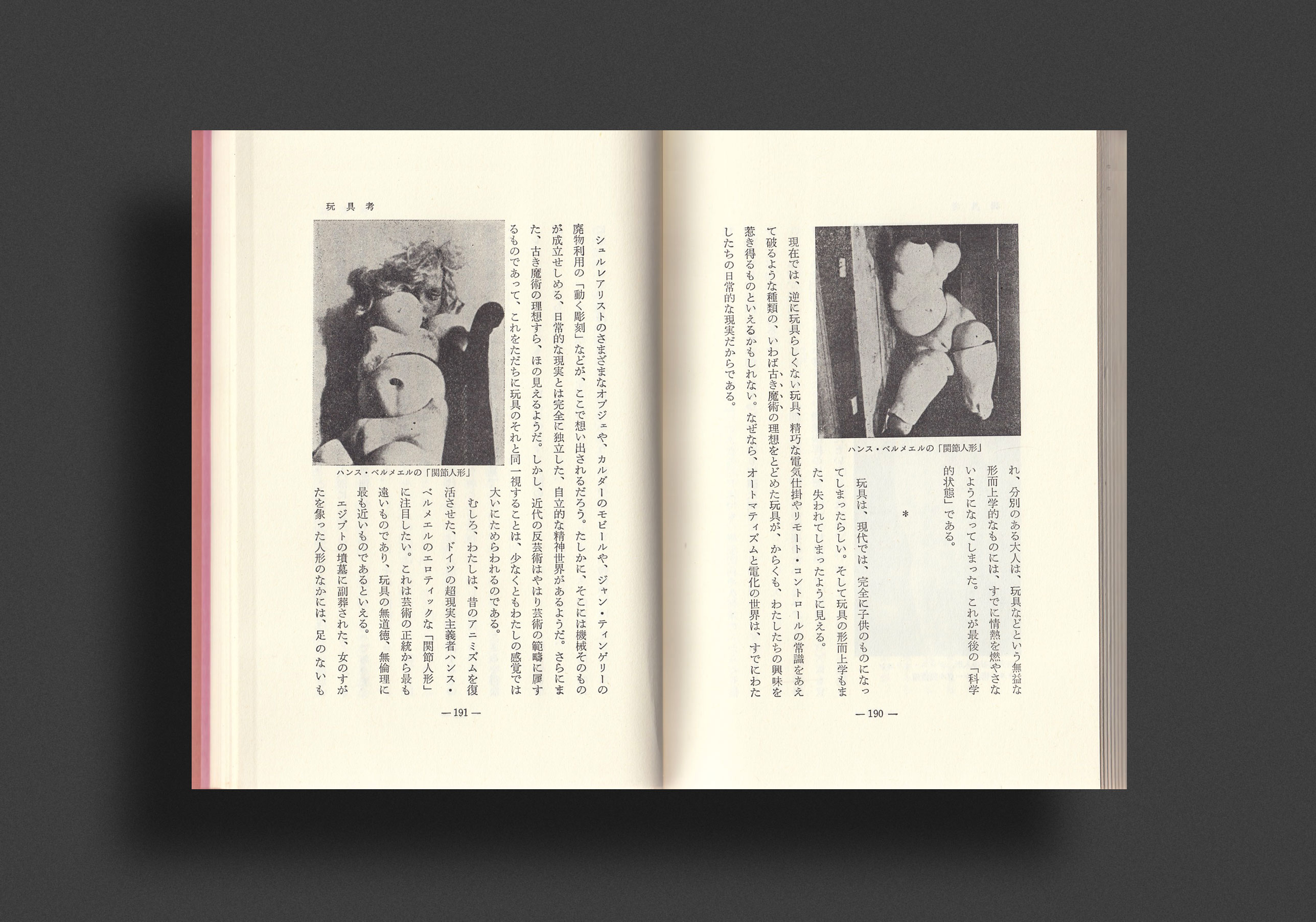
Revue de Érotologie, Homosexualité, Sadisme, Masochisme, Fétischisme, Narcissime, Infantilisme, Magie, Occultisme, Humour Noir, Complexe Psychisme. What more could you ask for? Le Sang Et La Rose is a masterpiece of the Japanese underground. A groundbreaking, powerful, yet short-lived Japanese arts and literary journal published in Tokyo from late 1968—mid 1969, published in a total of four luxurious, now collectible, volumes. The first three issues were edited by Tatsuhiko Shibusawa (1928—1987), a legendary, controversial Japanese novelist, art critic, translator of French writers such as Jean Cocteau, Georges Bataille and Marquis de Sade, and specialist in medieval demonology. The importance of this magazine to the Japanese avant-garde and radical culture cannot be overstated.
Born from a period of political, social and economical turmoil in Japan, Le Sang Et La Rose may be understood as a emblematic distillation and product of the late ‘60s student rebellion and anti-authoritarian underground culture. Wilfully politically subversive, the publication drew upon a vast range of perspectives - from criticism, literature, obscure esoteric sciences, art, eroticism, radical avant-garde and a historical-rooted Japanese counterculture; featuring literature, theory, art, photography, illustration and graphic design from the most innovative and subversive Japanese and international (predominately French) artists, authors and critics, spanning the themes above. As instigator, Tatsuhiko Shibusawa in effect formulated the magazine’s design to be a spiritual and political operative that would weaponize its readers minds. This stance was made clear in the 1969 manifesto text — "My 1969" — in which Shibusawa discuss' how he perceived the ‘60s as being the age of ideas, ideas as weapons, and outlined a distain towards systems of power, moralism, State oppression, sanitised and harmless liberalism, dogmatic academic sciences and an outright distrust for ideological, progressive literary scholars who advocate "freedom of expression", but have never caused friction with the judicial power. The magazine sketched out an aim to push towards a new kind of personal freedom, intellect, autonomy and moral compass. Here, the concept of ‘erotism’ — as discussed by Georges Bataille in his highly influential 1957 book "Erotism: Death and Sensuality" — acts as a critical force.
Issue no. 1 (1968) sets the scene perfectly, opening with Japanese author Yukio Mishima depicted as Saint Sebastian by photographer Kishin Shinoyama in a pictorial feature "Les Morts Masculines", a photographic homage to Georges Bataille that also features the photography of Eikoh Hosoe, Ikkō Narahara, Masahisa Fukase, and Osamu Hayasaki, with models including Butoh founder Tatsumi Hijikata, actor Akira Mita, author Tatsuhiko Shibusawa, actor Jin Nakayama, playwright Jūrō Kara, and others. Other features include " All Japanese are Perverse" — stories by Japanese writers including Yukio Mishima, Taruho Inagaki, Yutaka Haniya, Shinji Sōya; Henry Miller's letters to Anais Nin; a colour gallery of artwork by Belgian painter Paul Delvaux; articles on Vampire fantasy in the arts (including many original illustrations; Witches (illustrated by James Ensor); Oriental Eros, Ancient Indian poetry; Kama Sutra; female bi-sexuality; the history of gay (Danshoku) theatre in Japan; the full-colour art gallery "Masturbation Machine", featuring avant-garde artists Natsuyuki Nakanishi, Masuo Ikeda, Setsu Nagasawa, Carlos Marchioli, Kuniyoshi Kaneko, Masakazu Horiuchi, Tadanori Yokoo, Koji Suzuki, Tommy Ungerer; the fully illustrated museum supplement "Pain and Pleasure : On Torture" by Tatsuhiko Shibusawa with artworks throughout history; pornographic stories by Guillaume Apollinaire and Nicolas Restif de la Bretonne (who coined the term "Pornographer"); fiction by Pierre Morion (pseudo. André Pieyre de Mandiargues); critic Jin'ichi Uekusa on the controversial writings of Roger Peyrefitte, illustrations by Ernst, Bellmer, Labisse, Fini, Lam, and much more.
Tatsuhiko Shibusawa (1928—1987), was a well-known and controversial Japanese novelist, art critic, and translator of French writers such as Jean Cocteau, Georges Bataille and Marquis de Sade. In 1960 he and his publisher, Kyōji Ishii, were trialled for public obscenity over the publishing of Shibusawa's translation of de Sade's Juliette into the Japanese language. What was to be known as the "Sade Trial" took 9 years and although many of Japan's leading authors testified for the defense, in 1969 the Japanese Supreme Court ruled them guilty and charged. This did not deter Shibusawa, whose essays on black magic, demonology and eroticism were popular reading in Japan, and in 1981 he was awarded the 9th Izumi Kyoka Literature Prize.
Good copy with some spine damage and tanning/wear.
1969, Japanese / French
Softcover, 228 pages, 23 x 18 cm
1st Edition, Out of print title / used / very good
Published by
Tensei Shuppan / Tokyo
$110.00 - In stock -
Revue de Érotologie, Homosexualité, Sadisme, Masochisme, Fétischisme, Narcissime, Infantilisme, Magie, Occultisme, Humour Noir, Complexe Psychisme. What more could you ask for? Le Sang Et La Rose is a masterpiece of the Japanese underground. A groundbreaking, powerful, yet short-lived Japanese arts and literary journal published in Tokyo from late 1968—mid 1969, published in a total of four luxurious, now collectible, volumes. The first three issues were edited by Tatsuhiko Shibusawa (1928—1987), a legendary, controversial Japanese novelist, art critic, translator of French writers such as Jean Cocteau, Georges Bataille and Marquis de Sade, and specialist in medieval demonology. The importance of this magazine to the Japanese avant-garde and radical culture cannot be overstated.
Born from a period of political, social and economical turmoil in Japan, Le Sang Et La Rose may be understood as a emblematic distillation and product of the late ‘60s student rebellion and anti-authoritarian underground culture. Wilfully politically subversive, the publication drew upon a vast range of perspectives - from criticism, literature, obscure esoteric sciences, art, eroticism, radical avant-garde and a historical-rooted Japanese counterculture; featuring literature, theory, art, photography, illustration and graphic design from the most innovative and subversive Japanese and international (predominately French) artists, authors and critics, spanning the themes above. As instigator, Tatsuhiko Shibusawa in effect formulated the magazine’s design to be a spiritual and political operative that would weaponize its readers minds. This stance was made clear in the 1969 manifesto text — "My 1969" — in which Shibusawa discuss' how he perceived the ‘60s as being the age of ideas, ideas as weapons, and outlined a distain towards systems of power, moralism, State oppression, sanitised and harmless liberalism, dogmatic academic sciences and an outright distrust for ideological, progressive literary scholars who advocate "freedom of expression", but have never caused friction with the judicial power. The magazine sketched out an aim to push towards a new kind of personal freedom, intellect, autonomy and moral compass. Here, the concept of ‘erotism’ — as discussed by Georges Bataille in his highly influential 1957 book "Erotism: Death and Sensuality" — acts as a critical force.
Issue no. 2 includes photographic features by Yasuhiro Yoshioka and Yoshihiro Tatsuki, the artwork of French decorator of department store mannequins and surrealist Sunday painter Clovis Trouille, Venus in Furs erotic photo shoot by Yasuhiro Ishimoto, Yokoo Tadanori, Hans Bellmer, Leonor Fini, Alberto Martini, Félicien Rops, Rene Magritte, an incredible feature "Machine for Murder" with art by Hiroshi Nakamura, Tomi Ungerer, Koichi Tanigawa, Osamu Tsukasa, Tatsuo Ikeda, Marcel Duchamp, Seiichi Horiuchi, and others, an article on the erotica of Ukiyo-e with a fold-out colour three panel poster, the fully illustrated museum supplement on Demonology by Tatsuhiko Shibusawa with artworks throughout history, texts by Apollinaire, Burroughs, Mutsuo Takahashi, articles on laws pertaining to homosexuality, Kama Sutra, shoe fetishism, and much more.
Tatsuhiko Shibusawa (1928—1987), was a well-known and controversial Japanese novelist, art critic, and translator of French writers such as Jean Cocteau, Georges Bataille and Marquis de Sade. In 1960 he and his publisher, Kyōji Ishii, were trialled for public obscenity over the publishing of Shibusawa's translation of de Sade's Juliette into the Japanese language. What was to be known as the "Sade Trial" took 9 years and although many of Japan's leading authors testified for the defense, in 1969 the Japanese Supreme Court ruled them guilty and charged. This did not deter Shibusawa, whose essays on black magic, demonology and eroticism were popular reading in Japan, and in 1981 he was awarded the 9th Izumi Kyoka Literature Prize.
Good-Very Good copy. Light general tanning/wear. Some rippling to back cover.
1969, Japanese / French
Softcover, 232 pages, 23 x 18 cm
1st Edition, Out of print title / used / very good
Published by
Tensei Shuppan / Tokyo
$110.00 - In stock -
Revue de Érotologie, Homosexualité, Sadisme, Masochisme, Fétischisme, Narcissime, Infantilisme, Magie, Occultisme, Humour Noir, Complexe Psychisme. What more could you ask for? Le Sang Et La Rose is a masterpiece of the Japanese underground. A groundbreaking, powerful, yet short-lived Japanese arts and literary journal published in Tokyo from late 1968—mid 1969, published in a total of four luxurious, now collectible, volumes. The first three issues were edited by Tatsuhiko Shibusawa (1928—1987), a legendary, controversial Japanese novelist, art critic, translator of French writers such as Jean Cocteau, Georges Bataille and Marquis de Sade, and specialist in medieval demonology. The importance of this magazine to the Japanese avant-garde and radical culture cannot be overstated.
Born from a period of political, social and economical turmoil in Japan, Le Sang Et La Rose may be understood as a emblematic distillation and product of the late ‘60s student rebellion and anti-authoritarian underground culture. Wilfully politically subversive, the publication drew upon a vast range of perspectives - from criticism, literature, obscure esoteric sciences, art, eroticism, radical avant-garde and a historical-rooted Japanese counterculture; featuring literature, theory, art, photography, illustration and graphic design from the most innovative and subversive Japanese and international (predominately French) artists, authors and critics, spanning the themes above. As instigator, Tatsuhiko Shibusawa in effect formulated the magazine’s design to be a spiritual and political operative that would weaponize its readers minds. This stance was made clear in the 1969 manifesto text — "My 1969" — in which Shibusawa discuss' how he perceived the ‘60s as being the age of ideas, ideas as weapons, and outlined a distain towards systems of power, moralism, State oppression, sanitised and harmless liberalism, dogmatic academic sciences and an outright distrust for ideological, progressive literary scholars who advocate "freedom of expression", but have never caused friction with the judicial power. The magazine sketched out an aim to push towards a new kind of personal freedom, intellect, autonomy and moral compass. Here, the concept of ‘erotism’ — as discussed by Georges Bataille in his highly influential 1957 book "Erotism: Death and Sensuality" — acts as a critical force.
Issue no. 3 (with cover by Bronzino, 1554) includes full-colour photographic feature by Kishin Shinoyama ("Virgin In Uniform" featuring models/artists Angela Asaoka, Akaji Maro, Yoko Ashikawa) and beautiful Shomei Tomatsu photo feature ("Scoptophilia"), the artwork of the great French cross-dressing painter-photographer Pierre Molinier, texts by Jirō Kawamura, Yumiko Kurahashi, Taruho Inagaki ("Memories of Hemorrhoids or "New Tsurezuregusa"), Akiyuki Nosaka ("Dear Penis, Goodbye"), Minoru Minamihara ("The Mystic Thought of Love in the Case of Jakob Böhme"), Takiji Kobayashi, The Fictitious Garden of Babylon by Tatsuhiko Shibusawa, Tsunekazu Murata ("Witch's Ax : Concerning Heresy in Medieval Europe"), translation of Franz Kafka "Metamorphosis" illustrated by Franco Gentilini, recent research on homosexuality by film critic Jin'ichi Uekusa, Kama Sutra, more Gay (Danshoku) Japanese Theater history, Marquise de Blancvilliers by Koji Nakata, and much more.
Tatsuhiko Shibusawa (1928—1987), was a well-known and controversial Japanese novelist, art critic, and translator of French writers such as Jean Cocteau, Georges Bataille and Marquis de Sade. In 1960 he and his publisher, Kyōji Ishii, were trialled for public obscenity over the publishing of Shibusawa's translation of de Sade's Juliette into the Japanese language. What was to be known as the "Sade Trial" took 9 years and although many of Japan's leading authors testified for the defense, in 1969 the Japanese Supreme Court ruled them guilty and charged. This did not deter Shibusawa, whose essays on black magic, demonology and eroticism were popular reading in Japan, and in 1981 he was awarded the 9th Izumi Kyoka Literature Prize.
Very Good copy. Light general tanning/wear.
1969, Japanese
Softcover, 286 pages, 23 x 18 cm
1st Edition, Out of print title / used / very good
Published by
Tensei Shuppan / Tokyo
$130.00 - In stock -
Revue de Érotologie, Homosexualité, Sadisme, Masochisme, Fétischisme, Narcissime, Infantilisme, Magie, Occultisme, Humour Noir, Complexe Psychisme. What more could you ask for? Le Sang Et La Rose was a groundbreaking, powerful, yet short-lived Japanese arts and literary journal published in Tokyo from late 1968—mid 1969, in a total of four luxurious, now collectible, volumes. The first three issues were edited by Tatsuhiko Shibusawa (1928—1987), a well-known and controversial Japanese novelist, art critic, and translator of French writers such as Jean Cocteau, Georges Bataille and Marquis de Sade, and this, the fourth final issue, and rarest of the four, edited by critic Masaaki Hiraoka and especially designed by self-taught painter, graphic designer and political activist, Kiyoshi Awazu (!)
Born from a period of political, social and economical turmoil in Japan, Le Sang Et La Rose may be understood as a emblematic distillation and product of the late ‘60s student rebellion and anti-authoritarian underground culture. Wilfully politically subversive, the publication drew upon a vast range of perspectives - from criticism, literature, obscure esoteric sciences, art, eroticism, radical avant garde and a historical-rooted Japanese counterculture; featuring literature, theory, art, photography, illustration and graphic design from the most innovative Japanese and international (predominately French) artists, authors and critics, spanning the themes above. Much like an instigator, Tatsuhiko Shibusawa in effect formulated the magazine’s design as principally to be a spiritual and political operative that would weaponize its readers minds. This stance was made clear in the 1969 manifesto text — "My 1969" — in which Shibusawa discuss' how he perceived the ‘60s as being the age of ideas, ideas as weapons, and outlined a distain towards systems of power, moralism, State oppression, sanitised and harmless liberalism, dogmatic academic sciences and an outright distrust for ideological, progressive literary scholars who advocate "freedom of expression", but have never caused friction with the judicial power. The magazine sketched out an aim to push towards a new kind of personal freedom, intellect, autonomy and moral compass. Here, the concept of ‘erotism’ — as discussed by Georges Bataille in his highly influential 1957 book "Erotism: Death and Sensuality" — acts as a critical force.
Issue no. 4 includes photographic features by cinematographer Yasuhiro Yoshioka (Woman in the Dunes, Kwaidan, The Face of Another, Diary of a Shinjuku Thief), work by pioneering, self-taught visual artist and designer, Kiyoshi Awazu, Hans Bellmer, illustrations by the incredible Hiroshi Nakamura, sadomasochism in cinema, Ukiyo-e and Shunga art (erotic Japanese prints), writings by Tatsuhiko Shibusawa, Yukio Mishima, Taruho Inagaki, Jun’nosuke Yoshiyuki, Kôichi Iijima, Jûrô Kara, Ikuya Kato, Minoru Yoshioka, Masaaki Hiraoka, Tadanori Yokoo, and Ryûichi Tamura. Much more....
Very Good copy.
1999, Japanese / English / Spanish
Softcover (French Flaps), 170 pages, 29 x 20 cm
1st Edition, Out of print title / used / fine
Published by
Tokyo Shimbun / Tokyo
$140.00 - In stock -
Scarce, stunning Japanese catalogue on Spanish surrealist Remedios Varo, published on the occasion of a major touring retrospective of her work throughout Japan in 1999. Only available in the participating Japanese museums in the late 1990s and now long out-of-print, this book beautifully reproduces Varo's paintings and drawings (including preliminary sketches alongside final oils) with detailed captions and descriptions, accompanied by illustrated essays and other texts by Masayo Nonaka, Octavio Paz, Luis-Martin Lozano, and Walter Green, portraits of the artist, exhibition history, bibliography, work list and more.
Remedios Varo Uranga (1908 – 1963) was a Spanish surrealist artist. Born in Anglès (north of Catalonia), Spain in 1908, she studied at the Real Academia de Bellas Artes de San Fernando, Madrid. Varo spent her formative years between France and Barcelona and was greatly influenced by the surrealist movement. The summer of 1935 marked Varo's formal invitation into Surrealism when French surrealist Marcel Jean arrived in Barcelona. While still married to her first husband Gerardo Lizarraga, Varo met her second partner, the French surrealist poet Benjamin Péret, in Barcelona. During the Spanish Civil War she fled to Paris with Péret leaving Lizarraga behind (1937). It was through Peret that Remedios Varo met André Breton and the Surrealist circle, which included Leonora Carrington, Dora Maar, Roberto Matta, Wolfgang Paalen, and Max Ernst among others. Shortly after arriving in France, Varo took part in the International Surrealist exhibitions in Paris and in Amsterdam in 1938. She was forced into exile from Paris during the German occupation of France and moved to Mexico City at the end of 1941 when the Mexican president, Lázaro Cardenas, made it a policy to welcome Spanish and European refugees. In Mexico, she met native artists such as Frida Kahlo and Diego Rivera, but her strongest ties were to other exiles and expatriates, notably the English painter Leonora Carrington and the French pilot and adventurer, Jean Nicolle. However, because Mexican muralism still dominated the country's art scene, surrealism was not generally well received. She worked as an assistant to Marc Chagall with the design of the costumes for the production of the ballet Aleko, which premiered in Mexico City in 1942. In 1947, Péret returned to Paris, and Varo traveled to Venezuela, living there for two years. She returned to Mexico and began her third and last important relationship with Austrian refugee Walter Gruen, who had endured concentration camps before escaping Europe. Gruen believed fiercely in Varo, and he gave her the economic and emotional support that allowed her to fully concentrate on her painting. In 1955, Varo had her first solo exhibition at the Galería Diana in Mexico City. Buyers were put on waiting lists for her work. Even Diego Rivera was supportive. In 1960, her representative, Juan Martín, opened his own gallery and showed her work there, and opened a second in 1962. Only a year after that opening, at the height of her career, she died from a heart attack in Mexico City. Her work is well known in Mexico, but not as commonly known throughout the rest of the world.
Fine, As New copy.
1992 / ?, English
Softcover, 147 pages, 21.2 x 13.5 cm
1st Edition, Out of print title / used / good
Published by
Feral House / Los Angeles
$20.00 - In stock -
The Devil's Notebook is the fourth book by Anton LaVey, published in 1992 by Feral House. It includes a foreword by Adam Parfrey and design by Sean Tejaratchi. The book contains forty-one essays in which LaVey provides commentary on such topics as nonconformity, occult faddism, Nazism, terrorism, cannibalism, erotic politics, the “Goodguy badge”, demoralization and the construction of artificial human companions. Included are instructions for the creation of what LaVey terms "total environments", or places of magical evocation, where the enlightened may escape the deleterious effects of contemporary existence.
1992 edition, later reprint. Very Good copy.
1996, English
Softcover, 252 pages, 30.5 x 23 cm
Out of print title / used / average
Published by
University of Nebraska Press / Lincoln
$35.00 - In stock -
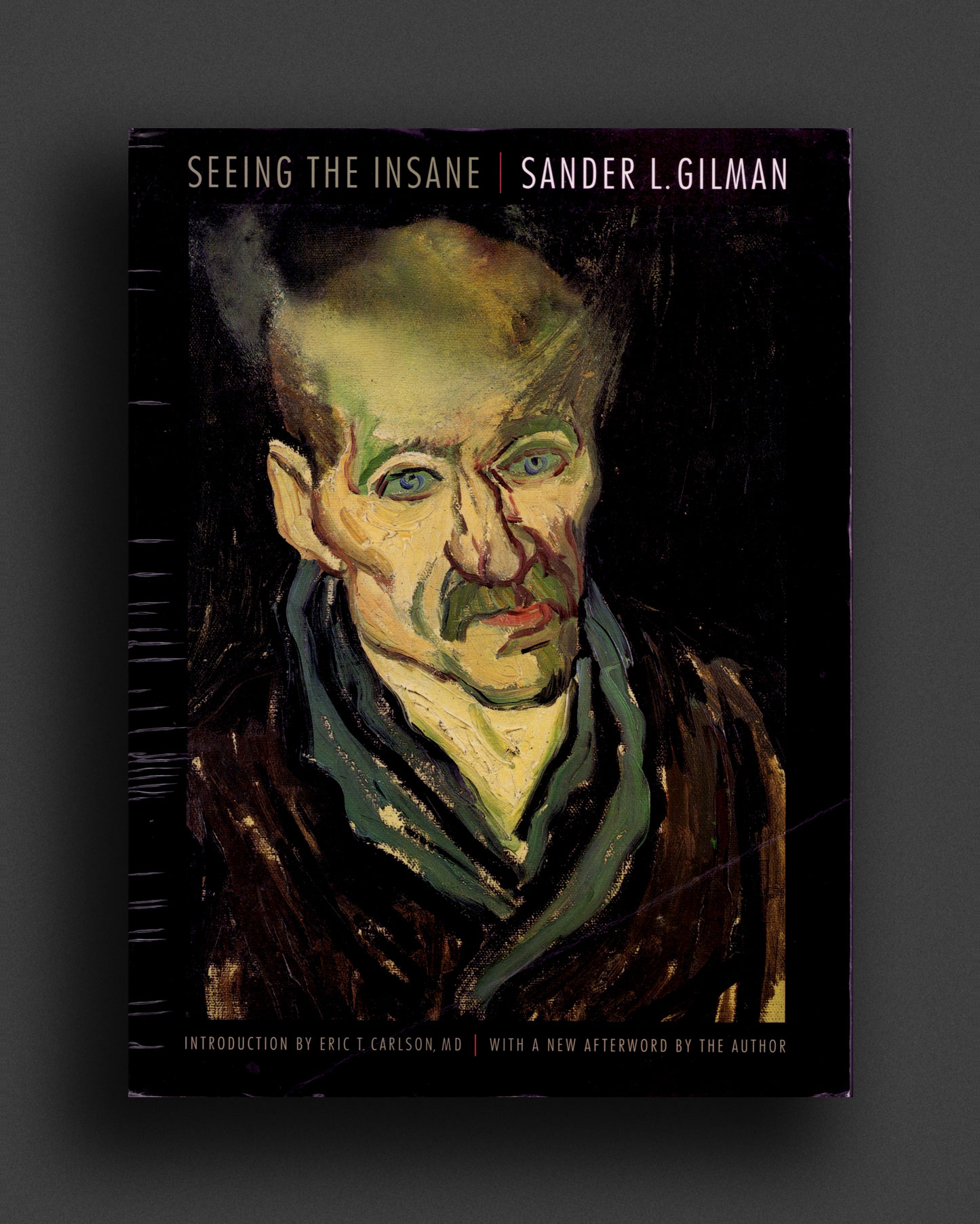
1996 Bison edition with Van Gogh cover. First published in 1982.
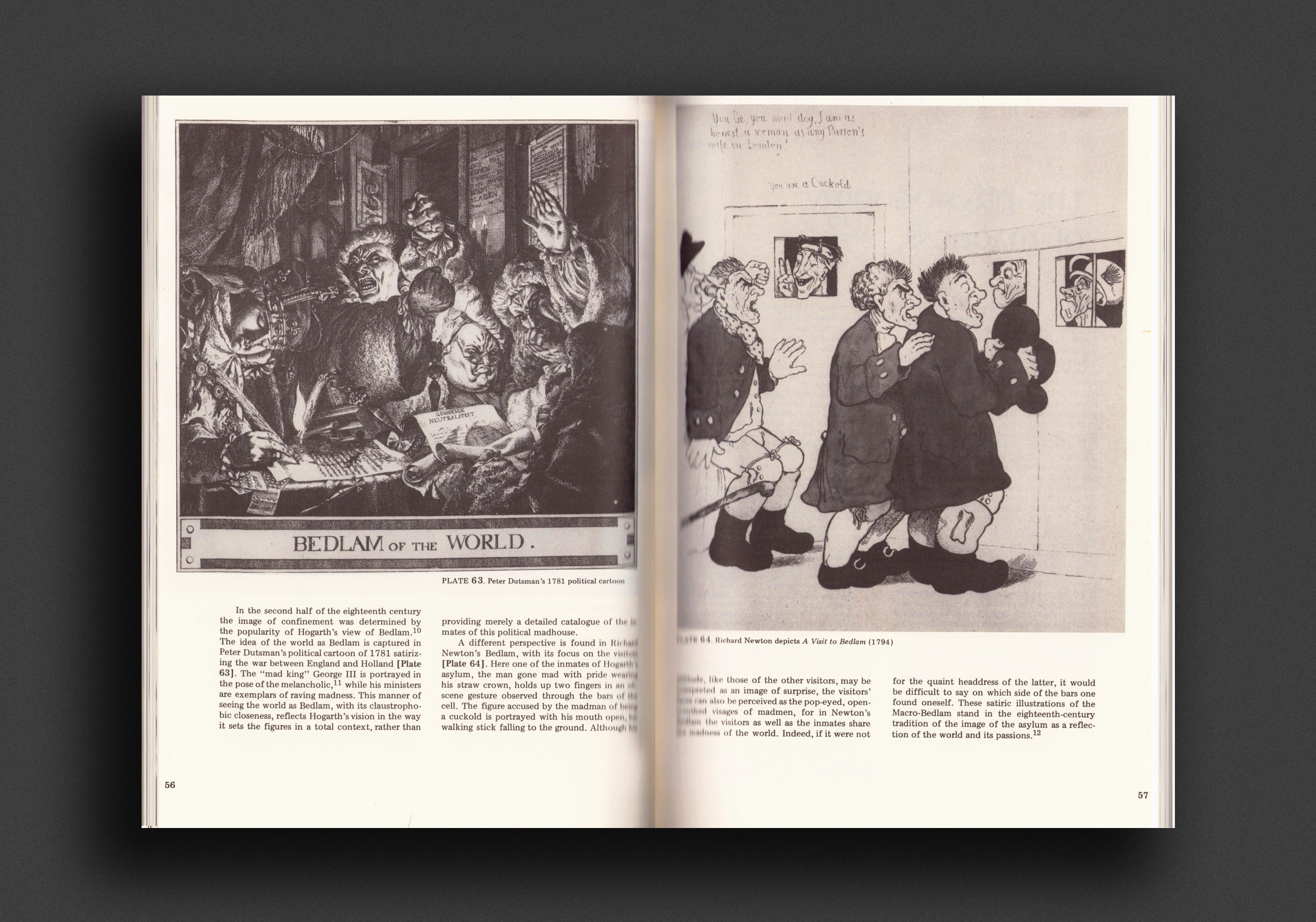
A cultural history of madness and art in the western world, showing how the portrayal of stereotypes has both reflected and shaped the perception and treatment of the mentally disturbed as depicted in manuscripts, woodcuts, engravings, drawings, paintings, sculptures, lithographs and photographs, from the middle ages to the end of the nineteenth century.
"Seeing the Insane is a visual history of the stereotypes that have shaped the perception of the mentally ill from medieval through modern times. The result is nearly as heart-breaking as a visual history of the Holocaust. In picture after picture, the book portrays centuries of intolerance for deviance, mindless cruelty, unthinking prejudice, and self-righteous abuse of the weak and ill."–American Journal of Psychiatry
"As extraordinary in concept as it is in its execution.... This remarkable book helps laymen as well as specialists to see the insane, but it does far more. When we study the past, we understand the present. When we see the conventional stereotype images of insanity, we find they still color our concepts of madness. Through these pictures of the insane, we see all humanity. We look, not through a glass darkly, but through a multiplicity of media, brightly."–Antiquarian Bookman
Seeing the Insane is a richly detailed cultural history of madness and art in the Western world, showing how the portrayal of stereotypes has both reflected and shaped the perception and treatment of the mentally disturbed.
Sander L. Gilman is Henry R. Luce Professor of the Liberal Arts in Human Biology at the University of Chicago. The late Eric T. Carlson, m.D., was a clinical professor of psychiatry at New York Hospital-Cornell Medical Center.
Average–Good copy with cover creases and rippling to laminate.
2018, English
Hardcover, 480 pages, 17.4 x 23.2 cm
Published by
Atlas Press / London
$74.00 - In stock -
Georges Bataille's secret society, long the stuff of legend, is now revealed in its texts, meditations, rules and prohibitions.
This book recounts what must be one of the most unusual intellectual journeys of modern times, in which the influential philosopher, cultural theorist and occasional pornographer Georges Bataille (1897-1962), having spent the early 1930s in far-left groups opposing the rise of fascism, abandoned that approach in order to transfer the struggle onto "the mythological plane."
In 1937, Bataille founded two groups in order to explore the combinations of power and the "sacred" at work in society. The first group, the College of Sociology, gave lectures that were intended to reveal the hidden undercurrents within a society on the verge of catastrophe. The second group was Acéphale, a genuine secret society and anti-religion whose emblem was a headless figure that, in part, represented the death of God. Until the discovery a few years ago of the group's internal papers (which include theoretical texts, meditations, minutes of meetings, rules and prohibitions and even a membership list), almost nothing was known of its activities.
This book is the first to collect a representative selection of the writings of Bataille, and of those close to him, in the years leading up to World War II. The texts published here comprise lectures given to the College of Sociology by Bataille, Roger Caillois and Michel Leiris, essays from the Acéphale journal and a large cache of the internal papers from the secret society. A desperate narrative unfolds, wherein Bataille risked all in a wholly unreasonable quest--with a few fellow travelers, he undertook what he later described as a "journey out of this world."
Additional texts by Roger Caillois, Pierre Klossowski, Michel Leiris, and by Georges Ambrosino, Pierre Andler, Michel Carrouges, Jacques Chavy, Jean Dautry, Henri Dobier, Henri Dussat, Imre Kelemen, Jean Rollin, Patrick Waldberg.
And with drawings by André Masson
Highest recommendation!
2000, English
Softcover, 336 pages, 23 x 15.4 cm
Published by
Llewellyn Publications / Minnesota
$35.00 - In stock -
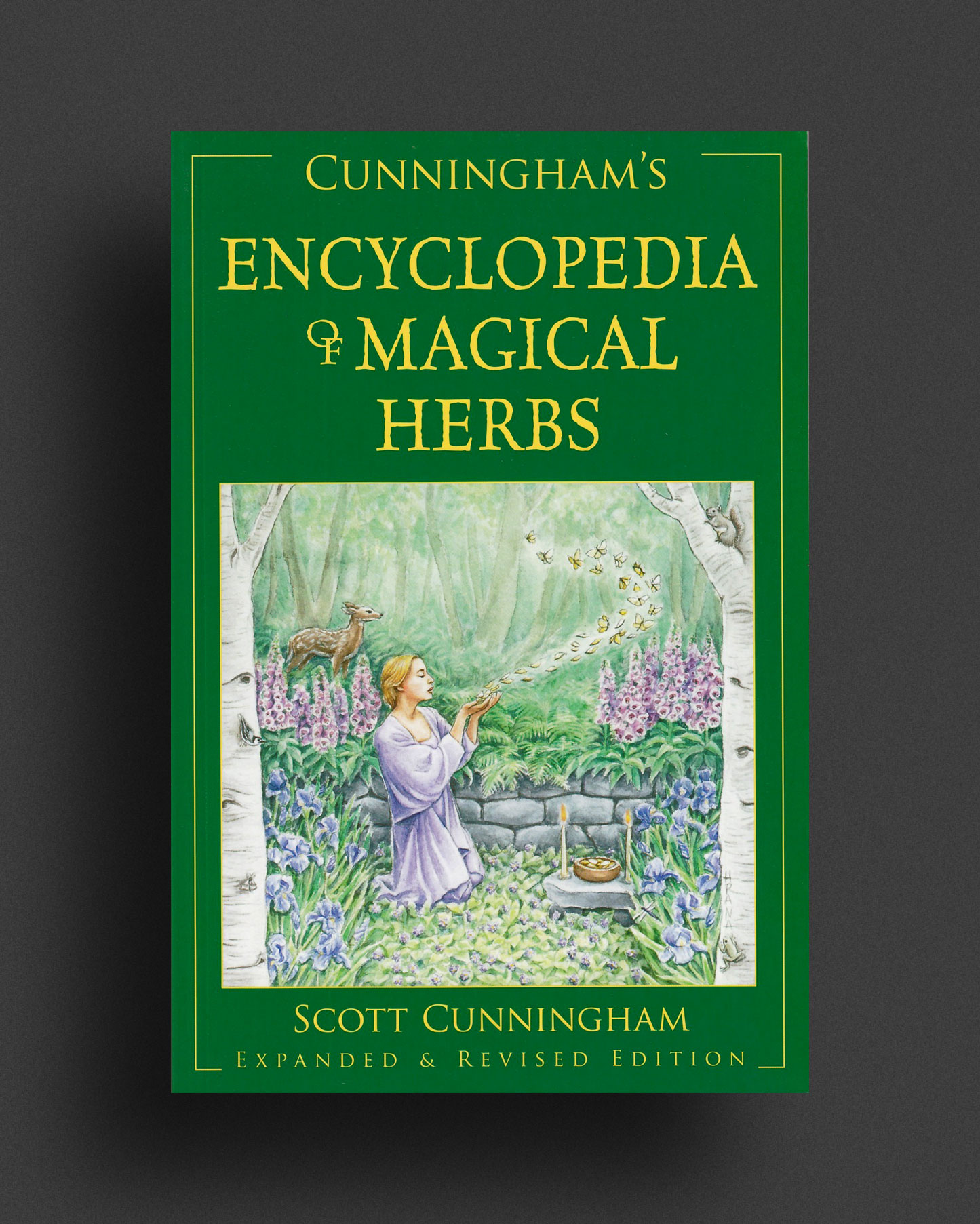
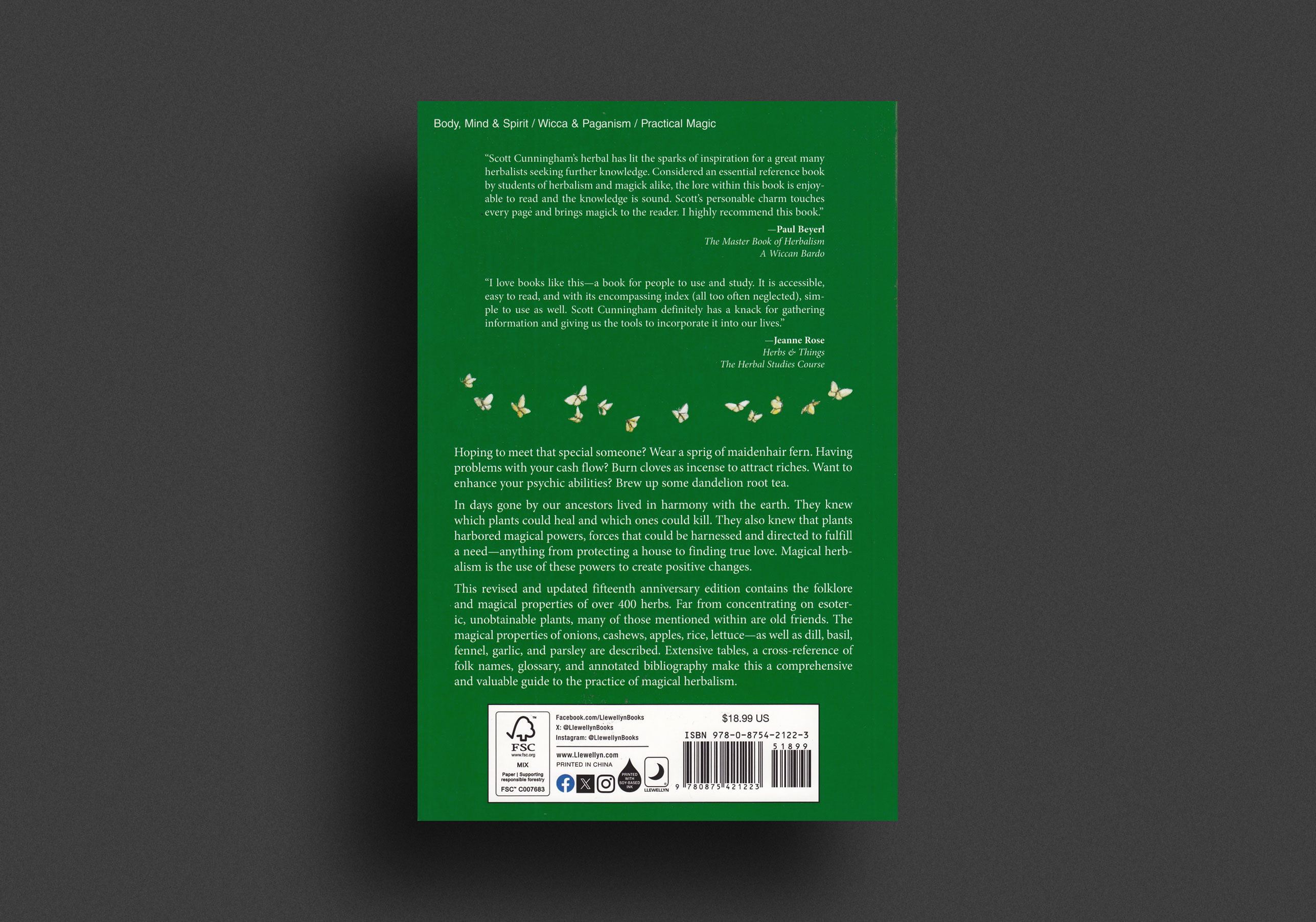
Expanded and revised edition of this absolute classic, probably consulted more than any other book on the subject. If you want to learn the secrets of magical herbs, this book is a must! Scott Cunningham's comprehensive guide features magical uses of over 400 herbs and plants from all parts of the world. With over 500,000 copies in print, this reference book is a must for all who perform natural magic. It features illustrations for easy identification of every herb, in addition to common names, use, and rulership.
2010, English
Softcover, 408 pages, 23.5 x 18 cm
Published by
North Atlantic Books / Vermont
$45.00 - In stock -
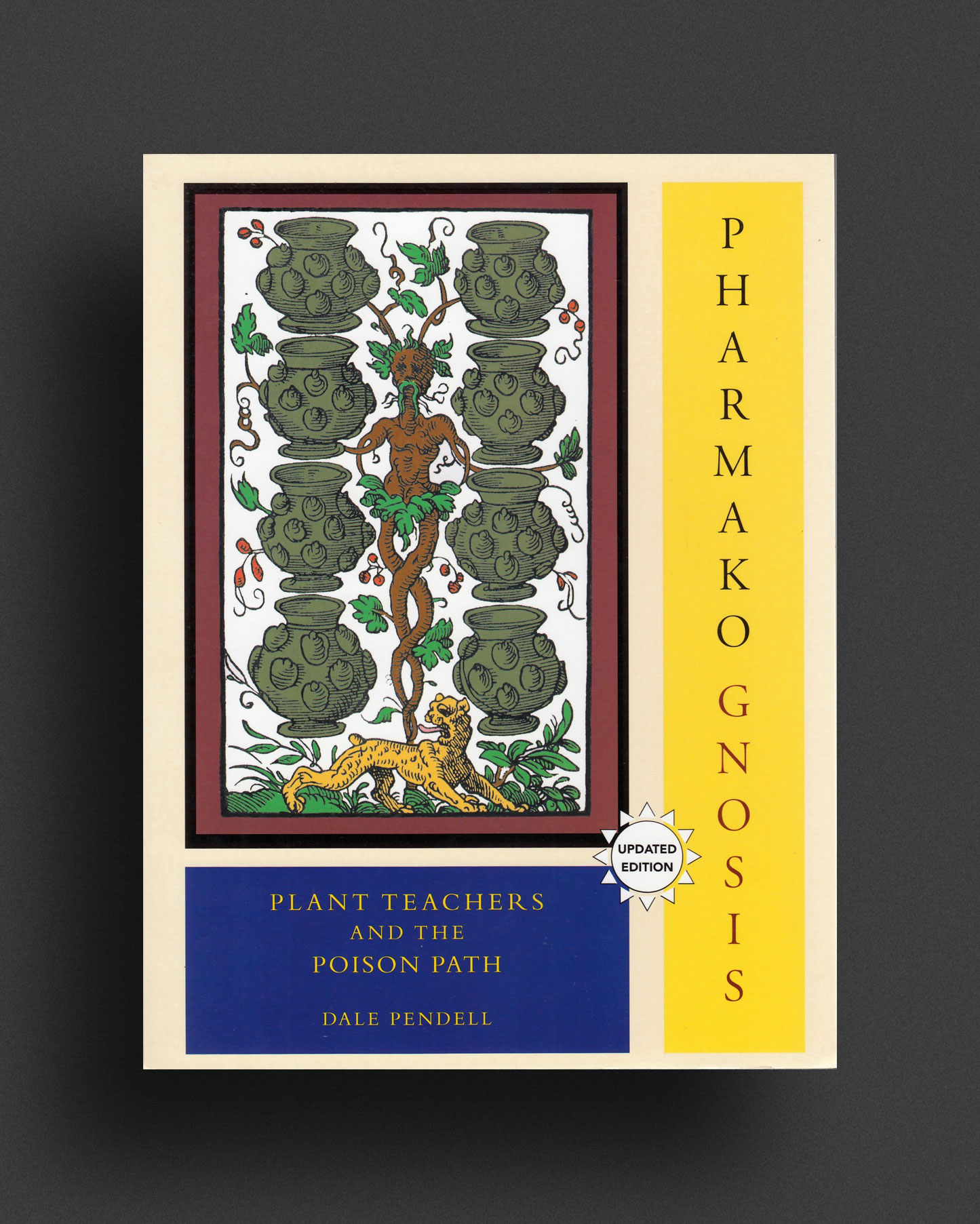
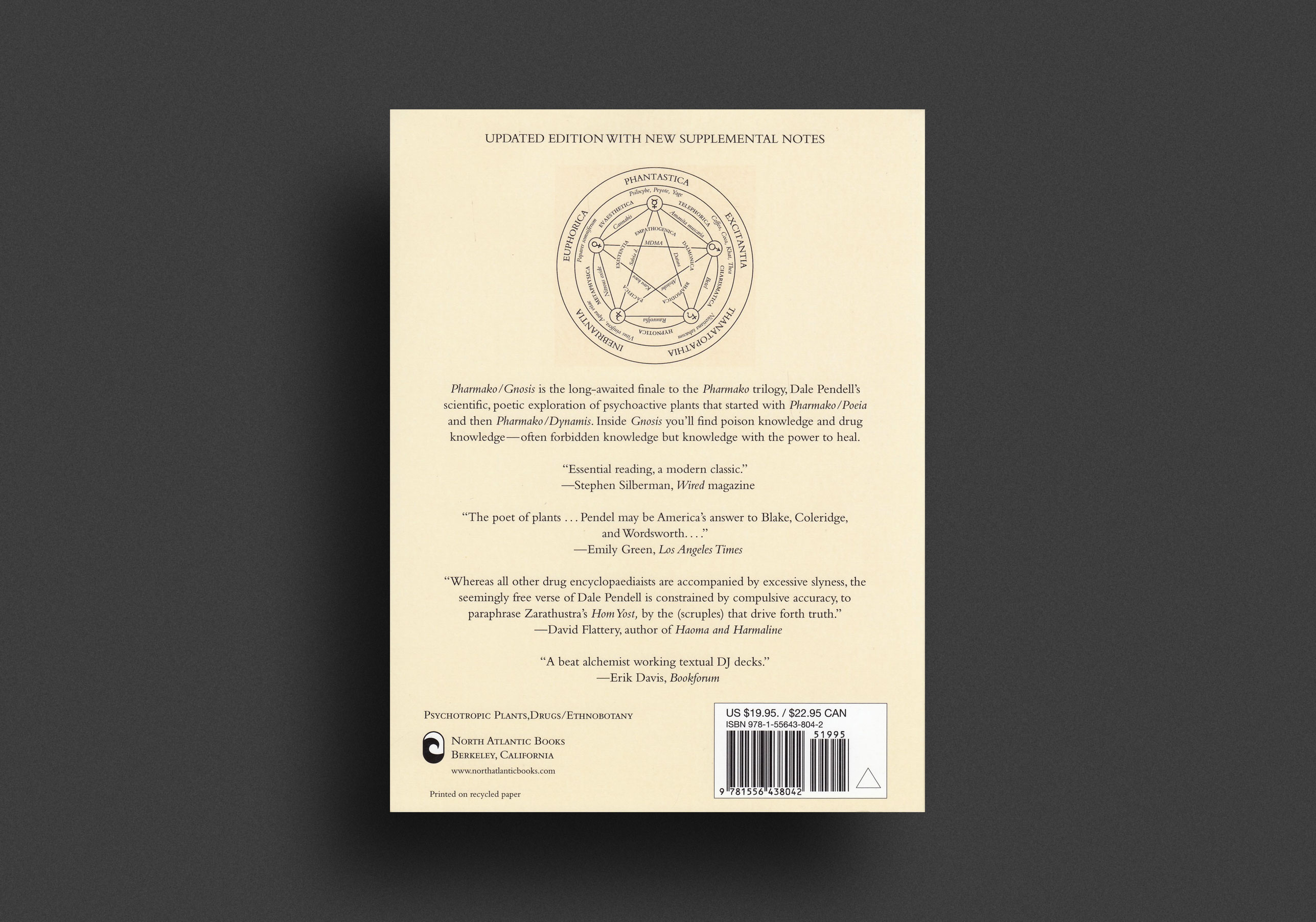
Anyone with an interest in the psychoactive and healing properties of plants and related substances will find Dale Pendell's Pharmako trilogy an entertaining yet profound overview of this emerging field. The series has rapidly assumed cult status as an unparalleled exposition of its subject, and this North Atlantic updated paperback edition will bring this underground classic to a wider readership than ever.
Delving deep into the world of psychoactive plants, including ayahuasca, Pharmako/Gnosis serves as a comprehensive and standalone guide.
Celebrated by readers as a modern classic, this is a must-have for anyone interested in the science, history, and lore of psychoactive substances.
In this third and final volume of the Pharmako trilogy, Dale Pendell embarks on a captivating journey through the botanical and cultural landscapes of a diverse array of mind-altering "teachers." From plant-based psychedelic substances to their synthetic derivatives, Pendell illuminates each with an erudition and playful wit uniquely his own.
He delves into the worlds of traditional use and modern interpretations of substances such as: Amanita muscaria, Ayahuasca (Banisteriopsis caapi), Blowfish/Puffer Fish (Tetradontidae), Bufo alvarius, Iboga (Tabernanthe iboga), Jurema (Mimosa hostilis), Ketamine, Kratom (Mitragynia speciosa), Mescal Bean (Sophora secundiflora), Morning Glory (Ipomoea, Rivea spp.), Peyote, Psilocybe (Teonanacatl), San Pedro Cactus, Tropane alkaloids, Peganum harmala.
Pharmako/Gnosis offers more than a mere historical or pharmacological background of these substances. Pendell delves into the nuances of each substance's effect on consciousness with a poetic finesse, bringing to life our profound and intricate relationship with these potent compounds. He approaches the topic with genuine curiosity, acknowledging the transformative power these substances wield over individuals, societies, and cultures. The narrative, enriched by a wealth of quotations from acclaimed writers, is as intoxicating as the substances it explores, brewing a unique literary concoction.
Taking the reader beyond the confines of traditional scientific discourse, Pendell's distinctive narrative style weaves in personal experiences, anecdotal evidence, and a profound sense of the sacred, resulting in a reading experience that is as deeply engaging as it is informative.
Plant student Dale Pendell established himself as one of the foremost popular exponents of shamanic ethnobotany with his unprecedented Pharmako trilogy. A noted poet, he was the founding editor of the avant-garde magazine Kuksu and a cofounder of the Primitive Arts Institute and has led workshops on ethnobotany and ethnopoetics for the Naropa Institute and the Omega Institute. Pendell was part of the Oracular Madness theme camp at Burning Man for a number of years (his book Inspired Madness: The Gifts of Burning Man was published by Frog Books in 2006). Also an experienced computer scientist, he lives with his wife Laura in California’s Sierra foothills.
2010, English
Softcover, 294 pages, 23.5 x 18 cm
Published by
North Atlantic Books / Vermont
$45.00 - In stock -
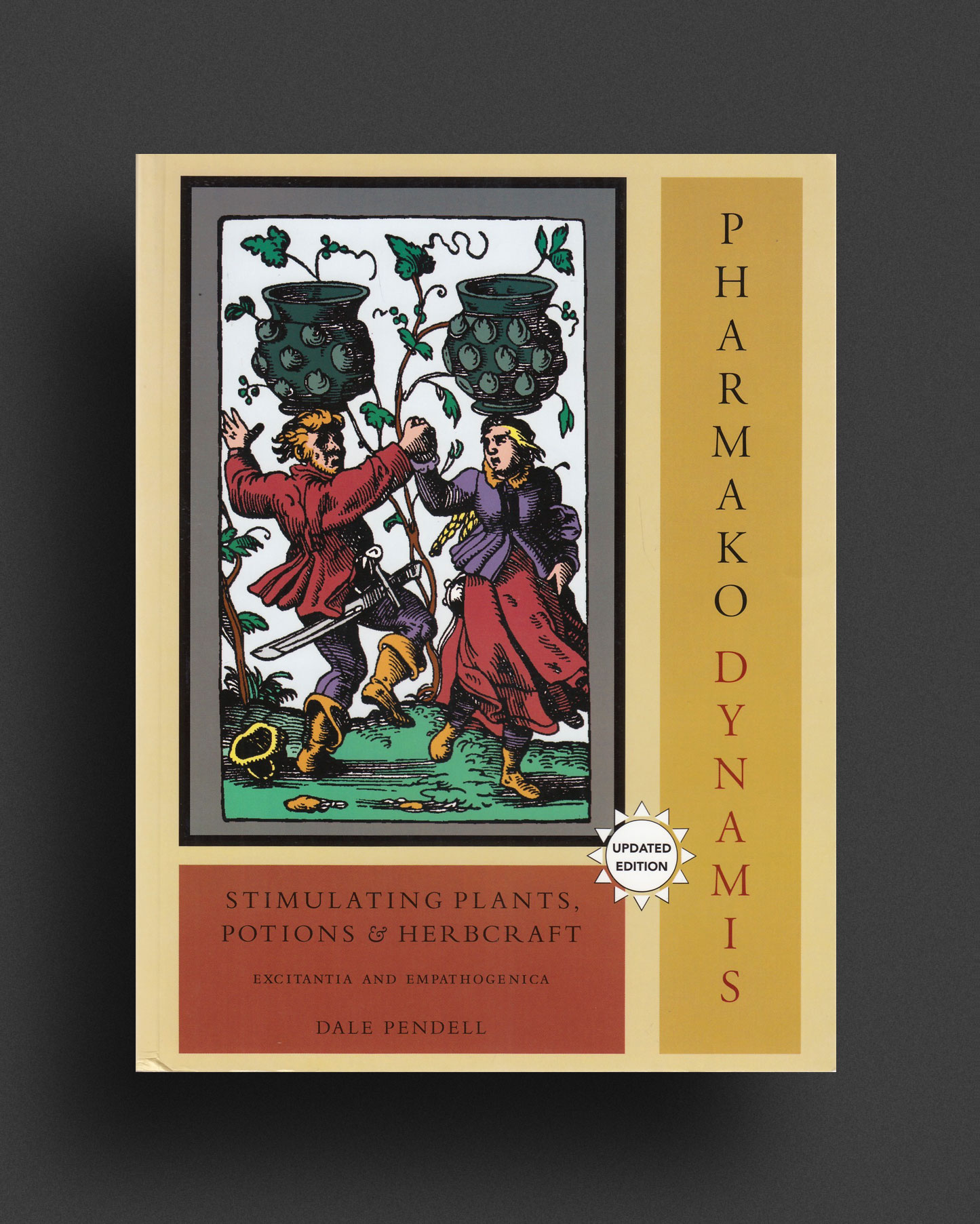
Anyone with an interest in the psychoactive and healing properties of plants and related substances will find Dale Pendell's Pharmako trilogy an entertaining yet profound overview of this emerging field. The series has rapidly assumed cult status as an unparalleled exposition of its subject, and this North Atlantic updated paperback edition will bring this underground classic to a wider readership than ever.
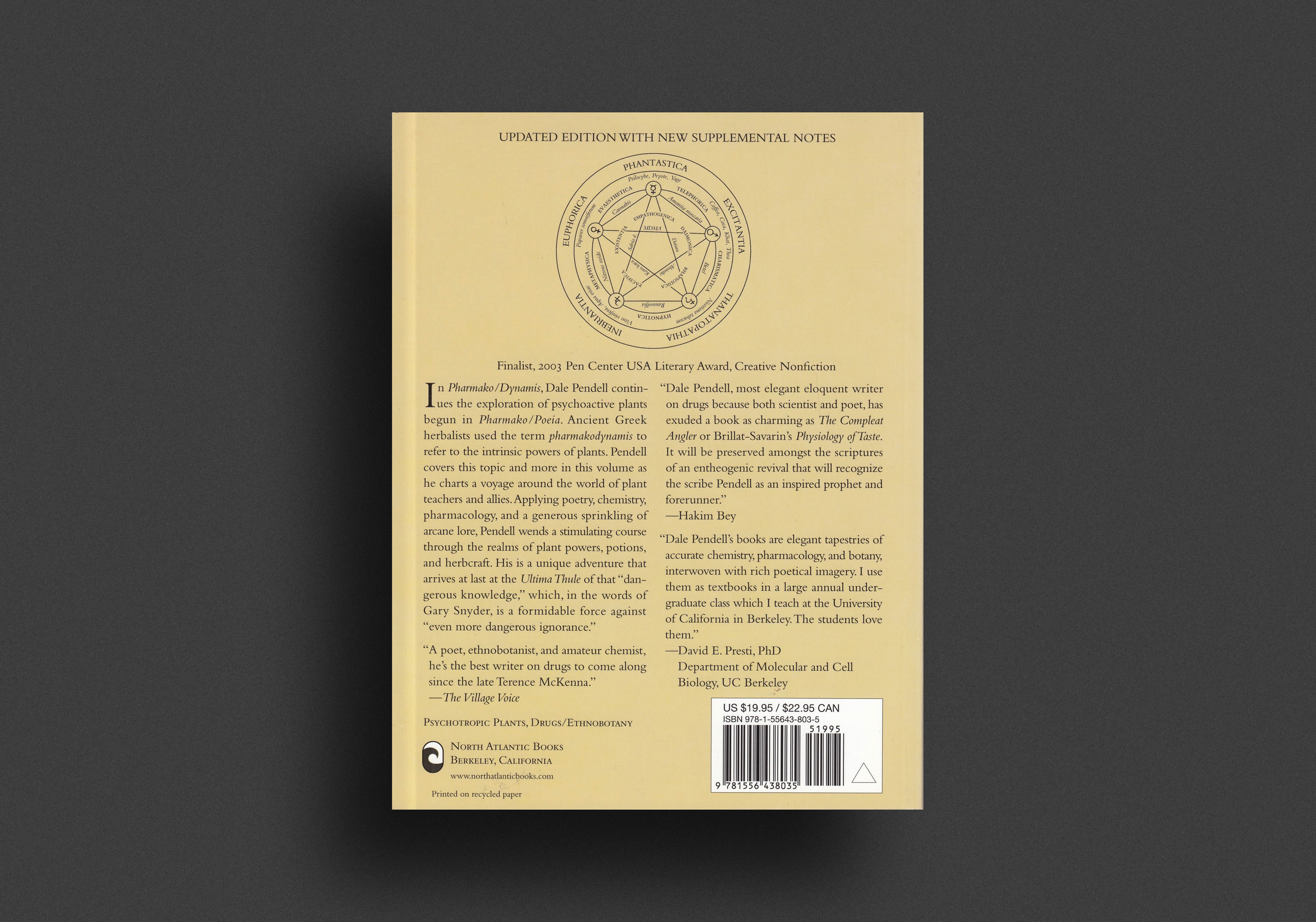
Dive into the potent world of plant-based stimulants and empathogens with Pharmako/Dynamis—Volume 2 of Dale Pendell's authoritative Pharmako trilogy.
Embark on an enriching journey through nature's stimulants—and our complex relationship with them—in Pharmako/Dynamis: Stimulating Plants, Potions, and Herbcraft. Pendell's poetic narrative expertly weaves together scientific understanding and enchanting literature, making this book an enticing read for enthusiasts, herbalists, and psychonauts alike.
Readers will delve deeper into the fascinating universe of psychoactive plants, investigating a variety of stimulants and empathogens, each with its own unique history, usage, and cultural significance: Amphetamines, Betel (Areca catechu), Chocolate, Coca (Erythroxylum coca), Coffee, Khat (Catha edulis), Kola (Kola nitida), Ma huang (Ephedra), MDMA (Ecstasy), Tea, and more.
The book explores these substances in detail and more, offering a profound understanding of their impact and roles. With an engaging blend of scientific knowledge, historical context, and spiritual insights, Pendell presents a meticulously detailed study of each psychoactive substance. His authoritative and delightfully playful voice elucidates not just the pharmacological aspects, but also the subtle effects of these substances on human consciousness.
This volume is more than just a resource; it's a thrilling voyage into the intricate dance between humans and the psychoactive plant kingdom.
Plant student Dale Pendell established himself as one of the foremost popular exponents of shamanic ethnobotany with his unprecedented Pharmako trilogy. A noted poet, he was the founding editor of the avant-garde magazine Kuksu and a cofounder of the Primitive Arts Institute and has led workshops on ethnobotany and ethnopoetics for the Naropa Institute and the Omega Institute. Pendell was part of the Oracular Madness theme camp at Burning Man for a number of years (his book Inspired Madness: The Gifts of Burning Man was published by Frog Books in 2006). Also an experienced computer scientist, he lives with his wife Laura in California’s Sierra foothills.
2010, English
Softcover, 314 pages, 23.5 x 18 cm
Published by
North Atlantic Books / Vermont
$49.00 - Out of stock
Foreword by Gary Snyder
Anyone with an interest in the psychoactive and healing properties of plants and related substances will find Dale Pendell's Pharmako trilogy an entertaining yet profound overview of this emerging field. The series has rapidly assumed cult status as an unparalleled exposition of its subject, and this North Atlantic updated paperback edition will bring this underground classic to a wider readership than ever.
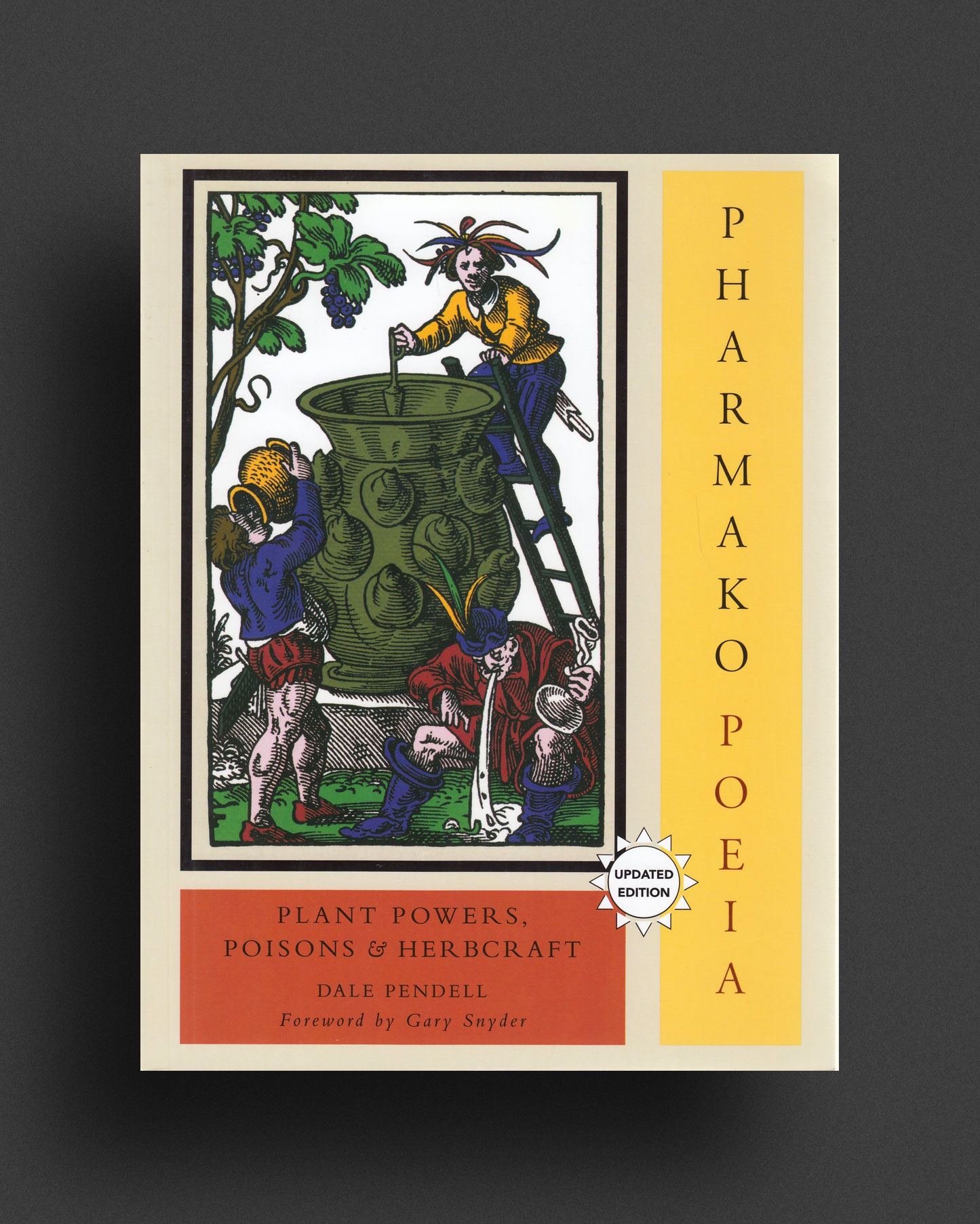
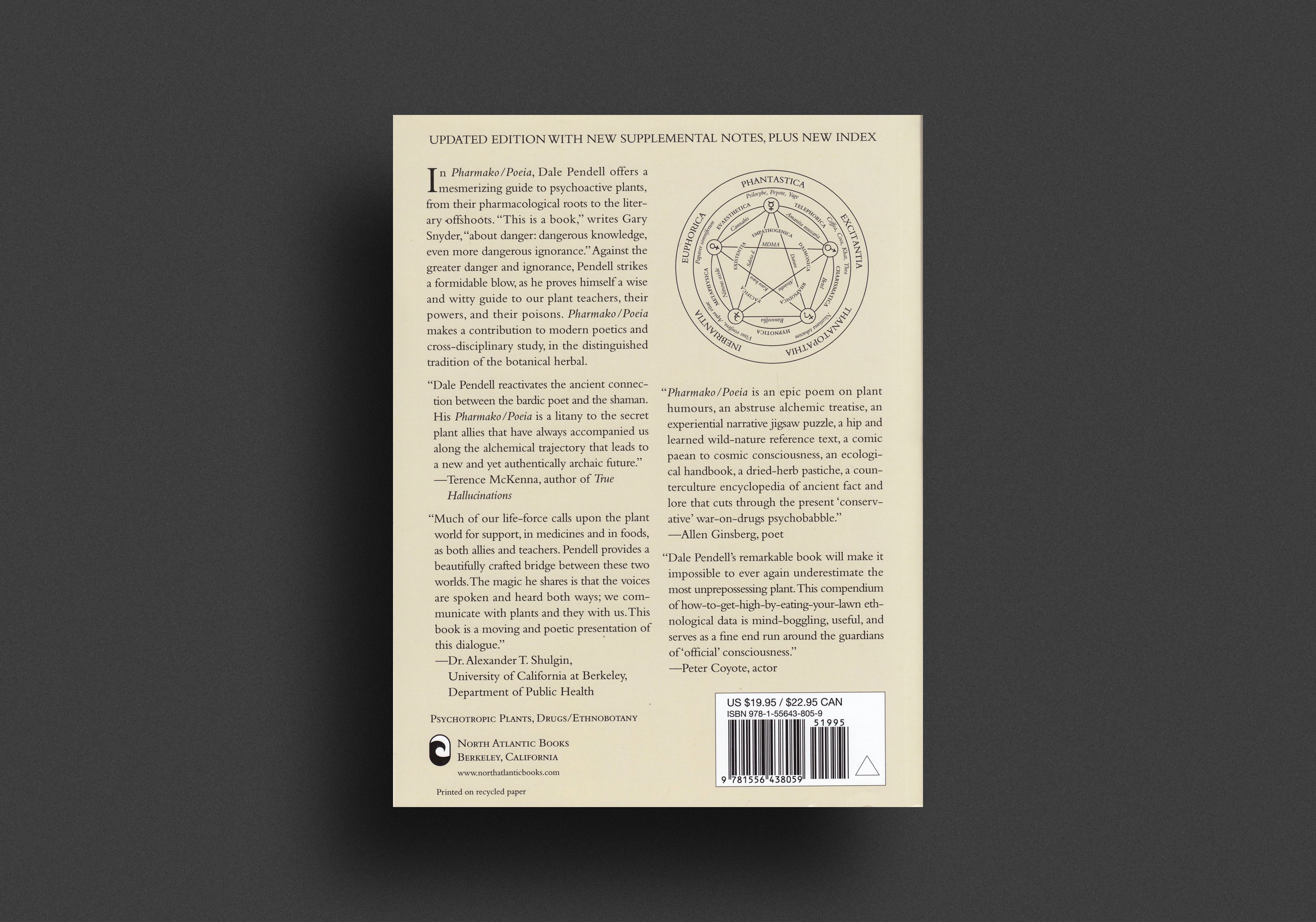
Immerse yourself in the fascinating universe of psychoactive plants with Volume 1 of Dale Pendell's celebrated Pharmako trilogy, the bestselling magical fusion of science, poetry, history, and philosophy.
In this updated paperback edition of the first volume of Dale Pendell's renowned Pharmako trilogy, readers are welcomed on an absorbing journey through the history and applications of psychoactive plants and their synthetic equivalents. Including a new introduction from the author, the book brilliantly merges factual information, historical context, cultural observations, and spiritual insights, all in a voice that is both authoritative and whimsical.
Pendell offers in-depth examination of substances including:
Absinthe, Aqua Vitae, Beer, Calea zacatechichi, Heroin, Kava kava, Marijuana, Nitrous Oxide, Opium, Ska Pastora (Diviner's Sage), Tobacco, Wine, and more.
The examination covers their history, pharmacology, preparation methods, cultural and esoteric connections, and impacts on human consciousness. Pendell presents this study with the sensitivity of a poet, emphasizing not only the concrete facts but also the nuanced implications of each substance's interaction with the human psyche.
Enriched with quotations from celebrated writers, the book serves as a captivating literary concoction that blends science, art, and spirituality, transforming a complex subject into a mesmerizing narrative. The blend of poetic and erudite writing in Pendell's style engages the reader's imagination while being firmly anchored in rigorous research and factual data.
More than an instructive guide on psychoactive plants and synthetics, Pharmako/Poeia: Plant Powers, Poisons, and Herbcraft is a revealing exploration of the ties between human consciousness and nature's own chemical elixirs. It stands as an indispensable read for those with interest in ethnobotany, herbal medicine, or simply the intriguing interplay between humans and the plant kingdom.
Plant student Dale Pendell established himself as one of the foremost popular exponents of shamanic ethnobotany with his unprecedented Pharmako trilogy. A noted poet, he was the founding editor of the avant-garde magazine Kuksu and a cofounder of the Primitive Arts Institute and has led workshops on ethnobotany and ethnopoetics for the Naropa Institute and the Omega Institute. Pendell was part of the Oracular Madness theme camp at Burning Man for a number of years (his book Inspired Madness: The Gifts of Burning Man was published by Frog Books in 2006). Also an experienced computer scientist, he lives with his wife Laura in California’s Sierra foothills.
2026, English
Softcover, 336 pages, 21 x 14.3 cm
Published by
Strange Attractor / London
$47.00 - In stock -
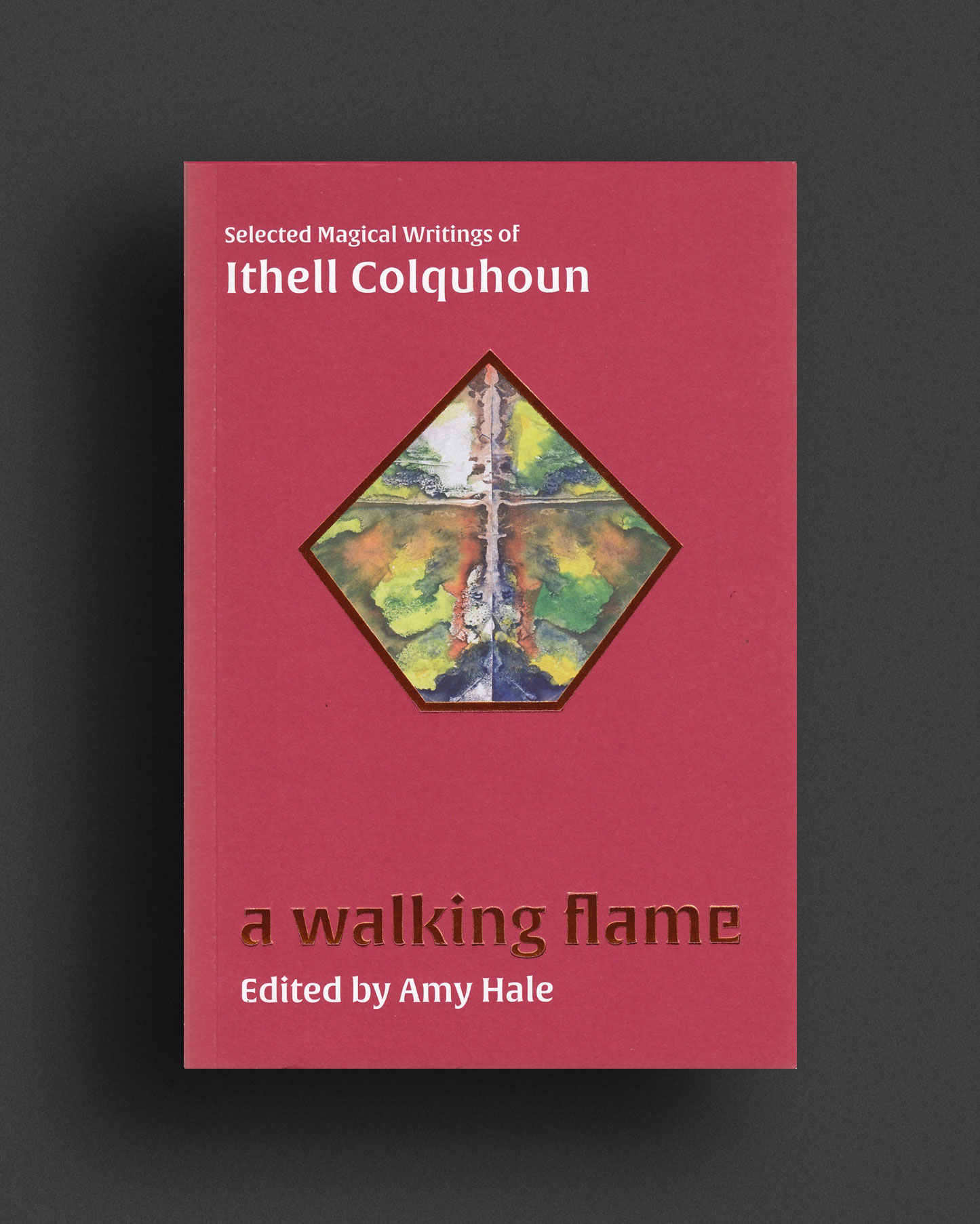
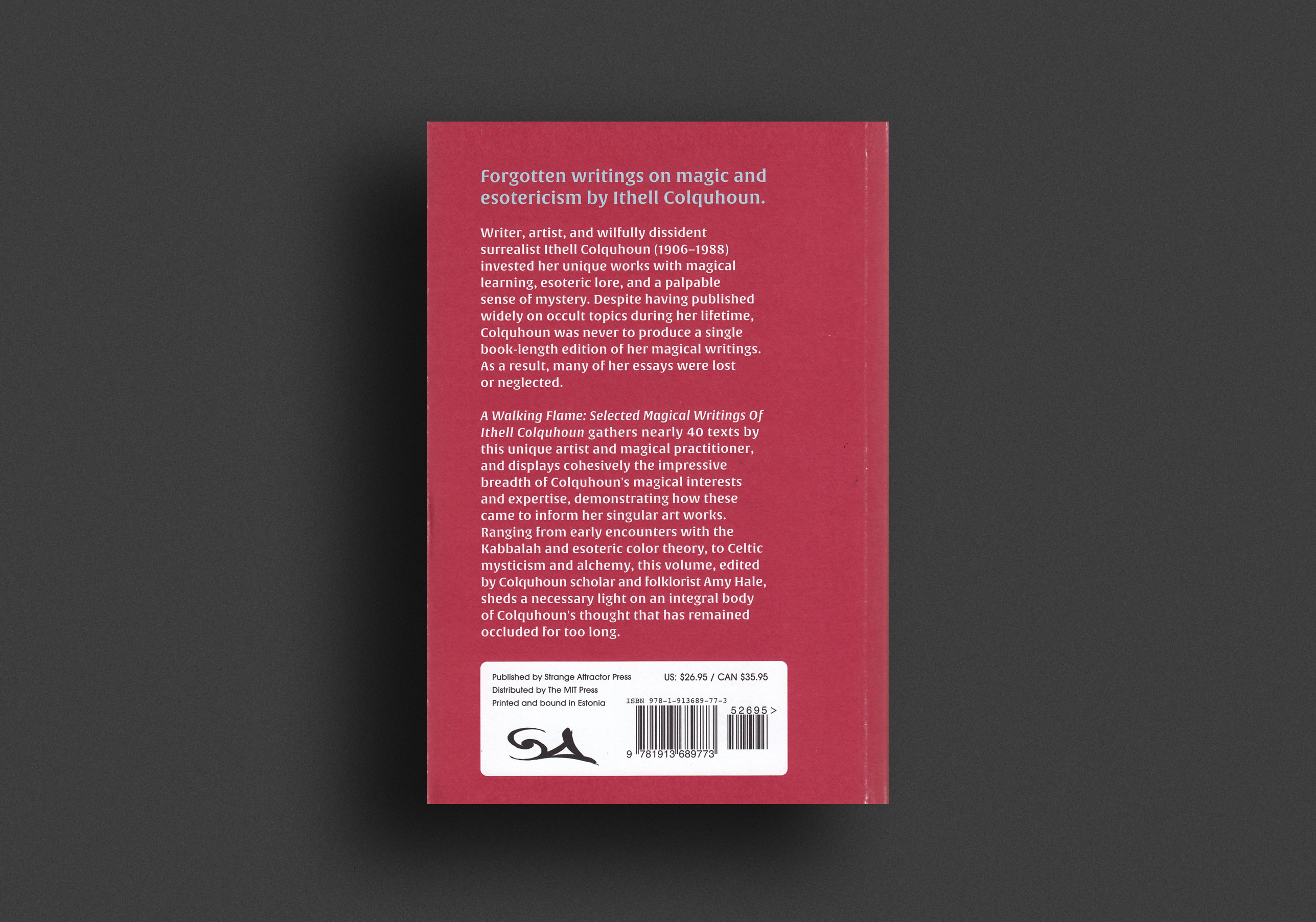
Nearly 40 nearly forgotten essays on magic and esotericism by Ithell Colquhoun.
Edited by Amy Hale.
Writer, artist, and wilfully dissident surrealist Ithell Colquhoun (1906–1988) invested her unique works with magical learning, esoteric lore, and a palpable sense of mystery. Despite having published widely on esoteric and occult topics during her lifetime, Colquhoun was never to produce a single book-length edition of her magical writings. As a result, many of her essays were lost or neglected.
A Walking Flame: Selected Magical Writings Of Ithell Colquhoun gathers nearly 40 texts by this unique artist and magical practitioner, and displays cohesively, and for the first time, the impressive breadth of Colquhoun's magical interests and expertise, and how these came to inform her singular works. Ranging from early encounters with the Kabbalah and esoteric color theory, to Celtic mysticism and alchemy, this volume, edited by Colquhoun scholar and folklorist Amy Hale, promises to shed a necessary light on an integral body of Colquhoun's thought that has remained occluded for too long.
2020, English
Softcover, 230 pages, 15.4 x 10.2 cm
Published by
Trident / Colorado
$32.00 - In stock -
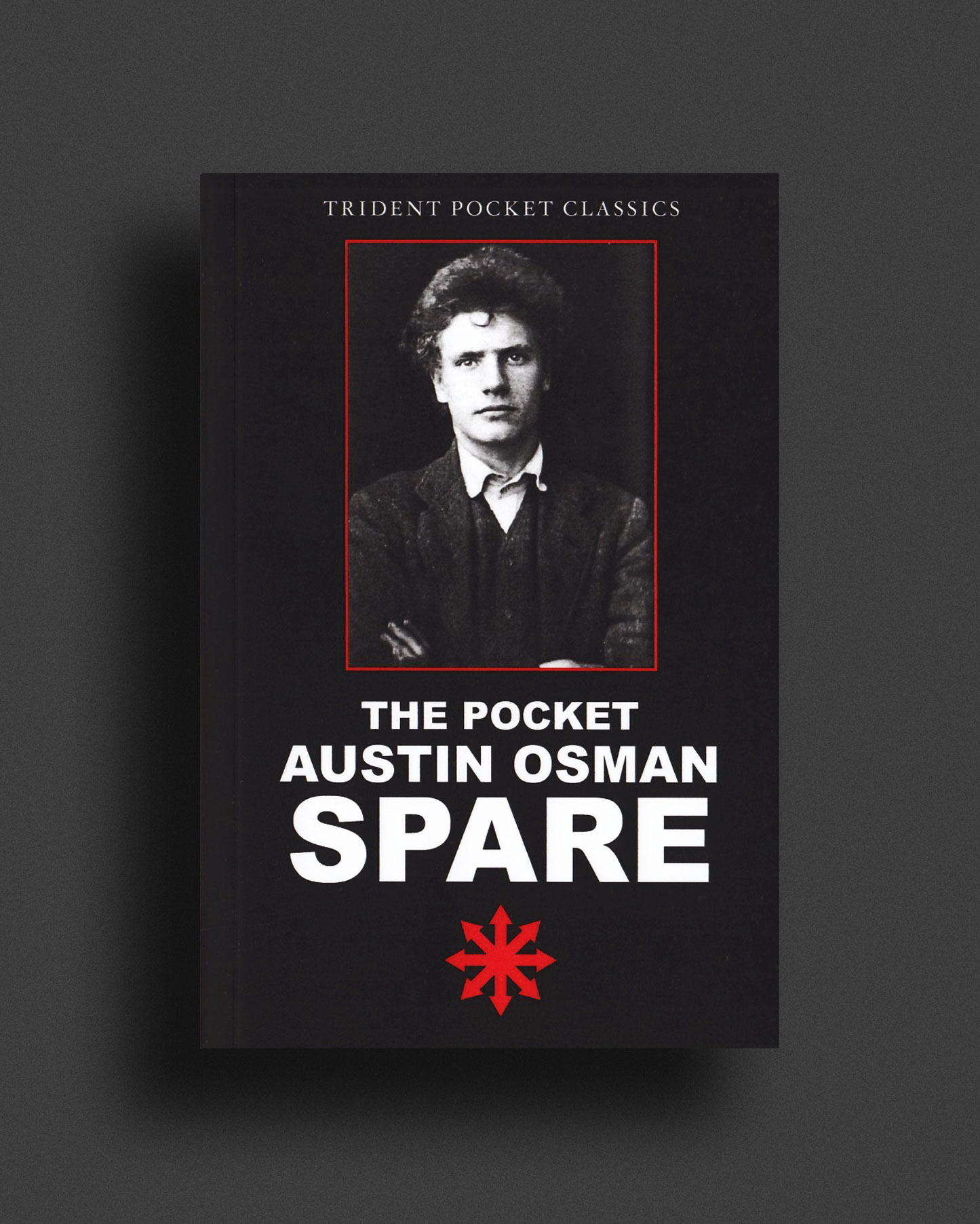
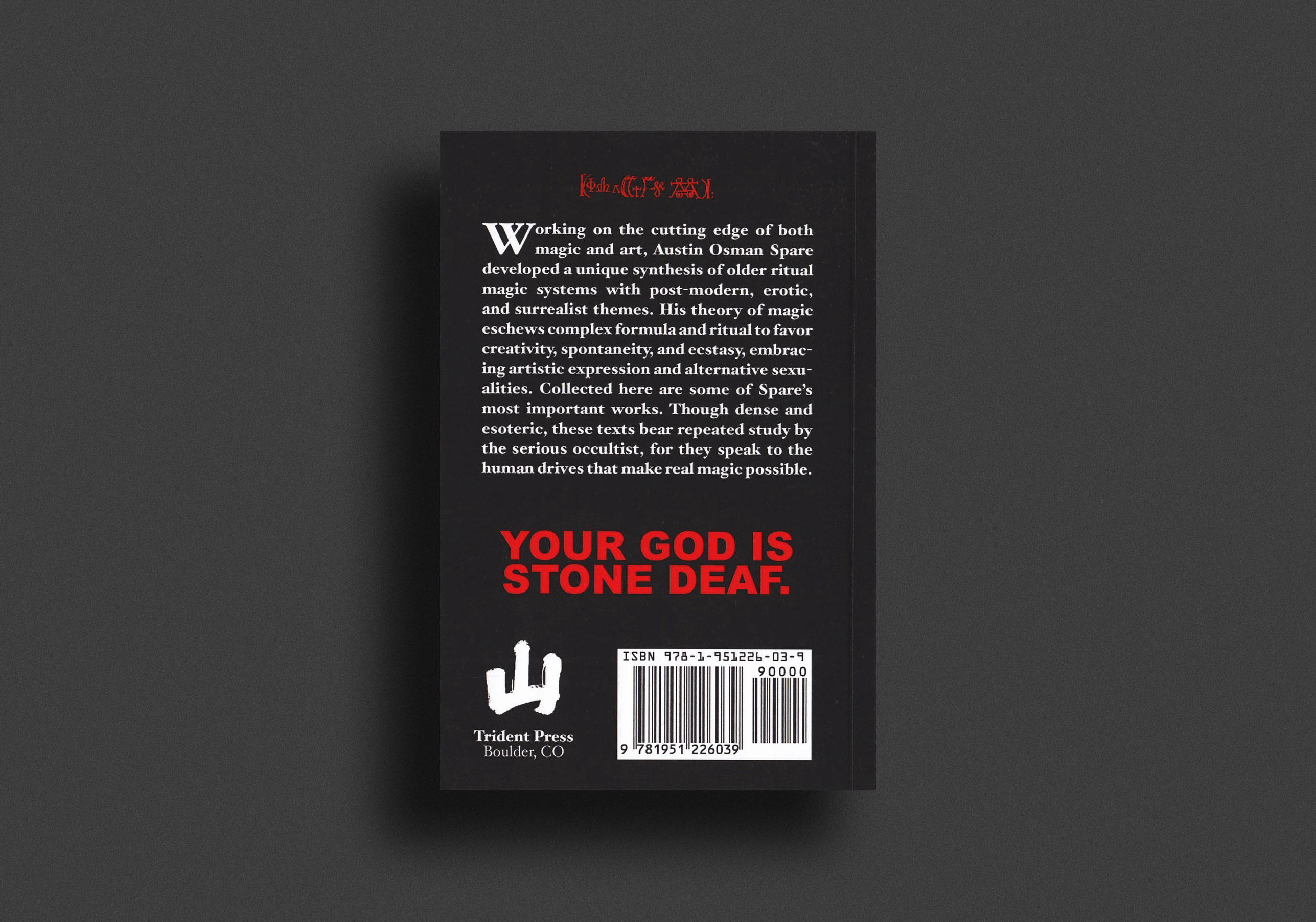
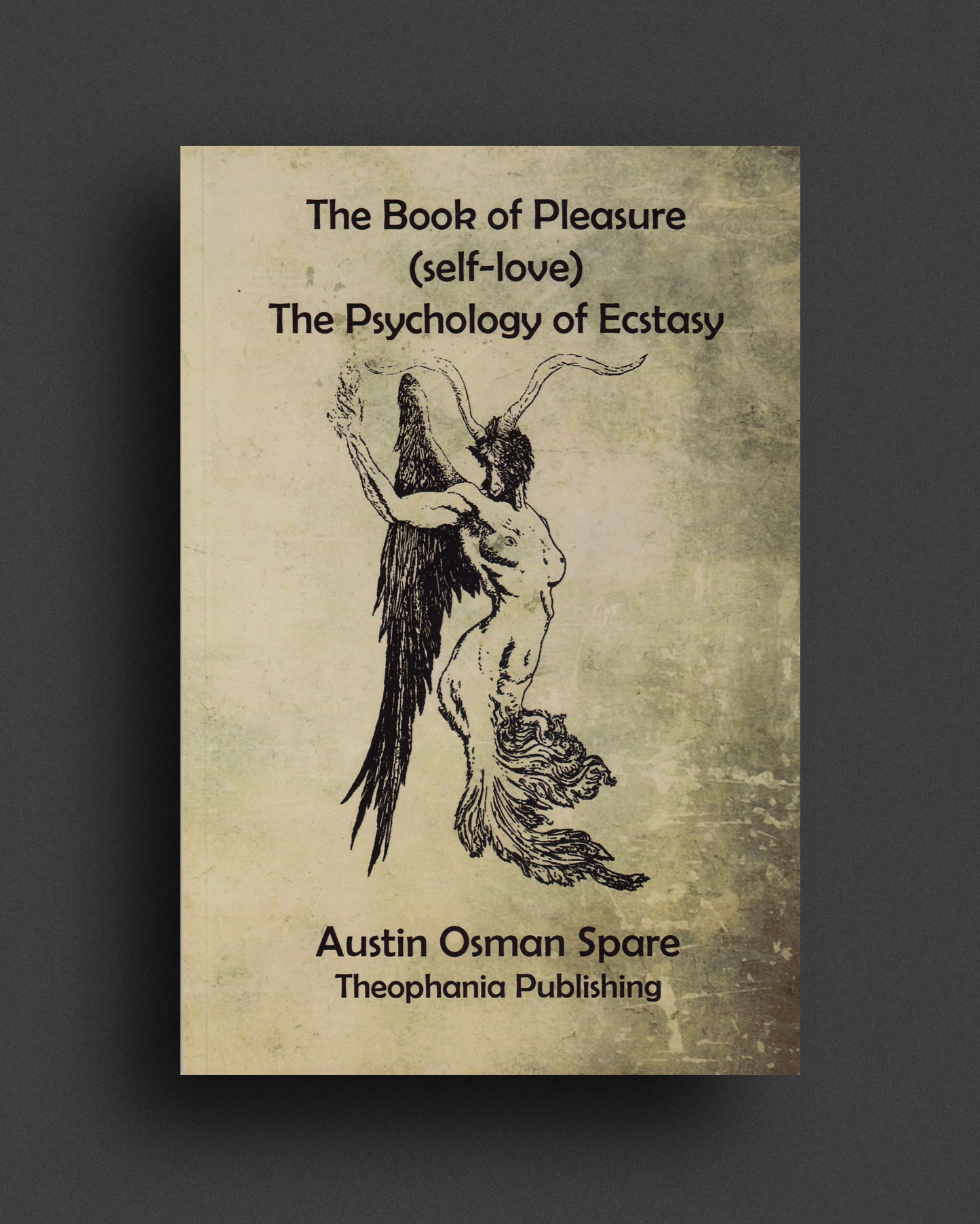
Working on the cutting edge of both magic and art, Austin Osman Spare developed a unique synthesis of older ritual magic systems with post-modern, erotic, and surrealist themes. His theory of magic eschews complex formula and ritual to favor creativity, spontaneity, and ecstasy, embracing artistic expression and alternative sexualities. Collected here are some of Spare’s most important works. Though dense and esoteric, these texts bear repeated study by the serious occultist, for they speak to the human drives that make real magic possible.
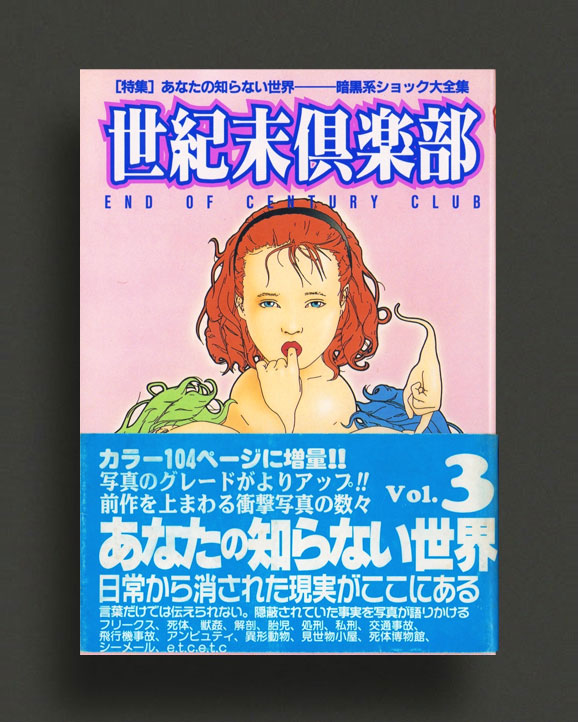
1996, Japanese
Softcover (w. dust jacket and obi-strip), 256 pages, 21 x 14.8 cm
1st Edition, Out of print title / used / very good
Published by
Core Magazine / Tokyo
$110.00 - In stock -
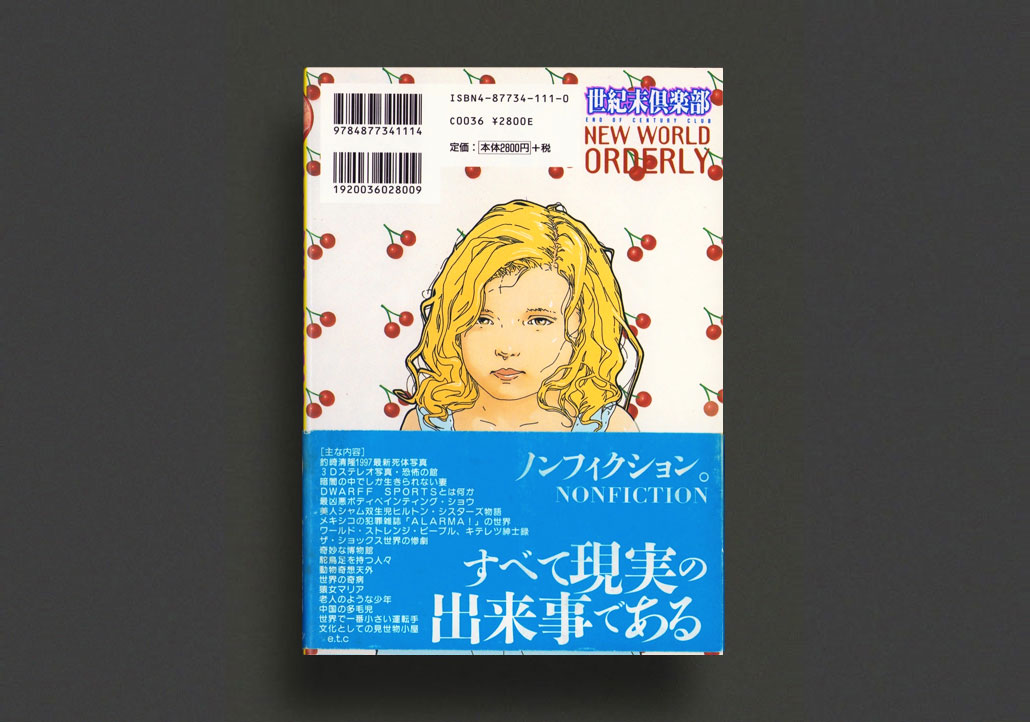
Don't judge a book by it's cover — you've been warned! Straight out of the young nihilist 90s, the second volume of the very short-lived and absolutely demented Seikimatsu Club (End of the Century Club), published in Tokyo between 1996—2000 for a total of only five volumes. This second volume, "Deathtpia in Suburbia", has the feature theme of Horror! Bizarre! Bizarre! Cruelty! and is packed to the absolute brim with "corpses, freaks, spectacles, murders, suicides, autopsies, rapes, sickness, pain, accident, war, religious rituals, violence, forensics, foetuses. A shocking document that eliminates all fiction (all genuine)!"
With contributors to this issue including Masami Akita (Merzbow), Masaaki Aoyama (author), Kiyotaka Tsurisaki (corpse photographer), Suehiro Maruo (ero guro manga artist), Teruo Ishii (ero guro film director), Kotaro Kobayashi (Too Negative editor-in-chief), Trevor Brown (artist), you should know what you are getting yourself into.
Following the trajection of fellow Japanese abnormal subculture magazines such as Kotaro Kobayashi's notorious Too Negative, Ultra Negative, ORG, etc., and in the spirit of a new wave of 90's nihilist publishing around the world (Answer Me!, Killing Times, Fuck!, AMOK, Feral House, etc.) End of the Century Club stares directly into the dark recesses of humanity and presents its viewers with the uncompromising extremes of our global culture. The real stuff. Where Too Negative presents itself as a glossy colour photo/art magazine, End of the Century Club is almost like a Whole Earth Catalog to the authentic macabre. With articles, interviews, reports, catalogues and hundreds of images spanning all manner of medical/autopsy/corpse photography, death journalism, serial killers, formalihide babies, war/shock accident/crime scenes, hara-kiri, murder, rape, slaughterhouse, forensic books, international underground magazines, Photobook of World Diseases, City of Sodom, corpses on the internet, Underground Baby Contest, Atlas of Dermatology, complete guide to Freaks movies, the Garbage Pail Kids, religious ceremonies, animal deformities, Interview with "The King of Cult" ero guro film director Teruo Ishii, bizarro sex, acrotomophila, artist Joel Peter Witkin's world, interview with Masaaki Aoyama, interview with corpse photographer Kotaro Kobayashi (Death, Hardcore Works, Too Negative, Billy, etc.), photography of George Dureau, interview with fetish film director and producer Kaoru Adachi, interview with experimental film director Shozin Fukui (Metal Days, Gerorisuto, Caterpillar, 964 Pinocchio, Rubber's Lover...), article on "Serial Killers & Record Junkies" by Toshihiko Hironaka (of Boris, Balzac, Hellbent fame), and all sorts of other curios from the mondo, bizarro realm.
Includes "gorgeous" 24-page high-quality corpse photo booklet feature and cover art by Trevor Brown.
Not for the fain-hearted. You'll feel like a shower after.
Very Good copy with dust jacket and obi.
1997, Japanese
Softcover (w. dust jacket and obi-strip), 256 pages, 21 x 14.8 cm
1st Edition, Out of print title / used / very good
Published by
Core Magazine / Tokyo
$110.00 - In stock -
Don't judge a book by it's cover — you've been warned! Straight out of the young nihilist 90s, the third volume of the very short-lived and absolutely demented Seikimatsu Club (End of the Century Club), published in Tokyo between 1996—2000 for a total of only five volumes. This third volume, "The World You Don't Know", has the feature theme of exposing "a reality erased from everyday life", which sums it up... packed to the absolute brim with "freaks, corpses, bestiality, autopsies, fetal executions, lynchings, traffic accidents, plane crashes, amputee, heteromorphic animals, freak shows, corpse museums, shemales, etc. A shocking document that eliminates all fiction (all genuine)!"
With contributors to this issue including Masami Akita (Merzbow), Masaaki Aoyama (author), Kiyotaka Tsurisaki (corpse photographer), Hideshi Hino (horror manga artist / Guinea Pig director), Kotaro Kobayashi (Too Negative editor-in-chief), Trevor Brown (artist), you should know what you are getting yourself into.
Following the trajection of fellow Japanese abnormal subculture magazines such as Kotaro Kobayashi's notorious Too Negative, Ultra Negative, ORG, etc., and in the spirit of a new wave of 90's nihilist publishing around the world (Answer Me!, Killing Times, Fuck!, AMOK, Feral House, etc.) End of the Century Club stares directly into the dark recesses of humanity and presents its viewers with the uncompromising extremes of our global culture. The real stuff. Where Too Negative presents itself as a glossy colour photo/art magazine, End of the Century Club is almost like a Whole Earth Catalog to the authentic macabre. With articles, interviews, reports, catalogues and hundreds of images spanning all manner of medical/autopsy/corpse photography, death journalism, serial killers, formalihide babies, war/shock accident/crime scenes, human intersection, murder art show, lobster boy, 3D stereo photography hall of horrors, donkey fucker (please no!), strange diseases of the world, amputee lovers, siamese twins, deformed children, amazing Photo Press historical stories, animal deformities, huge Hideshi Hino art gallery, book guide and interview, ALARMA! photo gallery, Trevor Brown art gallery, corpse photography, columns and features on and by Kiyotaka Tsurisaki (Death, Hardcore Works, Too Negative, Ultra Negative, Billy, etc.), Father Yod (YaHoWha 13) record guide, Medical Atlas by Naruhiko Tanaka, lots of noise record reviews by Masami Akita (Merzbow) inc. Smell & Quim, M.B., Lustmord, Ramleh, Genocide Organ, Richard Ramirez, Agoraphobic Nosebleed, Whitehouse, Extreme Hair Stench, Genital Masticator, Traci Lords Loves Noise, Morder, etc., interview with artist Wes Benscoter (heavy metal illustrator for Slayer, Mortician, Kreator, Deceased, Cattle Decapitation, etc) on the occasion of his NG Gallery body painting show, complete Freak book library, and all sorts of other curios from the mondo, bizarro realm. Lots of full colour gore.
Not for the fain-hearted. You'll feel like a shower after.
Very Good copy with dust jacket and obi.
1980, English
Softcover, 125 pages, 21 x 14 cm
Reprint,
Published by
Weiser / Boston
$44.00 - In stock -
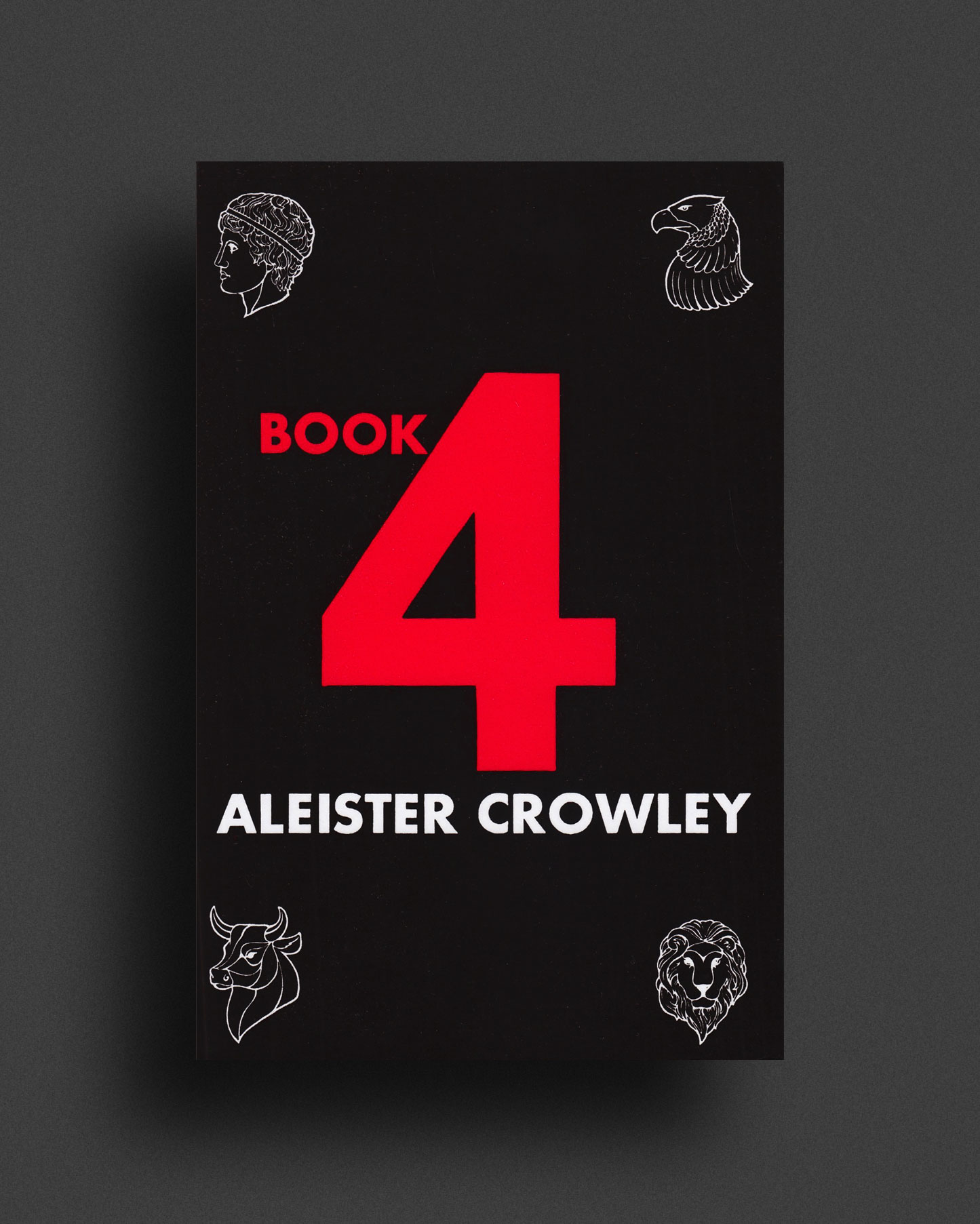
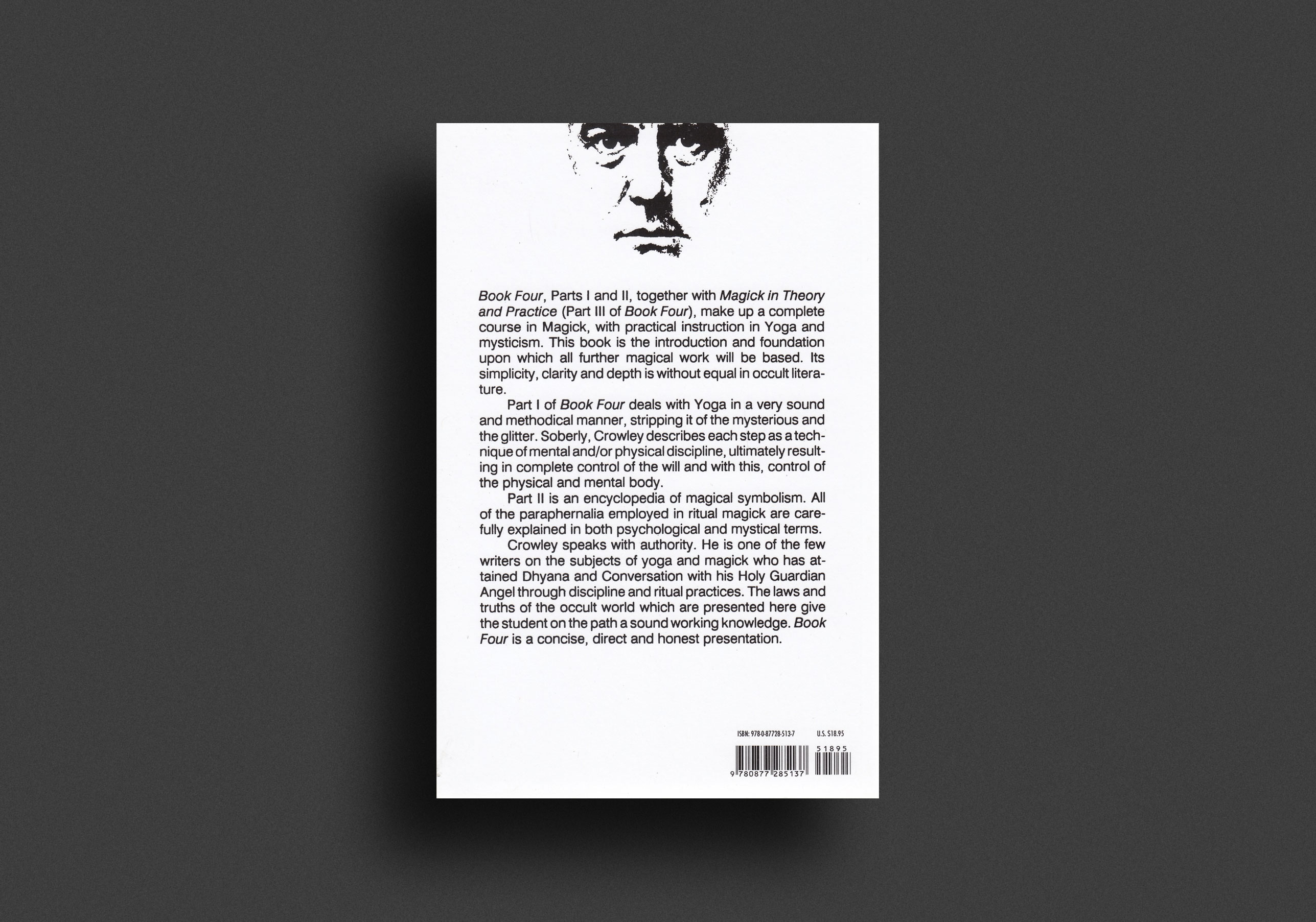
Book Four, Parts I and ll, together with Magick in Theory and Practice (Part Ill of Book Four), make up a complete course in Magick, with practical instruction in Yoga and mysticism. This book is the introduction and foundation upon which all further magical work will be based. Its simplicity, clarity and depth is without equal in occult literature.
Part I of Book Four deals with Yoga in a very sound and methodical manner, stripping it of the mysterious and the glitter. Soberly, Crowley describes each step as a technique of mental and/or physical discipline, ultimately resulting in complete control of the will and with this, control of the physical and mental body.
Part Il is an encyclopedia of magical symbolism. All of the paraphernalia employed in ritual magick are carefully explained in both psychological and mystical terms.
Crowley speaks with authority. He is one of the few writers on the subjects of yoga and magick who has attained Dhyana and Conversation with his Holy Guardian Angel through discipline and ritual practices. The laws and truths of the occult world which are presented here give the student on the path a sound working knowledge. Book Four is a concise, direct and honest presentation.
2025 , English
Softcover (w. dust jacket), 256 pages, 19.1 x 12.7 cm
Published by
Mandylion Press / Connecticut
$50.00 - In stock -
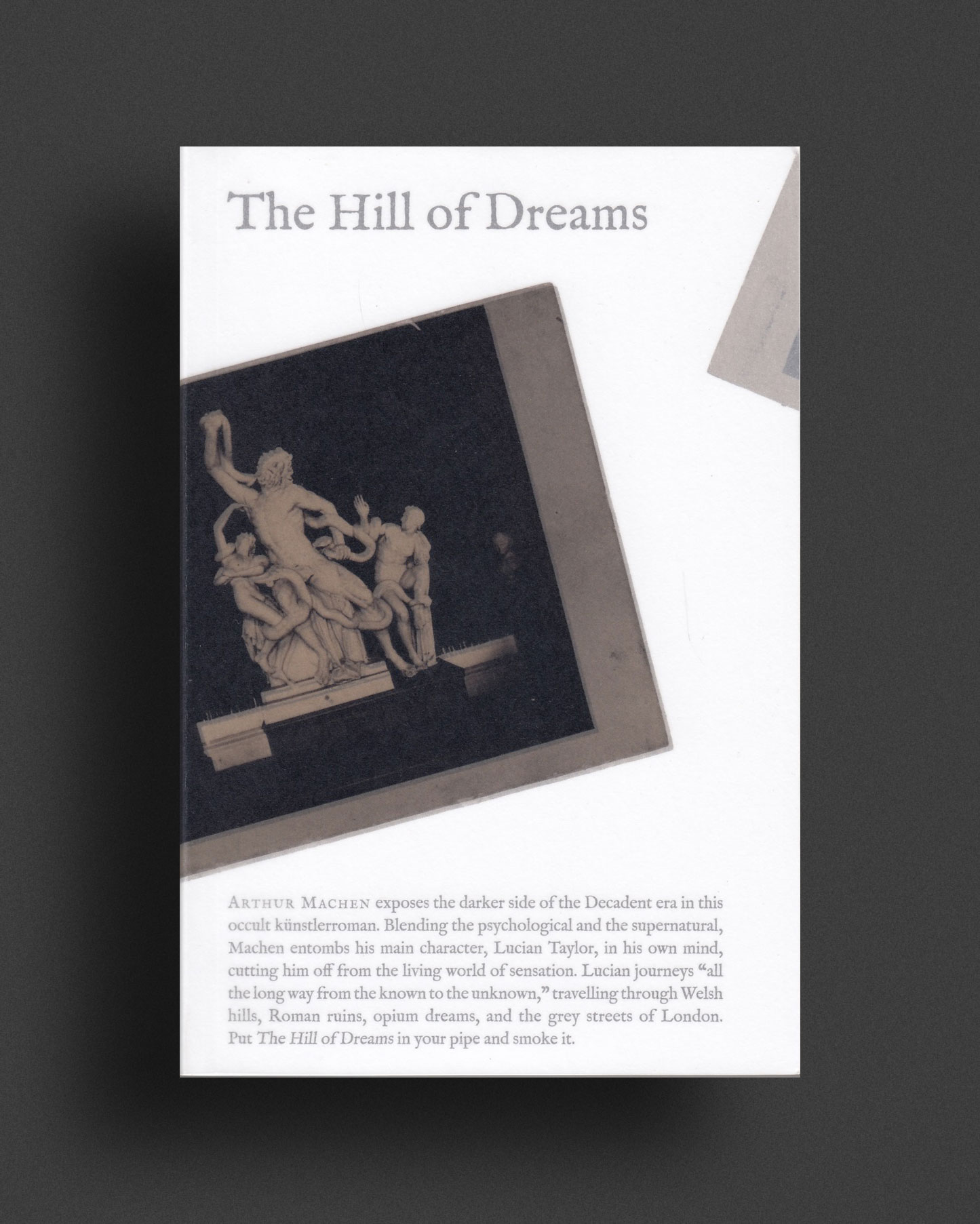
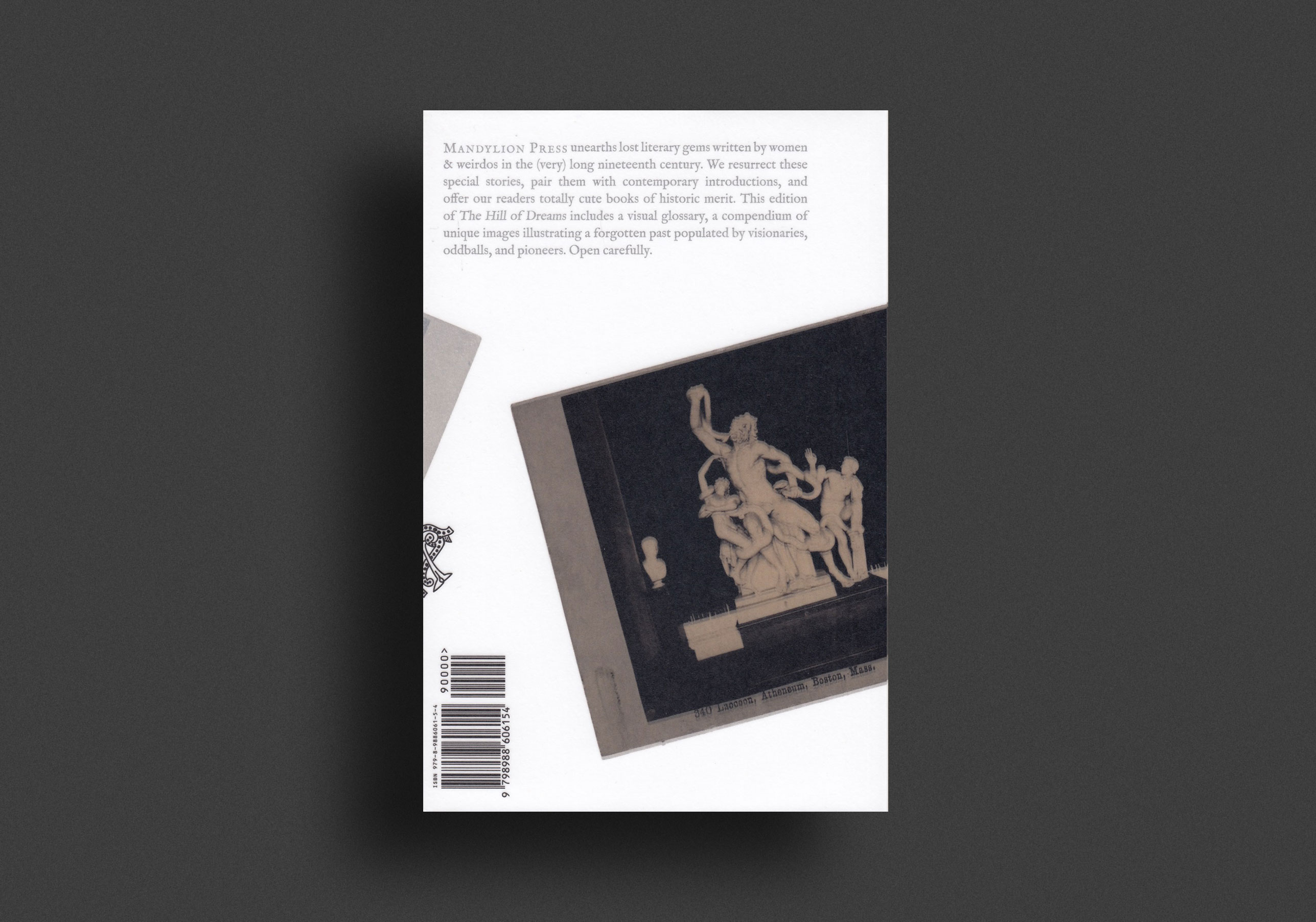
Arthur Machen exposes the darker side of the Decadent era in this occult künstlerroman. Blending the psychological and the supernatural, Machen entombs his main character, Lucian Taylor, in his own mind, cutting him off from the living world of sensation. Lucian journeys “all the long way from the known to the unknown,” travelling through Welsh hills, Roman ruins, opium dreams, and the grey streets of London. Includes the Mandylion Press's signature visual glossary. Written in 1897 but not published until 1907, the book was, in Machen’s own estimation, his masterpiece. All Mandylion books come adorned in a translucent dust jacket that emphasises the unique material qualities of the book.
Arthur Machen (1863–1947) was born Caerleon, Wales. His most well-known works include 'The Great God Pan' and 'Ornaments of Jade'. He has influenced writers as diverse as H.P. Lovecraft, Stephen King, Jorge Luis Borges and Sylvia Townsend Warner.
2026, English
Hardcover, 212 pages, 30.8 x 24.6 cm
Published by
Fulgur Press / UK
$135.00 - In stock -
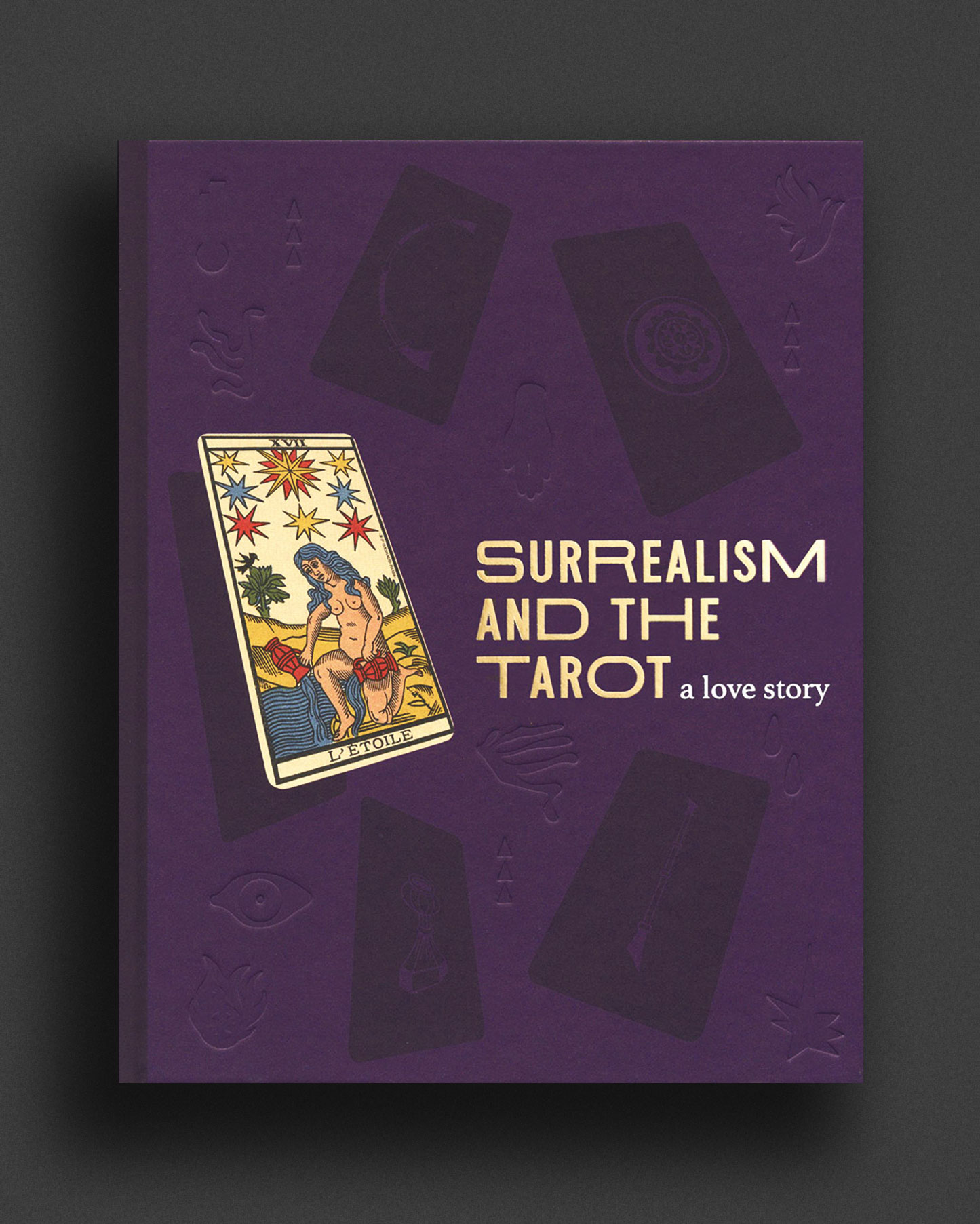
A definitive volume illuminating the under-studied role of tarot design in the Surrealist movement.
Edited with text by Tessel M. Bauduin. Text by Susan Aberth, Tere Arcq, Will Atkin, Emily E. Auger, Victoria Ferentinou, Anne Foucault, Felicity Gee, Jennifer Jäger, Elliott H. King, Claudia Mesch, Judith Noble, Michael Richardson, Robert Shehu-Ansell, Abigail Susik, Paulina Caro Troncoso, Daniel Zamani.
Many long-held aficionados of Surrealism will have heard of the tarot created by Salvador Dalí, or of Arcane 17, André Breton's novel dedicated to Major Arcana card XVII, The Star. Those with more recent interest might have also encountered the wonderful deck designed by Leonora Carrington, discovered in Mexico in 2018. But was there really a place for tarot in Surrealism? Did the Surrealists prophesize with tarot cards, or just play with them? Did they use existing cards, and if so, which ones? Did they make their own?
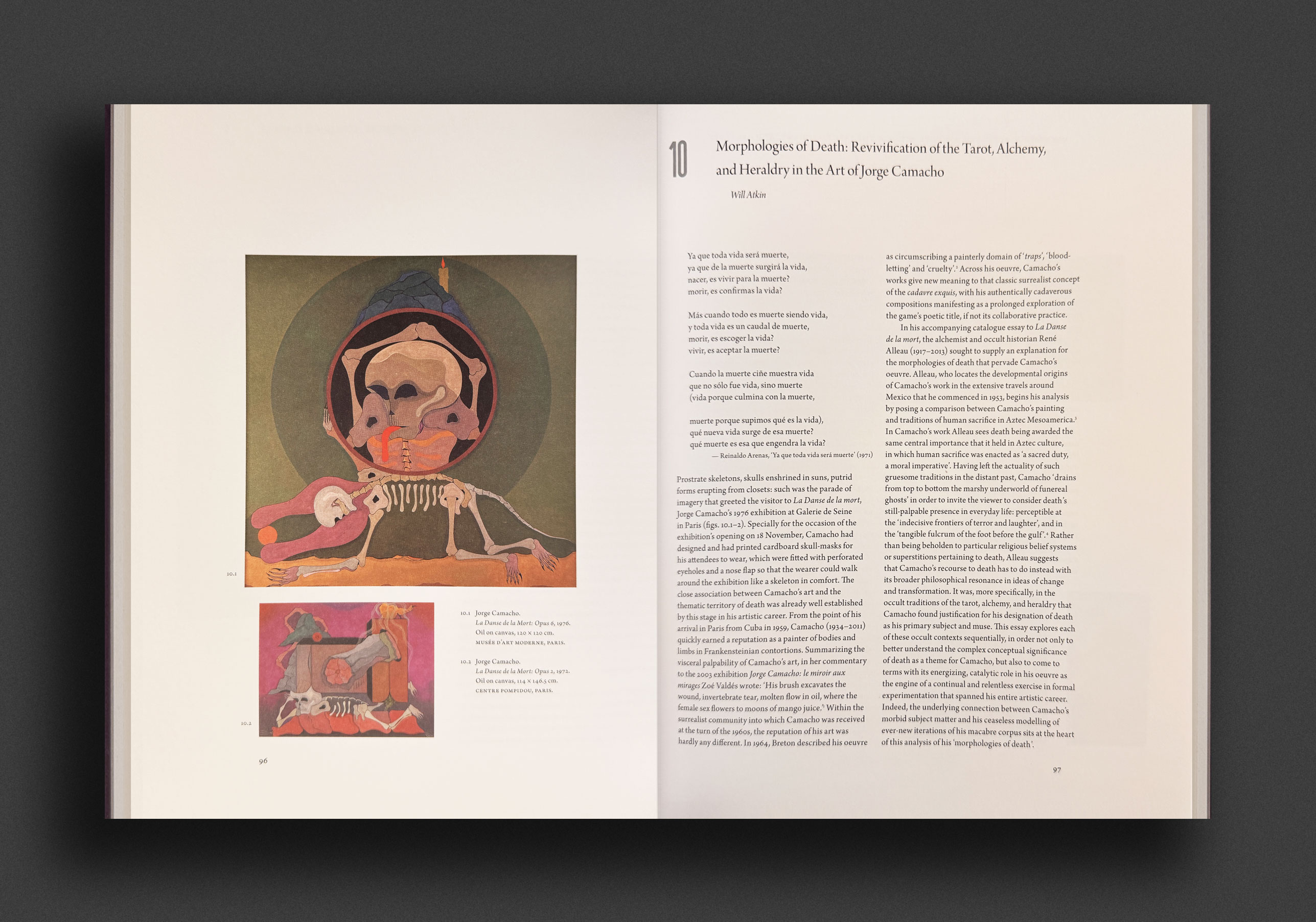
This groundbreaking publication from Fulgur Press, a leading voice on esotericism and magic in visual culture, answers these questions and many more. Through a series of essays from renowned experts in the field, including Susan Aberth and Tere Arcq, the book addresses a topic that has received very little in-depth scholarly study so far. Extensively illustrated, Surrealism and the Tarot: A Love Story highlights surrealist tarot designs, examines the incorporation of tarot cards and designs in surrealist film, art, literature and polemics, and explores the influence of surrealist visual tropes on contemporary tarot design. Spanning the 1920s to the present day, the book explores the full breadth of international surrealist interest in cartomancy. Surrealism and the Tarot: A Love Story highlights work from a wide-ranging slew of Surrealists, from Penny Slinger to Ithell Colquhoun, from Victor Brauner to Jorge Camacho, and from Kay Sage to Alejandro Jodorowsky, among many others.
1978, Japanese
Hardcover (w. slipcase), 236 pages, 14 x 20.5 cm
1st Edition, Out of print title / used / very good
Published by
Togensha / Tokyo
$65.00 - In stock -
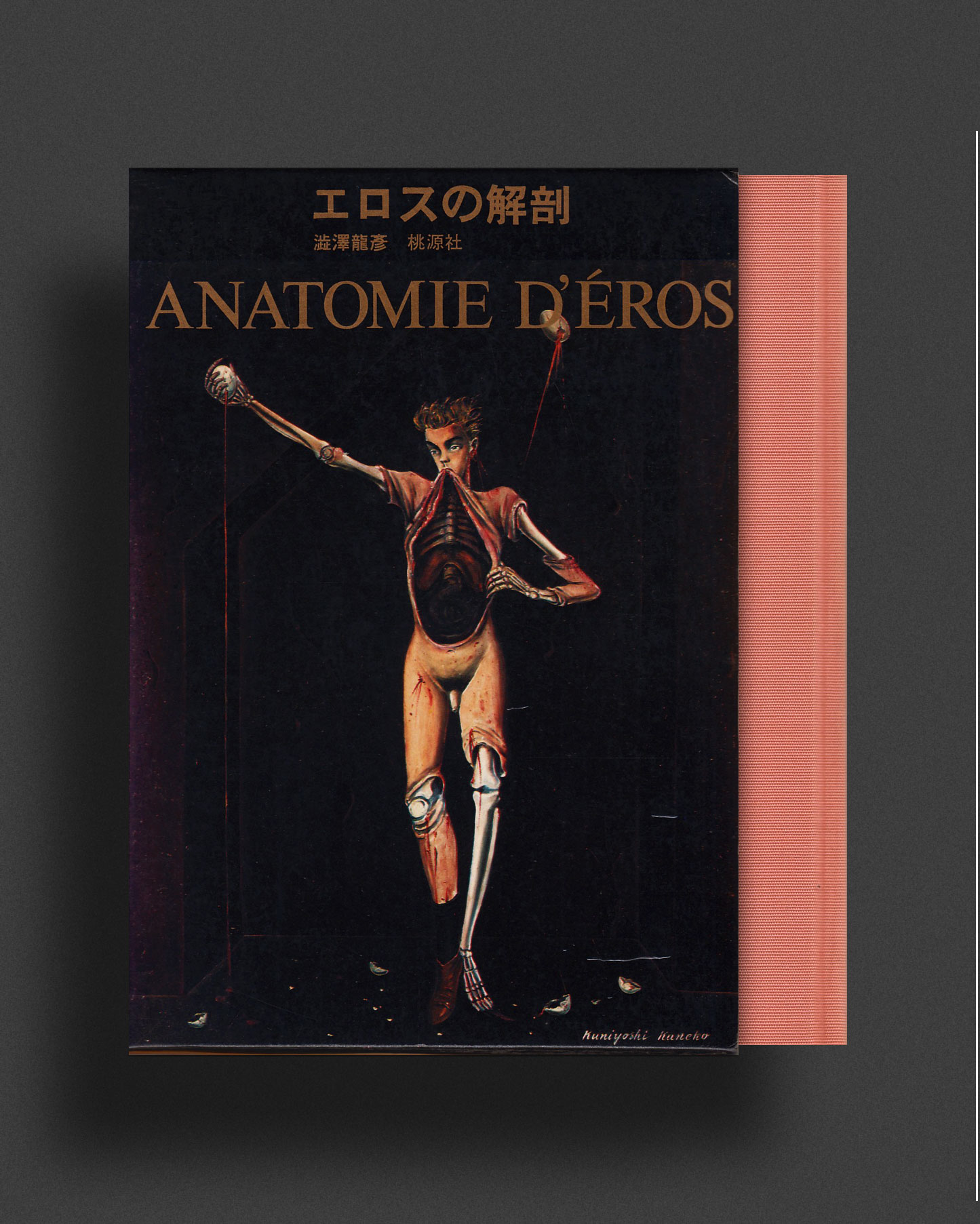
Rare slipcased 1978 hardcover edition of this classic collection of essays on eroticism and psychosexuality by the prominent Japanese author, translator, and French literature scholar Tatsuhiko Shibusawa (1928–1987). Cover art and illustrations by Kuniyoshi Kaneko. First published in paperback in 1965, Anatomy of Eros weaves together mythology, folklore, history, and psychological analysis to explore the complex landscape of human eroticism, deviance, and cultural taboos. Drawing primarily on psychoanalysis, psychology and philosophy, offering a remarkable breadth of knowledge despite the limited academic research available at the time, introducing subjects ranging from Freudian theory, the writings of Bataille, Sartre and Lévi-Strauss to surrealism, erotic art, mythology and sexual customs throughout history. For readers, Shibusawa’s encyclopedic approach provided a foundation from which to explore the darker aspects of humanity and develop their own artistic and philosophical interests, becoming instrumental texts in Shōwa era Japan and the new counter–culture.
The collection of essays explore diverse and unusual erotic subjects, including "On the Goddess's Belt" which examines the contrast between maternal goddesses and love goddesses through historical episodes and the curious invention of the chastity belt in Europe, "On Breasts" addressing the shifting historical and erotic perceptions of the female breast and male "breast complexes", essays on Sadomasochism & Deviance which explore Marquis de Sade, sadomasochistic impulses, incest taboos, and the darker margins of human desire, A Tour of Erotic Libraries showcasing Shibusawa's deep and eccentric erudition regarding global pornography and underground literature, and much more.
Tatsuhiko Shibusawa (1928–1987), was a well-known and controversial Japanese novelist, art critic, specialist in medieval demonology, and translator of French writers such as Jean Cocteau, Georges Bataille and Marquis de Sade. In 1960 he and his publisher, Kyōji Ishii, were trialled for public obscenity over the publishing of Shibusawa's translation of de Sade's Juliette into the Japanese language. What was to be known as the "Sade Trial" took 9 years and although many of Japan's leading authors testified for the defense, in 1969 the Japanese Supreme Court ruled them guilty and charged. This did not deter Shibusawa, whose essays on black magic, demonology and eroticism were popular reading in Japan, and in 1981 he was awarded the 9th Izumi Kyoka Literature Prize. His magazine Le Sang Et La Rose is a masterpiece of Japanese 1960s avant–garde publishing, and his championing of many experimental writers and artists of the period helped shaped the counter–cultural landscape of the Shōwa era.
2025, English
Softcover + flexi–disc, 184 pages, 26 x 19.5 cm
Limited Edition,
Published by
First To Knock / Michigan
$72.00 - In stock -
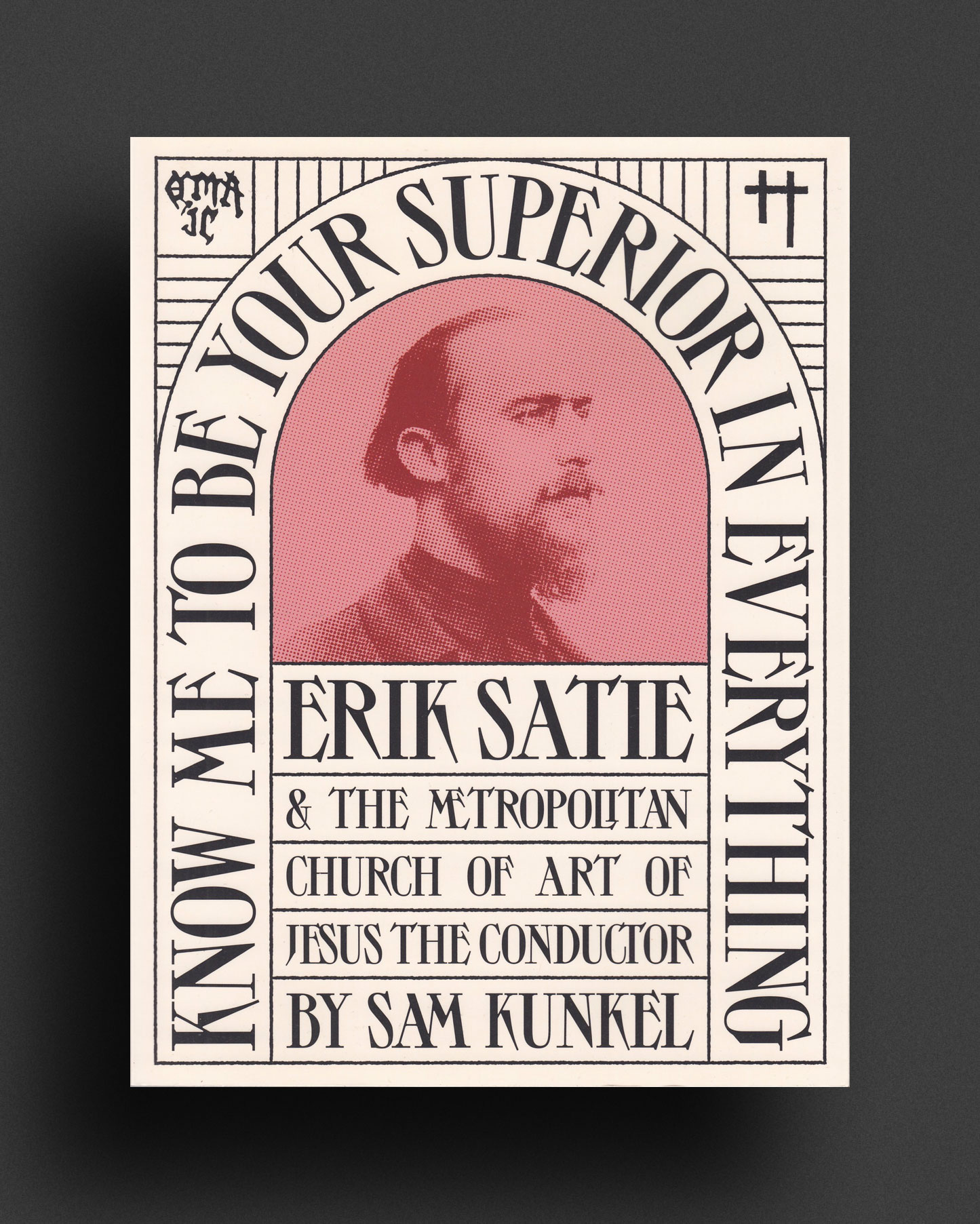
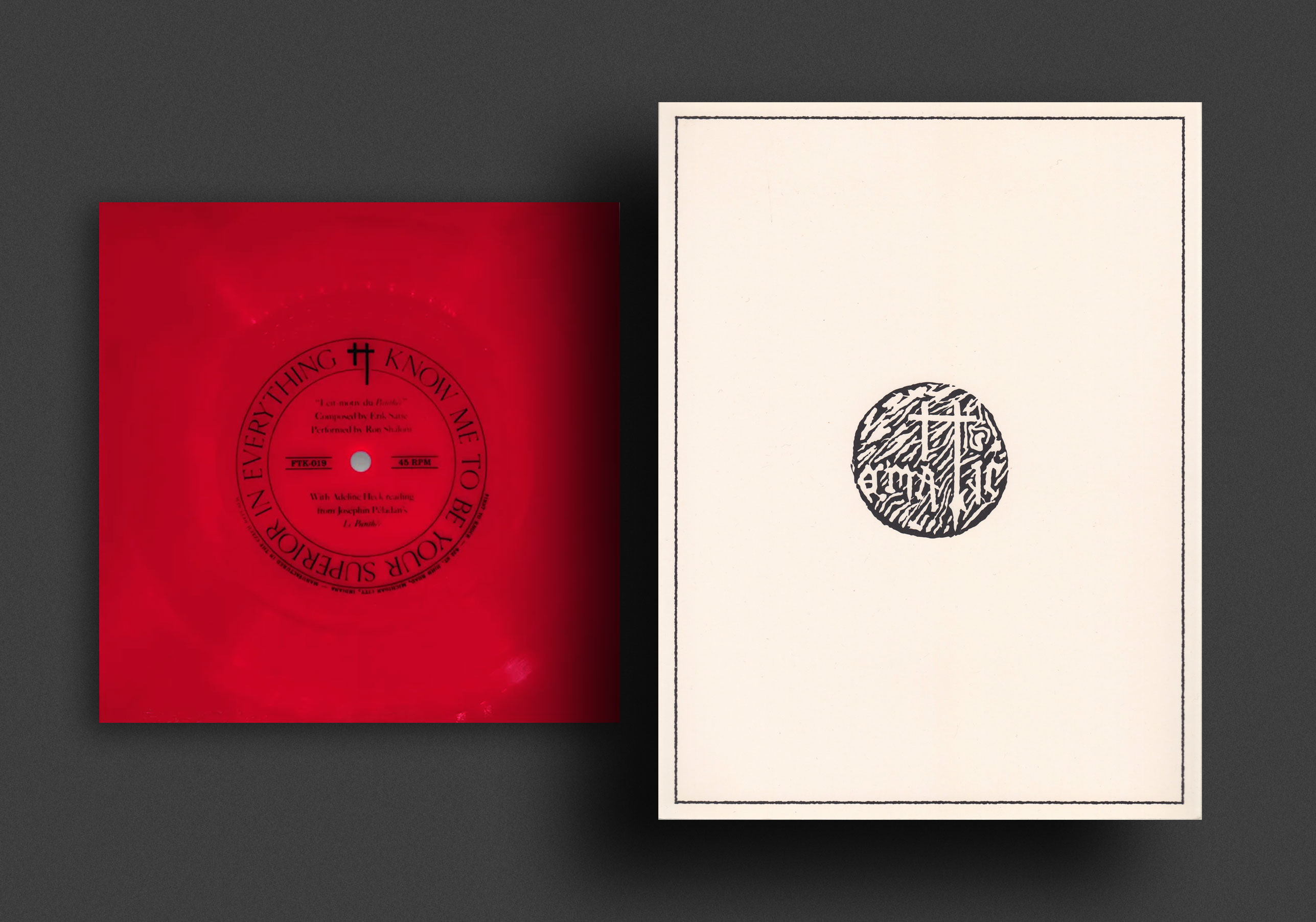
Limited-edition version with flexi-disc recording of Satie’s “Leit-motiv du Panthée” performed, as intended, as an accompaniment to a reading of Joséphin Péladan’s Le Panthée.
In 1892, Erik Satie was at a crossroads. Despite having already composed some of the finest works ever written for piano, the 26-year-old was still penniless and unappreciated. His artistic ethos—a paradoxical mix of reactionary Medievalism and avant-garde absurdism—could find no quarter in fin-de-siècle Paris. And so, with his musical aspirations dashed and nowhere left to turn, Satie would turn to himself.
His subsequent revolt was as shocking as it was incomprehensible to his contemporaries. Satie announced himself to be “the Parcener,” the head of a new religious order. It was, in fact, a church of his own founding—The Metropolitan Church of Art of Jesus the Conductor.
Transforming his dilapidated apartment into an “Abbatial Church,” Satie began issuing scathing letters to prominent cultural figures who had sought to render judgment upon his Art. Targets of the Parcener’s screeds ranged from the cape-clad mystagogue, Joséphin Péladan, to the pompous composer, Camille Saint-Saëns; from the novelist Octave Mirbeau, who had dared to lampoon the Parcener, to the theatre director Aurélien Lugné-Poe, whose unintentionally nude stage production had offended the Parcener’s moral sensibilities. The fiercest feud was reserved for music critic Henry Gauthier-Villars, whom the Parcener battled in the press for years, until the spat culminated in a physical altercation at a concert. Throughout the 1890s, luminaries, such as these, found themselves excommunicated from a church to which they had not even known they once belonged.
Inscrutable as the author himself, Satie’s writings from this brief period strike a tone that lies somewhere between fervent Catholicism, anarchistic satire, and the righteous rage of the true Artist—leaving readers befuddled as to the composer’s true intent. Yet, despite the impenetrability of his writings, the Parcener’s missives took the Parisian art scene by storm and, as Satie’s crusade grew in intensity, so too did his reputation, making this era as historically crucial as it is bewildering. Nevertheless, the Metropolitan Church was ultimately a solitary undertaking. Despite certain documents indicating that the Church expected to have more than a billion members, history would show that its congregation never grew beyond one: Erik Satie himself.
Know Me To Be Your Superior in Everything is the first book dedicated exclusively to the story of Erik Satie’s Metropolitan Church of Art of Jesus the Conductor. Drawing upon a multitude of firsthand sources—including documents held in the Erik Satie archives in Caen—the book includes new English translations of all known Church publications and correspondence by Satie as the Parcener. Facsimilic translations of Satie’s Church publications are reproduced herein as well, capturing, for the first time in English, the design and typography of the original productions.
Know Me To Be Your Superior in Everything was written by Sam Kunkel, a scholar of 19th century Symbolist literature. Previous to this book, Kunkel has also provided translations for Echoes of a Natural World—Tales of the Strange & Estranged (First To Knock, 2020); A Beam of Sunlight in the Deep Forest—Mystical Prose Works by Édouard Schuré (First To Knock, 2021); as well as The Solar Circus by Gustave Kahn (First To Knock, 2022). Kunkel has also written extensively in French, covering topics such as Joséphin Péladan and religion in fin-de-siècle Paris. His critical reedition of Péladan’s notorious novel, Istar, was published by Éditions du Lérot in 2024, and his book, L’Orphisme et le roman post-romantique, a comparative study of the mystical novel, was released by Éditions Otrante in 2023.
Design by Bryan Cipolla
2015, English
Softcover, 74 pages, 23 x 15.2 cm
Published by
Theophania Publishing / Canada
$40.00 - Out of stock
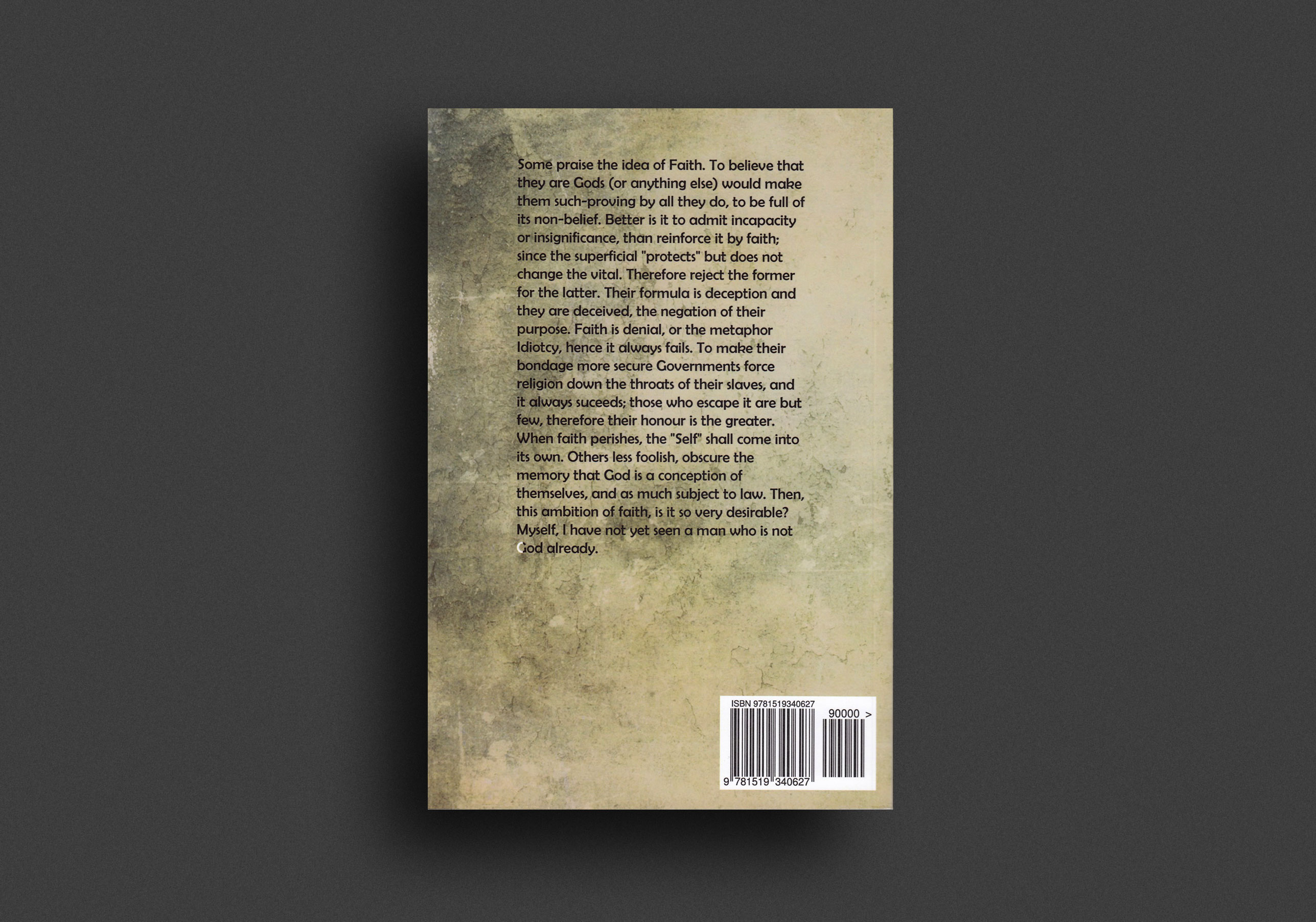
Some praise the idea of Faith. To believe that they are Gods (or anything else) would make them such-proving by all they do, to be full of its non-belief. Better is it to admit incapacity or insignificance, than reinforce it by faith; since the superficial "protects" but does not change the vital. Therefore reject the former for the latter. Their formula is deception and they are deceived, the negation of their purpose. Faith is denial, or the metaphor Idiotcy, hence it always fails. To make their bondage more secure Governments force religion down the throats of their slaves, and it always suceeds; those who escape it are but few, therefore their honour is the greater. When faith perishes, the "Self" shall come into its own. Others less foolish, obscure the memory that God is a conception of themselves, and as much subject to law. Then, this ambition of faith, is it so very desirable? Myself, I have not yet seen a man who is not God already.
1921 / 2018, English
Softcover, 152 pages, 20.4 x 12.7 cm
Published by
One-Eye Publishing / Canada
$40.00 - Out of stock
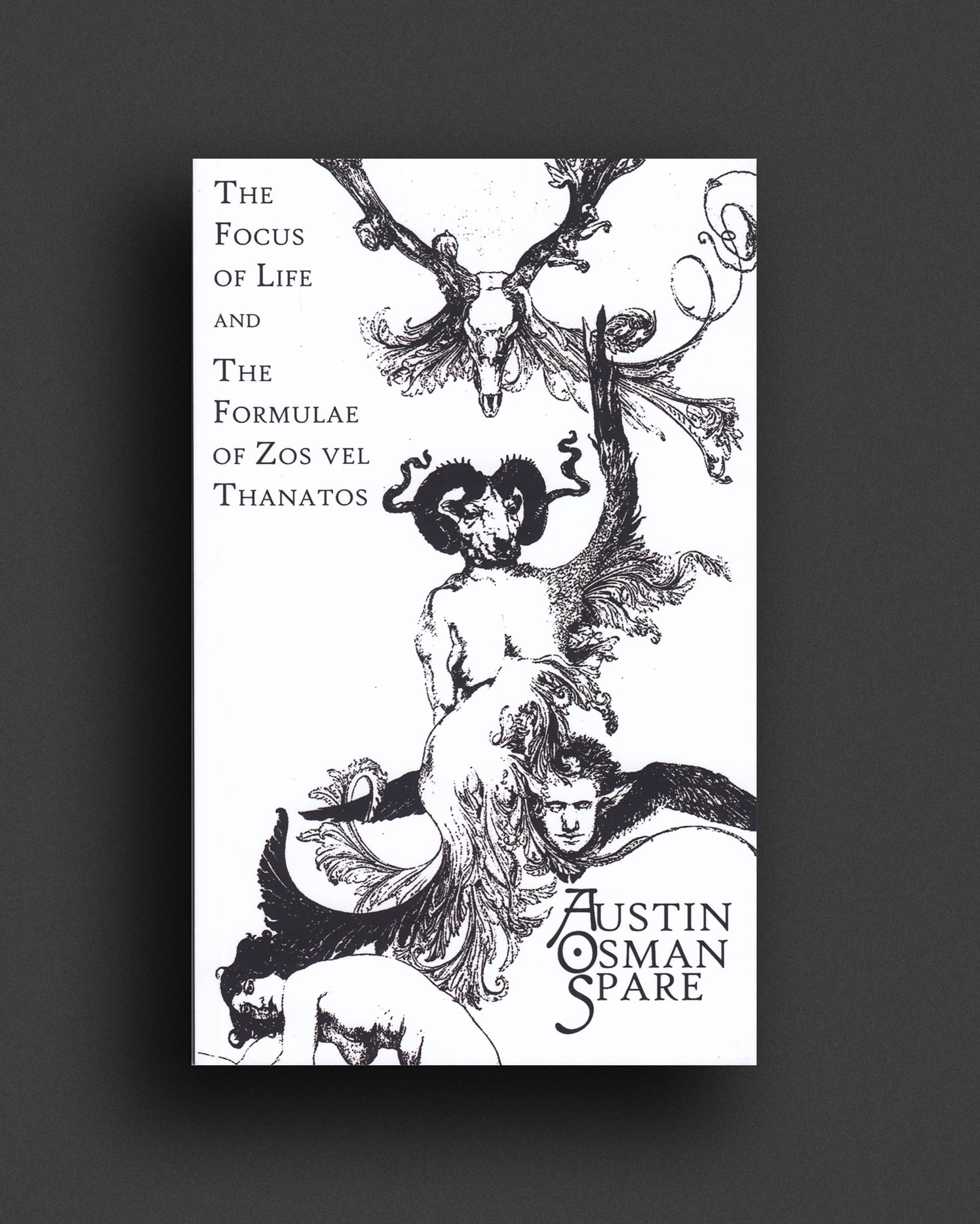
First published February 1921 by the Morland Press in London, The Focus of Life, The Mutterings of AOS is a comprehensive treatise written by Austin Osman Spare on key occult concepts he introduced in his previous writings. The Formulae of Zos vel Thanatos (part of Spare's later magical and philosophical writings, associated with the material published and explored alongside his system in works like Zos Speaks! Encounters with Austin Osman Spare) was written during Austin Osman Spare's later creative and occult period (mid-20th century, with correspondence and materials from the 1940s–1950s collected and later published).
1973 / 1986, English
Softcover, 336 pages, 23 x 15.5 cm
Published by
Weiser / Boston
$50.00 - In stock -
A unique collection of Qabalistic texts that includes Gematria, 777, and Sepher Sephiroth.
Gematria provides essential explanations of theoretical and practical Qabalistic number analysis and philosophy. “An Essay in Number,” also included, provides invaluable insights into key numbers as well as techniques and safeguards for practical magical work. Gematria was first published in The Equinox, vol. 1. no. 5.
777 itself contains, in concise tabulated form, an overview of symbolism of the major world religions, as well as the system of correspondence of the Hermetic Order of the Golden Dawn. In short, it is a complete magical and philosophical dictionary—a key to all religion and practical occultism—an amazing work whose value has been recognized through many editions since its first appearance in 1909 and subsequent enlargement in 1955.
The third text in this collection is Sepher Sephiroth, a unique dictionary listing hundreds of Hebrew words arranged by numerical value. It was compiled jointly by Aleister Crowley and Allan Bennett and first appeared in The Equinox, vol. 1, no. 8.
Reprint of the 1986 edition.