World Food Books' programme is largely produced on Kulin Nation land. We acknowledge the Wurundjeri people of the Kulin Nation as the first and continuing custodians of this land, and pay respect to their Elders past, present, and emerging.
World Food Books is an arts and special interests bookshop in Naarm / Melbourne. Founded in 2010, World Food Books is devoted to the presentation of a rotating, hand-selection of international art, design, literary and counterculture publications with an emphasis on the anti-traditional, the experimental, the avant-garde, the heretic, the marginal.
Presenting new titles alongside rare and out-of-print books, catalogues and journals spanning the fields of modern and contemporary art, design, photography, illustration, film, literature, poetry, cultural theory, philosophy, sexuality, popular and underground culture in its many radical forms, World Food Books wishes to encourage adventurous, thoughtful and open-minded reading, looking, writing, and exchange of publishing and ideas, both current and historical.
As well as our bookshop, located in Melbourne's historical Nicholas Building, all of our inventory is available internationally via our online mail-order service.
World Food Books semi-regularly co-ordinates "Occasions", a programme of exhibits and events at the bookshop and in partnership with other hosts (such as museums and art galleries) that develop out of the activities, relationships and content of the bookshop itself.
World Food Books
The Nicholas Building
37 Swanston Street
Room 5, Level 6
Melbourne 3000
Australia
SHOP HOURS:
Thu–Fri 12–6, Sat 12–5
WEB-SHOP OPEN 24/7
World Food Books
Postal Address:
PO Box 435
Flinders Lane
Victoria 8009
Australia
Art
Theory / Essay
Architecture / Interior
Graphic Design / Typography
Photography
Fashion
Eros
LGBTQ+
Fiction / Poetry
Weird / Speculative / Science Fiction / Horror
Transgressive / Visceral / Abject
Symbolism / Decadence / Fin de siècle
Film / Video
Painting
Sculpture / Installation
Performance / Dance / Theater
Drawing
Sound / Music
Curatorial
Group Shows / Collections
Periodicals
Out-of-print / Rare
Posters / Ephemera / Discs
Signed Books
World Food Books Gift Voucher
World Food Book Bag
Australian Art
Australian Fiction
Australian Science Fiction / Speculative Fiction
Australian Poetry
Australian Photography
Japanese Photography
Conceptual Art
Minimal Art
Dada
'Pataphysics / Oulipo
Fluxus
Concrete Poetry
Pop Art
Surrealism
Arte Povera
Arte Informale / Haute Pâte / Tachism
Nouveau Réalisme / Zero / Kinetic
Situationism / Lettrism
Collage / Mail Art / Xerox Art
Art Brut / Folk / Visionary / Fantastic
Illustration / Graphic Art / Bandes Dessinées
Furniture
Italian Radical Design / Postmodernism
Textiles
Ceramics / Glass
Counterculture
Protest / Revolt
Philosophy
Psychoanalysis
Anthropology
Anarchism
Socialism / Anarchism / Communism / Capitalism
Literary Theory / Semiotics / Language
Feminism / Women's Studies
Gender Studies / Sexuality
Anthropology
Fetishism / BDSM
Drugs / Psychedelia
Crime / Violence
Animal Rights / Veganism
Occult / Esoterica
Ecology / Earth / Alternative Living
Whole Earth / Crafts
All prices in AUD (Australian dollars)
Pick-Ups
Pick-up orders can be collected in our bookshop during opening hours after order date. Please collect any Pick-up orders within 2 weeks of ordering as we have limited storage space. Orders will be released back into stock if not collected within this time. No refunds can be made for pick-ups left un-collected. If you cannot make it in to the bookshop in this time-frame, please choose postage option.
Return Policy
All sales are final. We do accept returns (for refund or exchange) for items received in error. All our orders are packed with special care using heavy-duty padding and cardboard book-mailers or bubble mailers (for smaller books), using reinforcement where required. We cannot take responsibility for any lost, stolen or damaged parcels.
Insurance
Should you wish to insure your package, please email us directly after placing your order and we can organise this at a small extra expense. Although all standard/express tracked packages are very safe and dependable, we cannot take responsibility for any lost, stolen or damaged parcels. We recommend insurance on valuable orders.
Interested in selling your old books, catalogues, journals, magazines, comics, fanzines, ephemera? We are always looking for interesting, unusual and out-of-print books to buy. We only buy books in our fields of interest and specialty, and that we feel we can resell.
We base these prices on desirability, market value, in-print prices, condition and our current stock levels. We offer cash, store credit, and can take stock on consignment. All
about 25% of the price we expect to get when we sell them, or 30% in store credit. We base these prices on desirability, market value, in-print prices, condition and our current stock levels.
Sell your books any day of the week. You can drop them off and return later. If you have a lot of books, we can visit your Sydney home.
We buy books that we feel we can resell. We offer about 25 % of the price we expect to get when we sell them, or 30% in store credit. We base these prices on desirability, market value, in-print prices, condition and our current stock levels.
Philadelphia Wireman
03 August - 01 September, 2018
World Food Books is proud to announce our next Occasion, the first presentation of sculptures by Philadelphia Wireman in Australia.
The Philadelphia Wireman sculptures were found abandoned in an alley off Philadelphia’s South Street on trash night in 1982. Their discovery in a rapidly-changing neighbourhood undergoing extensive renovation, compounded with the failure of all attempts to locate the artist, suggests that the works may have been discarded after the maker’s death. Dubbed the "Philadelphia Wireman" during the first exhibition of this work, in 1985, the maker’s name, age, ethnicity, and even gender remain uncertain. The entire collection totals approximately 1200 pieces, all intricately bound together with tightly-wound heavy-gauge wire (along with a few small, abstract marker drawings, reminiscent both of Mark Tobey and J.B. Murry). The dense construction of the work, despite a modest range of scale and materials, is singularly obsessive and disciplined in design: a wire armature or exoskeleton firmly binds a bricolage of found objects including plastic, glass, food packaging, umbrella parts, tape, rubber, batteries, pens, leather, reflectors, nuts and bolts, nails, foil, coins, toys, watches, eyeglasses, tools, and jewellery.
Heavy with associations—anthropomorphic, zoomorphic, and socio-cultural responses to wrapped detritus—the totemic sculptures by Philadelphia Wireman have been discussed in the context of work created to fulfil the shamanistic needs of alternative religions in American culture. Curators, collectors, and critics have variously compared certain pieces to sculpture from Classical antiquity, Native American medicine bundles, African-American memory jugs, and African fetish objects. Reflecting the artist’s prolific and incredibly focused scavenging impulse, and despite—or perhaps enhanced by—their anonymity, these enigmatic objects function as urban artefacts and arbiters of power, though their origin and purpose is unknown. Philadelphia Wireman, whatever their identity, possessed an astonishing ability to isolate and communicate the concepts of power and energy through the selection and transformation of ordinary materials. Over the course of the past two decades, this collection has come to be regarded as an important discovery in the field of self-taught art and vernacular art.
Presented in collaboration with Fleisher-Ollman Gallery, Philadelphia, and Robert Heald, Wellington.
Susan Te Kahurangi King
02 February - 10 March, 2018
Susan Te Kahurangi King (24 February 1951 - ) has been a confident and prolific artist since she was a young child, drawing with readily available materials - pencils, ballpoint pens and felt-tip markers, on whatever paper is at hand. Between the ages of four and six Susan slowly ceased verbal communication. Her grandparents William and Myrtle Murphy had developed a special bond with Susan so they took on caring responsibilities for extended periods. Myrtle began informally archiving her work, carefully collecting and storing the drawings and compiling scrapbooks. No drawing was insignificant; every scrap of paper was kept. The King family are now the custodians of a vast collection containing over 7000 individual works, from tiny scraps of paper through to 5 meter long rolls.
The scrapbooks and diaries reveal Myrtle to be a woman of great patience and compassion, seeking to understand a child who was not always behaving as expected. She encouraged Susan to be observant, to explore her environment and absorb all the sights and sounds. Myrtle would show Susan’s drawings to friends and people in her community that she had dealings with, such as shopkeepers and postal workers, but this was not simply a case of a grandmother’s bias. She recognised that Susan had developed a sophisticated and unique visual language and sincerely believed that her art deserved serious attention.
This was an unorthodox attitude for the time. To provide some context, Jean Dubuffet coined the term Art Brut in 1945 to describe work created by self-taught artists – specifically residents of psychiatric institutions and those he considered to be visionaries or eccentrics. In 1972 Roger Cardinal extended this concept by adopting the term Outsider Art to describe work made by non-academically trained artists operating outside of mainstream art networks through choice or circumstance. Susan was born in Te Aroha, New Zealand in 1951, far from the artistic hubs of Paris and London that Dubuffet and Cardinal operated in. That Myrtle fêted Susan as a self-taught artist who deserved to be taken seriously shows how progressive her attitudes were.
Susan’s parents Doug and Dawn were also progressive. Over the years they had consulted numerous health practitioners about Susan’s condition, as the medical establishment could not provide an explanation as to why she had lapsed into silence. Dawn educated herself in the field of homeopathy and went on to treat all twelve of her children using these principles – basing prescriptions on her observations of their physical, mental and emotional state.
Doug was a linguist with an interest in philosophy who devoted what little spare time he had to studying Maori language and culture. To some extent their willingness to explore the fringes of the mainstream made them outsiders too but it was their commitment to living with integrity and their respect for individuality that ensured Susan’s creativity was always encouraged.
Even though Susan’s family supported her artistic pursuits, some staff in schools and hospitals saw it as an impediment to her assimilation into the community and discouraged it in a variety of ways. Her family was not always aware of this and therefore did not fully understand why Susan stopped drawing in the early 1990s. However, rather than dwell on the challenges that Susan faced in pursuit of her artistic practice, they prefer to highlight her achievements. In 2008 Susan began drawing again in earnest, after an almost 20 year interruption, and her work is now shown in galleries around the world.
Susan grew up without television and has been heavily influenced by the comics she read as a child. She is absolutely fearless in the appropriation of recognizable characters, such as Donald Duck and Mickey Mouse, in her work. She twists their limbs, contorts their faces, compresses them together, blends them into complex patterned backgrounds - always imbuing them with an incredible energy. Although Susan often used pop culture characters in her work they are not naive or childlike. These are drawings by a brilliant self-taught artist who has been creating exceptional work for decades without an audience in mind.
Mladen Stilinović
"Various Works 1986 - 1999"
02 February 16 - September 10, 2016
Various works 1986 - 1999, from two houses, from the collections of John Nixon, Sue Cramer, Kerrie Poliness, Peter Haffenden and Phoebe Haffenden.
Including: Geometry of Cakes (various shelves), 1993; Poor People’s Law (black and white plate), 1993; White Absence (glasses, ruler, set square, silver spoon, silver ladel with skin photograph and wooden cubes), 1990-1996; Exploitation of the Dead (grey and red star painting, wooden painting, black spoon with red table, red plate), 1984-1990; Money and Zeros (zero tie, paintings made for friends in Australia (Sue, John, Kerrie), numbers painting), 1991-1992; Words - Slogans (various t-shirts) - “they talk about the death of art...help! someone is trying to kill me”, “my sweet little lamb”, “work is a disease - Karl Marx”; Various artist books, catalogues, monographs, videos; Poster from exhibition Insulting Anarchy; "Circular" Croatian - Australian edition; Artist book by Vlado Martek (Dostoyevsky); more.
Thanks to Mladen Stilinović and Branka Stipančić.
Jonathan Walker
Always Will Need To Wear Winter Shirt Blue + Ochre Small Check Pattern
21 August - 21 September, 2015
Untitled
I am not a great reader of poetry but I always return to the work of Melbourne poet, Vincent Buckley (1925- 1988). Perhaps I find his most tantalising piece to be not a finished poem but a fragment left on a scrap of paper discovered on his desk after the poet’s death.
The poetry gathers like oil
In the word-core, and spreads
It has its music meet,
Its music is in movement.
This fragment is more the shell left behind from a volatile thought than a finished poem. I find the last two lines honest but awkward whereas the first two lines work like an arrow. Most likely he could not find a resolution so it was left. Still, in its present form, it remains an eloquent testimony to the ultimate failure of a medium to express mobile thought and sensation, in Buckley’s case, through verbal language. It’s an important matter because this is something all artists have to deal with regardless of the medium.
I have never written a poem, however, I am forever copying fragments from books on paper scraps in a vain effort to fix certain notions in my head. At first, they function as bookmarks that are sometimes returned to when I open the book. But before long, as they accumulate, they fall out littering the table interspersed with A4 photocopies, bills, books and medications.
To return to Buckley’s fragment, the first two lines very much evoke how I paint nowadays. As you age, detail diminishes and patches of light become more luminous and float. I feel the most honest way of dealing with this is by smearing the oil paint on the canvas with the fingers and working close-up, blind. Only if the patches coalesce into an approaching image can the work gain a life.
-
Jonathan Walker was born in Melbourne, Australia and brought up on a dairy farm in Gippsland. In the 1970’s he studied painting at RMIT and won the Harold Wright Scholarship to the British Museum, London. During the 1980’s he exhibited at Pinacotheca Gallery, Richmond and had work shown at the NGV and Heidi City Art Gallery. Over the same period he designed the cover for the “Epigenesi” LP by Giancarlo Toniutti, Italy and conducted a mail exchange work with Achim Wollscheid, Germany. The work with artists through the post resulted in an article published in the bicentenary issue of Art and Australia 1988. He showed in artist run spaces such as WestSpace in the 90’s and 2000’s, and until 2012, taught painting at Victoria University, which is where we (Colleen Ahern and Lisa Radford) as organisers of the exhibition, among many others, had the privilege of being his student.
Walker’s knowledge was imparted to students through the careful selection of music, literature, and artists found in books that he himself had ordered for the library. Walker’s strategy was the generosity of sharing his vast knowledge with references specific to each student and their context.
Walker’s paintings share a similar focus and intimacy.
This exhibition presents a small selection of recent paintings alongside a publication that includes Walker’s writing. Observational and analytical, Walker’s work is a type of material notation — the time of day, colour and how it is blended, the both specific and fleeting location of a reflection on lino or the question of whether a chair leg should be included in a painting.
Please join us on Friday August 21 between 6-8pm to celebrate the opening of the exhibition.
Curated by Colleen Ahern and Lisa Radford.
B. Wurtz
Curated by Nic Tammens
March 26 - April 4, 2015
B.Wurtz works from a basement studio in his home on Manhattan’s Lower East Side.
This local fact is attested to by the plastic shopping bags and newsprint circulars that appear in his work. As formal objects, they don’t make loud claims about their origins but nonetheless transmit street addresses and places of business from the bottom of this long thin island. Like plenty of artists, Wurtz is affected by what is local and what is consumed. His work is underpinned by this ethic. It often speaks from a neighborhood or reads like the contents of a hamper:
“BLACK PLUMS $1.29 lb.”
“Food Bazaar”
“USDA Whole Pork Shoulder Picnic 99c lb.”
“RITE AID Pharmacy, with us it’s personal.”
“H. Brickman & Sons.”
“Sweet Yams 59c lb."
Most of the work in this exhibition was made while the artist was in residence at Dieu Donne, a workshop dedicated to paper craft in Midtown. Here Wurtz fabricated assemblages with paper and objects that are relatively lightweight, with the intention that they would be easily transportable to Australia. This consideration isn’t absolute in Wurtz’s work, but was prescriptive for making the current exhibition light and cheap. Packed in two boxes, these works were sent from a USPS post office on the Lower East Side and delivered to North Melbourne by Australia Post.
Wurtz appears courtesy of Metro Pictures, New York.
Thanks to Rob Halverson, Joshua Petherick, Sari de Mallory, Matt Hinkley, Helen Johnson, Fayen d'Evie, Ask Kilmartin, Lisa Radon, Ellena Savage, Yale Union, and "Elizabeth".
John Nixon
"Archive"
December 15 - January 20, 2014
The presentation of John Nixon's archive offered a rare showcase of this extensive collection of the artist's own publications, catalogues, posters, ephemera, editions and more, from the mid 1980s onwards, alongside a selection of his artworks.
Organized by John Nixon, Joshua Petherick and Matt Hinkley.
<a href=http://wfb.public-office.info/artist/john-nixon>All titles by John Nixon
"Habitat"
at Minerva, Sydney (organised by Joshua Petherick and Matt Hinkley)
November 15 - December 20, 2014
Lupo Borgonovo, Janet Burchill & Jennifer McCamley,
Lewis Fidock, HR Giger, Piero Gilardi, Veit Laurent Kurz,
Cinzia Ruggeri, Michael E. Smith, Lucie Stahl, Daniel Weil, Wols
Press Release:
“...It contained seven objects. The slender fluted bone, surely formed for flight, surely from the wing of some large bird. Three archaic circuitboards, faced with mazes of gold. A smooth white sphere of baked clay. An age-blackened fragment of lace. A fingerlength segment of what she assumed was bone from a human wrist, grayish white, inset smoothly with the silicon shaft of a small instrument that must once have ridden flush with the surface of the skin - but the thing’s face was seared and blackened.”
William Gibson, “Count Zero”, 1986
"Autumn Projects Archive"
Curated by Liza Vasiliou
March 6 - March 15, 2014
World Food Books, in conjunction with the Virgin Australia Melbourne Fashion Festival 2014, presented the Autumn Projects archive, consisting of a selection of early examples in Australian fashion with a particular interest in collecting designers and labels from the period beginning in the 1980’s, who significantly influenced the discourse of Australian Fashion.
Curated by Liza Vasiliou, the exhibition provided a unique opportunity to view pieces by designers Anthea Crawford, Barbara Vandenberg, Geoff Liddell and labels CR Australia, Covers, Jag along with early experimental collage pieces by Prue Acton and Sally Browne’s ‘Fragments’ collection, suspended throughout the functioning World Food Books shop in Melbourne.
H.B. Peace
presented by CENTRE FOR STYLE
November 14, 2013
"Hey Blinky, you say chic, I say same"
Anon 2013
H.B. Peace is a clothing collaboration between great friends Blake Barns and Hugh Egan Westland. Their pieces explore the divergences between 'character’ and ‘personality’ in garments....etc
Special Thanks to Joshua Petherick and Matt Hinkley of WFB and Gillian Mears
and a Very Special Thank you to Audrey Thomas Hayes for her shoe collaboration.
Janet Burchill & Jennifer McCamley
"Aesthetic Suicide"
May 10 - June 8, 2013
The first of our occasional exhibitions in the World Food Books office/shop space in Melbourne, "Aesthetic Suicide" presented a body of new and older works together by artists Janet Burchill & Jennifer McCamley, including videos, prints, a wall work, and publications.
During shop open hours videos played every hour, on the hour.
$.00 - Out of stock
The eternal clean out! New items weekly.
https://worldfoodbooks.com/category/sale
Published by World Food Books / Melbourne
$20.00 - In stock -
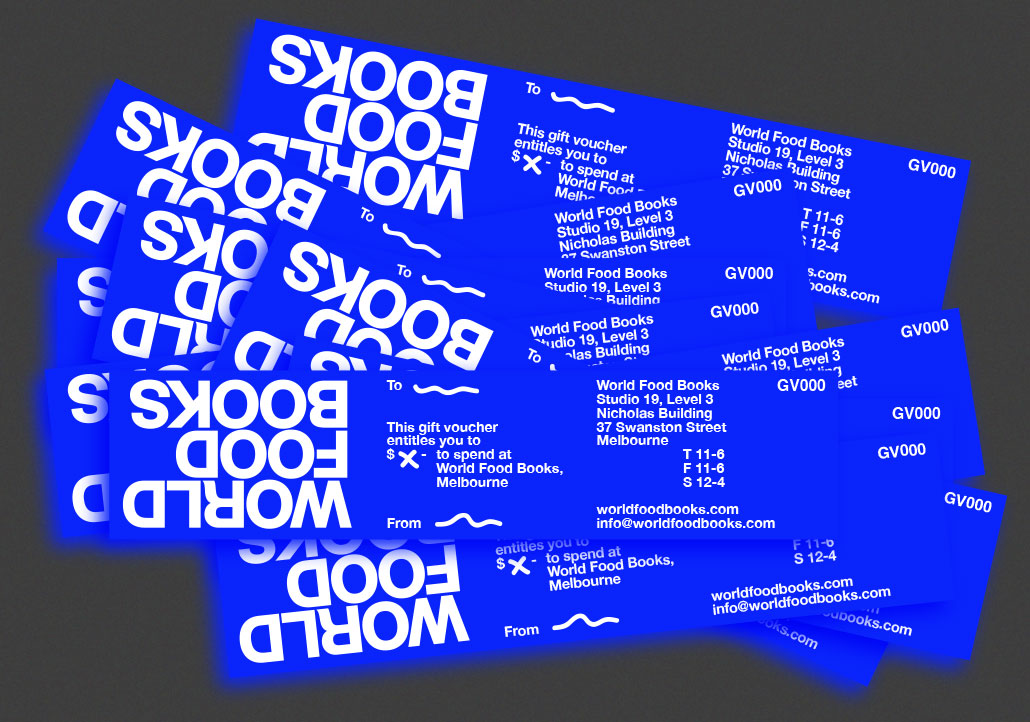
A World Food Books gift voucher is redeemable in our Melbourne bookshop or via our webshop (here). An e-voucher (printable pdf) will be sent to your purchase email address (please notify us if you wish to have the voucher sent to an alternate address and wish us to fill in the receiver's details on the card).
Gift vouchers can be purchased in increments of $20 (Australian Dollars) and the total amount can simply be added to by increasing the quantity in your shopping cart. eg. A quantity of 5 gift vouchers will result in an item total of $100 - a $100 gift voucher. Simply click "ADD TO CART" 5 times, or update your quantity in the shopping cart.
If you wish to purchase multiple, separate gift vouchers in one go, please just email us and we can personally prepare and email you a payment request.
Please note: Please select Pick-Up on gift voucher purchse to avoid any postage charges. Accidental postage charges will be refunded right away!
Thank you.
For any questions, please don't hesitate to email: [email protected]
1990, French
Softcover, 232 pages, 27 x 24 cm
1st Edition, Out of print title / used / very good
Published by
Centre Georges Pompidou / Paris
Musée Picasso / Antibes
$70.00 - Out of stock
One of the best and most comprehensive books on the great Swiss artist, Daniel Spoerri, beautifully put together to accompany a travelling exhibition of his work in 1990/1991 in Paris, Antibes, Wien, München, Genève, Solothurn. Profusely illustrated with Spoerri's incredible artistic history of installations, performances, studio photos, editions, and other activities across important associations with Fluxus, Nouveau réalisme and Eat Art; works across sculpture, assemblage, action, and relief, including a great number of his iconic "snare works". Includes an exhibition history, bibliography and essays (in French). Highly recommended book, long out-of-print.
Daniel Spoerri (b. 1930) is a Swiss artist and writer born in Romania. Spoerri is best known for his "snare-pictures". In 1960, Spoerri made his first "snare-picture": "objects found in chance positions, in order or disorder (on tables, in boxes, drawers, etc.) are fixed (‘snared’) as they are. Only the plane is changed: since the result is called a picture, what was horizontal becomes vertical. Example: remains of a meal are fixed to the table at which the meal was consumed and the table hung on the wall." His first "snare-picture", Kichka's Breakfast was created from his girlfriend's leftover breakfast. The piece is now in the collection in the Museum of Modern Art in New York. One snare-picture, made in 1964, consists of the remains of a meal eaten by Marcel Duchamp. He also is widely acclaimed for his book, Topographie Anécdotée* du Hasard (An Anecdoted Topography of Chance), a literary analog to his snare-pictures, in which he mapped all the objects located on his table at a particular moment, describing each with his personal recollections evoked by the object, with illustrations by the great Roland Topor. In the 1950s he was active in dance, studying classical dance with Olga Preobrajenska and in 1954 becoming the lead dancer at the State Opera of Bern, Switzerland. He later staged several avant-garde plays including Ionesco's The Bald Soprano and Picasso's surrealist Desire Trapped by the Tail. During that period he met a number of Surrealist artists, including Meret Oppenheim, Jean Tinguely, Marcel Duchamp and Man Ray, and also a number of artists subsequently associated with the Fluxus movement, including Robert Filliou, Dieter Roth and Emmett Williams. Closely associated with the Fluxus art movement, a movement "characterized by a strongly Dadaist attitude, [whose] participants were a divergent group of individualists whose most common theme was their delight in spontaneity and humor." It has been said that his Anecdoted Topography of Chance "seems perfectly to embody aspects of its spirit." Spoerri was also one of the original signers of the manifesto creating the Nouveau réalisme (New Realism) art movement, which involved artists such as Yves Klein, Arman, Martial Raysse, Pierre Restany, Niki de Saint Phalle, César, Jean Tinguely, Mimmo Rotella, Gérard Deschamps, and the Ultra-Lettrists, Francois Dufrêne, Raymond Hains, Jacques de la Villeglé, an avant garde endeavor begun in 1960. His use of everyday life as the main subject-matter of his art reflects his involvement in the New Realism movement. A major theme of Spoerri's artwork is food, and he has called this aspect of his work "Eat Art." This is seen not only in his snare-pictures of eaten meals, but in restaurant performance pieces, for which he cooks for guests and art-critics take on the role of waiters, playing on the idea of the critic bringing the art to the consumers and giving them an understanding of the work.
Very Good, preserved copy.
2025, English / Japanese
Softcover (w. obi), 488 pages, 21 x 14.8 cm
Published by
Lock Books / UK
$95.00 - In stock -
Our Feature Presentation curates an assortment of pages scanned from over 70 vintage Japanese cinema pamphlets, known as 映画パンフレット (Eiga panfuretto) ranging from 1950-2000.
Sold during a film’s run, these pamphlets typically included interviews with the cast and director, production notes, behind-the-scenes details and film stills. During the boom of Japanese cinema and imported Hollywood films in the 1950s, such programs became standard for most major releases and collectible items among cinephiles.
Ranging from Bresson to Fulci, The Evil Dead to The Virgin Suicides, each page highlights the unique and vibrant design of these pamphlets, showcasing rare film stills and production imagery.
1972, Japanese
Softcover, 140 pages, 25.5 x 18 cm
1st Edition, Out of print title / used / good
Published by
Hōen Shobō / Tokyo
$80.00 - Out of stock
Very rare inaugural issue of BLACK NIGHT, July 1972, the only issue published by Hōen Shobō before being published by Seifū Shobō. Another short-lived wonder of the golden era of SM publishing. With the title of SM Special Feature - "Tales of Rope Bondage", this first issue was edited by the legendary editor/designer/illustrator Akira Suei, frequent collaborator with Nobuyoshi Araki. In this larger B5 magazine format, BLACK NIGHT boasts beautifully printed, rich, saturated colour and gravure b/w photo features of young Japanese women in bondage, amazing erotic art galleries and heavily illustrated erotic stories spanning many different paper stocks. Features artwork by Jun Kazama, Kohinata Kazumu (Kimata Kiyoshi), a leading SM illustrator born in the Meiji era, Akira Suei, Yōko Kozuma, Haruo Shinozaki, Yukio Koaki, Kinji Miyagawa, Yoshio Kanzai, Fujikawa Miki, Kurohyosake, photography by Yutaka Okawa, Shotaro Ichitani, Kaoruko Saotome, Jiro Kusaka, and more, Models are Mari Kuga, Maya Kitami, Reiko Igawa, Yamada Ai, Hitomi Aran, Katsuko Seto, Hamana Mimi and many more. A rare publication from the golden era of Japanese SM publishing, erotic fantasy illustration and Pink film.
Good—Very Good copy, tightly bound, some tanning, mild wear, some creases to back cover.
1972, Japanese
Softcover, unpaginated, 25.5 x 18 cm
1st Edition, Out of print title / used / very good
Published by
Seifū Shobō / Tokyo
$80.00 - Out of stock
January 1972 issue of the incredible, and very rare, SM Punch, a magazine that published by Seifu Shobo, Tokyo. These are some of the best, but the magazine only lasted under one year, and featured works by Toshio Saeki, Yoji Muku, Akira Kitō, Juan Maeda, and many more. In this larger B5 magazine format, SM Punch boasts delightful and beautifully printed, rich, saturated colour and gravure b/w photo features of young Japanese women in bondage (many famous pink and Tokusatsu actresses from the period), amazing erotic art galleries and heavily illustrated erotic stories. Excellent design and no advertising! A rare publication from the golden era of Japanese SM publishing, erotic fantasy illustration and Pink film.
"THESE STORIES ARE ALL FICTIONS"
Very Good copy, light wear only.
1972, Japanese
Softcover, unpaginated, 25.5 x 18 cm
1st Edition, Out of print title / used / very good
Published by
Seifū Shobō / Tokyo
$80.00 - Out of stock
August 1972 issue of the incredible, and very rare, SM Punch, a magazine that published by Seifu Shobo, Tokyo. These are some of the best, but the magazine only lasted under one year, and featured works by Toshio Saeki, Yoji Muku, Akira Kitō, Juan Maeda, and many more. In this larger B5 magazine format, SM Punch boasts delightful and beautifully printed, rich, saturated colour and gravure b/w photo features of young Japanese women in bondage (many famous pink and Tokusatsu actresses from the period), amazing erotic art galleries and heavily illustrated erotic stories. Excellent design and no advertising! A rare publication from the golden era of Japanese SM publishing, erotic fantasy illustration and Pink film.
"THESE STORIES ARE ALL FICTIONS"
Very Good copy, light wear only.
2003, English
Hardcover (clothbound), 112 pages, 29 x 20 cm
1st Edition, Out of print title / used / very good
Published by
Rockin' On / Tokyo
$170.00 - In stock -
First, only, hardbound edition of ‘The Brown Bunny’ book, published in 2003 by Rockin' On in Tokyo — a photo book of sequential stills from Vincent Gallo’s film by the same name, beautifully designed by Hideki Nakajima.
The Brown Bunny is a 2003 experimental road drama film written, directed, produced, photographed and edited by Vincent Gallo. Starring Gallo and Chloe Sevigny, it tells the story of a motorcycle racer on a cross-country drive who is haunted by memories of his former lover. It was photographed with handheld 16 mm cameras in various locations throughout the United States.
Very Good copy overall. Good covers with some marking to the white cloth, internally a Fine—As New copy block preserved within the wide-margined cloth boards.
1964, Japanese
Portfolio (slipcase, 82 page softcover book, 15 sketches, 12 watercolour prints in cloth hardcover wrap), 31.5 x 27 cm
1st Edition, Out of print title / used / very good
Published by
Misuzu Shobo / Tokyo
$480.00 - In stock -
Rare and stunning deluxe Japanese portfolio of German painter and photographer Alfred Otto Wolfgang Schulze, known as Wols (1913–1951), published by Misuzu Shobo in 1964. Housed in heavy card slipcase, this limited edition folio contains an 82 page book of Wols drawings on heavy stock, gloss photographs and commentary by Japanese poet, art critic and surrealist artist Shūzō Takiguchi, Henri-Pierre Roché and Jean-Paul Sartre, amongst others, plus a further 12 line drawings (making a set of 15 total) and 12 colour plates of watercolours, all as loose-leaf litho prints housed in bi-folds featuring the drawings, collated into a debossed black cloth "wols" hardcover wrap.
A draftsman, painter, and photographer, Wols, the pseudonym of Alfred Otto Wolfgang Schulze (1913, Berlin–1951, Paris), was one of the most ingenious and influential—if commercially unsuccessful—artists to emerge in postwar Europe. Along with Jean Dubuffet, Pierre Soulages, and Georges Mathieu, Wols was a leading figure in Tachisme, a movement in painting Americans consider to be a European parallel to Abstract Expressionism. Named for the French word tache, meaning stain, Tachisme—an outgrowth of the larger trend of Art lnformel, or “art without form” movement—cultivated an automist style emphasizing free lines and forms drawn from the artist’s psyche.
Wols did not start his intimately scaled drawings and watercolor paintings with preconceived compositions. Instead, his unconscious, in the Surrealist and existentialist senses of the word, shaped his images, which began with a few marks, then were carefully developed into highly complex self-contained visual universes.
Born Alfred Otto Wolfgang Schulze in Berlin, Wols moved to Paris in 1932 to escape his austere bourgeois roots and the authority of a father who was chancellor of the German state of Saxony. There he changed his name to Wols—inspired by a mistake on a telegram—and eked out a living during the difficult wartime years by teaching German and making drawings, paintings, photographs, and etchings. A number of his prints were used as illustrations for texts by Antonin Artaud, Franz Kafka, and Jean-Paul Sartre, and exhibitions of his work in Paris in 1945 and 1947 at Galerie Drouin and other galleries in France, Italy, and the United States allowed him a precarious existence, made difficult by constant illness and alcoholism.
Notoriously reticent about his work, Wols once explained his vision of the world by referring to a crack in the sidewalk: “Look at that crack. It is like one of my drawings. It’s a living thing. It will grow… It was created by the only force that is real.”
Very Good copy overall, with some light foxing to initial protector bi-fold wrap, some discolouration and wear to extremities to protective slipcase, VG—NF plates, VG—NF book in VG—NF dust jacket and still with protective wax paper wrap. All kept very neatly. A beautiful copy.
1977, Japanese
Softcover, 56 pages, 26 x 18.5 cm
1st Edition, Out of print title / used / very good
Published by
Gallery 8 / Tokyo
$80.00 - In stock -
Very scarce Japanese publication on German painter and photographer Alfred Otto Wolfgang Schulze, known as Wols, published by Fuji Television Co. in 1977 on the occasion of an exhibition at Gallery 8, Tokyo. Beautifully illustrated throughout in colour and b/w with over 40 works, including chronology, exhibitions history, and bibliography. Exhibition work-list inserted.
Wols was the pseudonym of Alfred Otto Wolfgang Schulze (27 May 1913, Berlin – 1 September 1951, Paris), a German painter and photographer predominantly active in France. Though broadly unrecognized in his lifetime, he is considered a pioneer of Lyrical Abstraction, one of the most influential artists of the Tachisme movement. He is the author of a book on art theory entitled Aphorismes de Wols.
Near Fine copy.
2004, German
Softcover, 178 pages, 24 x 18 cm
1st Edition, Out of print title / used / very good
Published by
Leopold Museum / Vienna
$45.00 - In stock -
Scarce copy of the 2004 catalogue for the major exhibition of the vast graphic work of the Spanish artist Francisco de Goya. Rudolf Leopold presented the five completely preserved etching series "Etchings after Velazquez", "Los Caprichos", "Los Desastres de la Guerra", "La Tauromaquia" and "Los Disparates", comprising around 300 prints in the very rare first editions. Alongside the graphic works is a foreword by Rudolf Leopold, and texts contributions by German art historians Rainer Metzger and Ewald Gäßler. Texts in German.
Francisco de Goya (1746-1828) is a painter and printmaker of universal renown and is rightly considered the most important Spanish artist of the 18th century. Rudolf Leopold: "Goya provided crucial impetus to Max Klinger, to Alfred Kubin, who is so excellently represented in our museum, as well as to James Ensor, and finally also to Surrealist artists."
Goya's outstanding work is characterized by a high degree of originality, emotionality, and artistic freedom. This is particularly true of his graphic cycles, which were created between 1778 and approximately 1824.
Inspired by the spirit of the historical upheavals of the late 18th and early 19th centuries, Goya created these largely political and socially critical prints, often with a mercilessly ironic and accusatory intent. Goya's reputation as a pioneer of modern art is based, firstly, on the evolution of his themes and content. Secondly, he broke new ground with regard to the techniques he employed. In his large graphic cycles, Goya elevated the aquatint technique to a means of pictorial composition, thereby achieving unique painterly effects and spatial impacts.
Goya created the graphic cycles in a second creative phase, during which he withdrew from the courtly world. Illness and deafness contributed to his introspection.
The world of dreams, the unconscious, and the fantastic finds its way into his graphic work. Thus, the cruelty of war in "Los Desastres de la Guerra" and human stupidity and vanity in "Los Caprichos" and "Los Disparates" are depicted in an exaggerated, expressive style that is artistically brilliant and at the same time profoundly disturbing.
Good—VG copy, with light crease to last few pages and back cover, small adhesive shadow left on b/c from price tag, otherwise generally a Near Fine copy.
1998, English / Japanese
Hardcover (w. dust jacket), 100 pages, 37 x 26 cm
1st Edition, Out of print title / used / fine
Published by
Sakuhinsha / Tokyo
$190.00 - In stock -
Scarce first Japanese hardcover edition of Japanese master of erotic fantasy illustration Hajime Sorayama's absolute classic Torquere (Torture), published in 1998. Following the success of best-seller NAGA, Sorayama's Torquere delves deeper into the darker realm of fantasy fetishism and, as the title suggests, into the world of Sadomasochism. This lavish over-sized volume is illustrated cover-to-cover with Sorayama's most explicit works presented in dramatic, glossy full-colour throughout. Rare in this original hardcover edition.
Hajime Sorayama is revered for his erotic airbrushed illustrations of humanoid robots that explore ideals of femininity and beauty. Drawing on pinup pictures, Sorayama published the first book of his signature “Sexy Robot” series of chromium-plated figures in 1983. Decades later, these striking works have sold for more than $500,000. Sorayama started his career in advertising before freelancing in Hollywood, where he helped to produce visuals for sci-fi films. His illustrations gained widespread attention in 1995, when Penthouse began featuring them in a monthly column. While Sorayama has enjoyed a particular cult status for his sensual cyborgs —who appear empowered rather than objectified —he has also received mainstream commercial attention. Sony enlisted him to produce the first designs for its robotic dog AIBO, which won the grand prize for Japan’s Good Design Award in 1999. Sorayama has also worked with fashion titans such as Thierry Mugler and Dior on projects that have extended his illustrations into the realm of wearables, sculpture, and performance.
Near Fine copy.
1969, English
Softcover, unpaginated, 31 x 23 cm
1st Edition, Out of print title / used / very good
Published by
Dover / New York
$65.00 - Out of stock
First 1969 edition of Dover's The Graphic Works of Odilon Redon. A lovely over-sized volume containing 209 lithographs, etching and engravings by the master of mystery, reproduced in large format on warm paper stock. This was the largest collection of Redon's graphic work ever assembled — 172 lithographs, chiefly in chronological order, plus 37 etchings and engravings. Reprint of all plates from "Odilon Redon: oeuvre graphique complet" supplemented by 2 additional lithographs and 15 etchings and engravings. New Introduction and caption translations by Alfred Werner.
Odilon Redon (1840-1916) was one of the least erratic of the great 19th-century French artists. Quiet, withdrawn, conventionally dressed, he led an utterly simple and uneventful life, which, however, masked a startlingly complex and fantastic inner world. His mind-haunting, often macabre prints reveal an existence beneath and beyond that of everyday vision—a special vision that rendered him able to transform even common subjects and models into strange, often eerie images. Many of his works go still farther, in depicting winged creatures, spiders and serpents, skeletons and skulls, gnomes, cyclopes and other monsters. Yet everywhere they are presented with a controlled, even delicate realism which makes his most fantastic subjects seem plausible.
Redon's special gift was the ability to explore the fantastic realms of his own boundless imagination... to transform the subconscious world of dreams into a visual reality... to depict the world of fantasy which he believed most men did not dare to envision. Yet no drugs, no extraordinary cerebral efforts were used to create these images. As Redon himself stated, his works were the result solely of "submitting to the uprush of the unconscious." Although Redon's early work met with little success—he was not to know financial security until the last 10 or 12 years of his life—he came to be widely acclaimed in his later years. He was then especially popular among young progressive artists who saw in his works a visual symbolism to correspond to the literary symbolism of Mallarmé. Today he is widely claimed as a precursor to the Surrealists.
Very Good copy with some light creasing to board corners, light laminate peeling. Interior Fine.
2025, English
Hardcover, 320 pages, 30 x 24 cm
Published by
Fulgur Press / UK
$165.00 - In stock -
Breton's late treatise on magic and art appears for the first time in English, complete with citations, commentaries and a bibliography.
What is “Magic Art”? In 1953, André Breton, founder of the Surrealist movement, was invited by a prestigious French publisher to explore answers to this question. His resulting analysis is wide-ranging and evocative. Beginning with a literary review of magic and art, Breton draws upon Novalis and Baudelaire before considering the prehistoric rock art of Spain and France, the native art of the Pacific Northwest, the magical grimoires and alchemical symbolism of the Middle Ages, and the work of Hieronymus Bosch, Antoine Caron, Paolo Uccello, Gustav Moreau, Paul Gauguin and the Surrealists. Through these and other diverse sources, Breton traces a mystery that lies at the heart of our timeless fascination with otherness and seeks to place Surrealism as a successor to a magical sensibility that began with art itself.
First published in 1957 as L’Art magique, this important text is offered here as an English translation for the first time. Working from manuscript notes for the original project, this edition presents the iconographic content as Breton intended, together with more than 300 new citations and a comprehensive bibliography that emphasizes sources found in Breton’s own library.
André Breton (1896–1966) was one of the founders and most controversial exponents of Surrealism, defining the movement in his first Surrealist Manifesto as “pure psychic automatism.” Fleeing from Europe during World War II, Breton traveled throughout North America staging Surrealist exhibitions and lending his voice to several political movements.
With contributions by Gérard Legrand, Robert Shehu-Ansell, Merlin Cox, Krzysztof Fijalkowski, Dawn Ades, Anne Egger, Kristoffer Noheden.
1974, Japanese
Hardcover (w. dust jacket, obi & plastic sleeve), 124 pages, 29 x 22 cm
1st Edition, Out of print title / used / very good
Published by
Bijutsu Shuppan-sha / Japan
Rippu Shobo / Japan
$200.00 - In stock -
Rare copy of the best book on master Japanese illustrator and graphic artist Aquirax Uno (b. 1934). From the legendary Illustration NOW series published by Rippu Shobo in 1974, this lavishly produced book collects the best of Uno's stunningly decadent, provocative illustration and baroque commercial graphic work, his iconic and innovative print, book, and underground theatre works (Shuji Terayama, Tenjo Sajiki, etc.), posters, and paintings from throughout the 1960s—early 1970s, alongside texts and amazing photography of Uno as a young artist. Designed by Seiichi Horiuchi and presented by Keiichi Tanaami, Yoshitara Isaka, Yosuke Inoue and others, with an essay by avant-garde theatre director Shuji Terayama, The World of Aquirax Uno is highly recommended to any Uno fan!
Aquirax Uno, also known as Akira Uno (b. 1934) is a Japanese graphic artist, illustrator and painter who was very influential in the 1960s and 1970s. His incredibly unique work is characterized by fantastic visuals, capricious and sensuous line flow, flamboyant (and occasionally grotesque) eroticism, and frequent use of collage and psychedelic bright colours. Uno was prominently involved with the Japanese underground art of the 1960s–1970s, and is particularly notable for his frequent collaborations with Shuji Terayama and his experimental theater Tenjo Sajiki.
Very Good copy with VG dust jacket and obi (spine tanning, light wear) in the rarely preserved original thick plastic protector sleeve. Lacks pull-out poster.
1973, Japanese
Softcover, 160 pages, 25.7 x 18.3 cm
1st Edition, Out of print title / used / good
Published by
Kindai Eigasha / Japan
$55.00 - In stock -
1973 issue of Japanese film journal Kindai Eigasha's special Screen series on European Film with Italian actress Claudia Cardinale cover. Published for the Japanese market, these special issues, in the guise of men's magazines, introduced a new wave of European (continental) film to audiences there, with an interest in one particular aspect — the beauties that starred in them. Each issue is profusely illustrated in colour and monochrome with the young actresses, scantily-clad and nude for the most part, along with many film stills of nude scenes, reviews, illustrations, texts in Japanese and full-colour fold-out pin-up. This issue features Ornella Muti, Silvana Venturelli, Anita Sanders, Inger Sundh, Gio Petré, Anita Ekberg, Romy Schneider, Sophia Loren, Nancie Wait, Maria Rohm, Anna Fonsou, Danielle Ouimet, Christine Schuberth, Laura Antonelli, and many more, plus the films "W.R.: Mysteries of the Organism" (1971), "Fear Has 1000 Eyes" (1970), "Boccaccio '70" (1962), "Delusions of Grandeur (La Folie des grandeurs)" (1971), "8½" (1963), "La Polizia Ringrazia" (1972), "Lass Jucken, Kumpel" (1972), "Junge Leute wollen lieben" (1971), "The Ideal Marriage" (1970), and many more.
Good copy, light wear, age.
1985, Japanese
Softcover (w. dust jacket), 250 pages, 15 x 10.6 cm
1st Edition, Out of print title / used / very good
Published by
Kindai Eigasha / Japan
$55.00 - In stock -
Titillating little 1985 Japanese photo pocket-book packed cover-to-cover with "284 Star Actresses Who Took Off" — an endless stream of collected film stills of 284 actresses naked on the American silver-screen, including Bo Derek, Jacqueline Bisset, Julie Andrews, Phoebe Cates, Lauren Hutton, Karen Black, Margaux Hemingway, Cheri Caffaro, Linda Blair, Mathilda May, Barbara Carrera, Joanna Cassidy, Goldie Hawn, Daryl Hannah, Michelle Pfeiffer, Brooke Shields, Cybill Shepherd, Jennifer Billingsley, Marisa Berenson, Goldie Hawn, Nancy Allen, Glynnis O'Connor, Anne Heywood, Ursula Andress, Maude Adams, Marilyn Chambers, Linda Cristal, Jamie Lee Curtis, Patti D'Arbanville, Irina Demick, Angie Dickinson, Faye Dunaway, Farrah Fawcett, Jane Fonda, Rosemary Forsyth, Aliza Gur, Dalia Halprin, Mariel Hemingway, Ann Heywood, Jessica Lange, Kay Lenz, Linda Kerridge, Fiona Lewis, Shirley Maclain, Jayne Mansfield, Janet Margolin, Barbara McNair, Marilyn Monroe, Kim Novak, Tatum O'Neal, Bette Midler, Valerie Perrine, Cindy Pickett, Katherine Ross, Paula Prentiss, Tanya Roberts, Katherine Ross, Jane Seymour, Susan Sarandon, Cornelia Sharpe, Connie Stevens, Jean Simmons, Susan Strasberg, Pamela Tiffin, Elizabeth Taylor, Kathleen Tolan, Angel Tompkins, Kathleen Turner, Jessica Walter, Rachel Ward, Raquel Welsh, Debra Winger, Nathalie Wood, Sean Young, Laura Wood, Sigourney Weaver, and many more, all meticulously indexed! A "Continental Film" enthusiasts delight from the pre-internet publishing margins of Japan.
Very Good copy with VG DJ.
1985, Japanese
Softcover (w. dust jacket), 250 pages, 15 x 10.6 cm
1st Edition, Out of print title / used / very good
Published by
Kindai Eigasha / Japan
$55.00 - In stock -
Titillating little 1985 Japanese photo pocket-book packed cover-to-cover with "284 Star Actresses Who Took Off" — an endless stream of collected film stills of 284 European actresses naked on the silver-screen. From the great Giallo scream queens of the 1960s-70s to the stars of the European New Wave, including Carole Bouquet, Maria Schneider, Romy Schneider, Nastassja Kinski, Sophia Loren, Christina Lindberg, Sylvia Kristel, Isabelle Huppert, Corinne Cléry, Marianne Faithfull, Françoise Dorléac, Catherine Deneuve, Jane Birkin, Nathalie Delon, Olga Georges-Picot, Muriel Catala, Ornella Muti, Delia Boccardo, Julie Christie, Susan George, Edwige Fenech, Sybil Danning, Joan Collins, Isabelle Adjani, Clio Goldsmith, Muriel Catalá, Sophie Marceau, Charlotte Rampling, Valérie Kaprisky, Catherine Jourdan, Brigitte Bardot, Tina Aumont, Françoise Arnoul, Catherine Spaak, Valérie Lagrange, Miou-Miou, Isabel Sarli, Laura Antonelli, Anicée Alvina, Kristina van Eyck, and many more, all meticulously indexed! A "Continental Film" enthusiasts delight from the pre-internet publishing margins of Japan.
Very Good copy with VG DJ.
1985, Japanese
Softcover (w. dust jacket), 250 pages, 15 x 10.6 cm
1st Edition, Out of print title / used / very good
Published by
Kindai Eigasha / Japan
$55.00 - In stock -
Titillating little 1985 Japanese photo pocket-book packed cover-to-cover with "223 Newly Undressed Actresses" — an endless stream of collected film stills of 223 actresses naked on the American and English silver-screen, including Barbara Carrera, Jennifer Connelly, Margot Kidder, Sigourney Weaver, Mariel Hemingway, Brooke Shields, Madeline Smith, Kim Basinger, Marianne Faithfull, Candice Bergen, Camille Keaton, Mathilda May, Carroll Baker, Elizabeth McGovern, Kate Capshaw, Barbara Bouchet, Lana Wood, Bo Derek, Charlotte Rampling, Susan Sarandon, Angie Dickinson, Betsy Russell, Annette O'Toole, Jessica Lange, Marianna Hill, Samantha Jones, Sian Adey-Jones, Jenny Agutter, Emmanuelle Arson, Rosanna Arquette, Jane Asher, Sean Young, Barbara Bach, Jacqueline Bisset, Linda Blair, Rae Dawn Chong, Glenn Close, Joan Collins, Adrienne Corri, Sybil Danning, Faye Dunaway, Patti D'Arbanville, Mimsy Farmer, Farrah Fawcett, Tisa Farrow, Darlanne Fluegel, Dalia Halprin, Linda Fioentino, Marilyn Monroe, Vanessa Redgrave, Kathleen Turner, Elizabeth Taylor, Cybill Shepherd,Mathilda May, Margaux Hemingway, and and many more, all meticulously indexed! A "Continental Film" enthusiasts delight from the pre-internet publishing margins of Japan.
Very Good copy with VG DJ.
1995, English
Softcover, 410 pages, 23.5 x 15.5 cm
1st Edition, Out of print title / used / very good
Published by
Indiana University Press / Indiana
$25.00 - Out of stock
First 1995 edition.
"This new critical edition includes Mark Musa's classic verse translation and provides students with a clear, readable text.
In addition, ten innovative interpretations of Dante's masterpiece offer diverse approaches to the first canticle of the Divine Comedy, including Virgil's importance to Dante as a source for mythological, historical, and political material as well as for structuring his poetic vision; the language, symbols, and extended meanings of Hell; Dante's revision of the concepts of Limbo and the Harrowing of Hell; the figure of Francesca, representative of Eve, and how the Pilgrim participates in her sin; how understanding political and church history of the period enhances a reading of the poem; and the history of Dante's interpretation and reception in Italian cinema.
The contributors include Lawrence Baldassaro, Joan M. Ferrante, Denise Heilbronn-Gaines, Robert Hollander, Amilcare A. Iannucci, Christopher Kleinhenz, Ricardo J. Quinones, Guy P. Raffa, John P. Welle, and Musa himself.
Mark Musa, Distinguished Professor of Italian at Indiana University, is well known for his translations of the Italian classics, including the works of Dante, Petrarch, Boccaccio, and Machiavelli.
G—VG copy with light bumping.
2001, Japanese
Softcover (w. dust jacket), unpaginated, 30 x 21 cm
1st Edition, Out of print title / used / very good
Published by
Seibundo-Shinkosha / Tokyo
$100.00 - In stock -
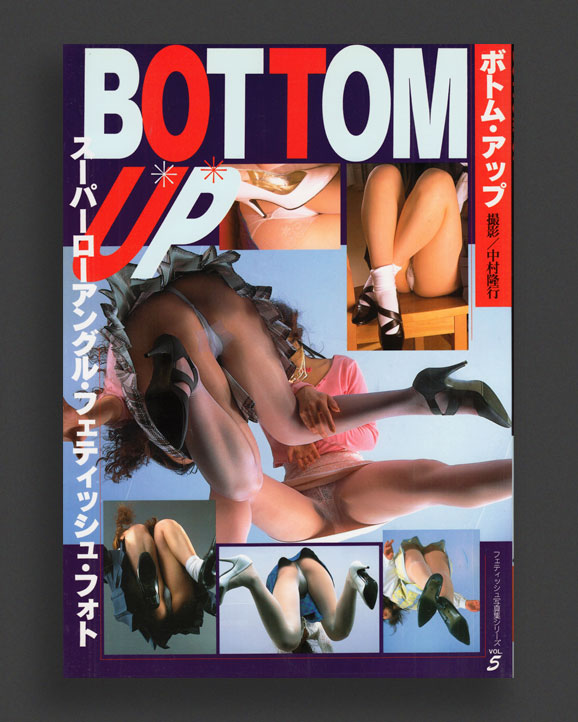
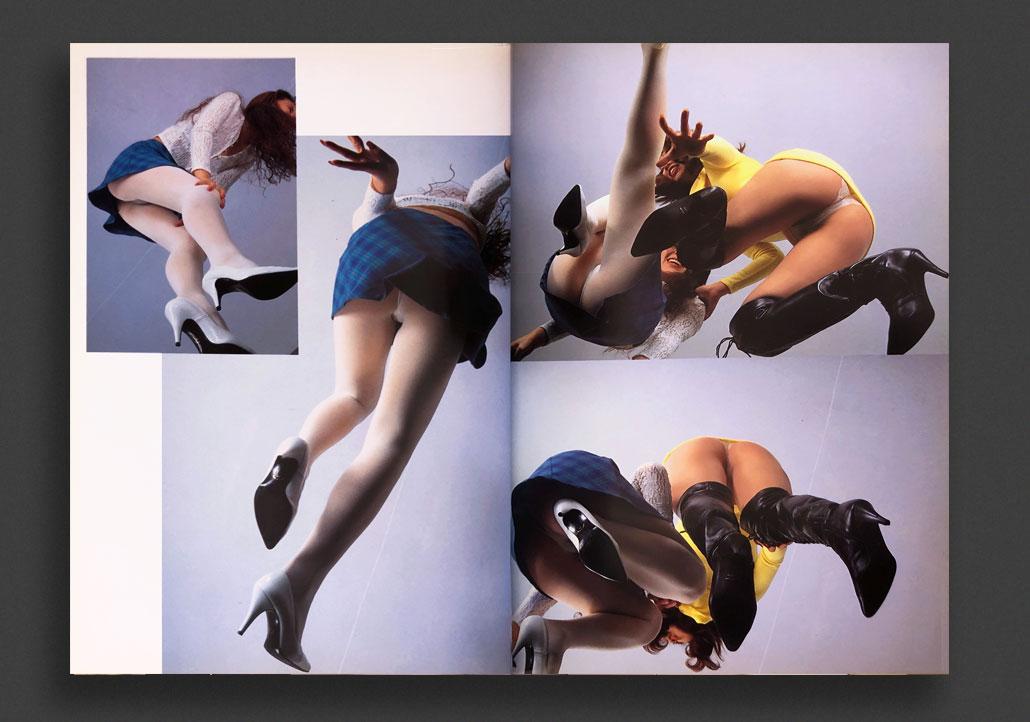
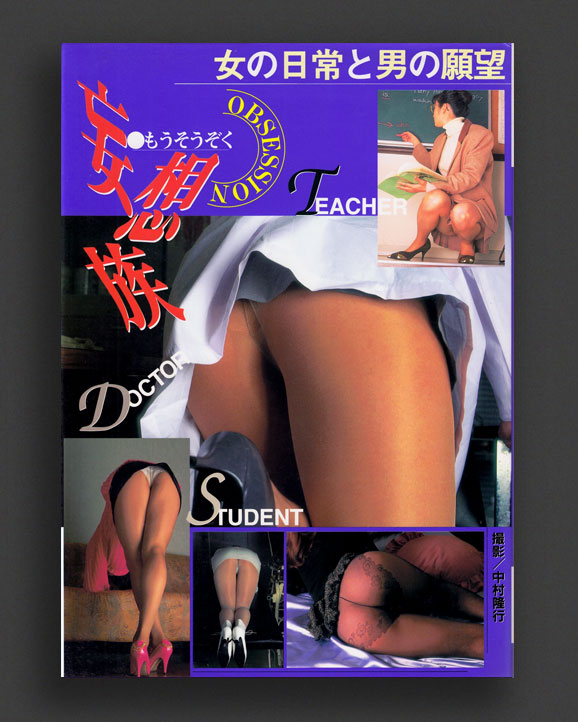
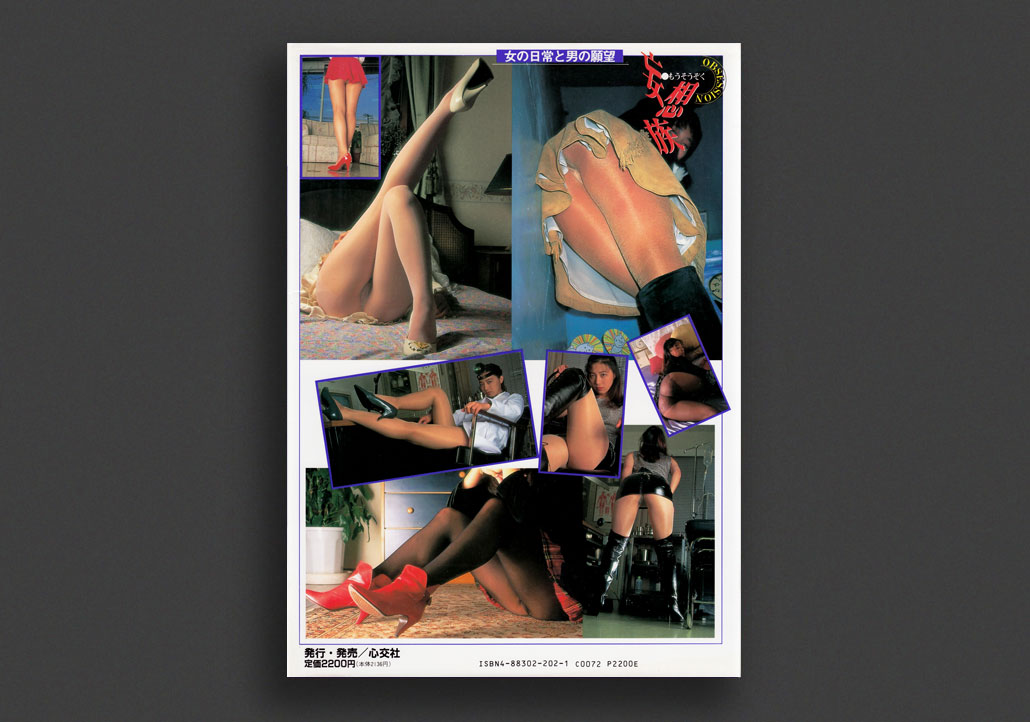
Published in Japan in 2001, Hip Paradise ("Ass Paradise") by photographer Takayuki Nakamura is cover to cover full-colour 90's glamour soft-core/garment fetishism at its finest, featuring Japanese adult film stars Kaya Asami and Hitomi Ikeno as models. The title says it all — this glossy fetish volume is for bottom fans. Styled by Toshiko Sugino, Asami and Ikeno feature in verso throughout undressing various late 90's/early 00's fashions—with loving attention to nylon, denim, lace, and spandex, these are incredible fashion styling/garment fetish publications. Undocumented and little known outside the fleeting appreciation of 1990's tokyo adult book vendors, Nakamura's books are really something special and hard to come by. For fans of Namio Harukawa, the neon exhibitionism of Pink Star Editions and the peeping lens of Ikko Kagari.
Very Good copy.
2013, English
Hardcover (w. dust jacket), 376 pages, 16.5 x 22.9 cm
Published by
Yale University Press / New Haven
$120.00 - In stock -
ince the 19th century, dolls have served as toys but also as objects of obsession, love, and lust. That century witnessed the emergence of the term "heterosexual" and of modern concepts of fetishism, perversity, and animism. Their convergence, and the demands of a growing consumer society resulted in a proliferation of waxworks, shop-window dummies, and customized love dolls, which also began to appear in art. Oskar Kokoschka commissioned a life-sized doll of his former lover Alma Mahler; Hans Bellmer crafted poupées; and Marcel Duchamp fabricated a nude figure in his environmental tableau Etant donnés. The Erotic Doll is the first book to explore men's complex relationships with such inanimate forms from historical, theoretical, and phenomenological perspectives. Challenging our commonsense grasp of the relations between persons and things, Marquard Smith examines these erotically charged human figures by interweaving art history, visual culture, gender, and sexuality studies with the medical humanities, offering startling insights into heterosexual masculinity and its discontents.
‘Ladies and gents, welcome to the museum of the erotic doll. Step right up and feast your eyes on modern man’s curious contraptions. If the saucy blow-up doll makes you squeamish, brace yourself for the Dutch Wife (a sailor’s delight!), lubricating robot ladies, surrealist brides stripped bare, state-of-the-art RealDolls, and the iDollators who love them. Marquard Smith is the curator of this collection of men's dolls, rendered in a lavishly illustrated volume.’—Laura Frost, Times Higher Education
'This book is platypus-like, unclassifiable.'—Marina Warner, London Review of Books
“[An] intriguing book . . . Smith teases out the history of these sex objects to provide a thorough genealogy of today’s erotic mannequins.”—Shelly Ronen, Public Books
1980, German
Softcover, 120 pages, 24.5 x 31.9 cm
1st Edition, Out of print title / used / very good
Published by
Edition Spangenberg im Ellermannverlag / Münich
$70.00 - In stock -
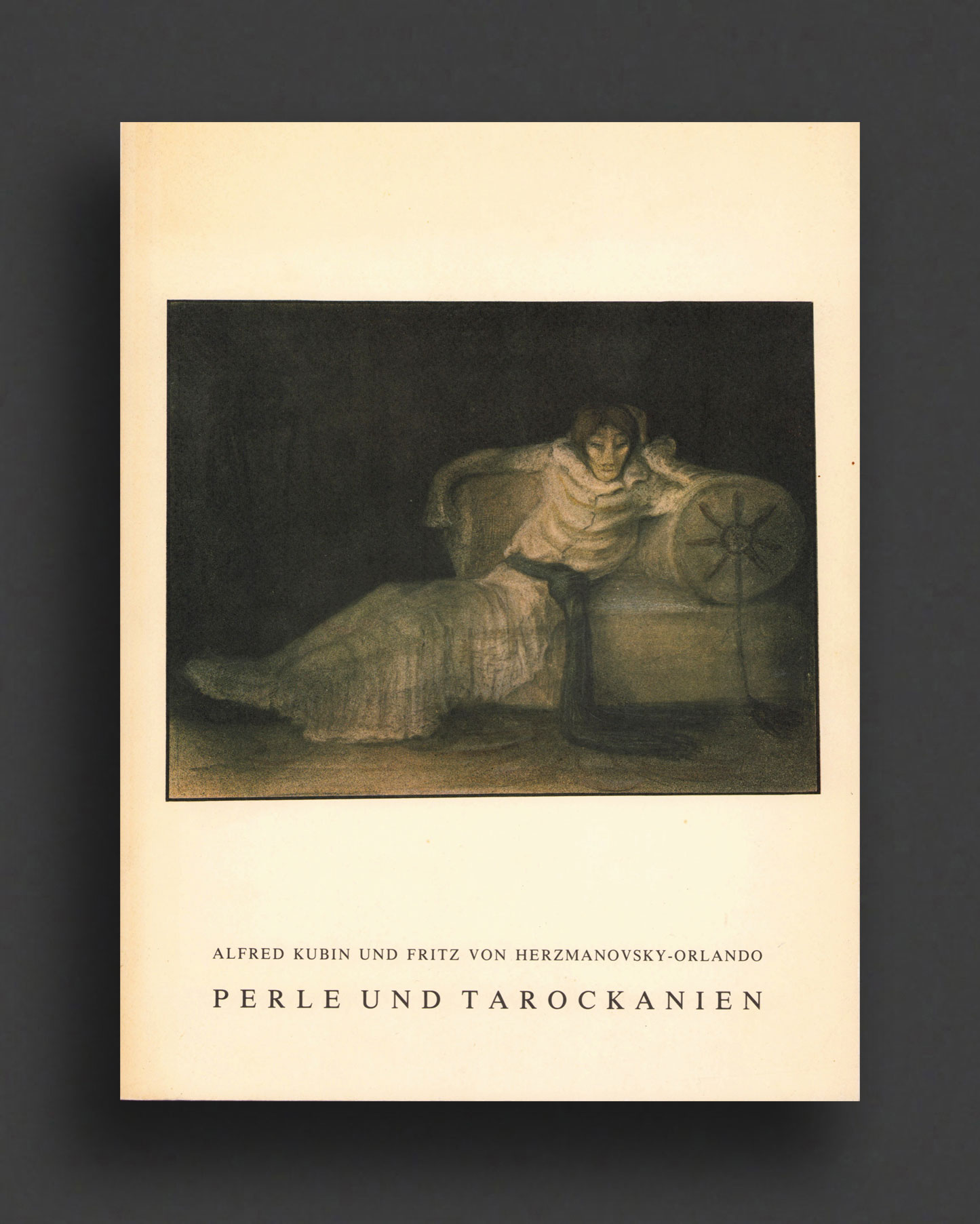
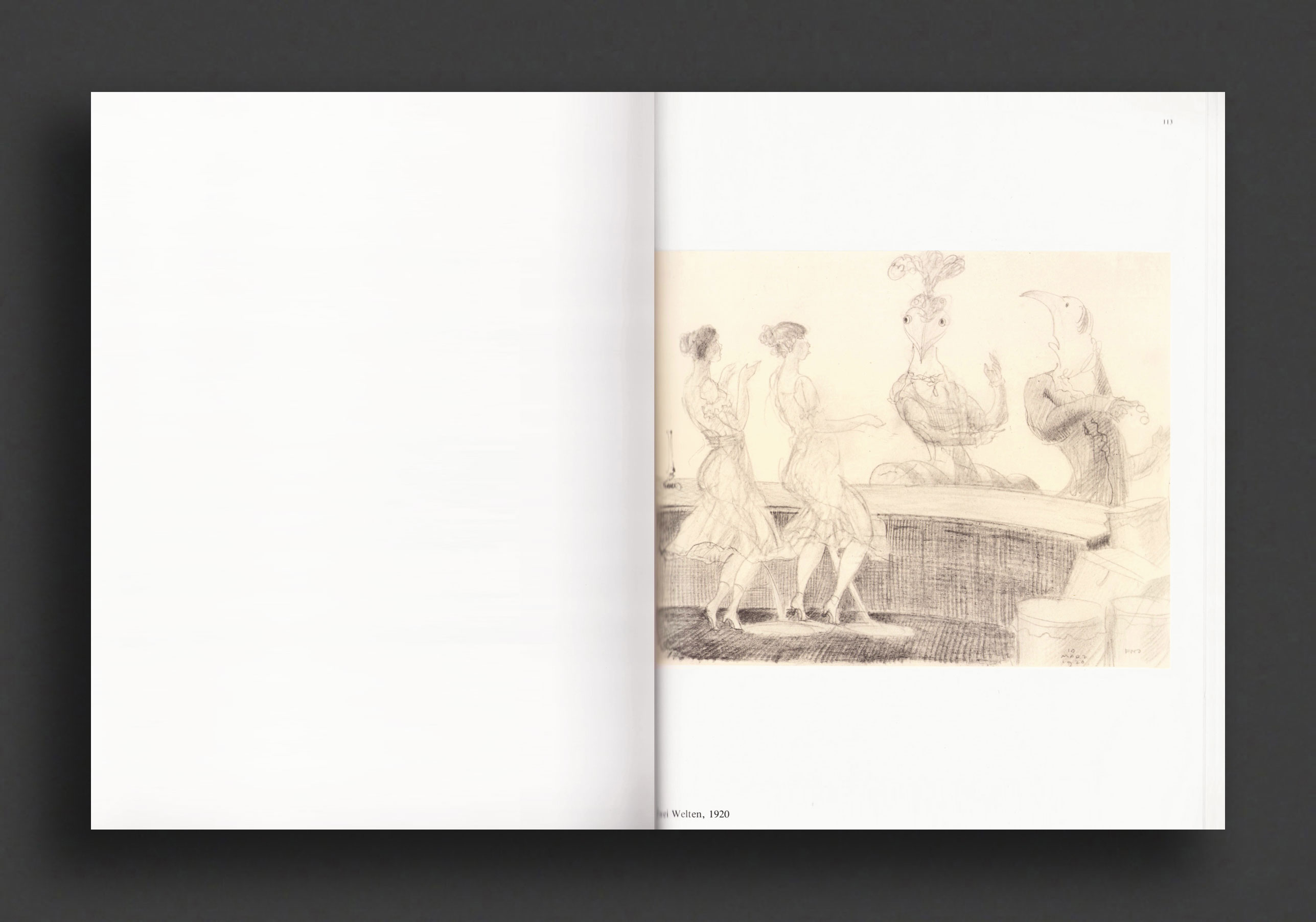
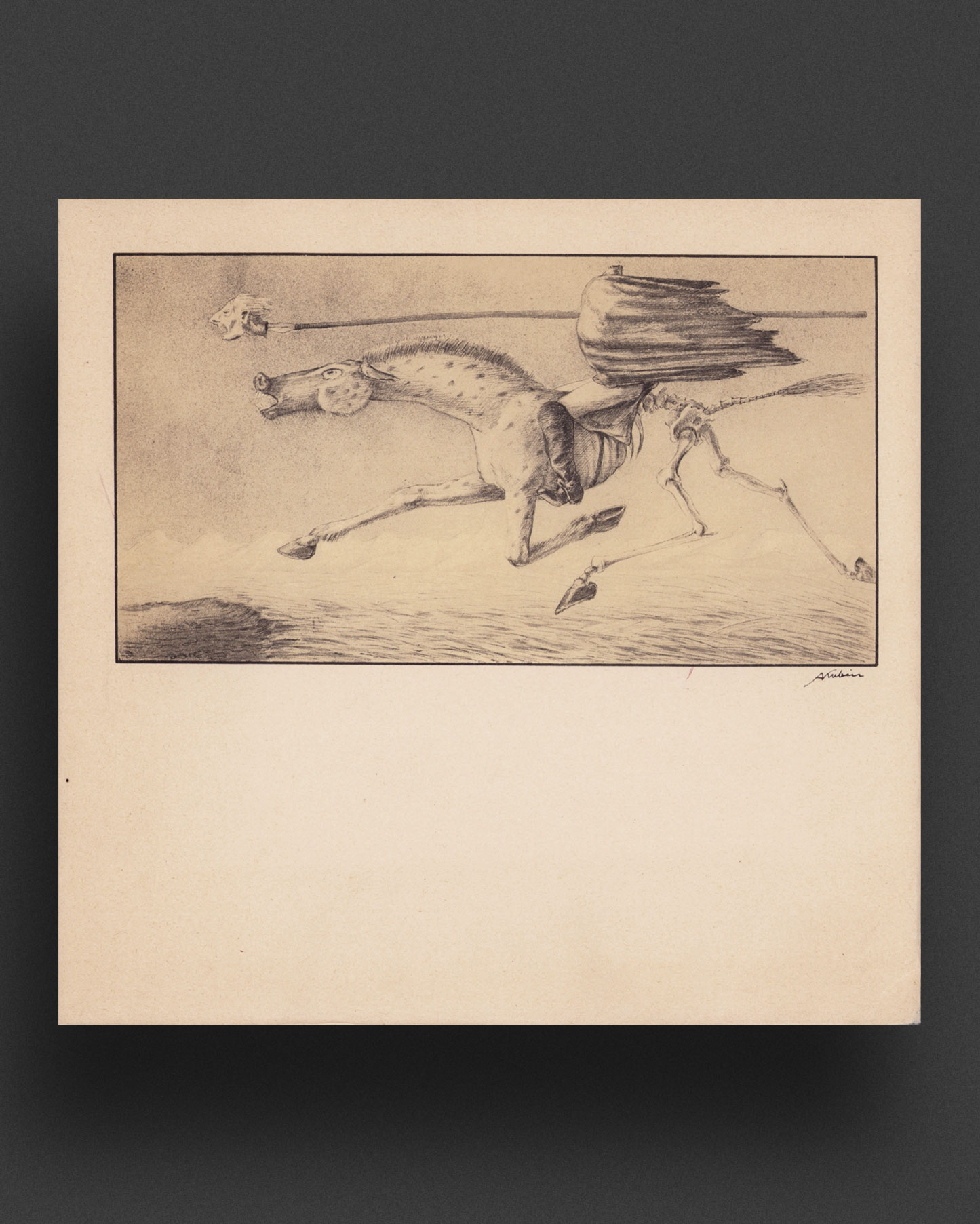
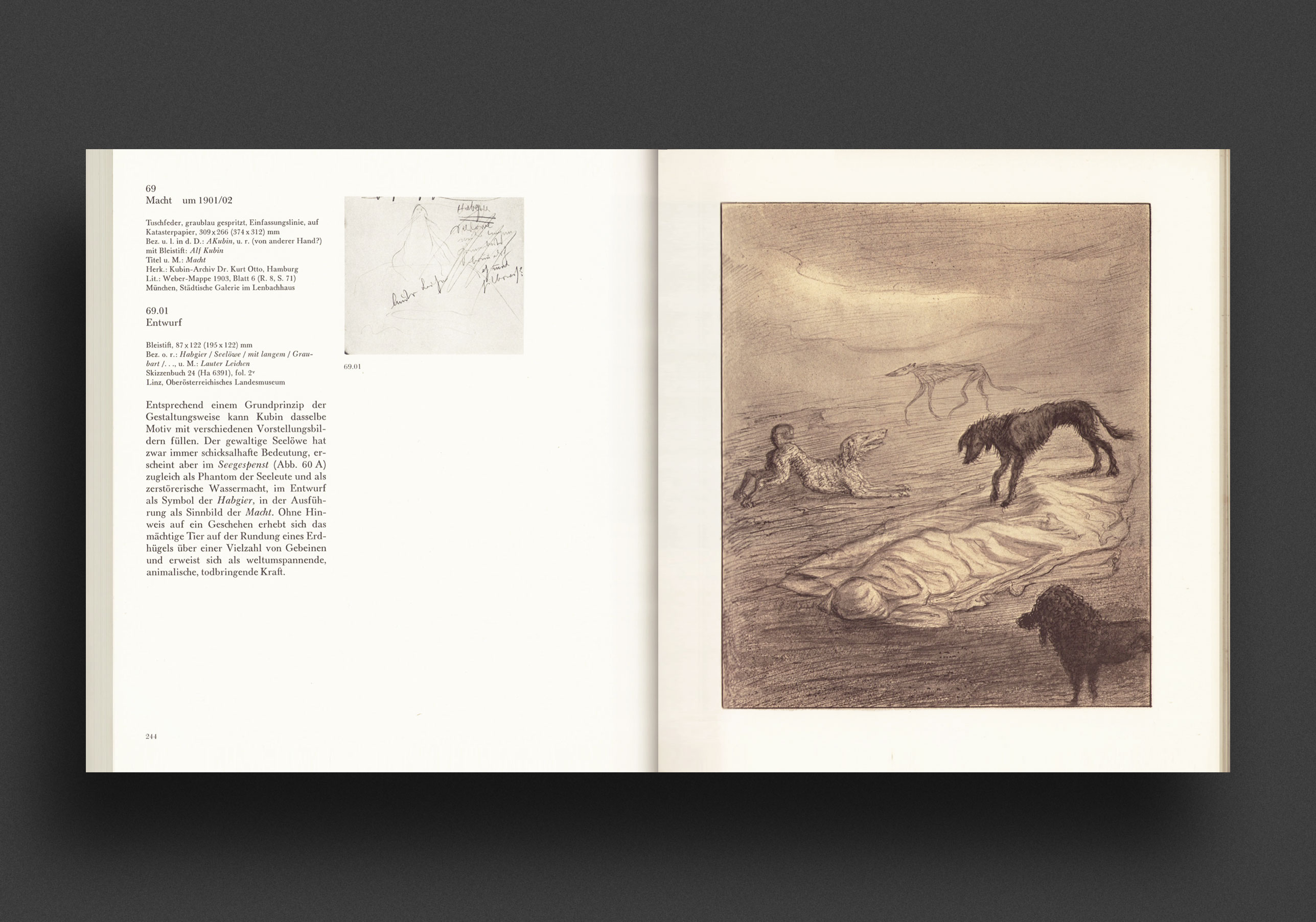
Wonderful over-sized publication devoted to two of the great originators of the Austrian fantastic, Alfred Kubin (1877–1959) and Fritz von Herzmanovsky-Orlando (1877–1954), published in 1980 by Edition Spangenberg im Ellermannverlag, Münich. The volume presents full-page drawings from both artists, in colour and b/w, along side biographies and photographs, accompanying texts in German.
Alfred Kubin and Fritz von Herzmanovsky-Orlando shared a profound, lifelong friendship and artistic kinship. Both were "double talents"—artists who achieved mastery in both literature and the visual arts. They were both part of the Münich bohemian scene and the Cosmic Circle. Despite their reclusive natures—Kubin in his castle at Zwickledt and Herzmanovsky-Orlando in South Tyrol—the two maintained a prolific and intense correspondence throughout their lives. Both shared a fascination with the fantastical and the bizarre, despite their starkly different artistic tones. While Kubin focused on the dark, nightmarish depths of the human subconscious, Herzmanovsky-Orlando channeled the satirical, absurd and grotesque through his mystical realm of "Tarockia". Together, they anchored the Austrian fantastic tradition.
Very Good copy with some tanning to boards, wear to bottom back cover.
1951, English
Hardcover (w. dust jacket), 250 pages, 19.2 x 12 cm
Out of print title / used / very good
Published by
Rider and Company / London
$180.00 - In stock -
Rare 1951 hardcover edition of Prince of Darkness, a 1946/1951 anthology edited by Gerald Verner (pseudonym of John Robert Stuart Pringle). It gathers occult, horror fiction, and "factual" writings by scholars on witchcraft, the Black Mass, and the supernatural, illustrated throughout with demons from Jacques Callot's (1593-1636) 1614 engraving "The Temptation of St. Anthony". The book is divided into four sections: Witchcult, Satanism, Sorcery, and Lycanthropy. Stories and essays by Montague Summers, Cotton Mather, Margaret Irwin, Algernon Blackwood, John Buchan, Sax Rohmer, Dorothy L. Sayers, Saki, and F.G. Loring. Published by Rider and Company, London.
Very Good copy with G—VG dust jacket, some wear/light chipping to extremities, now preserved in mylar wrap. Book VG with some age toning.