World Food Books' programme is largely produced on Kulin Nation land. We acknowledge the Wurundjeri people of the Kulin Nation as the first and continuing custodians of this land, and pay respect to their Elders past, present, and emerging.
World Food Books is an arts and special interests bookshop in Naarm / Melbourne. Founded in 2010, World Food Books is devoted to the presentation of a rotating, hand-selection of international art, design, literary and counterculture publications with an emphasis on the anti-traditional, the experimental, the avant-garde, the heretic, the marginal.
Presenting new titles alongside rare and out-of-print books, catalogues and journals spanning the fields of modern and contemporary art, design, photography, illustration, film, literature, poetry, cultural theory, philosophy, sexuality, popular and underground culture in its many radical forms, World Food Books wishes to encourage adventurous, thoughtful and open-minded reading, looking, writing, and exchange of publishing and ideas, both current and historical.
As well as our bookshop, located in Melbourne's historical Nicholas Building, all of our inventory is available internationally via our online mail-order service.
World Food Books semi-regularly co-ordinates "Occasions", a programme of exhibits and events at the bookshop and in partnership with other hosts (such as museums and art galleries) that develop out of the activities, relationships and content of the bookshop itself.
World Food Books
The Nicholas Building
37 Swanston Street
Room 5, Level 6
Melbourne 3000
Australia
SHOP HOURS:
Thu–Fri 12–6
Sat 12–5
WEB-SHOP OPEN 24/7
World Food Books
Postal Address:
37 Swanston Street
Room 5, Level 6
Melbourne 3000
Australia
Art
Theory / Essay
Architecture / Interior
Graphic Design / Typography
Photography
Fashion
Eros
LGBTQ+
Fiction / Poetry
Weird / Speculative / Science Fiction / Horror
Transgressive / Visceral / Abject
Symbolism / Decadence / Fin de siècle
Film / Video
Painting
Sculpture / Installation
Performance / Dance / Theater
Drawing
Sound / Music
Curatorial
Group Shows / Collections
Periodicals
Out-of-print / Rare
Posters / Ephemera / Discs
Signed Books
World Food Books Gift Voucher
World Food Book Bag
Australian Art
Australian Fiction
Australian Science Fiction / Speculative Fiction
Australian Poetry
Australian Photography
Japanese Photography
Conceptual Art
Minimal Art
Dada
'Pataphysics / Oulipo
Fluxus
Concrete Poetry
Pop Art
Surrealism
Arte Povera
Arte Informale / Haute Pâte / Tachism
Nouveau Réalisme / Zero / Kinetic
Situationism / Lettrism
Collage / Mail Art / Xerox Art
Art Brut / Folk / Visionary / Fantastic
Illustration / Graphic Art / Bandes Dessinées
Furniture
Italian Radical Design / Postmodernism
Textiles
Ceramics / Glass
Counterculture
Protest / Revolt
Philosophy
Psychoanalysis
Anthropology
Anarchism
Socialism / Anarchism / Communism / Capitalism
Literary Theory / Semiotics / Language
Feminism / Women's Studies
Gender Studies / Sexuality
Anthropology
Fetishism / BDSM
Drugs / Psychedelia
Crime / Violence
Animal Rights / Veganism
Occult / Esoterica
Ecology / Earth / Alternative Living
Whole Earth / Crafts
All prices in AUD (Australian dollars)
Pick-Ups
Pick-up orders can be collected in our bookshop during opening hours after order date. Please collect any Pick-up orders within 2 weeks of ordering as we have limited storage space. Orders will be released back into stock if not collected within this time. No refunds can be made for pick-ups left un-collected. If you cannot make it in to the bookshop in this time-frame, please choose postage option.
Return Policy
All sales are final. We do accept returns (for refund or exchange) for items received in error. All our orders are packed with special care using heavy-duty padding and cardboard book-mailers or bubble mailers (for smaller books), using reinforcement where required. We cannot take responsibility for any lost, stolen or damaged parcels.
Insurance
Should you wish to insure your package, please email us directly after placing your order and we can organise this at a small extra expense. Although all standard/express tracked packages are very safe and dependable, we cannot take responsibility for any lost, stolen or damaged parcels. We recommend insurance on valuable orders.
Interested in selling your old books, catalogues, journals, magazines, comics, fanzines, ephemera? We are always looking for interesting, unusual and out-of-print books to buy. We only buy books in our fields of interest and specialty, and that we feel we can resell.
We base these prices on desirability, market value, in-print prices, condition and our current stock levels. We offer cash, store credit, and can take stock on consignment. All
about 25% of the price we expect to get when we sell them, or 30% in store credit. We base these prices on desirability, market value, in-print prices, condition and our current stock levels.
Sell your books any day of the week. You can drop them off and return later. If you have a lot of books, we can visit your Sydney home.
We buy books that we feel we can resell. We offer about 25 % of the price we expect to get when we sell them, or 30% in store credit. We base these prices on desirability, market value, in-print prices, condition and our current stock levels.
Philadelphia Wireman
03 August - 01 September, 2018
World Food Books is proud to announce our next Occasion, the first presentation of sculptures by Philadelphia Wireman in Australia.
The Philadelphia Wireman sculptures were found abandoned in an alley off Philadelphia’s South Street on trash night in 1982. Their discovery in a rapidly-changing neighbourhood undergoing extensive renovation, compounded with the failure of all attempts to locate the artist, suggests that the works may have been discarded after the maker’s death. Dubbed the "Philadelphia Wireman" during the first exhibition of this work, in 1985, the maker’s name, age, ethnicity, and even gender remain uncertain. The entire collection totals approximately 1200 pieces, all intricately bound together with tightly-wound heavy-gauge wire (along with a few small, abstract marker drawings, reminiscent both of Mark Tobey and J.B. Murry). The dense construction of the work, despite a modest range of scale and materials, is singularly obsessive and disciplined in design: a wire armature or exoskeleton firmly binds a bricolage of found objects including plastic, glass, food packaging, umbrella parts, tape, rubber, batteries, pens, leather, reflectors, nuts and bolts, nails, foil, coins, toys, watches, eyeglasses, tools, and jewellery.
Heavy with associations—anthropomorphic, zoomorphic, and socio-cultural responses to wrapped detritus—the totemic sculptures by Philadelphia Wireman have been discussed in the context of work created to fulfil the shamanistic needs of alternative religions in American culture. Curators, collectors, and critics have variously compared certain pieces to sculpture from Classical antiquity, Native American medicine bundles, African-American memory jugs, and African fetish objects. Reflecting the artist’s prolific and incredibly focused scavenging impulse, and despite—or perhaps enhanced by—their anonymity, these enigmatic objects function as urban artefacts and arbiters of power, though their origin and purpose is unknown. Philadelphia Wireman, whatever their identity, possessed an astonishing ability to isolate and communicate the concepts of power and energy through the selection and transformation of ordinary materials. Over the course of the past two decades, this collection has come to be regarded as an important discovery in the field of self-taught art and vernacular art.
Presented in collaboration with Fleisher-Ollman Gallery, Philadelphia, and Robert Heald, Wellington.
Susan Te Kahurangi King
02 February - 10 March, 2018
Susan Te Kahurangi King (24 February 1951 - ) has been a confident and prolific artist since she was a young child, drawing with readily available materials - pencils, ballpoint pens and felt-tip markers, on whatever paper is at hand. Between the ages of four and six Susan slowly ceased verbal communication. Her grandparents William and Myrtle Murphy had developed a special bond with Susan so they took on caring responsibilities for extended periods. Myrtle began informally archiving her work, carefully collecting and storing the drawings and compiling scrapbooks. No drawing was insignificant; every scrap of paper was kept. The King family are now the custodians of a vast collection containing over 7000 individual works, from tiny scraps of paper through to 5 meter long rolls.
The scrapbooks and diaries reveal Myrtle to be a woman of great patience and compassion, seeking to understand a child who was not always behaving as expected. She encouraged Susan to be observant, to explore her environment and absorb all the sights and sounds. Myrtle would show Susan’s drawings to friends and people in her community that she had dealings with, such as shopkeepers and postal workers, but this was not simply a case of a grandmother’s bias. She recognised that Susan had developed a sophisticated and unique visual language and sincerely believed that her art deserved serious attention.
This was an unorthodox attitude for the time. To provide some context, Jean Dubuffet coined the term Art Brut in 1945 to describe work created by self-taught artists – specifically residents of psychiatric institutions and those he considered to be visionaries or eccentrics. In 1972 Roger Cardinal extended this concept by adopting the term Outsider Art to describe work made by non-academically trained artists operating outside of mainstream art networks through choice or circumstance. Susan was born in Te Aroha, New Zealand in 1951, far from the artistic hubs of Paris and London that Dubuffet and Cardinal operated in. That Myrtle fêted Susan as a self-taught artist who deserved to be taken seriously shows how progressive her attitudes were.
Susan’s parents Doug and Dawn were also progressive. Over the years they had consulted numerous health practitioners about Susan’s condition, as the medical establishment could not provide an explanation as to why she had lapsed into silence. Dawn educated herself in the field of homeopathy and went on to treat all twelve of her children using these principles – basing prescriptions on her observations of their physical, mental and emotional state.
Doug was a linguist with an interest in philosophy who devoted what little spare time he had to studying Maori language and culture. To some extent their willingness to explore the fringes of the mainstream made them outsiders too but it was their commitment to living with integrity and their respect for individuality that ensured Susan’s creativity was always encouraged.
Even though Susan’s family supported her artistic pursuits, some staff in schools and hospitals saw it as an impediment to her assimilation into the community and discouraged it in a variety of ways. Her family was not always aware of this and therefore did not fully understand why Susan stopped drawing in the early 1990s. However, rather than dwell on the challenges that Susan faced in pursuit of her artistic practice, they prefer to highlight her achievements. In 2008 Susan began drawing again in earnest, after an almost 20 year interruption, and her work is now shown in galleries around the world.
Susan grew up without television and has been heavily influenced by the comics she read as a child. She is absolutely fearless in the appropriation of recognizable characters, such as Donald Duck and Mickey Mouse, in her work. She twists their limbs, contorts their faces, compresses them together, blends them into complex patterned backgrounds - always imbuing them with an incredible energy. Although Susan often used pop culture characters in her work they are not naive or childlike. These are drawings by a brilliant self-taught artist who has been creating exceptional work for decades without an audience in mind.
Mladen Stilinović
"Various Works 1986 - 1999"
02 February 16 - September 10, 2016
Various works 1986 - 1999, from two houses, from the collections of John Nixon, Sue Cramer, Kerrie Poliness, Peter Haffenden and Phoebe Haffenden.
Including: Geometry of Cakes (various shelves), 1993; Poor People’s Law (black and white plate), 1993; White Absence (glasses, ruler, set square, silver spoon, silver ladel with skin photograph and wooden cubes), 1990-1996; Exploitation of the Dead (grey and red star painting, wooden painting, black spoon with red table, red plate), 1984-1990; Money and Zeros (zero tie, paintings made for friends in Australia (Sue, John, Kerrie), numbers painting), 1991-1992; Words - Slogans (various t-shirts) - “they talk about the death of art...help! someone is trying to kill me”, “my sweet little lamb”, “work is a disease - Karl Marx”; Various artist books, catalogues, monographs, videos; Poster from exhibition Insulting Anarchy; "Circular" Croatian - Australian edition; Artist book by Vlado Martek (Dostoyevsky); more.
Thanks to Mladen Stilinović and Branka Stipančić.
Jonathan Walker
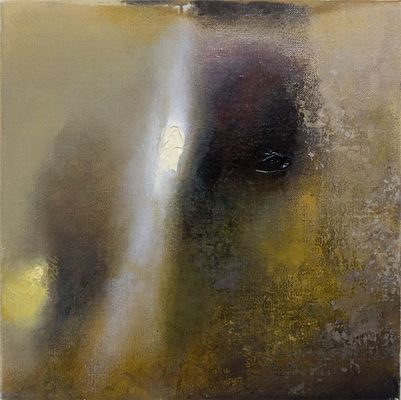
Always Will Need To Wear Winter Shirt Blue + Ochre Small Check Pattern
21 August - 21 September, 2015
Untitled
I am not a great reader of poetry but I always return to the work of Melbourne poet, Vincent Buckley (1925- 1988). Perhaps I find his most tantalising piece to be not a finished poem but a fragment left on a scrap of paper discovered on his desk after the poet’s death.
The poetry gathers like oil
In the word-core, and spreads
It has its music meet,
Its music is in movement.
This fragment is more the shell left behind from a volatile thought than a finished poem. I find the last two lines honest but awkward whereas the first two lines work like an arrow. Most likely he could not find a resolution so it was left. Still, in its present form, it remains an eloquent testimony to the ultimate failure of a medium to express mobile thought and sensation, in Buckley’s case, through verbal language. It’s an important matter because this is something all artists have to deal with regardless of the medium.
I have never written a poem, however, I am forever copying fragments from books on paper scraps in a vain effort to fix certain notions in my head. At first, they function as bookmarks that are sometimes returned to when I open the book. But before long, as they accumulate, they fall out littering the table interspersed with A4 photocopies, bills, books and medications.
To return to Buckley’s fragment, the first two lines very much evoke how I paint nowadays. As you age, detail diminishes and patches of light become more luminous and float. I feel the most honest way of dealing with this is by smearing the oil paint on the canvas with the fingers and working close-up, blind. Only if the patches coalesce into an approaching image can the work gain a life.
-
Jonathan Walker was born in Melbourne, Australia and brought up on a dairy farm in Gippsland. In the 1970’s he studied painting at RMIT and won the Harold Wright Scholarship to the British Museum, London. During the 1980’s he exhibited at Pinacotheca Gallery, Richmond and had work shown at the NGV and Heidi City Art Gallery. Over the same period he designed the cover for the “Epigenesi” LP by Giancarlo Toniutti, Italy and conducted a mail exchange work with Achim Wollscheid, Germany. The work with artists through the post resulted in an article published in the bicentenary issue of Art and Australia 1988. He showed in artist run spaces such as WestSpace in the 90’s and 2000’s, and until 2012, taught painting at Victoria University, which is where we (Colleen Ahern and Lisa Radford) as organisers of the exhibition, among many others, had the privilege of being his student.
Walker’s knowledge was imparted to students through the careful selection of music, literature, and artists found in books that he himself had ordered for the library. Walker’s strategy was the generosity of sharing his vast knowledge with references specific to each student and their context.
Walker’s paintings share a similar focus and intimacy.
This exhibition presents a small selection of recent paintings alongside a publication that includes Walker’s writing. Observational and analytical, Walker’s work is a type of material notation — the time of day, colour and how it is blended, the both specific and fleeting location of a reflection on lino or the question of whether a chair leg should be included in a painting.
Please join us on Friday August 21 between 6-8pm to celebrate the opening of the exhibition.
Curated by Colleen Ahern and Lisa Radford.
B. Wurtz
Curated by Nic Tammens
March 26 - April 4, 2015
B.Wurtz works from a basement studio in his home on Manhattan’s Lower East Side.
This local fact is attested to by the plastic shopping bags and newsprint circulars that appear in his work. As formal objects, they don’t make loud claims about their origins but nonetheless transmit street addresses and places of business from the bottom of this long thin island. Like plenty of artists, Wurtz is affected by what is local and what is consumed. His work is underpinned by this ethic. It often speaks from a neighborhood or reads like the contents of a hamper:
“BLACK PLUMS $1.29 lb.”
“Food Bazaar”
“USDA Whole Pork Shoulder Picnic 99c lb.”
“RITE AID Pharmacy, with us it’s personal.”
“H. Brickman & Sons.”
“Sweet Yams 59c lb."
Most of the work in this exhibition was made while the artist was in residence at Dieu Donne, a workshop dedicated to paper craft in Midtown. Here Wurtz fabricated assemblages with paper and objects that are relatively lightweight, with the intention that they would be easily transportable to Australia. This consideration isn’t absolute in Wurtz’s work, but was prescriptive for making the current exhibition light and cheap. Packed in two boxes, these works were sent from a USPS post office on the Lower East Side and delivered to North Melbourne by Australia Post.
Wurtz appears courtesy of Metro Pictures, New York.
Thanks to Rob Halverson, Joshua Petherick, Sari de Mallory, Matt Hinkley, Helen Johnson, Fayen d'Evie, Ask Kilmartin, Lisa Radon, Ellena Savage, Yale Union, and "Elizabeth".
John Nixon
"Archive"
December 15 - January 20, 2014
The presentation of John Nixon's archive offered a rare showcase of this extensive collection of the artist's own publications, catalogues, posters, ephemera, editions and more, from the mid 1980s onwards, alongside a selection of his artworks.
Organized by John Nixon, Joshua Petherick and Matt Hinkley.
<a href=http://wfb.public-office.info/artist/john-nixon>All titles by John Nixon
"Habitat"
at Minerva, Sydney (organised by Joshua Petherick and Matt Hinkley)
November 15 - December 20, 2014
Lupo Borgonovo, Janet Burchill & Jennifer McCamley,
Lewis Fidock, HR Giger, Piero Gilardi, Veit Laurent Kurz,
Cinzia Ruggeri, Michael E. Smith, Lucie Stahl, Daniel Weil, Wols
Press Release:
“...It contained seven objects. The slender fluted bone, surely formed for flight, surely from the wing of some large bird. Three archaic circuitboards, faced with mazes of gold. A smooth white sphere of baked clay. An age-blackened fragment of lace. A fingerlength segment of what she assumed was bone from a human wrist, grayish white, inset smoothly with the silicon shaft of a small instrument that must once have ridden flush with the surface of the skin - but the thing’s face was seared and blackened.”
William Gibson, “Count Zero”, 1986
"Autumn Projects Archive"
Curated by Liza Vasiliou
March 6 - March 15, 2014
World Food Books, in conjunction with the Virgin Australia Melbourne Fashion Festival 2014, presented the Autumn Projects archive, consisting of a selection of early examples in Australian fashion with a particular interest in collecting designers and labels from the period beginning in the 1980’s, who significantly influenced the discourse of Australian Fashion.
Curated by Liza Vasiliou, the exhibition provided a unique opportunity to view pieces by designers Anthea Crawford, Barbara Vandenberg, Geoff Liddell and labels CR Australia, Covers, Jag along with early experimental collage pieces by Prue Acton and Sally Browne’s ‘Fragments’ collection, suspended throughout the functioning World Food Books shop in Melbourne.
H.B. Peace
presented by CENTRE FOR STYLE
November 14, 2013
"Hey Blinky, you say chic, I say same"
Anon 2013
H.B. Peace is a clothing collaboration between great friends Blake Barns and Hugh Egan Westland. Their pieces explore the divergences between 'character’ and ‘personality’ in garments....etc
Special Thanks to Joshua Petherick and Matt Hinkley of WFB and Gillian Mears
and a Very Special Thank you to Audrey Thomas Hayes for her shoe collaboration.
Janet Burchill & Jennifer McCamley
"Aesthetic Suicide"
May 10 - June 8, 2013
The first of our occasional exhibitions in the World Food Books office/shop space in Melbourne, "Aesthetic Suicide" presented a body of new and older works together by artists Janet Burchill & Jennifer McCamley, including videos, prints, a wall work, and publications.
During shop open hours videos played every hour, on the hour.
2021, English
Softcover, 160 pages, 19.8 x 13 cm
Published by
And Other Stories / High Wycombe
$32.00 - In stock -
Introduction by Claire-Louise Bennett
A book of voices, landscapes and seasons, Ann Quin's newly republished novel mirrors the multiplicity of meanings of the very word 'passage'--of music, of time, and of life itself. A woman, accompanied by her lover, searches for her lost brother, who may have been a revolutionary, and who may have been tortured, imprisoned or killed. Roving through a Mediterranean landscape, they live out their entangled existences, reluctant to give up, afraid of the outcome.
Reflecting the schizophrenia of its characters, the novel splits into alternating passages, switching between the sister and her lover's perspective. The lover's passages are also fractured, taking the form of a diary with notes alongside the entries. An intricate system of repetition and relation builds across the passages. 'All seasons passed through before the pattern formed, collected in parts.'
Erotic and tense, in Quin's compelling third novel the author allowed her writing freer rein than before, and created a work ahead of its time: her most poetic, evocative and mysterious novel yet.
2022, English
Softcover, 192 pages, 12.9 x 19.8 cm
Published by
And Other Stories / High Wycombe
$33.00 - In stock -
First published in 1972, Ann Quin's fourth and final novel was a radical break from the introspective style she had developed in Three and Passages: a declaration of independence from all expectations.
Brashly experimental, ribald, and hilarious, Tripticks maps new territories for the novel - aspiring to a form of pop art via the drawings of the artist Carol Annand and anticipating the genre-busting work of Kathy Acker through collage and gory satire.
Splattering its pages with the story of a man being chased across a nightmarish America by his 'first X-wife' and her 'schoolboy gigolo', Tripticks was ground zero for the collision of punk energy with high style.
1961, English
Softcover, 304 pages, 20.5 x 13 cm
Reprint,
Published by
New Directions / New York
$44.00 - In stock -
The poem is as easy to read as breathing: it could be danced, it could be sung, the clarity of image is so perfect… Tremendous suggestiveness and magnetic force radiate from the scenes… H. D.’s verse has the balance, the amplitude and the clean outlines of a Greek temple.—Nation
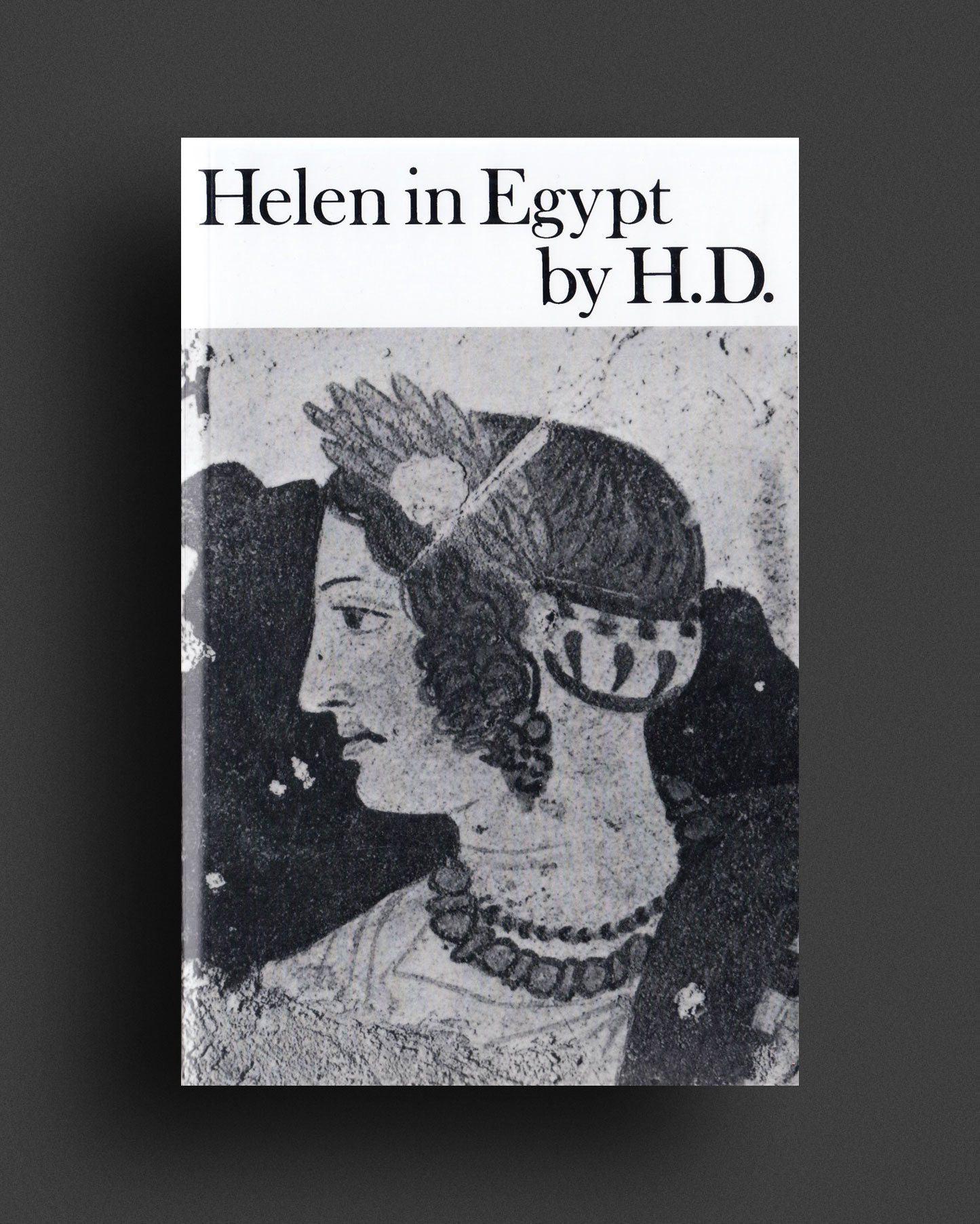
The fabulous beauty of Helen of Troy is legendary. But some say that Helen was never in Troy, that she had been conveyed by Zeus to Egypt, and that Greeks and Trojans alike fought for an illusion. A fifty-line fragment by the poet Stesichorus of Sicily (c. 640-555 B.C.), what survives of his Pallinode, tells us almost all we know of this other Helen, and from it H. D. wove her book-length poem. Yet Helen in Egypt is not a simple retelling of the Egyptian legend but a recreation of the many myths surrounding Helen, Paris, Achilles, Theseus, and other figures of Greek tradition, fused with the mysteries of Egyptian hermeticism.
Hilda Doolittle (1886–1961), known as H.D., was an innovative modernist writer whose career encompassed poetry, novels, memoirs, short stories, essays, reviews, translations, and children’s literature. Born in Pennsylvania, she formed lifelong friendships with Ezra Pound, William Carlos Williams, and Marianne Moore, and became central to the literary networks of London and Paris after moving to Europe in 1911. Her writing explored the poet’s role, war, ancient cultures and mythology, national and colonial identity, lesbian and queer sexuality, and spirituality. Her marriage to Richard Aldington was strained by World War I, while her lifelong partnership with Bryher became the foundation of a creative and unconventional household that included their daughter Perdita, filmmaker Kenneth Macpherson, and others. Closely connected to figures including Gertrude Stein and Sylvia Beach, H.D. travelled extensively and drew inspiration from Egypt, Greece, Britain, and America. Through Norman Holmes Pearson, she established an important connection with Yale, where her papers are now preserved, and she influenced younger poets including Robert Duncan and Denise Levertov. Her final years brought renewed recognition, including the 1960 Award of Merit Medal for Poetry from the American Academy of Arts and Letters—the first awarded to a woman. H.D. died following a stroke in 1961 and was buried in Bethlehem, where her Moravian gravestone is often adorned with seashells in tribute to her first poetry collection, Sea Garden.
1973, English
Softcover, 206 pages, 20.5 x 13.5 cm
Reprint,
Published by
New Directions / New York
$34.00 - In stock -
…this ecstasy, ecstasy in language, in beautiful language, is what carries me through the entire trilogy, not only content with her trick…not only content with these high-handed fictions but enchanted with her whole poem, not to say enraptured.—Hayden Carruth, Hudson Review
This reissue of the classic Trilogy, by H. D. (Hilda Doolittle, 1886-1961), now includes a new introduction and a large section of referential notes for readers and students, compiled by Professor Aliki Barnstone. As civilian war poetry (written under the shattering impact of World War II), Trilogy’s three long poems rank with T. S. Eliot’s Four Quartets and Ezra Pound’s Pisan Cantos. The first book of the Trilogy, published in the midst of the “fifty thousand incidents” of the London blitz, maintains the hope that though “we have no map;/ possibly we will reach haven,/heaven.” Tribute to the Angels describes new life springing from the ruins, and finally, in The Flowering of the Rod––with its epigram, “…pause to give/thanks that we rise again from death and live”––faith in love and resurrection is realized in lyric and strongly Biblical imagery. About Trilogy, Denise Levertov wrote: “. . . H. D. spoke of essentials. It is a simplicity not of reduction but of having gone further out of the circle of known light, further toward an unknown center.”
Hilda Doolittle (1886–1961), known as H.D., was an innovative modernist writer whose career encompassed poetry, novels, memoirs, short stories, essays, reviews, translations, and children’s literature. Born in Pennsylvania, she formed lifelong friendships with Ezra Pound, William Carlos Williams, and Marianne Moore, and became central to the literary networks of London and Paris after moving to Europe in 1911. Her writing explored the poet’s role, war, ancient cultures and mythology, national and colonial identity, lesbian and queer sexuality, and spirituality. Her marriage to Richard Aldington was strained by World War I, while her lifelong partnership with Bryher became the foundation of a creative and unconventional household that included their daughter Perdita, filmmaker Kenneth Macpherson, and others. Closely connected to figures including Gertrude Stein and Sylvia Beach, H.D. travelled extensively and drew inspiration from Egypt, Greece, Britain, and America. Through Norman Holmes Pearson, she established an important connection with Yale, where her papers are now preserved, and she influenced younger poets including Robert Duncan and Denise Levertov. Her final years brought renewed recognition, including the 1960 Award of Merit Medal for Poetry from the American Academy of Arts and Letters—the first awarded to a woman. H.D. died following a stroke in 1961 and was buried in Bethlehem, where her Moravian gravestone is often adorned with seashells in tribute to her first poetry collection, Sea Garden.
1983, English
Softcover, 670 pages, 23 x 15 cm
Reprint,
Published by
New Directions / New York
$50.00 - In stock -
"In the tradition of poems by Yeats, Eliot and Pound, H. D’s verse sequences are richly visionary ‘supreme fictions’…"—Sandra M. Gilbert, New York Times Book Review
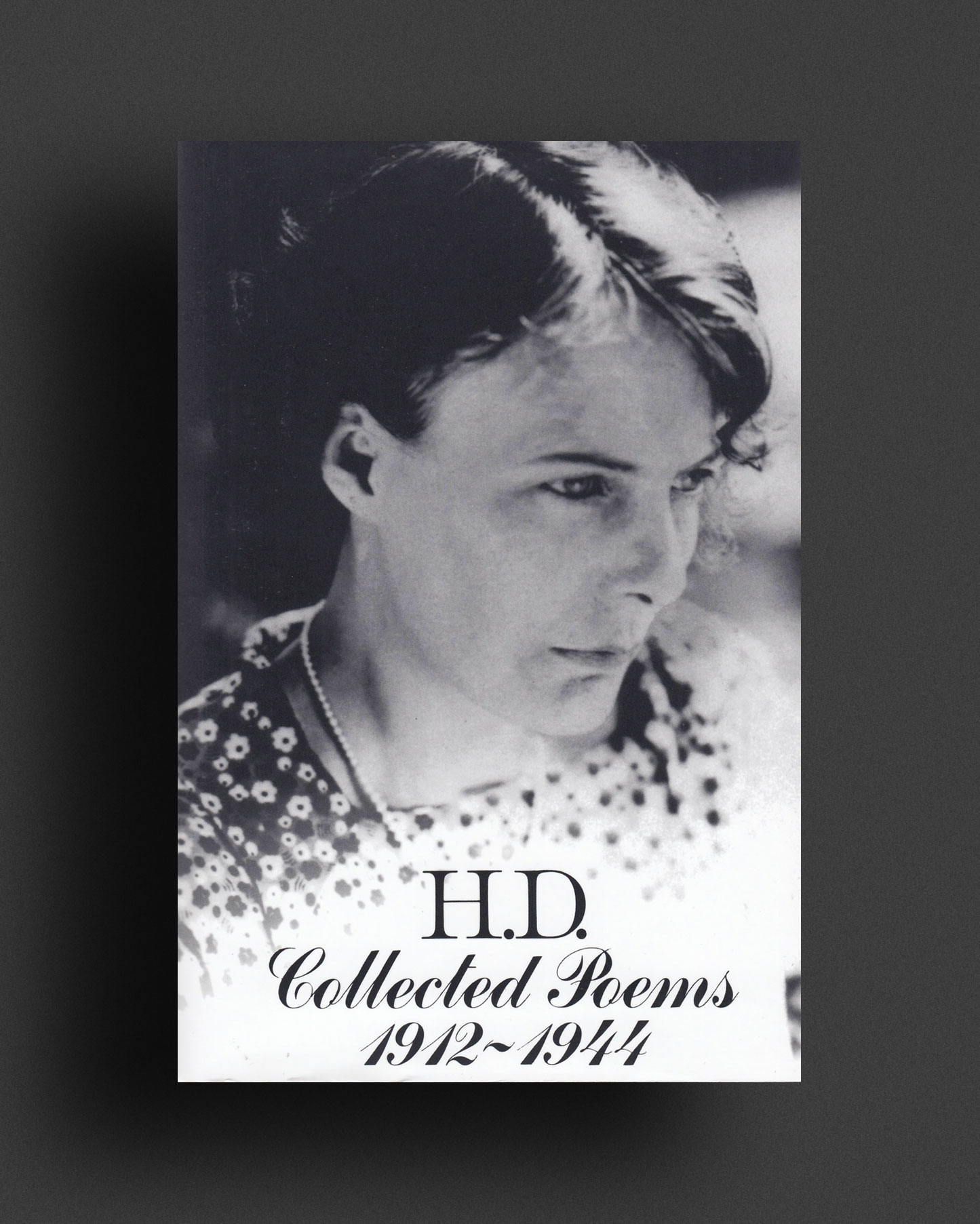
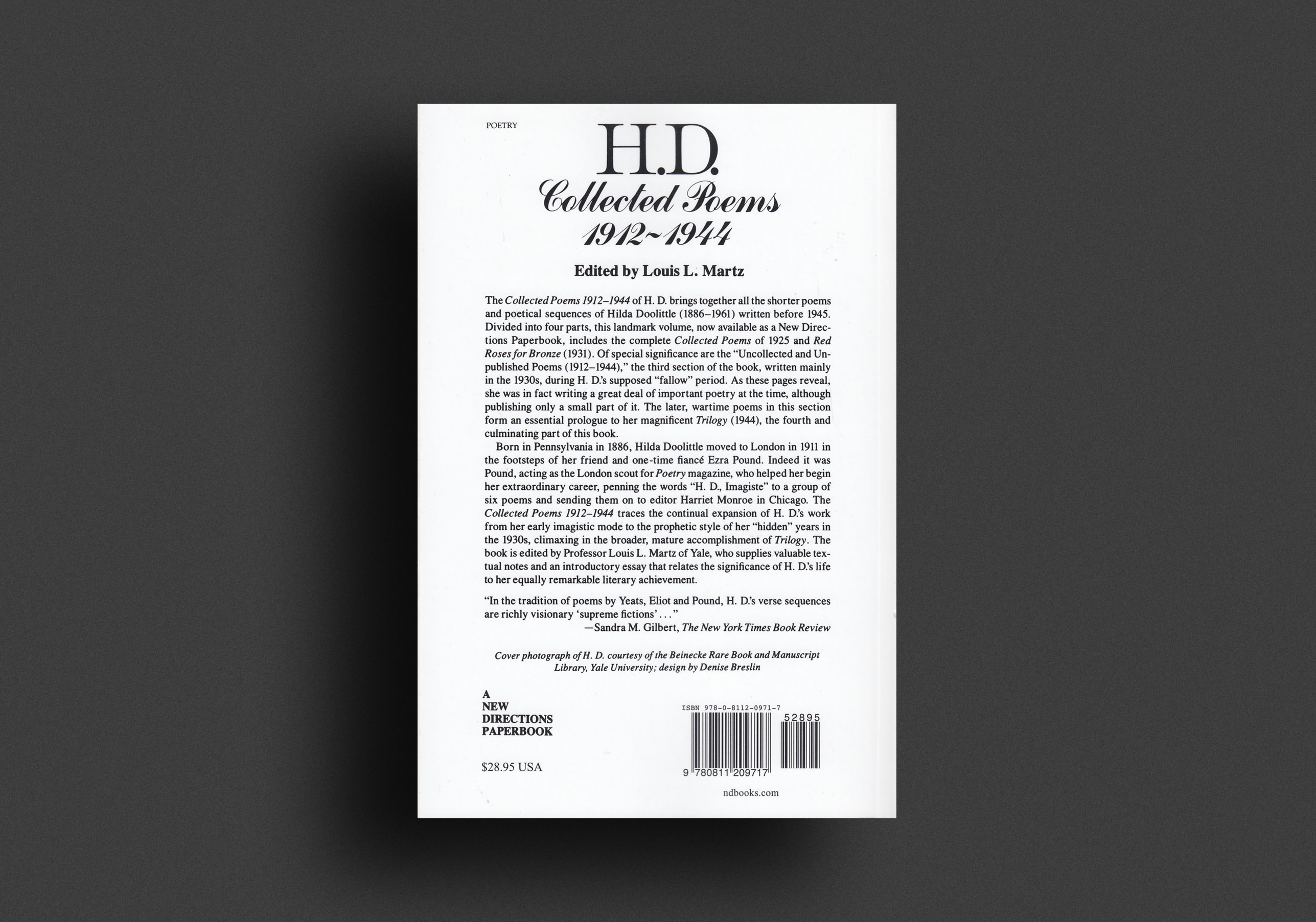
The Collected Poems 1912-1944 of H. D. brings together all the shorter poems and poetical sequences of Hilda Doolittle (1886-1961) written before 1945. Divided into four parts, this landmark volume, now available as a New Directions Paperbook, includes the complete Collected Poems of 1925 and Red Roses for Bronze (1931). Of special significance are the “Uncollected and Unpublished Poems (1912-1944),” the third section of the book, written mainly in the 1930s, during H. D.’s supposed “fallow” period. As these pages reveal, she was in fact writing a great deal of important poetry at the time, although publishing only a small part of it. The later, wartime poems in this section form an essential prologue to her magnificent Trilogy (1944), the fourth and culminating part of this book. Born in Pennsylvania in 1886, Hilda Doolittle moved to London in 1911 in the footsteps of her friend and one-time fiancé Ezra Pound. Indeed it was Pound, acting as the London scout for Poetry magazine, who helped her begin her extraordinary career, penning the words “H. D., Imagiste” to a group of six poems and sending them on to editor Harriet Monroe in Chicago. The Collected Poems 1912-1944 traces the continual expansion of H. D.’s work from her early imagistic mode to the prophetic style of her “hidden” years in the 1930s, climaxing in the broader, mature accomplishment of Trilogy. The book is edited by Professor Louis L. Martz of Yale, who supplies valuable textual notes and an introductory essay that relates the significance of H. D.’s life to her equally remarkable literary achievement.
Hilda Doolittle (1886–1961), known as H.D., was an innovative modernist writer whose career encompassed poetry, novels, memoirs, short stories, essays, reviews, translations, and children’s literature. Born in Pennsylvania, she formed lifelong friendships with Ezra Pound, William Carlos Williams, and Marianne Moore, and became central to the literary networks of London and Paris after moving to Europe in 1911. Her writing explored the poet’s role, war, ancient cultures and mythology, national and colonial identity, lesbian and queer sexuality, and spirituality. Her marriage to Richard Aldington was strained by World War I, while her lifelong partnership with Bryher became the foundation of a creative and unconventional household that included their daughter Perdita, filmmaker Kenneth Macpherson, and others. Closely connected to figures including Gertrude Stein and Sylvia Beach, H.D. travelled extensively and drew inspiration from Egypt, Greece, Britain, and America. Through Norman Holmes Pearson, she established an important connection with Yale, where her papers are now preserved, and she influenced younger poets including Robert Duncan and Denise Levertov. Her final years brought renewed recognition, including the 1960 Award of Merit Medal for Poetry from the American Academy of Arts and Letters—the first awarded to a woman. H.D. died following a stroke in 1961 and was buried in Bethlehem, where her Moravian gravestone is often adorned with seashells in tribute to her first poetry collection, Sea Garden.
2025, English
Softcover, 360 pages, 21.5 x 14 cm
Published by
University of Minnesota Press / Minnesota
Univocal Publishing / Minneapolis
$62.00 - In stock -
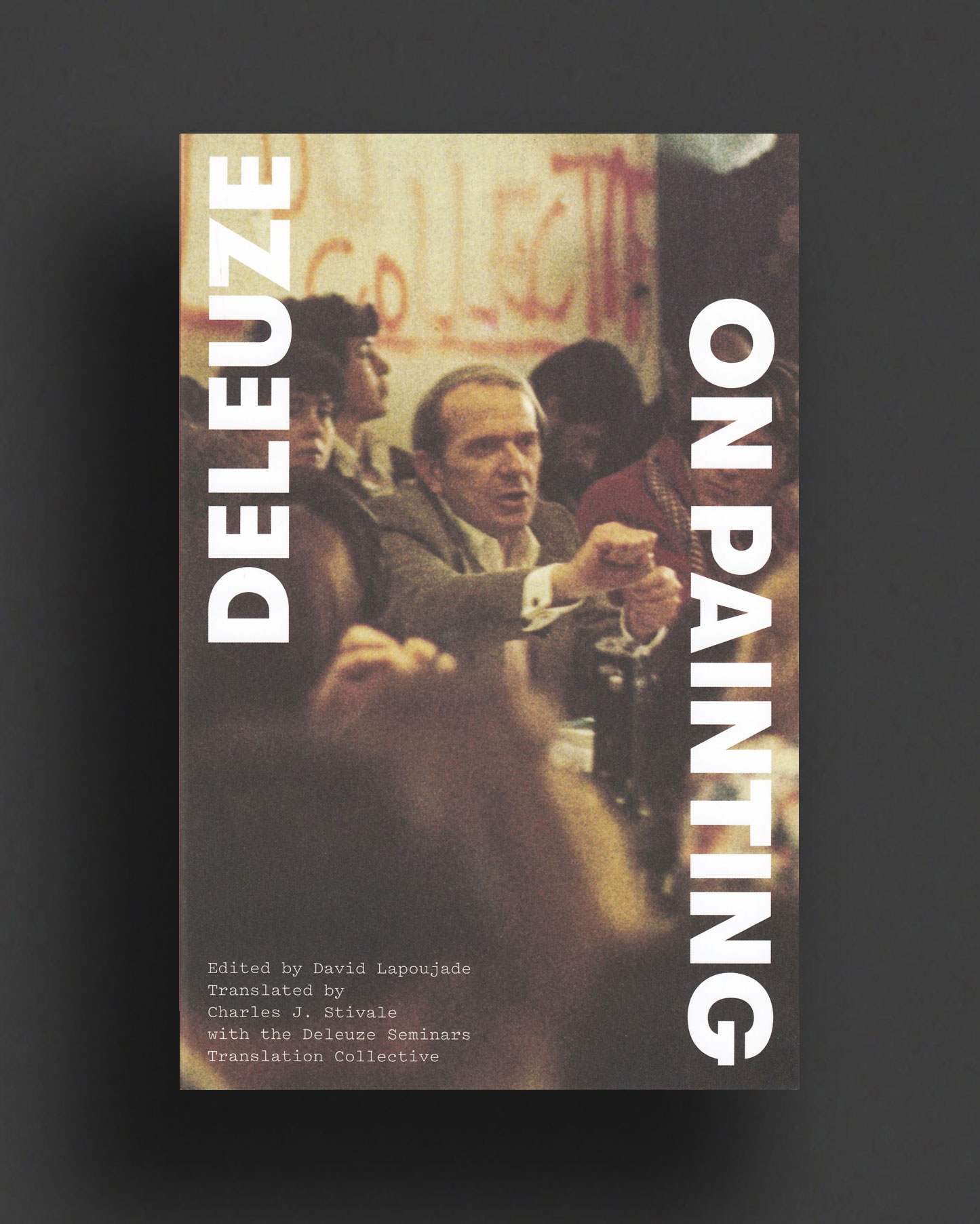
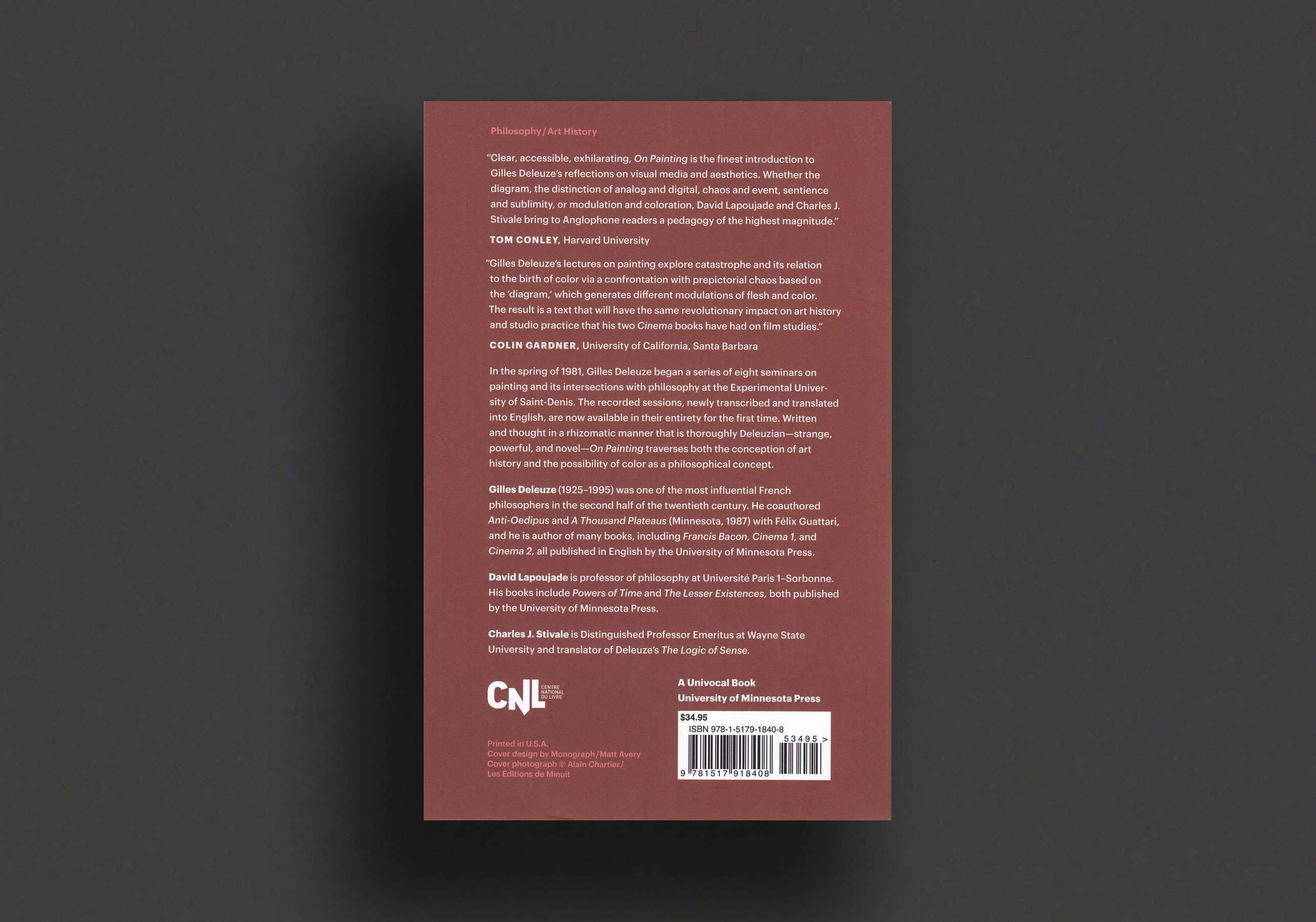
From 1970 until 1987, Gilles Deleuze held a weekly seminar at the Experimental University of Vincennes and, starting in 1980, at Saint-Denis. In the spring of 1981, he began a series of eight seminars on painting and its intersections with philosophy. The recorded sessions, newly transcribed and translated into English, are now available in their entirety for the first time. Extensively annotated by philosopher David Lapoujade, On Painting illuminates Deleuze's thinking on artistic creation, significantly extending the lines of thought in his book Francis Bacon.
Through paintings and writing by Rembrandt, Delacroix, Turner, Cezanne, Van Gogh, Klee, Pollock, and Bacon, Deleuze explores the creative process, from chaos to the pictorial fact. The introduction and use of color feature prominently as Deleuze elaborates on artistic and philosophical concepts such as the diagram, modulation, code, and the digital and the analogical. Through this scrutiny, he raises a series of profound and stimulating questions for his students: How does a painter ward off greyness and attain color? What is a line without contour? Why paint at all?
Written and thought in a rhizomatic manner that is thoroughly Deleuzian-strange, powerful, and novel-On Painting traverses both the conception of art history and the possibility of color as a philosophical concept.
Edited by David Lapoujade, translated by Charles J. Stivale.
1991, English
Softcover, 144 pages, 20.5 x 14 cm
Published by
Northwestern University Press / Evanston
$62.00 - In stock -
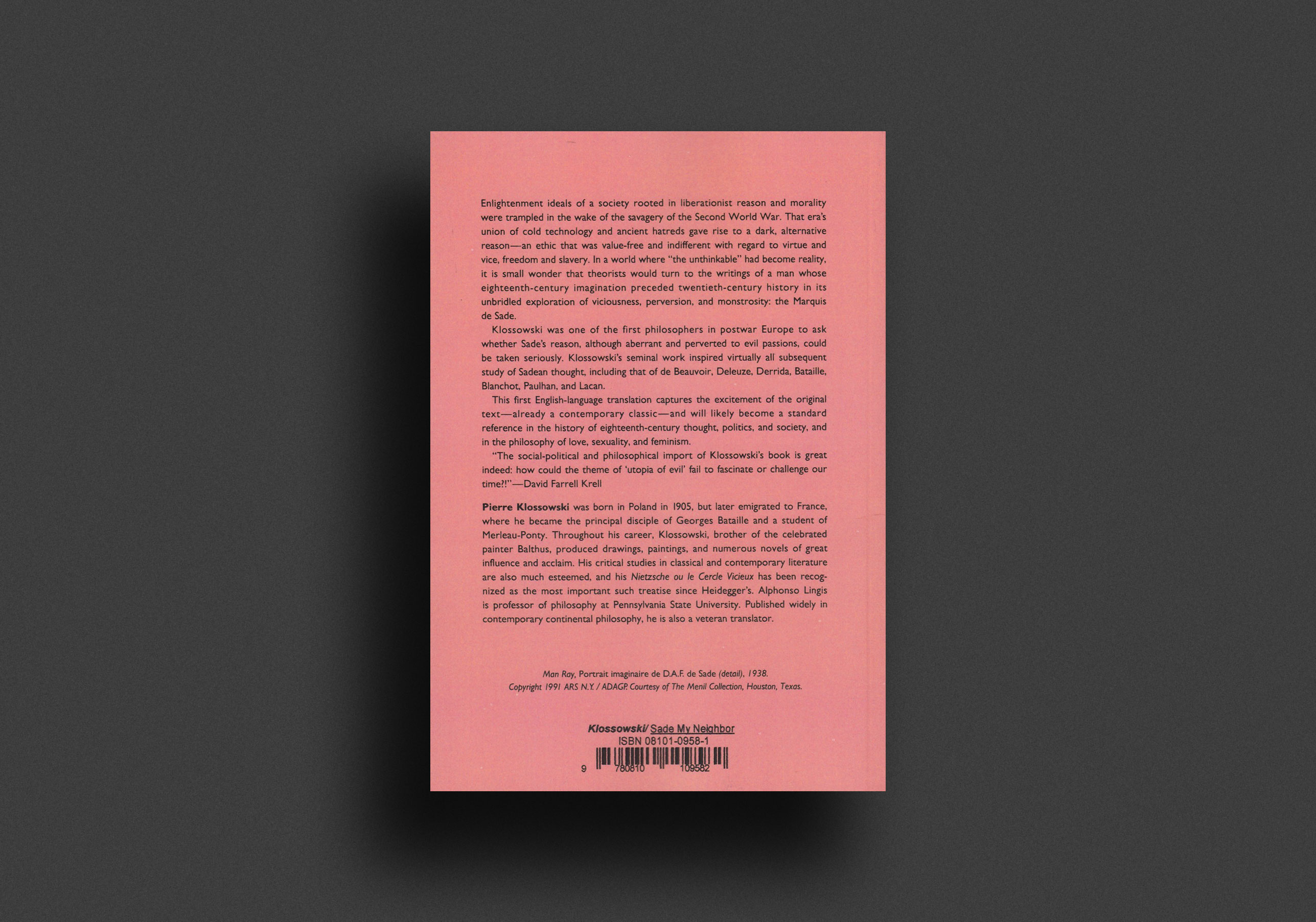
1991 edition. Translated by Alphonso Lingis.
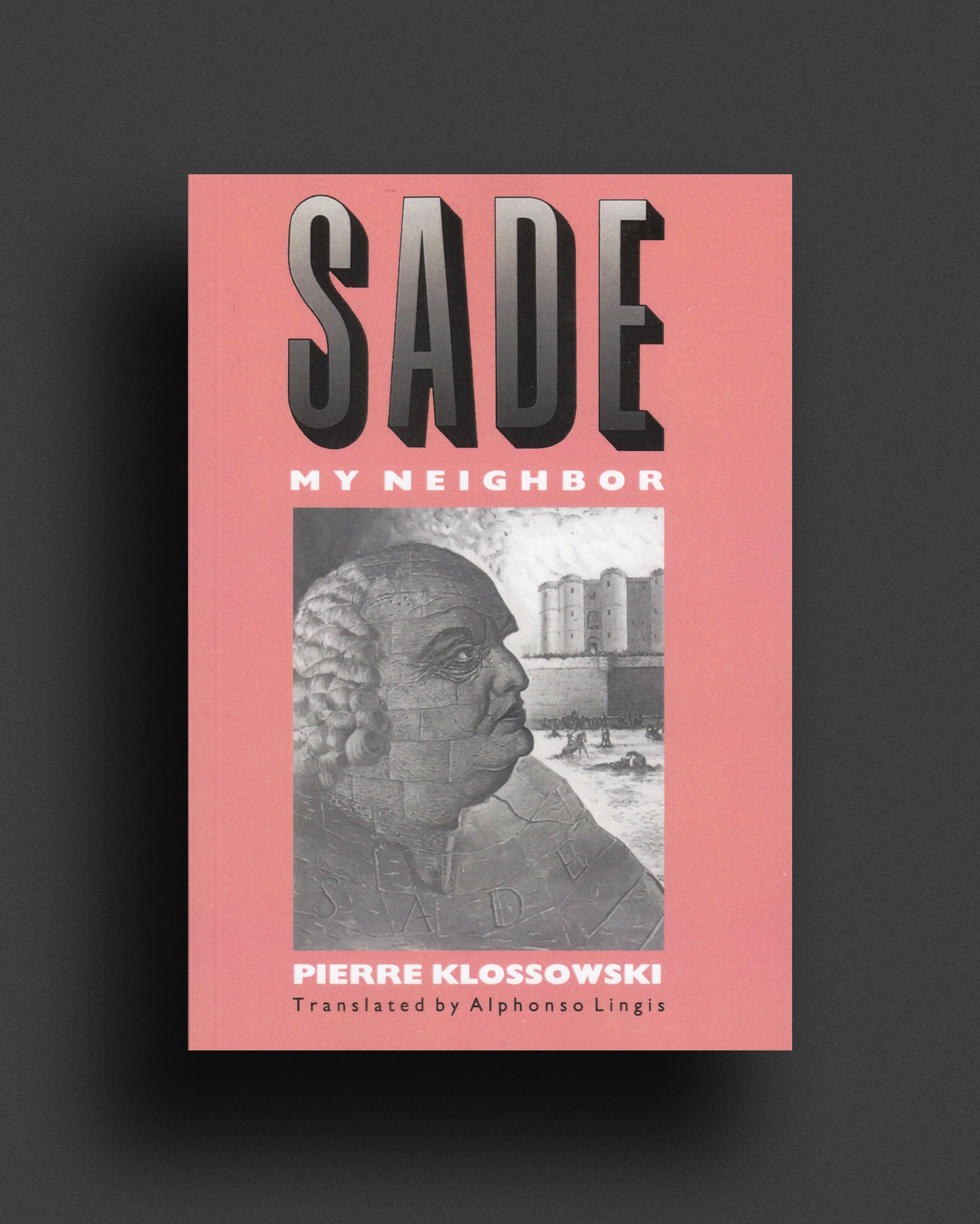
Enlightenment ideals of a society rooted in liberationist reason and morality were trampled in the wake of the savagery of the Second World War. That era's union of cold technology and ancient hatreds gave rise to a dark, alternative reason--an ethic that was value-free and indifferent with regard to virtue and vice, freedom, and slavery. In a world where "the unthinkable" had become reality, it is small wonder that theorists would turn to the writings of a man whose eighteenth-century imagination preceded twentieth-century history in its unbridled exploration of viciousness, perversion, and monstrosity: the Marquis de Sade.
Klossowski was one of the first philosophers in postwar Europe to ask whether Sade's reason, although aberrant and perverted to evil passions, could be taken seriously. Klossowski's seminal work inspired virtually all subsequent study of Sadean thought, including that of de Beauvoir, Deleuze, Derrida, Bataille, Blanchot, Paulhan, and Lacan.
2026, English / German
Hardcover (clothbound), 304 pages, 31 x 25 cm
Published by
Distanz / Berlin
Kunsthalle Gießen / Gießen
$110.00 - In stock -
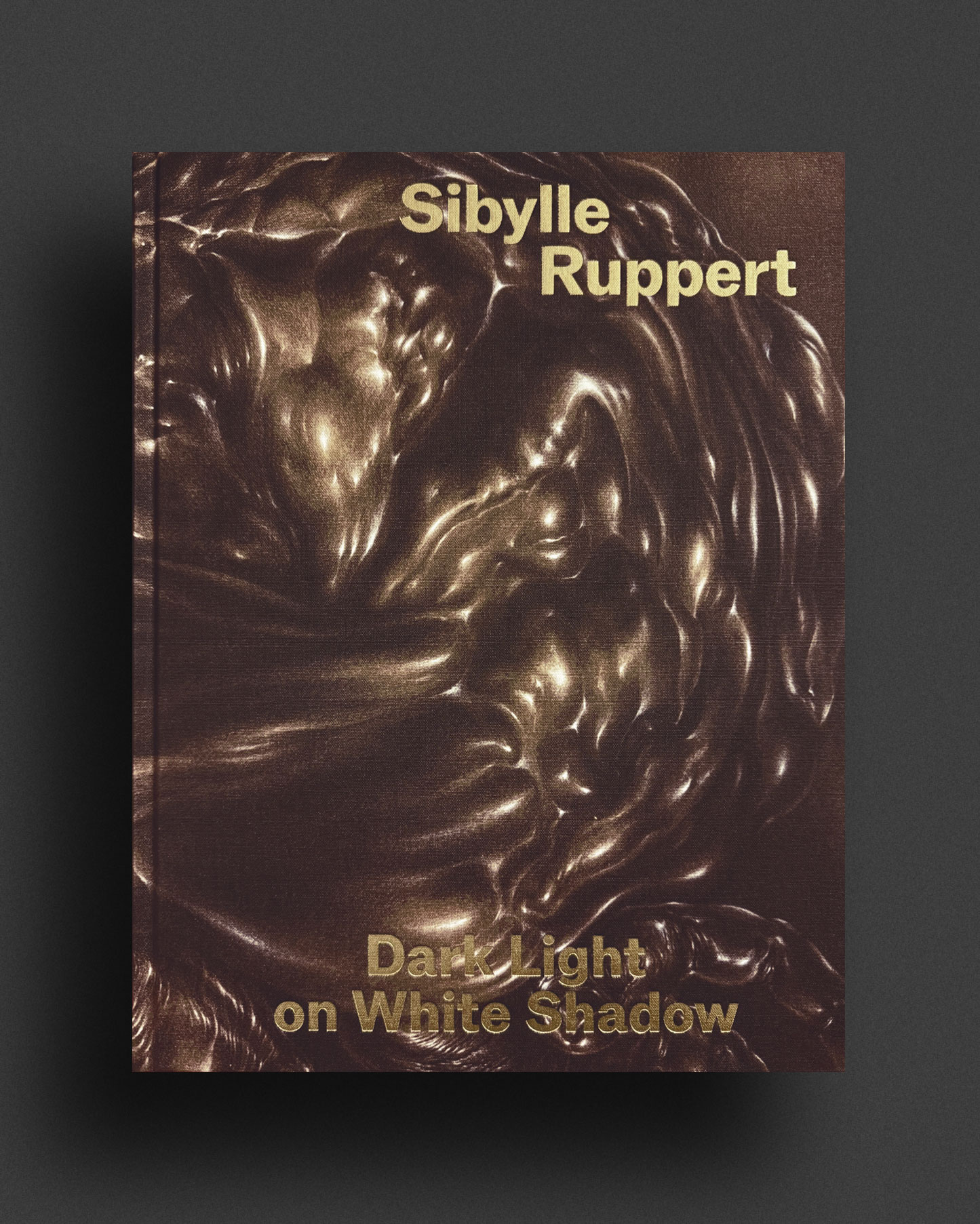
Grotesque and Somber. Dark Light on White Shadow is a retrospective of the largely unpublished oeuvre of Sibylle Ruppert, whose hyperrealistic works were inspired by Marquis de Sade and Georges Bataille.
Edited by Nadia Ismail / Kunsthalle Gießen and Paul J. Walter / Estate Sibylle Ruppert
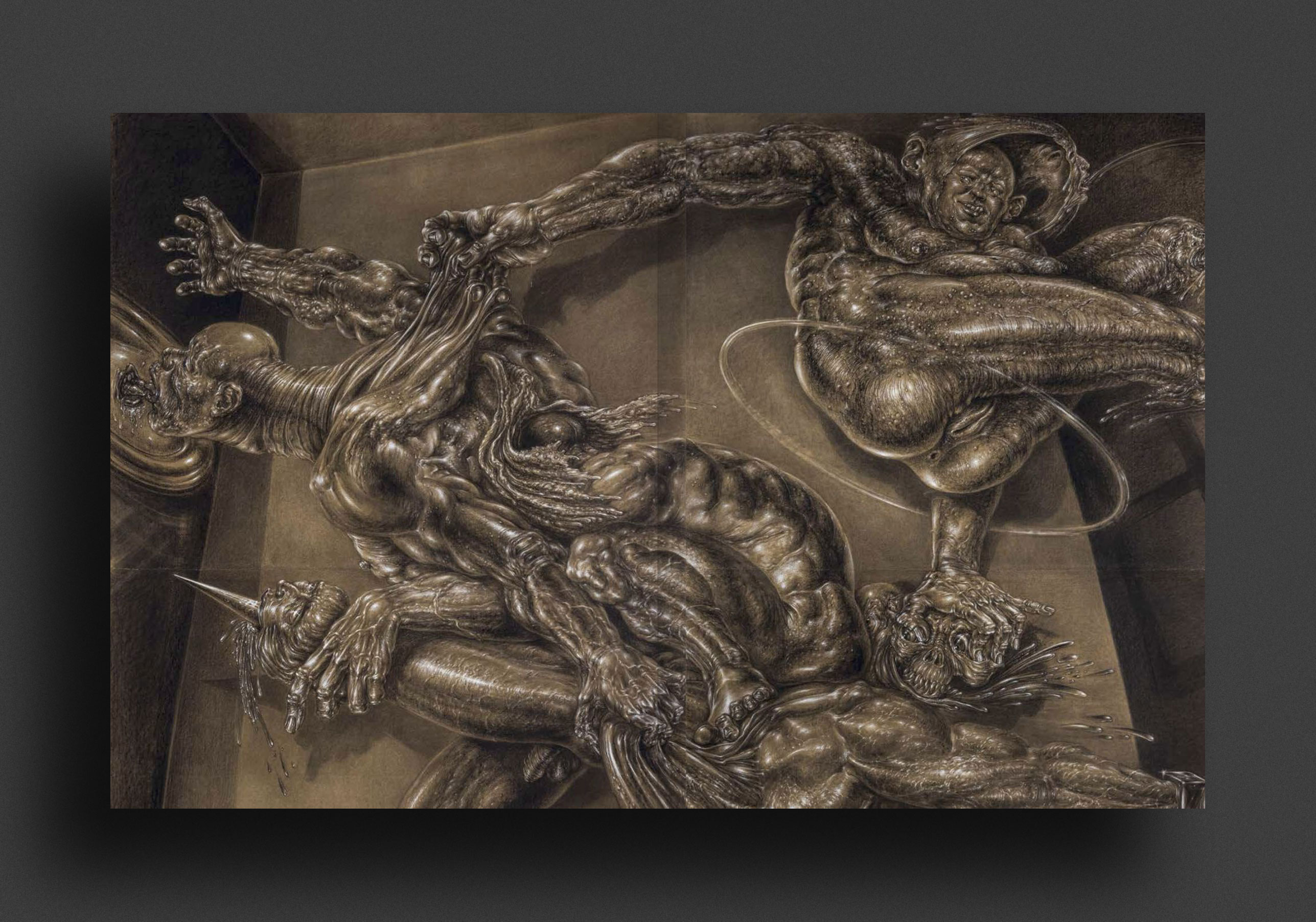
Sibylle Ruppert (b. Frankfurt/Main, 1942; d. Paris, 2011) turned childhood fears and wartime experiences into art. Born the night of the first massive bombing of Frankfurt Main, she spent her early years between nursery and improvised air-raid shelter. Ruppert's richly detailed drawings, paintings, and collages investigate her traumas and the rifts within us they leave behind. Her works reveal a visual language in which bodies menace one another and fuse to produce grotesque creatures. Drawing inspiration from writers like Georges Bataille, Comte de Lautréamont, and Marquis de Sade as well as the artists Francis Bacon and HR Giger, Rupert created a prolific surreal erotic and dystopian imagery — a singular oeuvre in hues of brown and gray. In 2010, a year before her death, the artist was the subject of a retrospective at the HR Giger Museum in Gruyeres.
The book Dark Light on White Shadow pays fresh homage to her oeuvre, which was displayed at Kunsthalle Gießen in 2023. With essays by Kate Brown, Nadia Ismail, Vera Kattermann, Annekathrin Kohout, and Paul J. Walter.
1995, English
Softcover, 259 pages, 22.8 x 15.2 cm
1st Edition, Out of print title / used / very good
Published by
Dedalus / Cambs
$35.00 - In stock -
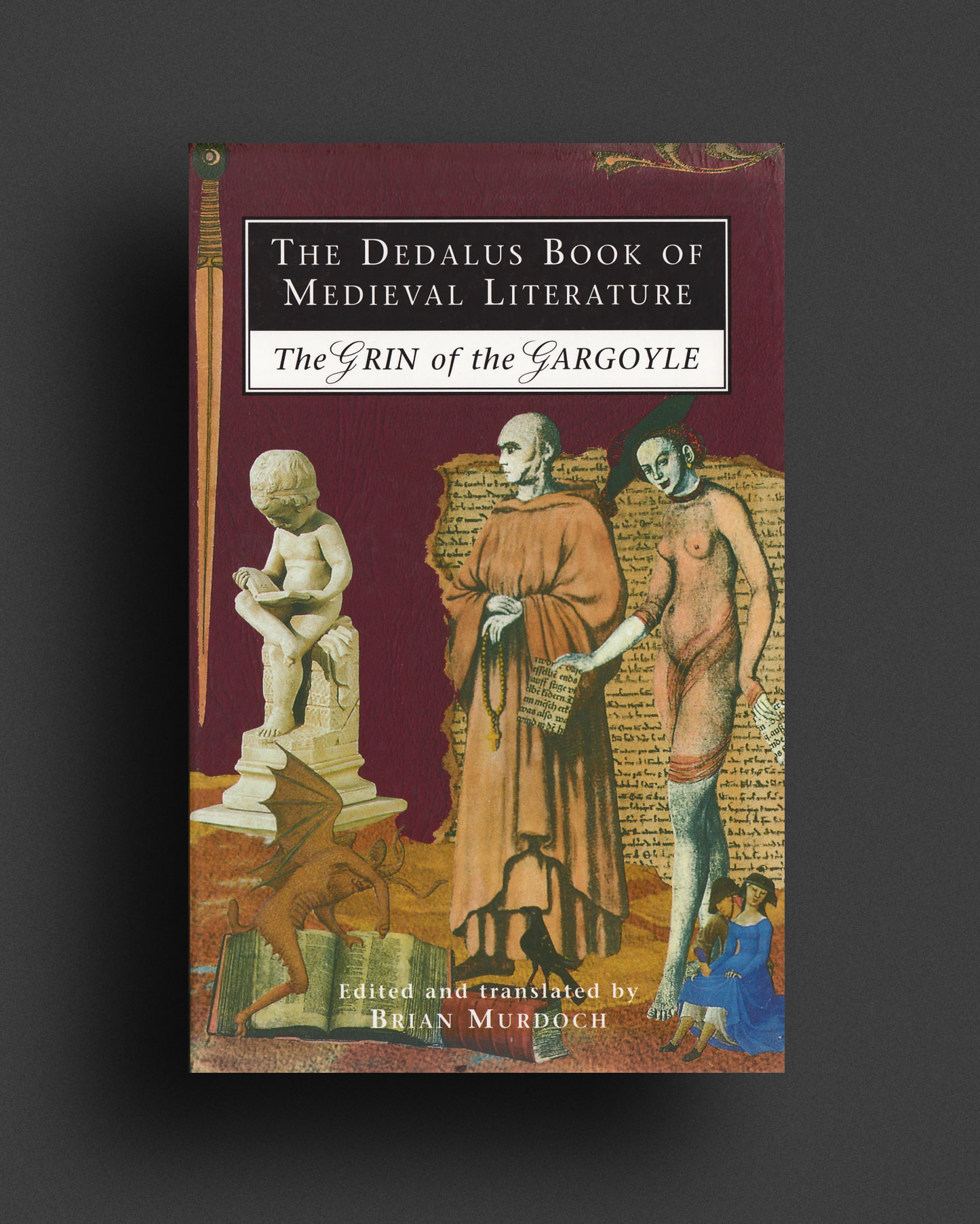
First 1995 edition.
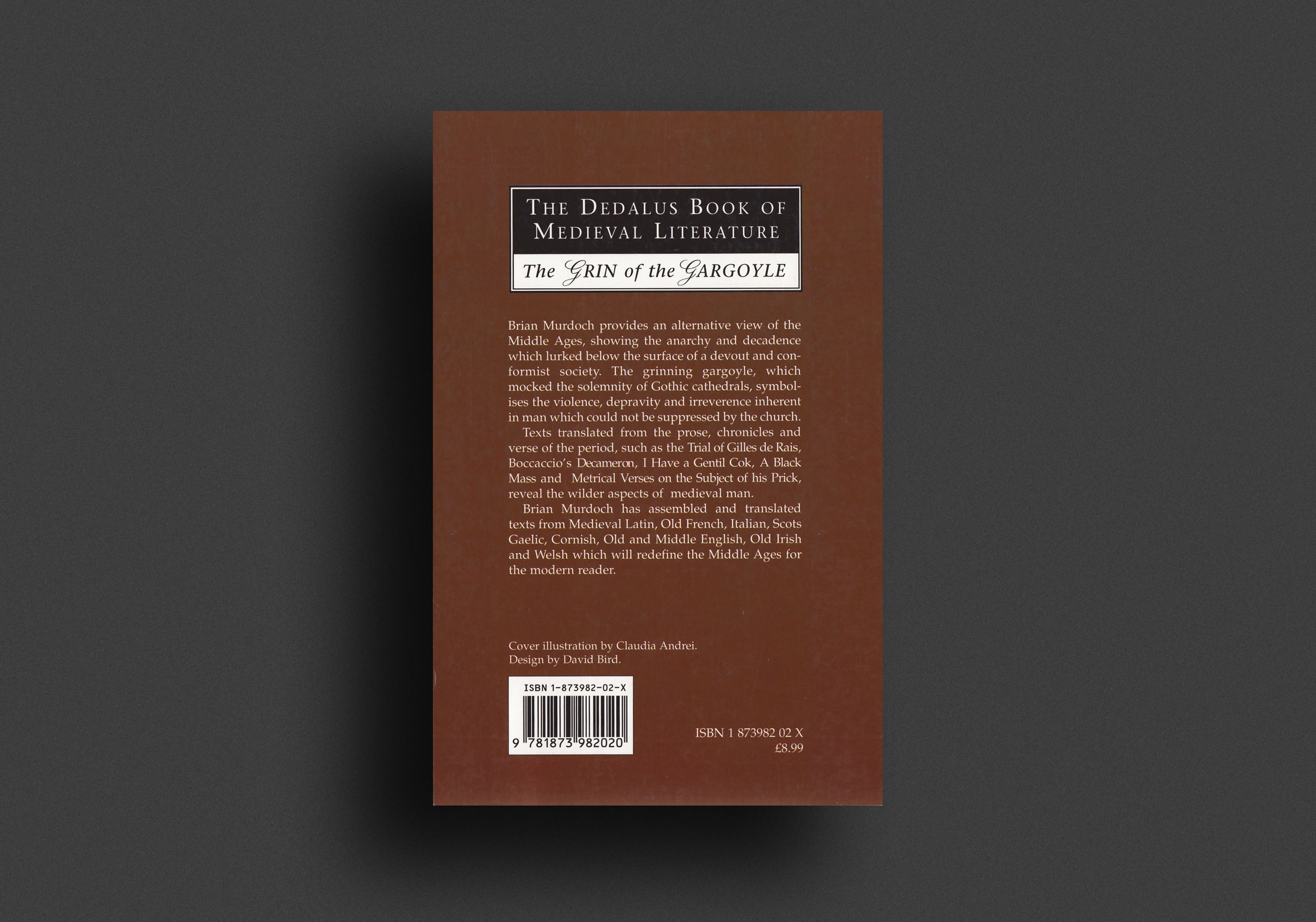
Brian Murdoch provides an alternative view of the Middle Ages, showing the anarchy and decadence which lurked below the surface of a devout and conformist society. The grinning gargoyle, which mocked the solemnity of Gothic cathedrals, symbolises the violence, depravity and irreverence inherent in man which could not be suppressed by the church.
Texts translated from the prose, chronicles and verse of the period, such as the Trial of Gilles de Rais, Boccaccio's Decameron, I Have a Gentil Cok, A Black Mass and Metrical Verses on the Subject of his Prick, reveal the wilder aspects of medieval man. Brian Murdoch has assembled and translated texts from Medieval Latin, Old French, Italian, Scots Gaelic, Cornish, Old and Middle English, Old Irish and Welsh which will redefine the Middle Ages for the modern reader.
Brian Murdoch is Professor of German at the University of Stirling and a former Visiting Fellow of Trinity Hall, Cambridge, and of Magdalen College, Oxford, where he delivered the Waynflete Lecture in 1994. Primarily a specialist in medieval and renaissance literature (German, Latin, Celtic), he has also written on the literature of the world wars, and has translated classical and medieval Latin as well as medieval and modern German texts. He is the editor of The Dedalus Book of Medieval Literature and has translated for Dedalus, with his son Brian, the texts of The Dedalus Book of Roman Decadence.
VG–NF copy with block tanning.
1993, English
Softcover, 126 pages, 13.5 x 21.5 cm
Out of print title / used / very good
Published by
Creation Books / London
$60.00 - In stock -
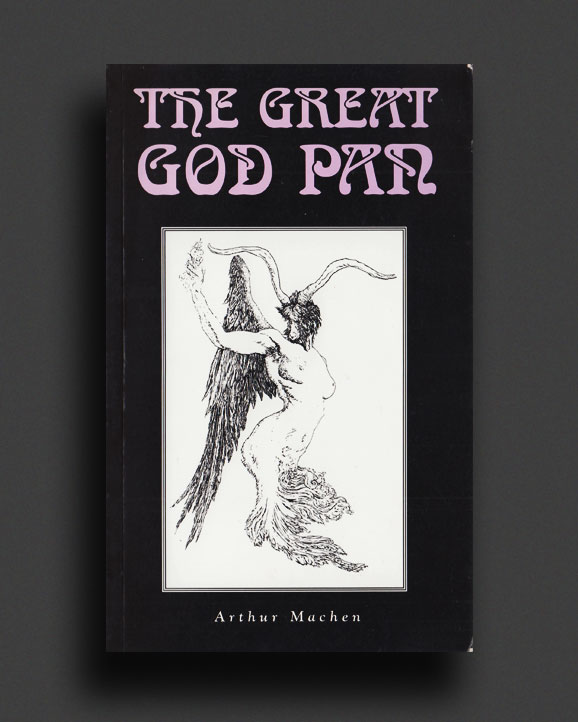
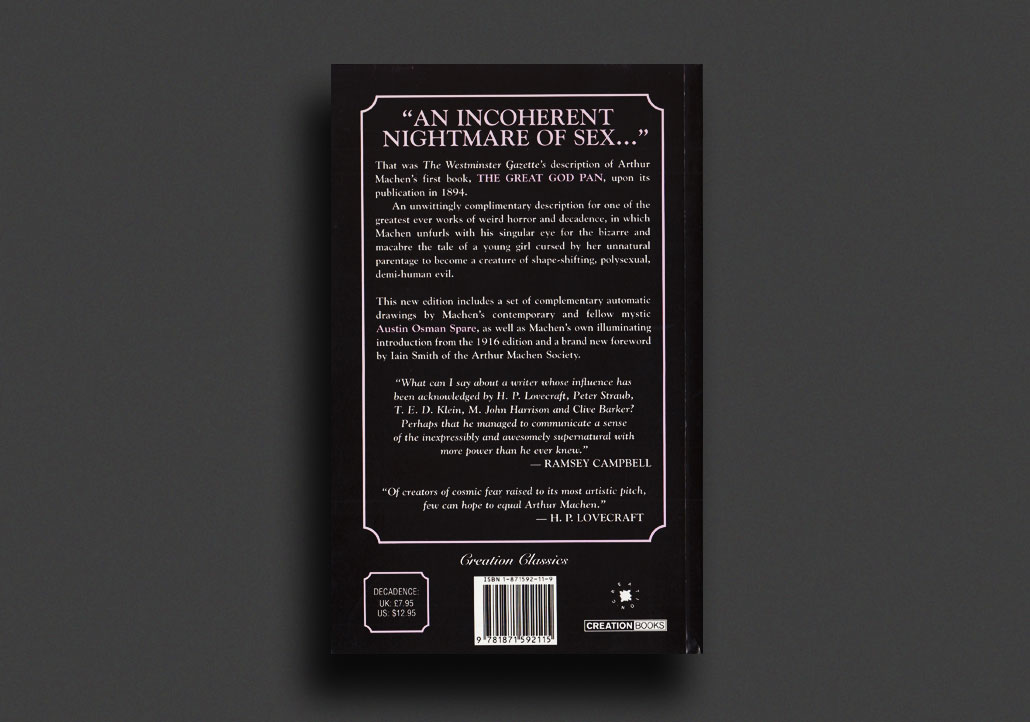
"An incoherent nightmare of sex..." That was The Westminster Gazette's description of Arthur Machen's first book, The Great God Pan, upon its publication in 1894. An unwittingly complimentary description for one of the greatest works of weird horror and decadence, in which Machen unfurls with his singular eye for the bizarre and macabre the tale of a young girl cursed by her unnatural parentage to become a creature of shape-shifting polysexual demi-human evil.
Wonderful collectable 1993 Creation Books reprint, with illustrations throughout by the great Austin Osman Spare.
Arthur Machen (1863 – 1947) was a Welsh author and mystic of the 1890s and early 20th century. He is best known for his influential supernatural, fantasy, and horror fiction. His novella The Great God Pan (1890; 1894) has garnered a reputation as a classic of horror, with Stephen King describing it as "Maybe the best [horror story] in the English language."
Very Good copy, light wear.
1999, English
Softcover (w. dust jacket), 288 pages, 21.5 x 13.4 cm
1st Edition, Out of print title / used / very good
Published by
Faber & Faber / London
$50.00 - In stock -
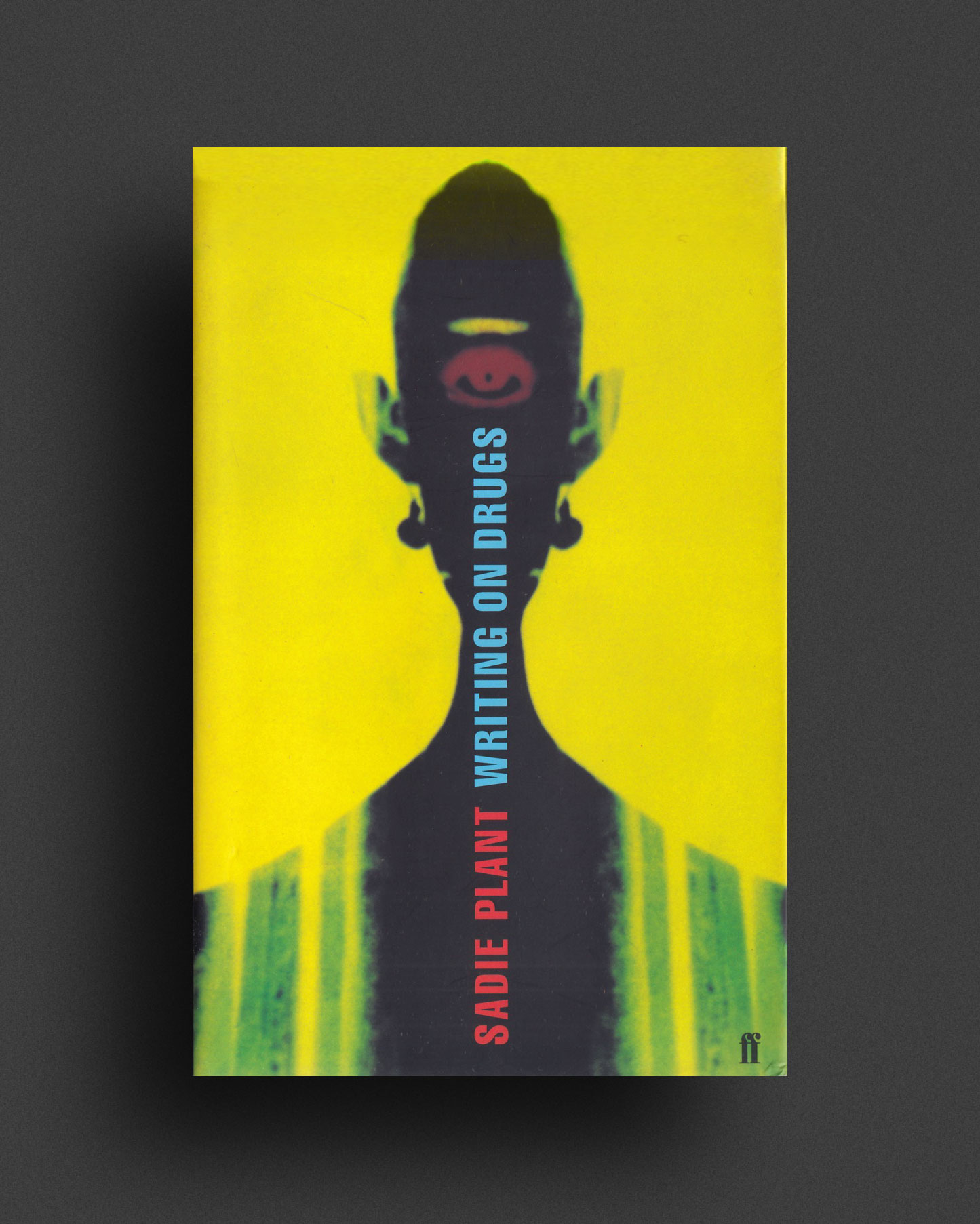
First edition of CCRU founder Sadie Plant's end-of-the-millennium classic, Writing on Drugs, published by Faber and Faber in 1999.
"All writers on drugs become ghost writers for drugs. Or perhaps their drugs are ghost writing them"—Sadie Plant
Narcotics, stimulants and hallucinogens — these drugs have always affected far more than the perceptions, minds and moods of their users. Writing on Drugs explores the profound and pervasive nature of their influence on contemporary culture. It reads Coleridge on opium, Freud on cocaine, Michaux on mescaline and Burroughs on them all, and with such writers it begins to understand the many ways in which the modern world has found itself on drugs. Psychoactive substances have been integral to its economic history, its politics, media and technologies. They have influenced its poetry and stories, and shaped some if its most fundamental philosophies. They have even exposed the neurochemistry of a human brain which, like its cultures, has never been drug-free.
Sadie Plant was born in Birmingham and studied at the University of Manchester, where she gained her PhD in Philosophy in 1989. She has been a Lecturer in Cultural Studies at the University of Birmingham and a Research Fellow in the Department of Philosophy at the University of Warwick, where, in 1995, she formed The Cybernetic Culture Research Unit (CCRU) with Mark Fisher and Nick Land, an experimental cultural theorist collective celebrated for its idiosyncratic and surreal "theory-fiction" which incorporated cyberpunk and Gothic horror, gaining an online cult following related to the rise in popularity of accelerationism. She published The Most Radical Gesture: The Situationist International in a Postmodern Age in 1992, and Zeros and Ones: Digital Women and the New Technoculture in 1997. Having spent much of the 1990s in the academic world, she now works independently and writes full-time.
G—VG in VG dust jacket. Normal page tanning, tanning to dust jacket edge and spine. Not necessarily copy pictured.
1993, English
Softcover, 280 pages, 20 x 12.5 cm
1st Edition, Out of print title / used / very good
Published by
Dedalus / Cambs
$35.00 - Out of stock
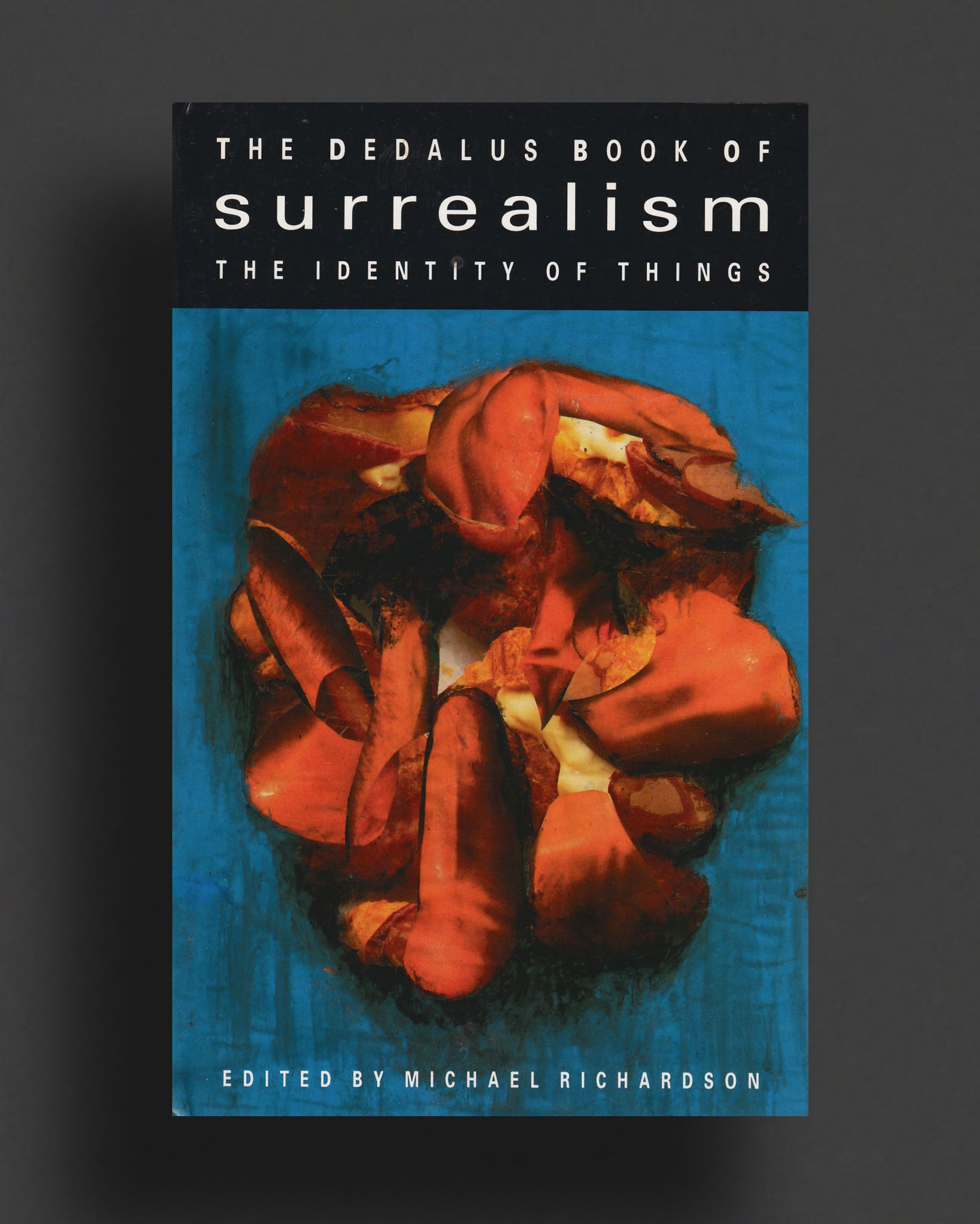
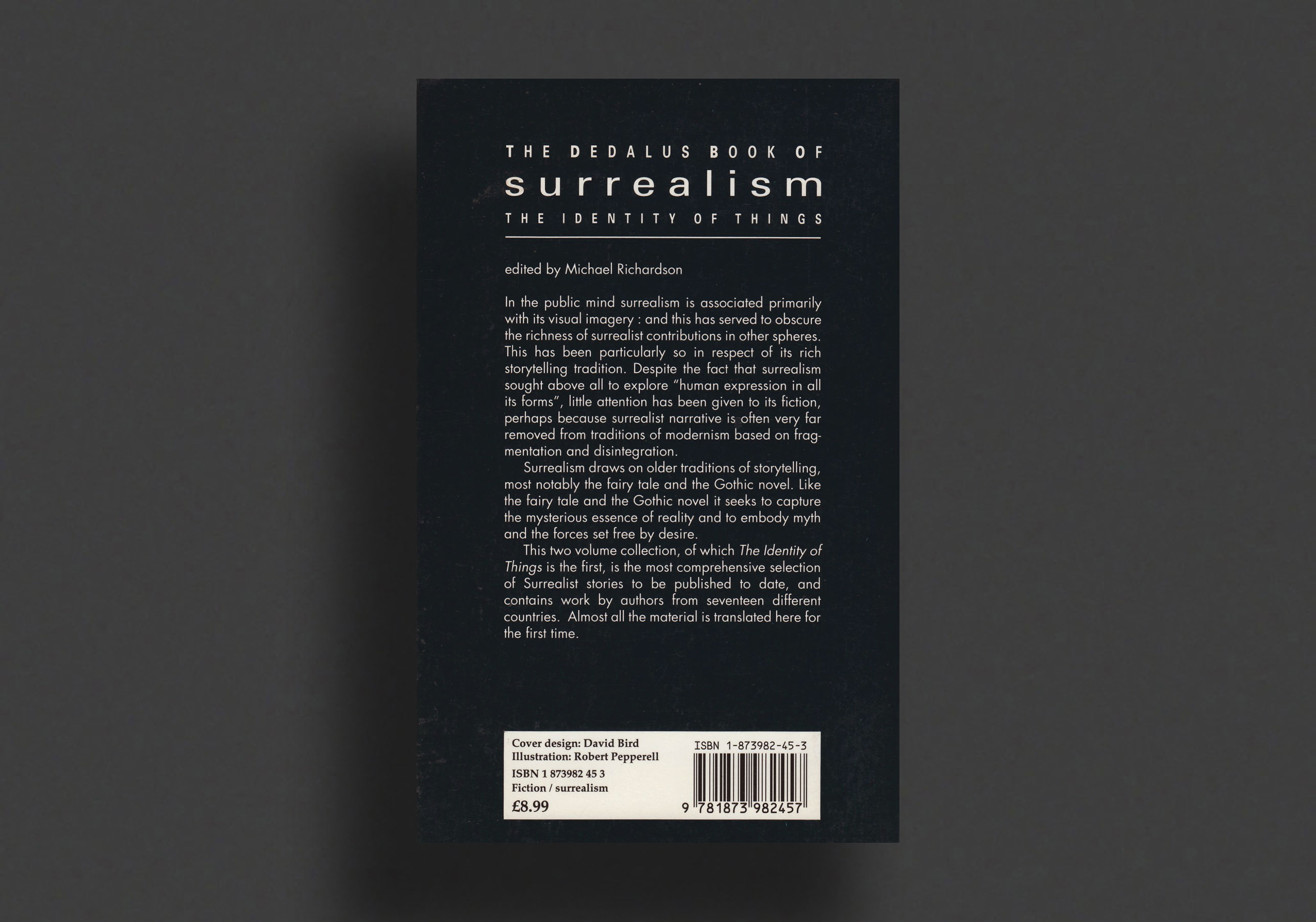
In the the public mind surrealism is associated primarily with its visual imagery: and this has served to obscure the richness of surrealist contributions in other spheres. This has been particularly so in respect of its rich storytelling tradition...Surrealism draws on older traditions of storytelling, most notably the fairy tale and the Gothic novel...it seeks to capture the mysterious essence of reality and to embody myth and the forces set free by desire.
"The range is impressive, and includes several women...Gisele Prassinos...Leonora Carrington and Meret Oppenheim; contemporary writers like Rikki Ducornet. Richardson makes available in English several early treasures, such as Salvador Dali's Reverie and Pierre Unik's Long Live the Bride, a wonderful tale of mistaken identity and metonymical transfer of meaning." —Fiona Bradley in the Times Literary Supplement
"'I went to fetch my car, but my chauffeur, who has no sense at all, had just buried it,' writes Leonora Carrington in this captivating collection of tales from 17 languages."—The Observer
VG copy.
1989, English
Softcover, 210 pages, 21 x 13.5 cm
Out of print title / used / good
Published by
Blast Books / New York
$25.00 - In stock -
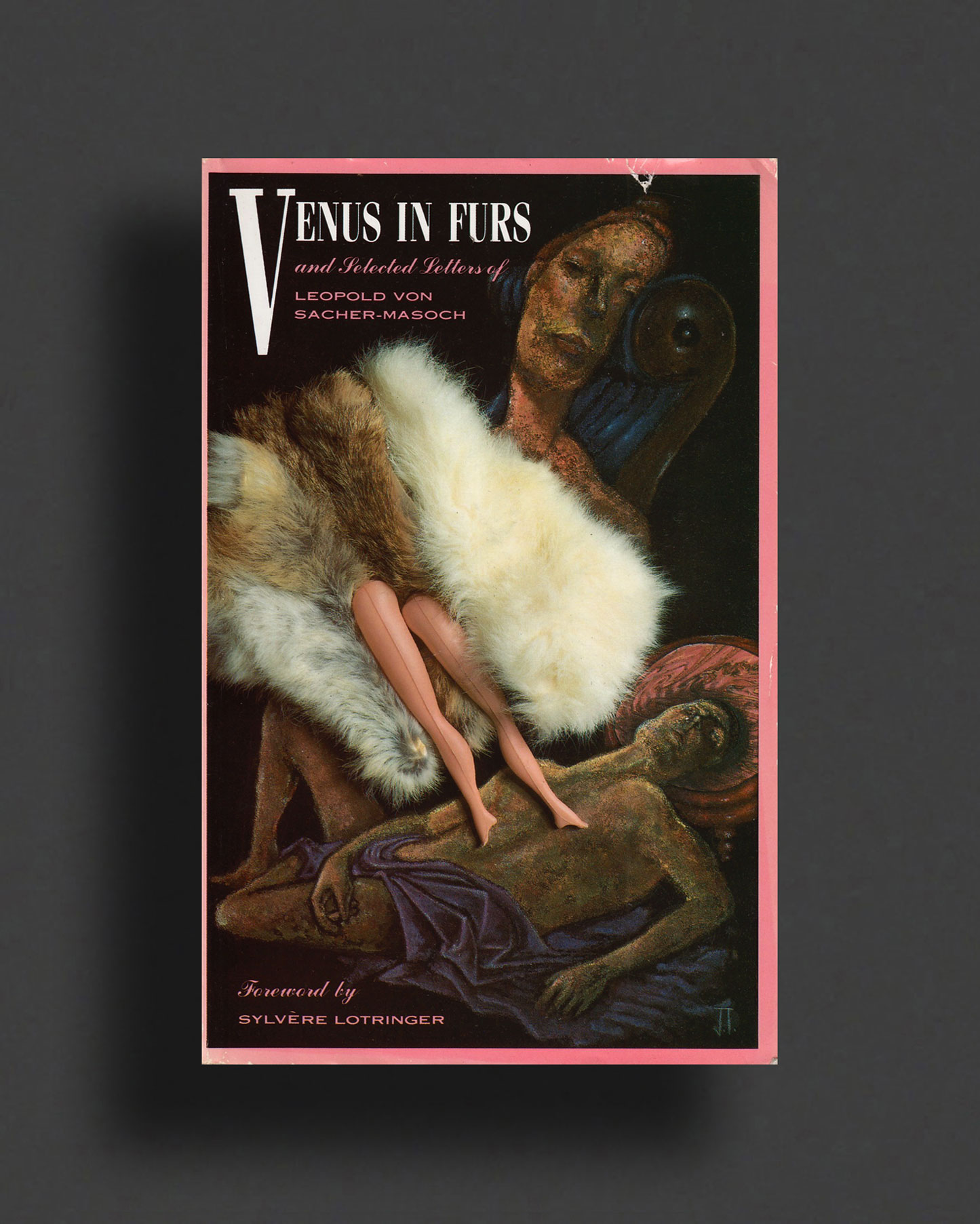
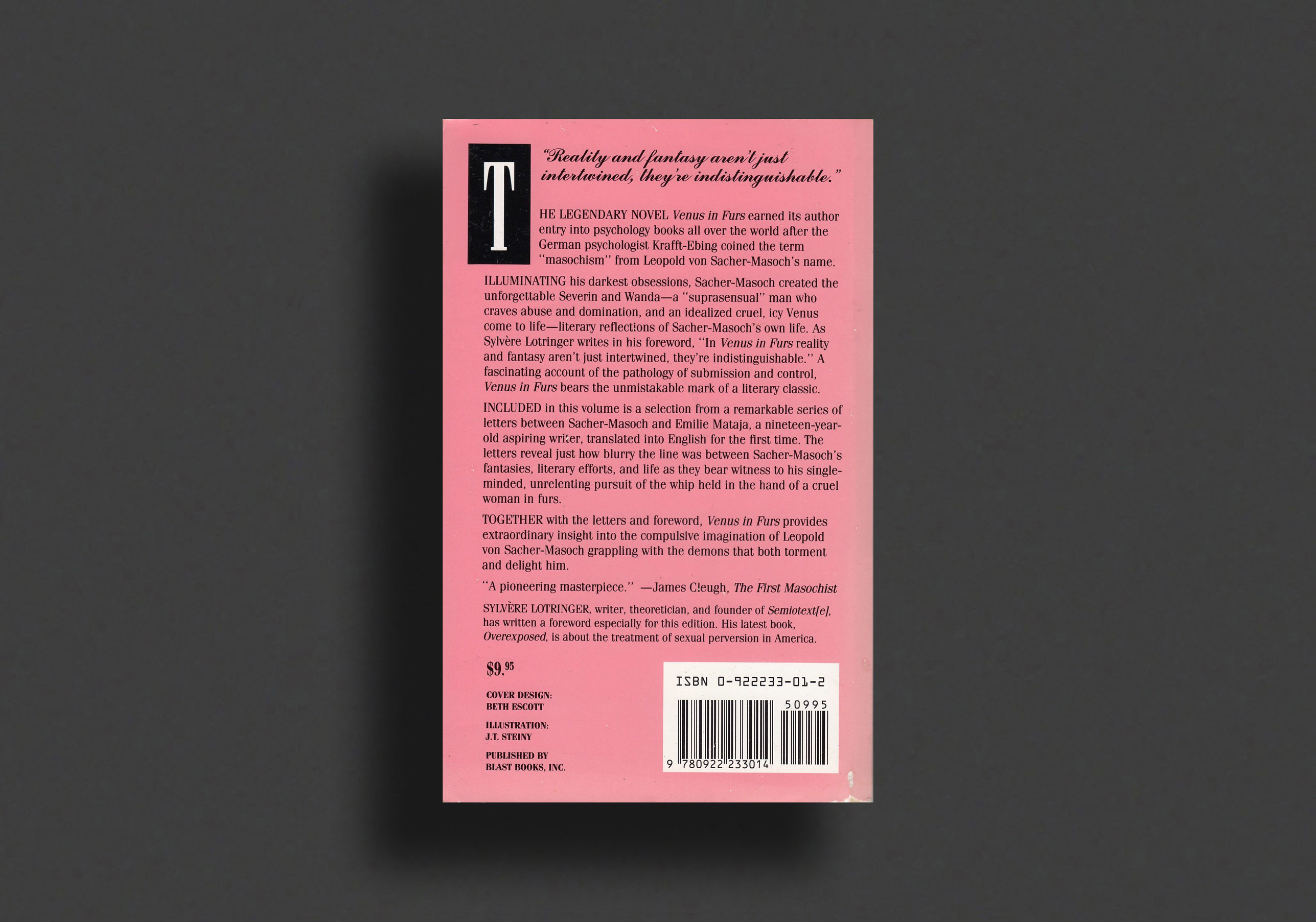
Lovely Blast Books 1989 edition of Venus in Furs with introduction by literary critic and founder of Semiotext(e), Sylvère Lotringer.
"Reality and fantasy aren't just intertined, they're indistinguishable."
The legendary novel Venus in Furs earned its author entry into psychology books all over the world after the German psychologist Krafft-Ebing coined the term "masochism" from Leopold von Sacher-Masoch's name.
Illuminating his darkest obsessions, Sacher-Masoch created the unforgettable Severin and Wanda—a "suprasensual" man who craves abuse and domination, and an idealized cruel, icy Venus come to life-literary reflections of Sacher-Masoch's own life. As Sylvère Lotringer writes in his foreword, "In Venus in Furs reality and fantasy aren't just intertwined, they're indistinguishable." A fascinating account of the pathology of submission and control, Venus in Furs bears the unmistakable mark of a literary classic.
Included in this volume is a selection from a remarkable series of letters between Sacher-Masoch and Emilie Mataja, a nineteen-year-old aspiring writer, translated into English for the first time. The letters reveal just how blurry the line was between Sacher-Masoch's fantasies, literary efforts, and life as they bear witness to his single-minded, unrelenting pursuit of the whip held in the hand of a cruel woman in furs.
Together with the letters and foreword, Venus in Furs provides extraordinary insight into the compulsive imagination of Leopold von Sacher-Masoch grappling with the demons that both torment and delight him.
"A pioneering masterpiece."—James Cleugh, The First Masochist
Sylvère Lotringer, writer, theoretician, and founder of Semiotext(e), has written a foreword especially for this edition. His latest book, Overexposed, is about the treatment of sexual perversion in America.
Good copy with edge wear/age. Eraser-able pencil underling to forward only. Sample image only.
1971, English
Softcover, 254 pages, 18 x 11 cm
1st Edition, Out of print title / used / very good
Published by
Mayflower / London
$20.00 - In stock -
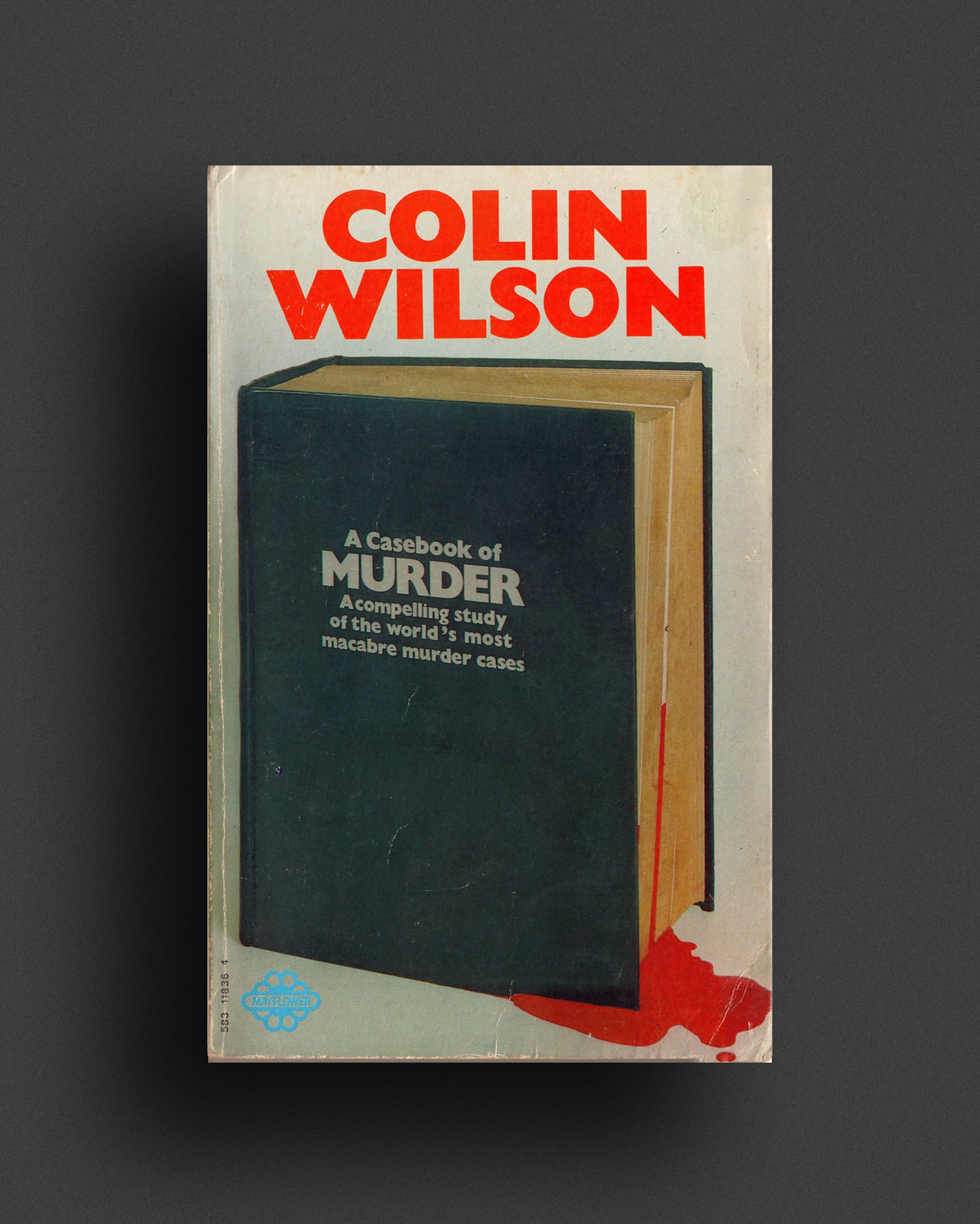
First 1969 hardcover edition of this classic study of killers by Colin Wilson, issued in hardcover by Leslie Frewin in the UK. In A Casebook of Murder "(Wilson) discusses crimes in Britain and Europe, in America and Australia, and breaks down the motives of the killers in an attempt to isolate a common denominator. He draws strongly on psychological and psychiatric authorities and offers new hope for the future, particularly in connection with murders of a violent, sexual nature. He is of the opinion - alarming perhaps, but perceptive - that it is 'the ability to discount the victim that distinguishes the murderer from the rest of us', and he illustrates this vividly by discussing among many others, the cases of: Sawney Bean and his strange cannibalistic family, Thomas Arden of Faversham; Catherine Hayes; the rape of Sarah Woodcock; Andrew Bichel, the Bavarian ripper; Lacenaire, the notorious French murderer; Anna Zwanziger, whose creed was 'poison is my truest friend'; Thomas Cream; Jack the Ripper; 'The Red Spider'; Jesse Pomeroy; Hickock and Smith; The Cannock Chase and the Moor murders. (In) its scope, (this) is a finely-worked tapestry that records the struggle of centuries between the forces of good and evil and demonstrates how the comparative security of the citizen today has slowly been constructed."
Colin Wilson (1931—2013) was an English existentialist philosopher-novelist. He also wrote widely on true crime, mysticism and the paranormal, eventually writing more than a hundred books.
VG copy light wear/tanning.
2019, English
Softcover, 219 pages, 20.4 x 13 cm
1st Edition, Out of print title / used / fine
Published by
Kurodahan Press / Fukuoka
$25.00 - Out of stock
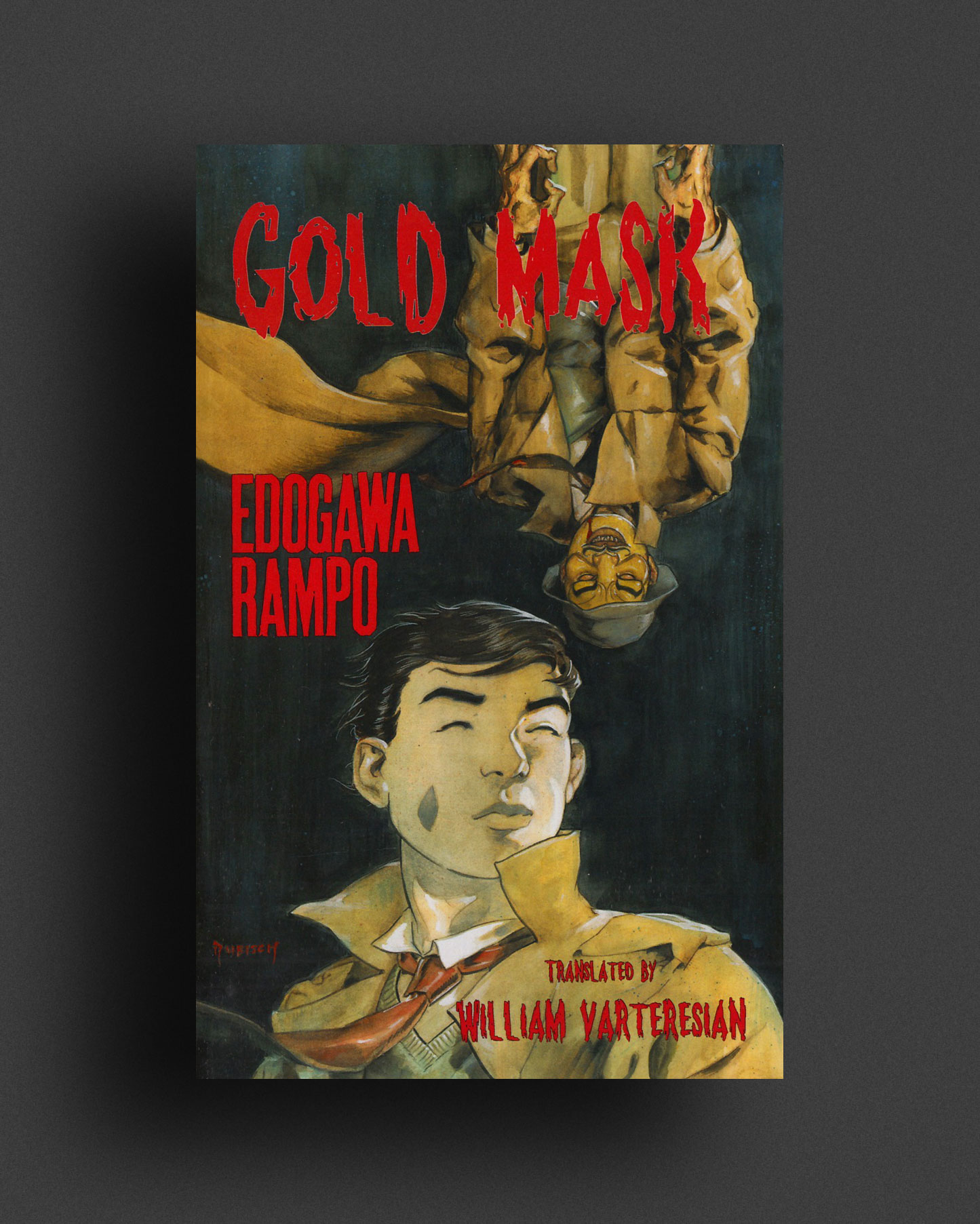
First English translation of Gold Mask by Japan's literary master of mystery, Edogawa Rampo (1894–1965).
An endlessly ingenious battle across Japan between dogged detective Akechi Kogoro and the many-faced thief Gold Mask, in a thrill–a–minute cliff–hanger that has captivated school children in Japan for generations.
A frenzied test of wits between ace detective Akechi Kogoro and the seemingly superhuman and fiendishly clever villain known only as Gold Mask, this is one of Edogawa Rampo’s most enjoyable and witty novels. The anonymous fiend, lurking imperturbably behind his glittering mask, leads a frenzied chase across Japan, gleefully using every imaginable trick to outwit his pursuers. But sooner or later he surely has to make a mistake?
Gold Mask is Rampo at his most gleeful and ingenious. It is also a wonderful picture of interwar Japan, mixing new technology and ancient sleights of hand.
Near Fine.
1989, English
Hardcover (w. dust jacket), 325 pages (619 colour and b/w ill.), 23 x 31 cm
1st Edition, Out of print title / used / fine
Published by
Prestel / Munich
$50.00 - In stock -
Published by Prestel Munich, in 1989, this wonderful, richly illustrated and stylishly designed book covers the entire range of design in the late 1980's and it's predecessors. With sections dedicated to themes and subjects such as Exemplars; High Tech; Trans High Tech; Alchimia/Memphis; Post-Modernism; Minimalism; Archetypes; plus dense profile chapters on Dieter Rams, Stefan Wewerka and Holger Scheel; and essay sections from Matteo Thun ("Neo-Baroque Yardsticks"; "Micro-Architecture"; "Banal Design"), Volker Albus ("Rolex and Manhattan: Skyscraper Symbolism in Advertising") and Jochen Gros ("Small but Sophisticated: Microelectronics and Design"). Featuring fantastic photo-documentation and archival imagery of some of the finest and most radical design-objects of the period, including work by Frank Gehry, Hans Hollien, Michael Graves, Robert Venturi, Norbert Berghof, Aldo Rossi, Zeus, Shiro Kuramata, Philippe Starck, Dakota Jackson, Stanley Tigerman, Marcus Brotsch, Jorg Hieronymous, Michael Matuschka, Stefan Ambrozus, Michele De Lucchi, Ettore Sottsass, Ron Arad, Gaetano Pesce, George J. Sowden, Peter Shire, Martine Bedin, Carla Ceccariglia, Alessandro Mendini, Bruno Gregori, Ingo Maurer, Till Lesser, Gerard Kuijpers, Mario Botta, Jean-Marc da Costa, Piero Vendruscolo, Heide Warlamis, Robert A.M. Stern, Robert and Trix Hausmann, Stanley Tigerman, Margaret McCurry, Steven Holl, Danilo Silvestrin, Dieter Rams, Stefan Wewerka, Daniel Weil, Holger Scheel, Matteo Thun, SITE, and so many more, this generous publication is a must for any enthusiast of design from this period.
Edited by Volker Fischer, deputy director of the German Architecture Museum, Frankfurt.
Fine copy in Fine dust jacket.
1992, French
Hardcover (w. dust jacket), 140 pages, 23 x 31 cm
Out of print title / used / fine
Published by
Editions du May / Paris
$280.00 - In stock -
First hardcover edition of best book on French furniture and interior designer Pierre Paulin (1927-2009), Un Univers De Formes, published by Du May in 1992 and long long out-of-print. Famous for his innovative designs during the 1960s when he worked for Artifort, with his most iconic Mushroom chair, Ribbon chair, and Tongue chair. This profusely illustrated monograph surveys his entire career, reproducing the many designs from the personal archives of the designer himself. Along with his distinctive chair designs, the books presents many seldom seen interior design works, environments, fit-out for Elysee Palace, ADSA + Partners, exhibitions, Salon des arts menagers, Mobilier National, along with texts by Anne Chapoutot, preface by Yvonne Brunhammer and afterword by Jean Coural. A must for any fan of Paulin or mid-century French design.
Fine copy in VG-Fine dustjacket.
1985, Japanese
Softcover, 80 pages, 33.5 x 26 cm
1st Edition, Out of print title / used / very good
Published by
The Museum Modern Art / Hyogo
$80.00 - Out of stock
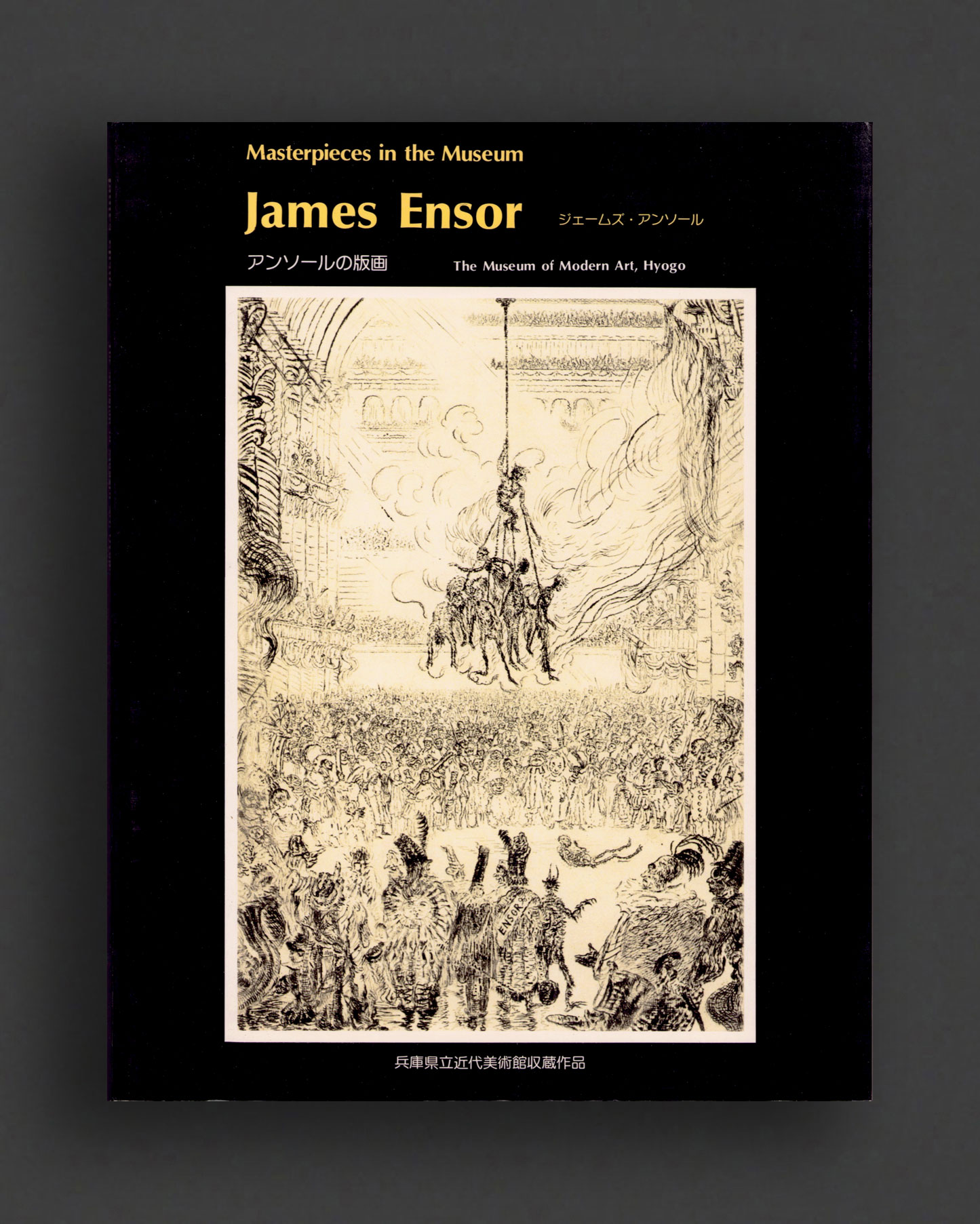
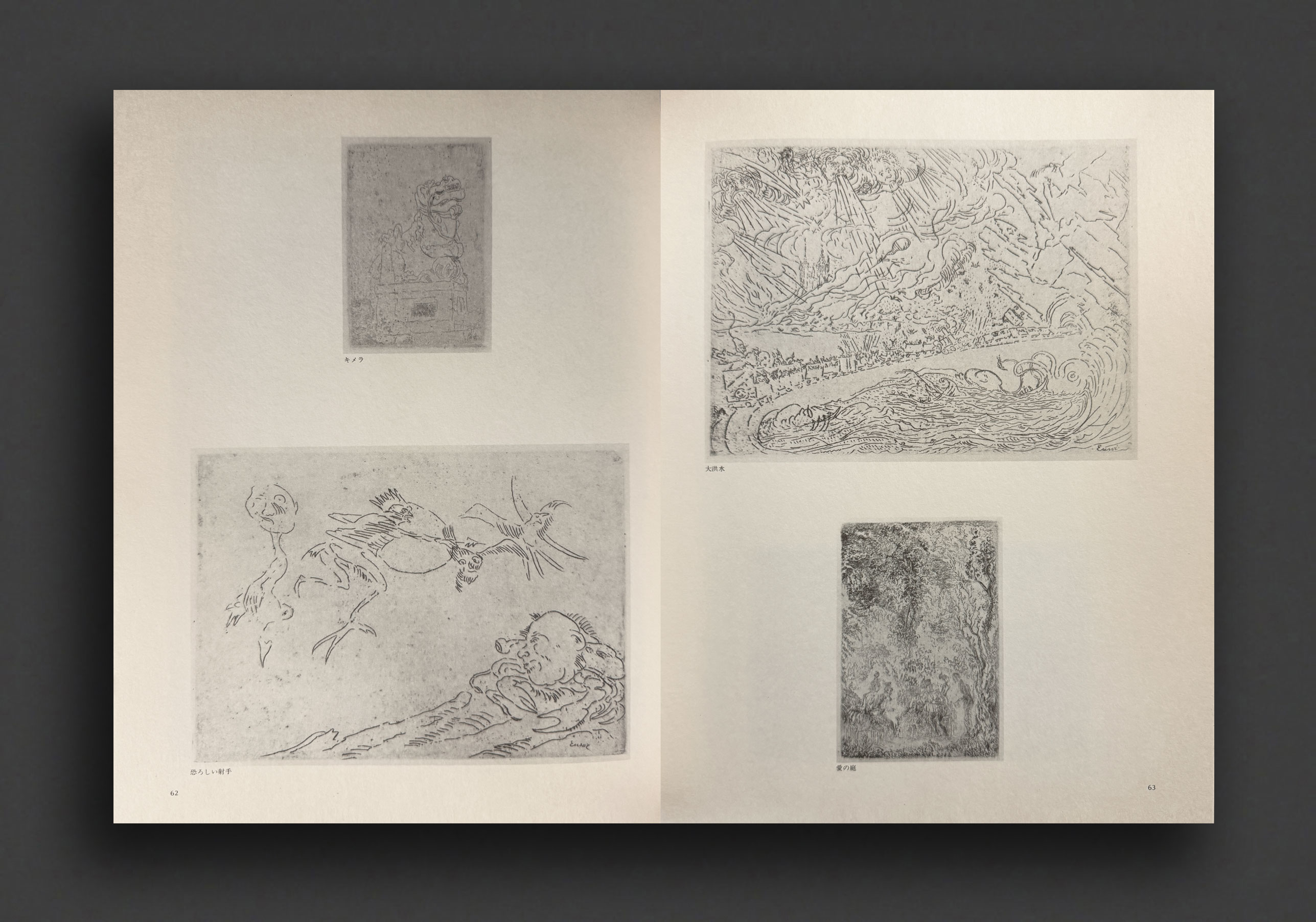
Rare major overview of James Ensor's astounding graphic work published on the occasion of a major 1985 Japanese exhibition at the Museum Modern Art in Hyogo, showcasing the prints held in their collection. Profusely illustrated with reproductions of Ensor's prints in an oversized softcover format, all catalogued in detail with an introductory text in Japanese. Lovely reproductions on warm paperstock.
James Sidney Edouard, Baron Ensor (13 April 1860 – 19 November 1949) was a Belgian painter and printmaker, an important influence on expressionism and surrealism who lived in Ostend for almost his entire life. He was associated with the artistic group Les XX. While Ensor's early works, such as Russian Music (1881) and The Drunkards (1883), depict realistic scenes in a somber style, his palette subsequently brightened and he favored increasingly bizarre subject matter. Such paintings as The Scandalized Masks (1883) and Skeletons Fighting over a Hanged Man (1891) feature figures in grotesque masks inspired by the ones sold in his mother's gift shop for Ostend's annual Carnival. Subjects such as carnivals, masks, puppetry, skeletons, and fantastic allegories are dominant in Ensor's mature work. Ensor dressed skeletons up in his studio and arranged them in colorful, enigmatic tableaux on the canvas, and used masks as a theatrical aspect in his still lifes. Attracted by masks' plastic forms, bright colors, and potential for psychological impact, he created a format in which he could paint with complete freedom. James Ensor is considered to be an innovator in 19th-century art. Although he stood apart from other artists of his time, he significantly influenced such 20th-century artists as Paul Klee, George Grosz, Wols, and many expressionist and surrealist painters of the 20th century.
Very Good copy.
1932, English
Hardcover (clothbound w. dust jacket), 242 pages, 22.6 x 15 cm
1st Edition, Out of print title / used / very good
Published by
Sampson Low
Marston & Co. / London
$320.00 - In stock -
Very rare first 1932 hardcover edition of 'A History Of Capital Punishment (With Special Reference to Capital Punishment in Great Britain),' crime historian John Laurence's grimly fascinating and meticulously researched chronicle of the ultimate penalty, published in London by Sampson Low, Marston & Co. Clothbound with the seldom seen dust jacket.
In this landmark 1932 volume, profusely illustrated with historical plate illustrations throughout, Laurence offers a profound, comprehensive investigation into the history of executions. Tracking the dark evolution of state-sanctioned death from the ancient world to twentieth-century Britain, Laurence unravels the macabre story of the gallows, the guillotine, and the grim mechanics of the scaffold.
Through detailed case studies, rare archival illustrations, and deep biographical sketches of Britain’s most notorious executioners—including William Marwood and James Berry—this book lifts the veil on the "Bloody Code" and the shifting cultural attitudes toward justice, crime, and punishment.
Far more than a simple catalogue of horrors, A History of Capital Punishment serves as an invaluable, definitive text for criminologists, historians, and anyone captivated by the darker side of legal history.
Good-VG copy with the exceedingly rare dust jacket, also Good-VG. Well preserved copy all round with foxing and spine/block edge tanning to book and jacket. Dust jacket otherwise only minor edge wear, couple of minor chips to spine ends, preserved in mylar wrap and unclipped. Beautifully preserved black heavy, textured cloth covers with gold title stamping to spine.
1978, English / Japanese
Softcover, 160 pages, 26 x 12 cm
Out of print title / used / fine
Published by
The National Museum of Art / Osaka
$150.00 - In stock -
Incredibly rare Japanese publication from 1978, printed on the occasion of a major exhibition entitled "Design and Art of Modern Chairs", August 19—October 15, at the National Museum of Art, Osaka. This wonderful landscape-formatted book is profusely illustrated throughout (in colour and black and white) with the chairs of designers and artists including Gerrit Rietveld, Isamu Kenmochi, Olivier Mourgue, Pierre Paulin, Sadamasa Motonaga, Mario Ceroli, Marcel Breuer, Studio 65, Le Corbusier, Pierre Jeanneret, Charlotte Perriand, Jan Dranger, Johan Huldt, Robert Haussman, Kwok Hoi Chan, Steen Østergaard, George Nakashima, Mies van der Rohe, Poul Kjaerholm, Eero Saarinen, Harry Bertoia, Charles Pollock, Aarne Jacobsen, Warren Platner, Roger Tallon, Verner Panton, Earo Aarnio, Bruno Mathsson, Motomi Kawakami, Marco Zanuso, Richard Sapper, Gerd Lange, Vico Magistretti, Alver Aalto, Jonathan de Pas, Paolo Lomazzi, Donato d'Urbino, Giorgio Decursu, Sori Yanagi, Reiko Tanabe-Murai, Wolfgang Mueller-Deisig, Stacy Dukes, Ettore Sottsass, Charles Eames, Hans J. Wegner, Franco Albini, Gio Ponti, Kaare Klint, Enzo Mari, Takeshi Nii, Achille Castiglioni, Achille and Piergiacomo Castiglioni, Tadashi Minohara, Gaetano Pesce, Yrjo Kukkapuro, Afra and Tobia Scarpa, Mario Bellini, Cini Boeri, Mario Marenco, Joe Colombo, Piero Gatti, Jonathan de Pas, Paolo Lomazzi, Donato d'Urbino, Ubald Klug, Gerrit Rietveld, Salvador Dali, Poltronova, Cassina, Taro Okamoto. Jiro Takamatsu, Susumu Koshimizu, Shiro Kuramata, Minoru Takeyama, Lucas Samaras, Kozo Mio, Arata Isozaki, Shigeo Fukuda, Takashi Sakaizawa, Constantin Brâncuși, Yoji Kuri, Yayoi Kusama, Vitra, Knoll, Kartell, Herman Miller, Arflex, BBB, Flexform, C&B Italia, Cassina, and many more. Each chair included is detailed with a blurb in Japanese, data/specs of year, designer/artist, manufacture and dimensions. Also includes an illustrated timeline tracing a chronological history of the chairs exhibited, along with a production index and forward texts in English and Japanese. Forms an indispensable index of important modern chair designs from the early 1930s—late 1970s.
Near Fine copy.
1987, English
Hardcover (w. dust jacket), 140 pages, 22.9 x 27.9 cm
1st Edition, Out of print title / used / very good
Published by
The MIT Press / Massachusetts
$140.00 - In stock -
First english edition of this long out-of-print major hardcover monograph on Bruno Munari. Published by The MIT Press in 1987, this was the first comprehensive book on his work, and was itself designed by Munari! Clothbound, in original dust-jacket, protected in plastic sleeve.
Foreward by Andrea Branzi.
One of the last surviving members of the futurist generation, Bruno Munari has been the enfant terrible of Italian art and design for most of this century. Munari was born in 1907 in Milan and it was against the active background of futurism that his artistic experiments developed, but his mechanical fantasies, practical inventions, and didactic writings continue to be enjoyed by a public that has no memory of Balla, Prampolini, and Marinetti.
Munari's 40-odd books, ranging from futurist manifestoes to design manuals to children's books, have been widely read in many languages. But this book, itself designed by Munari, is the first comprehensive account of his total achievement. Here are the Unreadable Books (that told stories through the possibilities of typography, papermaking, and binding), Traveling Sculptures, Fossils of the Year 2000, Theoretical Reconstruction of Imaginary Objects, Original Xerographies, Negative Positives, and the famous Useless Machines of the 1930s (constructions for wagging the tails of lazy dogs, predicting dawn, making sobs sound musical) as well as numerous other works, some published for the first time.
The hundreds of illustrations, many in full color, recreate Munari's relentless inventiveness, his love of irony, chance and humor, his intensely experimental orientation and constantly fresh approach to new technologies and materials.
Aldo Tanchis lives in Milan where he is currently collaborating with the advertising agency Pirella Göttsche. He is the author of The Anomalous Art of Bruno Munari.
VG in VG dust jacket preserved under Mylar wrap.
1982, English / German
Softcover, 32 pages, 14.8 cm x 18.5 cm
1st Edition, Out of print title / used / very good
Published by
Edition Copie / Hannover
$400.00 - Out of stock
Extremely rare and wonderful Lapo Binazzi artist book, "Cool Lights (Indifferent Technology)", first edition from 1982. Almost entirely illustrated with Binazzi's incredible lamp objects dating from 1973-1981, this small book compiles his works, drawings, and ideas, with accompanying text by Michael Erlhoff.
Lapo Binazzi is a quintessential figure in the Italian Radical movement and a founding member of Global Tools and the collective UFO, one of the “supergroups” of Italian architects, alongside Gruppo 9999 and Superstudio. The Italian Radical movement grew in response to the political state of Italy in the 1960’s, when groups of designers congregated together to create works that challenged the current political and economical system, violently opposing the standardisation and doctrines of the international style of design. Binazzi’s designs exemplify this movement through their provocative tones, humorous messages and symbolic imagery. Lingering between conceptual and pop art, Binazzi works in a variety of mediums including interior design, fashion, film and performance.
Very Good copy with only light tanning/spotting with age.
1986, English
Softcover, 438 pages, 21.7 x 13.5 cm
Out of print title / used / very good
Published by
Rider / UK
$65.00 - In stock -
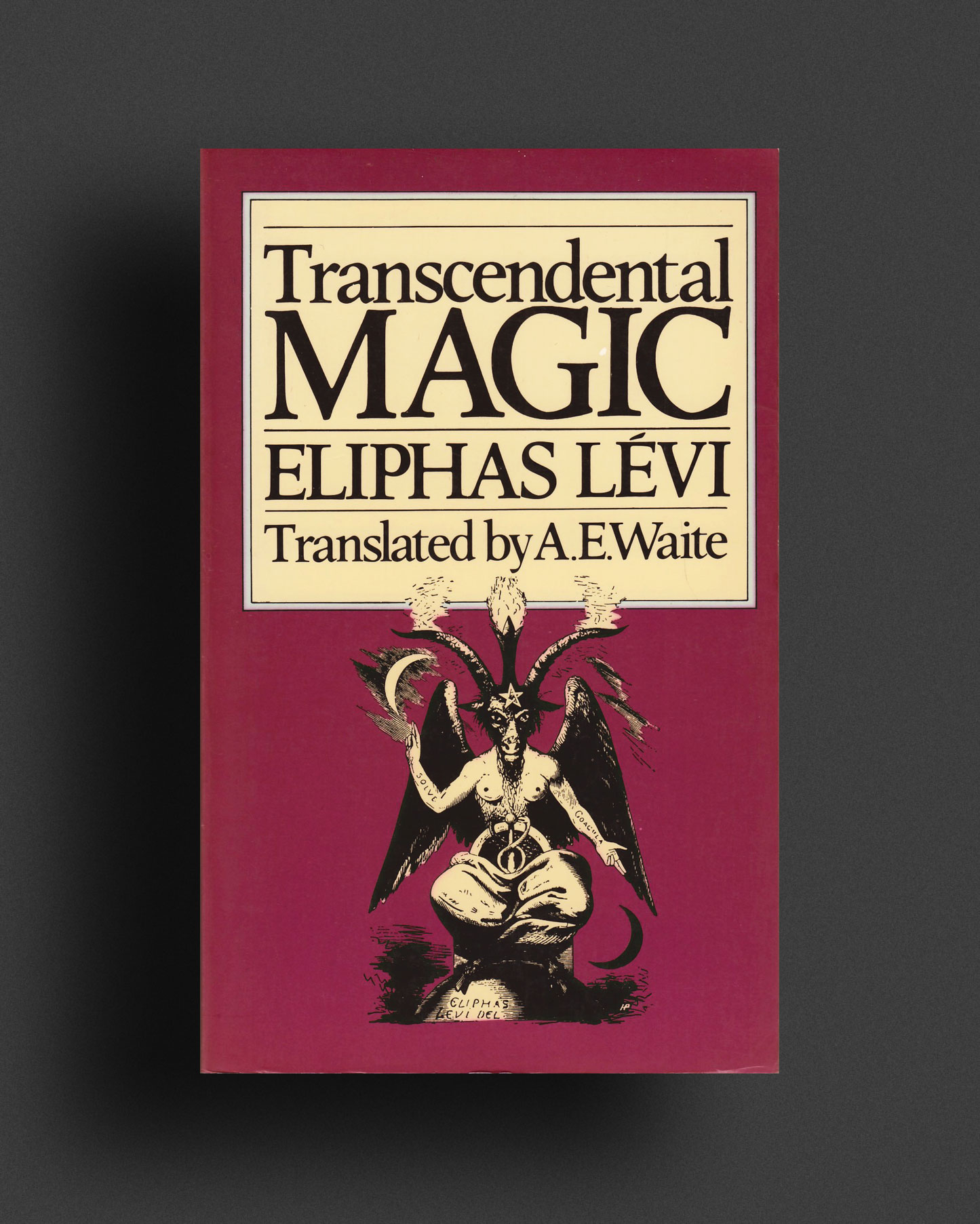
Scarce 1986 Rider edition.
This is the foundational text of the nineteenth-century occult revival—the definitive English translation of Eliphas Lévi’s masterwork, Dogme et Rituel de la Haute Magie. Universally recognized as one of the most influential magical treatises ever compiled, it establishes magic not as a collection of dark superstitions, but as a disciplined, universal science of the human will and imagination.Divided into two distinct parts, the first half outlines the Doctrine—the theoretical, philosophical principles underpinning magical work. Here, Lévi masterfully synthesizes Christian mysticism, Hermeticism, alchemy, and the Qabalah into a cohesive spiritual tradition. The second half provides explicit instructions for the Ritual. It guides the seeker through the preparation of sacred instruments, ceremonial environments, and the rites governing divination, spells, and necromancy.
Enriched by Lévi's thrilling personal accounts—such as his legendary evocation of Apollonius of Tyana in London—this volume also serves as the historic link that first integrated the Tarot into Western ceremonial practice.
The translation and notes by A.E. Waite are immaculate. Waite, a noted occult scholar of his day, taught the theory and practice of magic in both the Hermetic and Rosicrucian orders. Due to the high calibre of both author and editor, this book maintains its pre-eminent position in the literature of the magic arts.
VG copy. Foxing/tanning to edges.
1972 / 1975, English
Softcover, 238 pages, 21.5 x 14 cm
1st Edition, Out of print title / used / very good
Published by
Rider and Company / London
$65.00 - In stock -
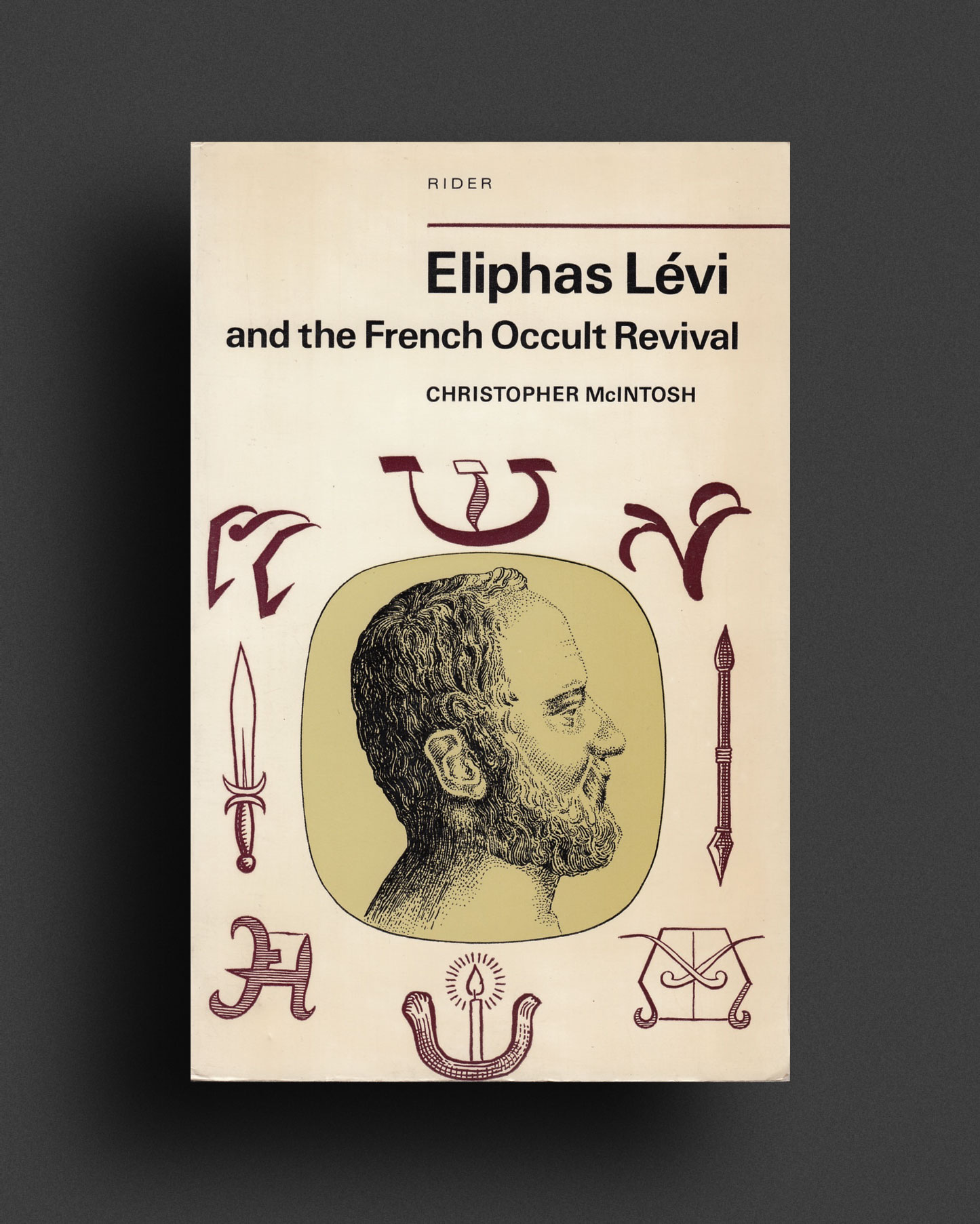
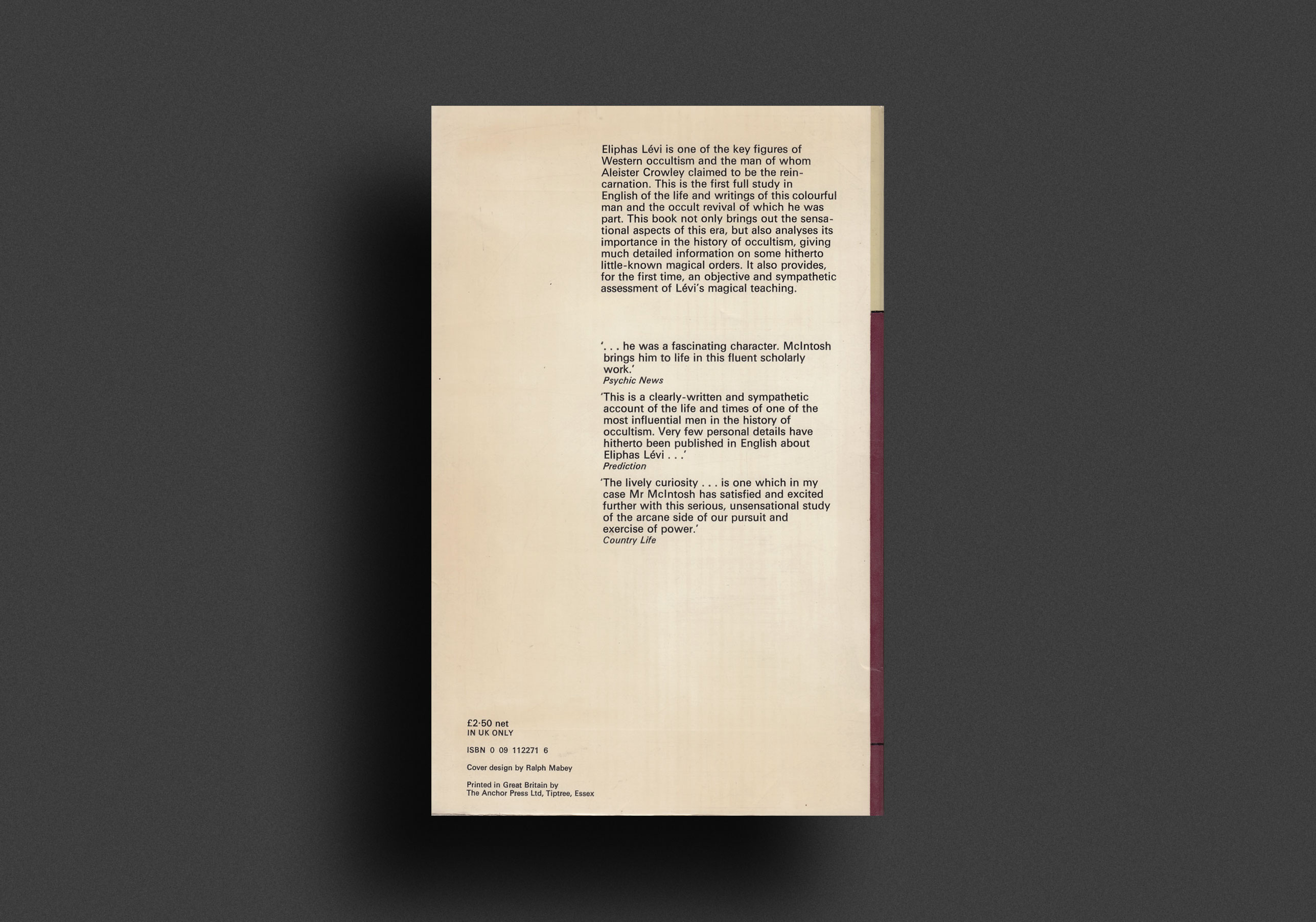
Scarce first 1972 edition, second 1975 printing, of 'Eliphas Lévi and the French Occult Revival', a seminal academic study by historian Christopher McIntosh, which explores the profound impact of the 19th-century French magician on modern Western esotericism, published by Rider & Company.
Eliphas Lévi is one of the key figures of Western occultism and the man of whom Aleister Crowley claimed to be the rein-carnation. This is the first full study in English of the life and writings of this colourful man and the occult revival of which he was part. This book not only brings out the sensational aspects of this era, but also analyses its importance in the history of occultism, giving much detailed information on some hitherto little-known magical orders. It also provides, for the first time, an objective and sympathetic assessment of Lévi's magical teaching.
•.. he was a fascinating character. McIntosh brings him to life in this fluent scholarly work.'–Psychic News
"This is a clearly-written and sympathetic account of the life and times of one of the most influential men in the history of occultism. Very few personal details have hitherto been published in English about Eliphas Lévi..."–Prediction
'The lively curiosity... is one which in my case Mr Mcintosh has satisfied and excited further with this serious, unsensational study of the arcane side of our pursuit and exercise of power.'–Country Life
VG copy. Light wear to boards.