World Food Books' programme is largely produced on Kulin Nation land. We acknowledge the Wurundjeri people of the Kulin Nation as the first and continuing custodians of this land, and pay respect to their Elders past, present, and emerging.
World Food Books is an arts and special interests bookshop in Naarm / Melbourne. Founded in 2010, World Food Books is devoted to the presentation of a rotating, hand-selection of international art, design, literary and counterculture publications with an emphasis on the anti-traditional, the experimental, the avant-garde, the heretic, the marginal.
Presenting new titles alongside rare and out-of-print books, catalogues and journals spanning the fields of modern and contemporary art, design, photography, illustration, film, literature, poetry, cultural theory, philosophy, sexuality, popular and underground culture in its many radical forms, World Food Books wishes to encourage adventurous, thoughtful and open-minded reading, looking, writing, and exchange of publishing and ideas, both current and historical.
As well as our bookshop, located in Melbourne's historical Nicholas Building, all of our inventory is available internationally via our online mail-order service.
World Food Books semi-regularly co-ordinates "Occasions", a programme of exhibits and events at the bookshop and in partnership with other hosts (such as museums and art galleries) that develop out of the activities, relationships and content of the bookshop itself.
World Food Books
The Nicholas Building
37 Swanston Street
Room 5, Level 6
Melbourne 3000
Australia
SHOP HOURS:
Thu–Fri 12–6, Sat 12–5
WEB-SHOP OPEN 24/7
World Food Books
Postal Address:
PO Box 435
Flinders Lane
Victoria 8009
Australia
Art
Theory / Essay
Architecture / Interior
Graphic Design / Typography
Photography
Fashion
Eros
LGBTQ+
Fiction / Poetry
Weird / Speculative / Science Fiction / Horror
Transgressive / Visceral / Abject
Symbolism / Decadence / Fin de siècle
Film / Video
Painting
Sculpture / Installation
Performance / Dance / Theater
Drawing
Sound / Music
Curatorial
Group Shows / Collections
Periodicals
Out-of-print / Rare
Posters / Ephemera / Discs
Signed Books
World Food Books Gift Voucher
World Food Book Bag
Australian Art
Australian Fiction
Australian Science Fiction / Speculative Fiction
Australian Poetry
Australian Photography
Japanese Photography
Conceptual Art
Minimal Art
Dada
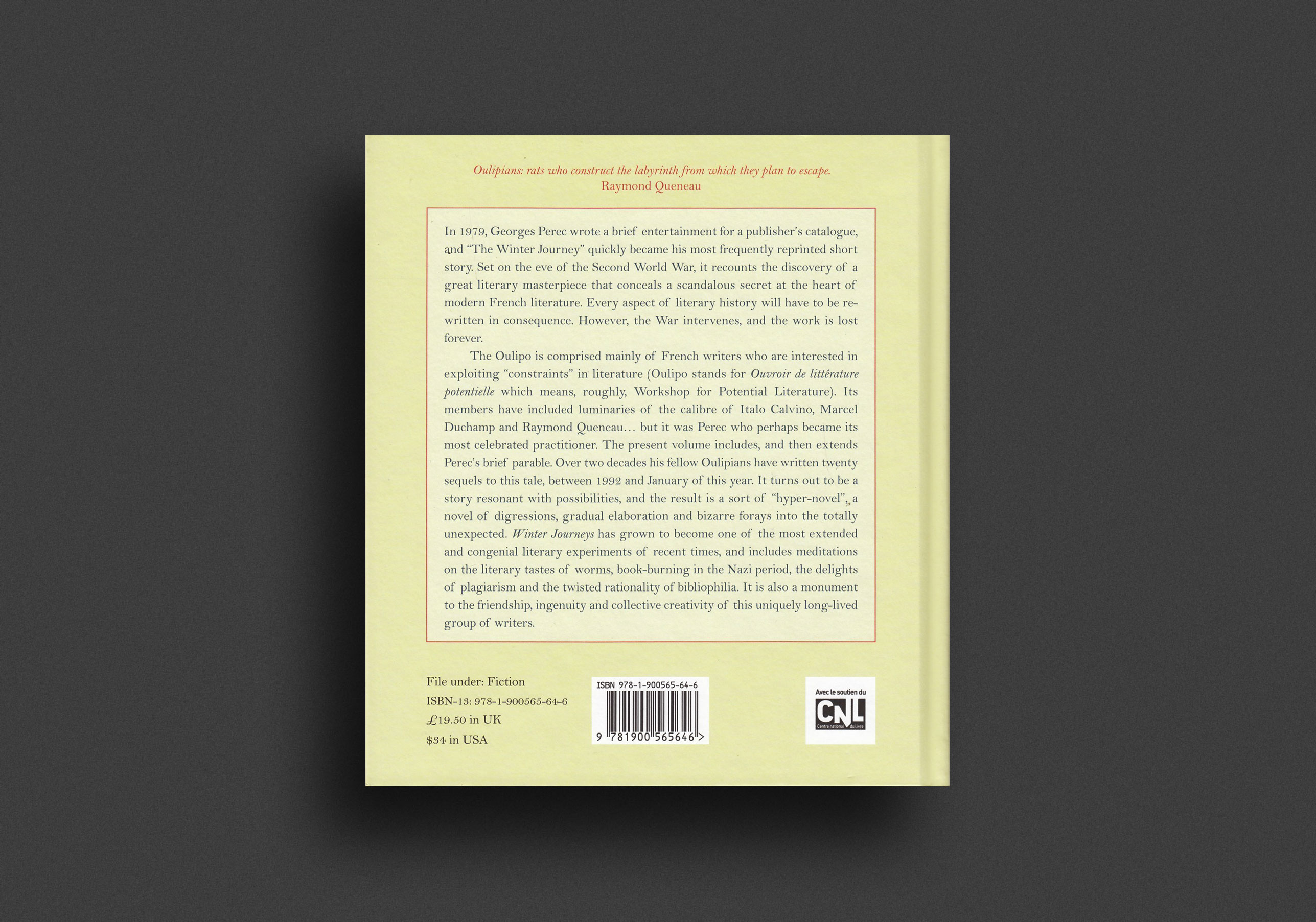
'Pataphysics / Oulipo
Fluxus
Concrete Poetry
Pop Art
Surrealism
Arte Povera
Arte Informale / Haute Pâte / Tachism
Nouveau Réalisme / Zero / Kinetic
Situationism / Lettrism
Collage / Mail Art / Xerox Art
Art Brut / Folk / Visionary / Fantastic
Illustration / Graphic Art / Bandes Dessinées
Furniture
Italian Radical Design / Postmodernism
Textiles
Ceramics / Glass
Counterculture
Protest / Revolt
Philosophy
Psychoanalysis
Anthropology
Anarchism
Socialism / Anarchism / Communism / Capitalism
Literary Theory / Semiotics / Language
Feminism / Women's Studies
Gender Studies / Sexuality
Anthropology
Fetishism / BDSM
Drugs / Psychedelia
Crime / Violence
Animal Rights / Veganism
Occult / Esoterica
Ecology / Earth / Alternative Living
Whole Earth / Crafts
All prices in AUD (Australian dollars)
Pick-Ups
Pick-up orders can be collected in our bookshop during opening hours after order date. Please collect any Pick-up orders within 2 weeks of ordering as we have limited storage space. Orders will be released back into stock if not collected within this time. No refunds can be made for pick-ups left un-collected. If you cannot make it in to the bookshop in this time-frame, please choose postage option.
Return Policy
All sales are final. We do accept returns (for refund or exchange) for items received in error. All our orders are packed with special care using heavy-duty padding and cardboard book-mailers or bubble mailers (for smaller books), using reinforcement where required. We cannot take responsibility for any lost, stolen or damaged parcels.
Insurance
Should you wish to insure your package, please email us directly after placing your order and we can organise this at a small extra expense. Although all standard/express tracked packages are very safe and dependable, we cannot take responsibility for any lost, stolen or damaged parcels. We recommend insurance on valuable orders.
Interested in selling your old books, catalogues, journals, magazines, comics, fanzines, ephemera? We are always looking for interesting, unusual and out-of-print books to buy. We only buy books in our fields of interest and specialty, and that we feel we can resell.
We base these prices on desirability, market value, in-print prices, condition and our current stock levels. We offer cash, store credit, and can take stock on consignment. All
about 25% of the price we expect to get when we sell them, or 30% in store credit. We base these prices on desirability, market value, in-print prices, condition and our current stock levels.
Sell your books any day of the week. You can drop them off and return later. If you have a lot of books, we can visit your Sydney home.
We buy books that we feel we can resell. We offer about 25 % of the price we expect to get when we sell them, or 30% in store credit. We base these prices on desirability, market value, in-print prices, condition and our current stock levels.
Philadelphia Wireman
03 August - 01 September, 2018
World Food Books is proud to announce our next Occasion, the first presentation of sculptures by Philadelphia Wireman in Australia.
The Philadelphia Wireman sculptures were found abandoned in an alley off Philadelphia’s South Street on trash night in 1982. Their discovery in a rapidly-changing neighbourhood undergoing extensive renovation, compounded with the failure of all attempts to locate the artist, suggests that the works may have been discarded after the maker’s death. Dubbed the "Philadelphia Wireman" during the first exhibition of this work, in 1985, the maker’s name, age, ethnicity, and even gender remain uncertain. The entire collection totals approximately 1200 pieces, all intricately bound together with tightly-wound heavy-gauge wire (along with a few small, abstract marker drawings, reminiscent both of Mark Tobey and J.B. Murry). The dense construction of the work, despite a modest range of scale and materials, is singularly obsessive and disciplined in design: a wire armature or exoskeleton firmly binds a bricolage of found objects including plastic, glass, food packaging, umbrella parts, tape, rubber, batteries, pens, leather, reflectors, nuts and bolts, nails, foil, coins, toys, watches, eyeglasses, tools, and jewellery.
Heavy with associations—anthropomorphic, zoomorphic, and socio-cultural responses to wrapped detritus—the totemic sculptures by Philadelphia Wireman have been discussed in the context of work created to fulfil the shamanistic needs of alternative religions in American culture. Curators, collectors, and critics have variously compared certain pieces to sculpture from Classical antiquity, Native American medicine bundles, African-American memory jugs, and African fetish objects. Reflecting the artist’s prolific and incredibly focused scavenging impulse, and despite—or perhaps enhanced by—their anonymity, these enigmatic objects function as urban artefacts and arbiters of power, though their origin and purpose is unknown. Philadelphia Wireman, whatever their identity, possessed an astonishing ability to isolate and communicate the concepts of power and energy through the selection and transformation of ordinary materials. Over the course of the past two decades, this collection has come to be regarded as an important discovery in the field of self-taught art and vernacular art.
Presented in collaboration with Fleisher-Ollman Gallery, Philadelphia, and Robert Heald, Wellington.
Susan Te Kahurangi King
02 February - 10 March, 2018
Susan Te Kahurangi King (24 February 1951 - ) has been a confident and prolific artist since she was a young child, drawing with readily available materials - pencils, ballpoint pens and felt-tip markers, on whatever paper is at hand. Between the ages of four and six Susan slowly ceased verbal communication. Her grandparents William and Myrtle Murphy had developed a special bond with Susan so they took on caring responsibilities for extended periods. Myrtle began informally archiving her work, carefully collecting and storing the drawings and compiling scrapbooks. No drawing was insignificant; every scrap of paper was kept. The King family are now the custodians of a vast collection containing over 7000 individual works, from tiny scraps of paper through to 5 meter long rolls.
The scrapbooks and diaries reveal Myrtle to be a woman of great patience and compassion, seeking to understand a child who was not always behaving as expected. She encouraged Susan to be observant, to explore her environment and absorb all the sights and sounds. Myrtle would show Susan’s drawings to friends and people in her community that she had dealings with, such as shopkeepers and postal workers, but this was not simply a case of a grandmother’s bias. She recognised that Susan had developed a sophisticated and unique visual language and sincerely believed that her art deserved serious attention.
This was an unorthodox attitude for the time. To provide some context, Jean Dubuffet coined the term Art Brut in 1945 to describe work created by self-taught artists – specifically residents of psychiatric institutions and those he considered to be visionaries or eccentrics. In 1972 Roger Cardinal extended this concept by adopting the term Outsider Art to describe work made by non-academically trained artists operating outside of mainstream art networks through choice or circumstance. Susan was born in Te Aroha, New Zealand in 1951, far from the artistic hubs of Paris and London that Dubuffet and Cardinal operated in. That Myrtle fêted Susan as a self-taught artist who deserved to be taken seriously shows how progressive her attitudes were.
Susan’s parents Doug and Dawn were also progressive. Over the years they had consulted numerous health practitioners about Susan’s condition, as the medical establishment could not provide an explanation as to why she had lapsed into silence. Dawn educated herself in the field of homeopathy and went on to treat all twelve of her children using these principles – basing prescriptions on her observations of their physical, mental and emotional state.
Doug was a linguist with an interest in philosophy who devoted what little spare time he had to studying Maori language and culture. To some extent their willingness to explore the fringes of the mainstream made them outsiders too but it was their commitment to living with integrity and their respect for individuality that ensured Susan’s creativity was always encouraged.
Even though Susan’s family supported her artistic pursuits, some staff in schools and hospitals saw it as an impediment to her assimilation into the community and discouraged it in a variety of ways. Her family was not always aware of this and therefore did not fully understand why Susan stopped drawing in the early 1990s. However, rather than dwell on the challenges that Susan faced in pursuit of her artistic practice, they prefer to highlight her achievements. In 2008 Susan began drawing again in earnest, after an almost 20 year interruption, and her work is now shown in galleries around the world.
Susan grew up without television and has been heavily influenced by the comics she read as a child. She is absolutely fearless in the appropriation of recognizable characters, such as Donald Duck and Mickey Mouse, in her work. She twists their limbs, contorts their faces, compresses them together, blends them into complex patterned backgrounds - always imbuing them with an incredible energy. Although Susan often used pop culture characters in her work they are not naive or childlike. These are drawings by a brilliant self-taught artist who has been creating exceptional work for decades without an audience in mind.
Mladen Stilinović
"Various Works 1986 - 1999"
02 February 16 - September 10, 2016
Various works 1986 - 1999, from two houses, from the collections of John Nixon, Sue Cramer, Kerrie Poliness, Peter Haffenden and Phoebe Haffenden.
Including: Geometry of Cakes (various shelves), 1993; Poor People’s Law (black and white plate), 1993; White Absence (glasses, ruler, set square, silver spoon, silver ladel with skin photograph and wooden cubes), 1990-1996; Exploitation of the Dead (grey and red star painting, wooden painting, black spoon with red table, red plate), 1984-1990; Money and Zeros (zero tie, paintings made for friends in Australia (Sue, John, Kerrie), numbers painting), 1991-1992; Words - Slogans (various t-shirts) - “they talk about the death of art...help! someone is trying to kill me”, “my sweet little lamb”, “work is a disease - Karl Marx”; Various artist books, catalogues, monographs, videos; Poster from exhibition Insulting Anarchy; "Circular" Croatian - Australian edition; Artist book by Vlado Martek (Dostoyevsky); more.
Thanks to Mladen Stilinović and Branka Stipančić.
Jonathan Walker
Always Will Need To Wear Winter Shirt Blue + Ochre Small Check Pattern
21 August - 21 September, 2015
Untitled
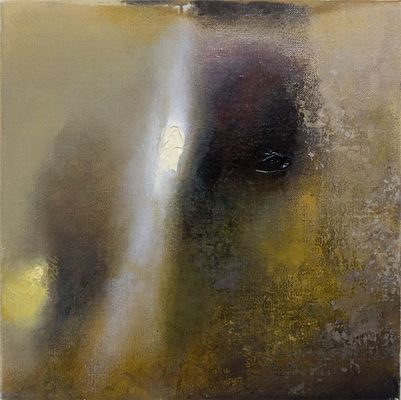
I am not a great reader of poetry but I always return to the work of Melbourne poet, Vincent Buckley (1925- 1988). Perhaps I find his most tantalising piece to be not a finished poem but a fragment left on a scrap of paper discovered on his desk after the poet’s death.
The poetry gathers like oil
In the word-core, and spreads
It has its music meet,
Its music is in movement.
This fragment is more the shell left behind from a volatile thought than a finished poem. I find the last two lines honest but awkward whereas the first two lines work like an arrow. Most likely he could not find a resolution so it was left. Still, in its present form, it remains an eloquent testimony to the ultimate failure of a medium to express mobile thought and sensation, in Buckley’s case, through verbal language. It’s an important matter because this is something all artists have to deal with regardless of the medium.
I have never written a poem, however, I am forever copying fragments from books on paper scraps in a vain effort to fix certain notions in my head. At first, they function as bookmarks that are sometimes returned to when I open the book. But before long, as they accumulate, they fall out littering the table interspersed with A4 photocopies, bills, books and medications.
To return to Buckley’s fragment, the first two lines very much evoke how I paint nowadays. As you age, detail diminishes and patches of light become more luminous and float. I feel the most honest way of dealing with this is by smearing the oil paint on the canvas with the fingers and working close-up, blind. Only if the patches coalesce into an approaching image can the work gain a life.
-
Jonathan Walker was born in Melbourne, Australia and brought up on a dairy farm in Gippsland. In the 1970’s he studied painting at RMIT and won the Harold Wright Scholarship to the British Museum, London. During the 1980’s he exhibited at Pinacotheca Gallery, Richmond and had work shown at the NGV and Heidi City Art Gallery. Over the same period he designed the cover for the “Epigenesi” LP by Giancarlo Toniutti, Italy and conducted a mail exchange work with Achim Wollscheid, Germany. The work with artists through the post resulted in an article published in the bicentenary issue of Art and Australia 1988. He showed in artist run spaces such as WestSpace in the 90’s and 2000’s, and until 2012, taught painting at Victoria University, which is where we (Colleen Ahern and Lisa Radford) as organisers of the exhibition, among many others, had the privilege of being his student.
Walker’s knowledge was imparted to students through the careful selection of music, literature, and artists found in books that he himself had ordered for the library. Walker’s strategy was the generosity of sharing his vast knowledge with references specific to each student and their context.
Walker’s paintings share a similar focus and intimacy.
This exhibition presents a small selection of recent paintings alongside a publication that includes Walker’s writing. Observational and analytical, Walker’s work is a type of material notation — the time of day, colour and how it is blended, the both specific and fleeting location of a reflection on lino or the question of whether a chair leg should be included in a painting.
Please join us on Friday August 21 between 6-8pm to celebrate the opening of the exhibition.
Curated by Colleen Ahern and Lisa Radford.
B. Wurtz
Curated by Nic Tammens
March 26 - April 4, 2015
B.Wurtz works from a basement studio in his home on Manhattan’s Lower East Side.
This local fact is attested to by the plastic shopping bags and newsprint circulars that appear in his work. As formal objects, they don’t make loud claims about their origins but nonetheless transmit street addresses and places of business from the bottom of this long thin island. Like plenty of artists, Wurtz is affected by what is local and what is consumed. His work is underpinned by this ethic. It often speaks from a neighborhood or reads like the contents of a hamper:
“BLACK PLUMS $1.29 lb.”
“Food Bazaar”
“USDA Whole Pork Shoulder Picnic 99c lb.”
“RITE AID Pharmacy, with us it’s personal.”
“H. Brickman & Sons.”
“Sweet Yams 59c lb."
Most of the work in this exhibition was made while the artist was in residence at Dieu Donne, a workshop dedicated to paper craft in Midtown. Here Wurtz fabricated assemblages with paper and objects that are relatively lightweight, with the intention that they would be easily transportable to Australia. This consideration isn’t absolute in Wurtz’s work, but was prescriptive for making the current exhibition light and cheap. Packed in two boxes, these works were sent from a USPS post office on the Lower East Side and delivered to North Melbourne by Australia Post.
Wurtz appears courtesy of Metro Pictures, New York.
Thanks to Rob Halverson, Joshua Petherick, Sari de Mallory, Matt Hinkley, Helen Johnson, Fayen d'Evie, Ask Kilmartin, Lisa Radon, Ellena Savage, Yale Union, and "Elizabeth".
John Nixon
"Archive"
December 15 - January 20, 2014
The presentation of John Nixon's archive offered a rare showcase of this extensive collection of the artist's own publications, catalogues, posters, ephemera, editions and more, from the mid 1980s onwards, alongside a selection of his artworks.
Organized by John Nixon, Joshua Petherick and Matt Hinkley.
<a href=http://wfb.public-office.info/artist/john-nixon>All titles by John Nixon
"Habitat"
at Minerva, Sydney (organised by Joshua Petherick and Matt Hinkley)
November 15 - December 20, 2014
Lupo Borgonovo, Janet Burchill & Jennifer McCamley,
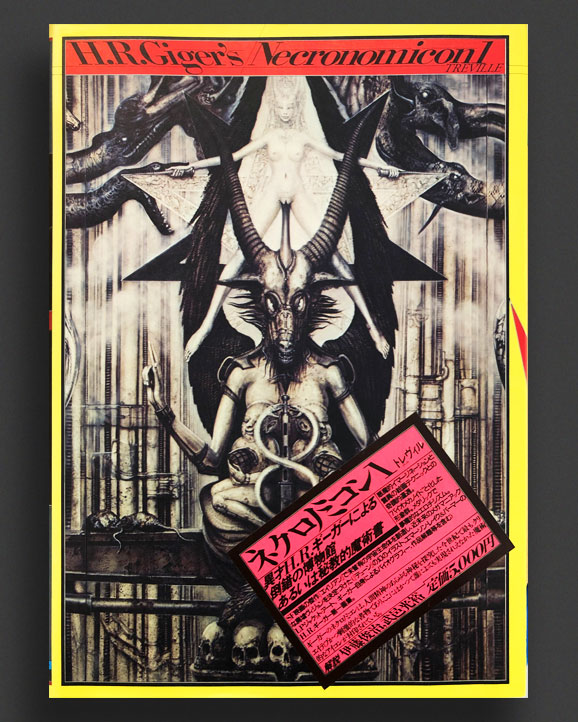
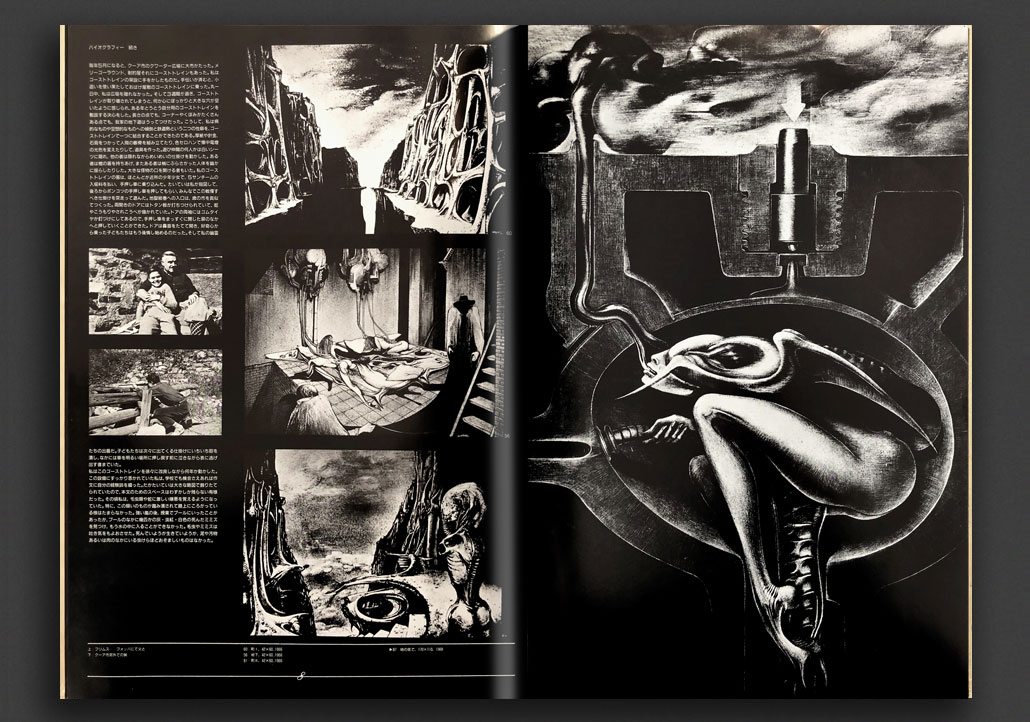
Lewis Fidock, HR Giger, Piero Gilardi, Veit Laurent Kurz,
Cinzia Ruggeri, Michael E. Smith, Lucie Stahl, Daniel Weil, Wols
Press Release:
“...It contained seven objects. The slender fluted bone, surely formed for flight, surely from the wing of some large bird. Three archaic circuitboards, faced with mazes of gold. A smooth white sphere of baked clay. An age-blackened fragment of lace. A fingerlength segment of what she assumed was bone from a human wrist, grayish white, inset smoothly with the silicon shaft of a small instrument that must once have ridden flush with the surface of the skin - but the thing’s face was seared and blackened.”
William Gibson, “Count Zero”, 1986
"Autumn Projects Archive"
Curated by Liza Vasiliou
March 6 - March 15, 2014
World Food Books, in conjunction with the Virgin Australia Melbourne Fashion Festival 2014, presented the Autumn Projects archive, consisting of a selection of early examples in Australian fashion with a particular interest in collecting designers and labels from the period beginning in the 1980’s, who significantly influenced the discourse of Australian Fashion.
Curated by Liza Vasiliou, the exhibition provided a unique opportunity to view pieces by designers Anthea Crawford, Barbara Vandenberg, Geoff Liddell and labels CR Australia, Covers, Jag along with early experimental collage pieces by Prue Acton and Sally Browne’s ‘Fragments’ collection, suspended throughout the functioning World Food Books shop in Melbourne.
H.B. Peace
presented by CENTRE FOR STYLE
November 14, 2013
"Hey Blinky, you say chic, I say same"
Anon 2013
H.B. Peace is a clothing collaboration between great friends Blake Barns and Hugh Egan Westland. Their pieces explore the divergences between 'character’ and ‘personality’ in garments....etc
Special Thanks to Joshua Petherick and Matt Hinkley of WFB and Gillian Mears
and a Very Special Thank you to Audrey Thomas Hayes for her shoe collaboration.
Janet Burchill & Jennifer McCamley
"Aesthetic Suicide"
May 10 - June 8, 2013
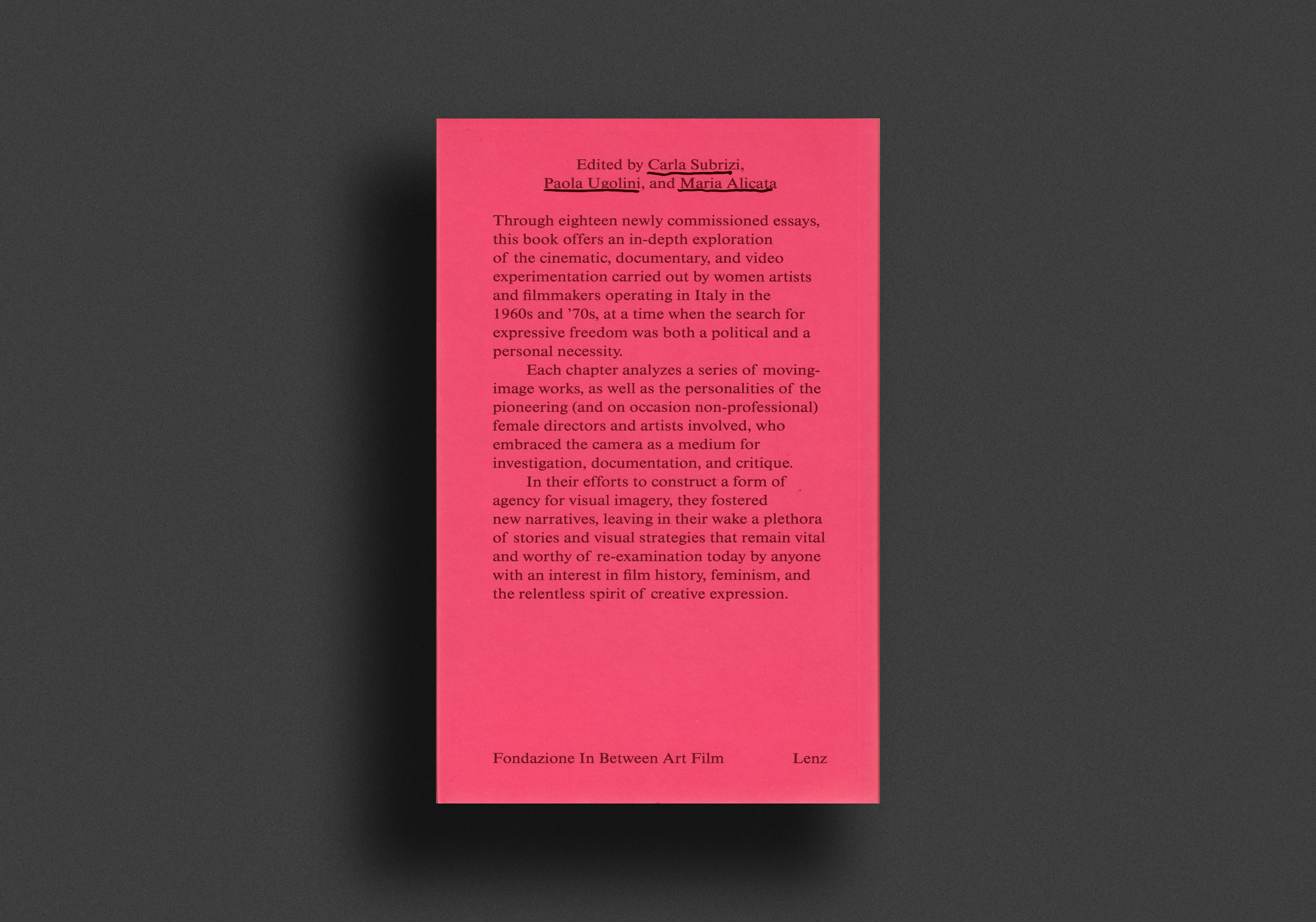
The first of our occasional exhibitions in the World Food Books office/shop space in Melbourne, "Aesthetic Suicide" presented a body of new and older works together by artists Janet Burchill & Jennifer McCamley, including videos, prints, a wall work, and publications.
During shop open hours videos played every hour, on the hour.
1995, Japanese
Softcover, 208 pages, 15 cm x 21 cm
1st Edition, Out of print title / used / very good
Published by
Tom Shobo / Japan
$140.00 - Out of stock
Too Negative issue no. 4, April 1995. Now rare and highly collectible, Too Negative, the "Forbidden Picture Book", was a visceral and visually explosive glossy cult arts magazine that reflected the gory-depraved-beyond salvation-bad taste expressions visible in international subculture at the height of 1990s underground publishing, a time when art was pushing the limits of taste and morality. Edited solely by legendary Japanese publisher and gallery owner Kotaro Kobayashi and published by Tom Publication Inc. between 1994—2000, each thick, glossy volume takes on the aesthetics of a vibrant fashion magazine in the great Japanese "mook" format (the magazine book) packed cover to cover with themes of Eros and Thanatos, such as fetishism, erotica, medical/autopsy photography, death journalism, Japanese bondage, grotesque and neo-surrealist art, crime scene photography, tattooing/irezumi, piercing, and all things of the mondo, macabre, bizarro realm. Frequent collaborators and featured artists were Kiyotaka Tsurisaki, Joel-Peter Witkin, Trevor Brown, Kiyoshi Ikejiri, to name a few. With a Japanese publishing lineage that may be found in earlier bounding-pushing periodicals such as the 1920s erotic grotesque magazine Hentai Shiriou (Pervert Documents), Tasuhiko Shibusawa’s incredible 1960s avant-garde journal Le Sang Et La Rose, or Fiction Inc’s SALE2 journal published from 1980—mid 1990s, Too Negative, and affiliated periodicals such as ORG, Spiral, Schizo, etc. took their subjects to another level of extremism, even by Japanese standards.
Not for the faint hearted.
This issue features the Columbian corpse/death photography of Kiyotaka Tsurisaki (featuring Orozco the Embalmer), Kiyoshi Ikejiri, the artwork of Yoshifumi Hayashi and Trevor Brown, loads of abnormal medical photography, insane collages, vintage gay porn, fetish photography, adipophilia porn, death scenes, deranged art, genital piercing, you name it.
Very Good copy.
1995, Japanese
Softcover, 210 pages, 21 x 15 cm
1st Edition, Out of print title / used / very good
Published by
Tom Shobo / Japan
$140.00 - Out of stock
Too Negative No. 5 July 1995. Now rare and highly collectible, Too Negative, the "Forbidden Picture Book", was a visceral and visually explosive glossy cult arts magazine that reflected the gory-depraved-beyond salvation-bad taste expressions visible in international subculture at the height of 1990s underground publishing, a time when art was pushing the limits of taste and morality. Edited solely by legendary Japanese publisher and gallery owner Kotaro Kobayashi and published by Tom Publication Inc. between 1994—2000, each thick, glossy volume takes on the aesthetics of a vibrant fashion magazine in the great Japanese "mook" format (the magazine book) packed cover to cover with themes of Eros and Thanatos, such as fetishism, erotica, medical/autopsy photography, death journalism, Japanese bondage, grotesque and neo-surrealist art, crime scene photography, tattooing/irezumi, piercing, and all things of the mondo, macabre, bizarro realm. Frequent collaborators and featured artists were Kiyotaka Tsurisaki, Joel-Peter Witkin, Trevor Brown, Kiyoshi Ikejiri, to name a few. With a Japanese publishing lineage that may be found in earlier bounding-pushing periodicals such as the 1920s erotic grotesque magazine Hentai Shiriou (Pervert Documents), Tasuhiko Shibusawa’s incredible 1960s avant-garde journal Le Sang Et La Rose, or Fiction Inc’s SALE2 journal published from 1980—mid 1990s, Too Negative, and affiliated periodicals such as ORG, Spiral, Schizo, etc. took their subjects to another level of extremism, even by Japanese standards.
Not for the faint hearted.
This issue, Too Negative No. 6 August 1995, features Thailand corpse/death photography by Kiyotaka Tsurisaki, Trevor Brown artwork, Crime Museum photography, Chokudo Shibuya, Kiyoshi Ikejiri, western hardcore porn, asshole photography by Goro Asawa, Kotaro Kobayashi, x-ray porn, western obesity porn / adipophilia, Berlin sex, death art by noise artist Raita Ishikawa, Lisa Palac's Future Sex, piercing fetish, bizarre sex, medical photography, plus much more.
Very Good copy.
1997, Japanese
Softcover, 208 pages, Softcover, 15 cm x 21 cm
1st Edition, Out of print title / used / very good
Published by
Tom Shobo / Japan
$140.00 - In stock -
Too Negative issue no. 8, March 1997. Now rare and highly collectible, Too Negative, the "Forbidden Picture Book", was a visceral and visually explosive glossy cult arts magazine that reflected the gory-depraved-beyond salvation-bad taste expressions visible in international subculture at the height of 1990s underground publishing, a time when art was pushing the limits of taste and morality. Edited solely by legendary Japanese publisher and gallery owner Kotaro Kobayashi and published by Tom Publication Inc. between 1994—2000, each thick, glossy volume takes on the aesthetics of a vibrant fashion magazine in the great Japanese "mook" format (the magazine book) packed cover to cover with themes of Eros and Thanatos, such as fetishism, erotica, medical/autopsy photography, death journalism, Japanese bondage, grotesque and neo-surrealist art, crime scene photography, tattooing/irezumi, piercing, and all things of the mondo, macabre, bizarro realm. Frequent collaborators and featured artists were Kiyotaka Tsurisaki, Joel-Peter Witkin, Trevor Brown, Kiyoshi Ikejiri, to name a few. With a Japanese publishing lineage that may be found in earlier bounding-pushing periodicals such as the 1920s erotic grotesque magazine Hentai Shiriou (Pervert Documents), Tasuhiko Shibusawa’s incredible 1960s avant-garde journal Le Sang Et La Rose, or Fiction Inc’s SALE2 journal published from 1980—mid 1990s, Too Negative, and affiliated periodicals such as ORG, Spiral, Schizo, etc. took their subjects to another level of extremism, even by Japanese standards.
Not for the faint hearted.
This issue, Too Negative issue no. 8, March 1997, features the photography the paintings of Manuel Ocampo, the art of Helter Skelter corpse/death photography, the art of Jake and Dinos Chapman, grotesque tabloid news, the art of Pierre Molinier, the art of Damien Hirst, the fetish photography of Hiroshi Yokoi, latex/rubber fetish photography by Uchiyama Kazunori, Kiyotaka Tsurisaki, Kiyoshi Ikejiri, loads of abnormal medical photography, autopsy, anatomical photographic/illustrated, much more.
Mature readers only.
Very Good copy.
2026, English
Hardcover, 320 pages, 31.9 x 24.5 cm
Published by
David Zwirner Books / New York
$110.00 - In stock -
The definitive collection of Raymond Pettibon's album covers, uniting art and music in one powerful visual history. Featuring work for Black Flag, Sonic Youth, Foo Fighters, Iggy Pop, Lana Del Rey, and many others, this volume traces the artist's bold influence on alternative culture from the late 1970s to today.
Throughout his decades-long career, Raymond Pettibon has remained deeply engaged with the world around him, whether through biting political satire of American geopolitics or poetic meditations on surfing and baseball. Pettibon's aesthetic and political sensibilities originated in the punk scene that thrived in Southern California, the artist's first home, in the late 1970s and 1980s-evidenced in his collaborations with bands such as the Minutemen, Sonic Youth, and Saccharine Trust. Among the most iconic works featured in this collection is Pettibon's four-column logo design for Black Flag. His distinctive artwork appears on albums for a wide range of legendary musicians, including Iggy Pop, Foo Fighters, and Lana Del Rey, among many others.
Nervous Breakdown spotlights the artist's enduring impact on the music industry, presenting for the first time every record, CD, and cassette cover since 1978 that features his artwork. Published on the occasion of an exhibition at the Wilhelm-Hack-Museum in Ludwigshafen, Germany, this catalogue features more than two hundred works from the Stefan Thull Collection. With essays by Max Dax, Robert Eikmeyer, and Ulrich Loock, and a 1985 Artforum essay by Kim Gordon, the book includes a catalogue raisonne of Pettibon's album artwork, an essential resource for fans, scholars, and collectors of contemporary art and music history alike.
1985, English
Softcover (staple-bound), 28 pages, 21.5 x 14 cm
1st Edition, Out of print title / used / average
Published by
SST Publications / Lawndale
$400.00 - In stock -
Rare early Raymond Pettibon zine from 1985 for SST Publications, Lawdale, California. "Limited to five hundred copies (of which some four hundred were destroyed)", "Exterminating The Eagles" reproduces twenty-eight psychologically-charged, graphic fables for which Pettibon is famed.
Hand-numbered by Pettibon in red ink #120 of 500.
In Exterminating the Eagles, Raymond Pettibon tackles race, violence and inner city crime using his spare, expressive ink drawings. Subjects include a White Power shop owner, a sourpuss grandmother, Nancy Reagan and Hitler. Pettibon notes, “Unauthorized duplication is unAmerican, i.e., unprofitable.”
Known for his poetic and anarchic collisions of "high" and "low" cultural forms, Raymond Pettibon first came to prominence during the late-1970s with his raw, literary-inflected imagery making zines published by his brother's record label SST Publications, fliers, and other ephemera within the SoCal punk scene, for Black Flag, Sonic Youth, The Minutemen... "His work became identified with a brash and iconoclastic visual style that would influence and speak for an entire generation of disaffected youth … He stands alongside a generation of Los Angeles artists who have tackled the dissolution of American idealism head-on using fragments of its own visual culture." Over the subsequent decades, the erstwhile Southern California artist has deservedly become an international contemporary art icon.
Guaranteed authentic example of this uncommon, early Pettibon tour de force (entry number twenty-two in Uwe Koch and Roberto Ohrt's "A Catalogue Raisonné of Artists' Books by Raymond Pettibon, 1978-98").
Good copy, wear around the edges, especially the spine, still holding together but with some splitting. General toning/marking/wear from age. Preserved in archival mylar with backing board.
1985, English
Softcover (staple-bound), 28 pages, 21.5 x 14 cm
1st Edition, Out of print title / used / good
Published by
SST Publications / Lawndale
$420.00 - In stock -
Very rare early Raymond Pettibon zine from 1985 for SST Publications, Lawdale, California. "Limited to five hundred copies (of which some four hundred were destroyed)", "The Express Sex Train" reproduces twenty-eight psychologically-charged drawings.
Hand-numbered by Pettibon in red ink #426 of 500.
Known for his poetic and anarchic collisions of "high" and "low" cultural forms, Raymond Pettibon first came to prominence during the late-1970s with his raw, literary-inflected imagery making zines published by his brother's record label SST Publications, fliers, and other ephemera within the SoCal punk scene, for Black Flag, Sonic Youth, The Minutemen... "His work became identified with a brash and iconoclastic visual style that would influence and speak for an entire generation of disaffected youth … He stands alongside a generation of Los Angeles artists who have tackled the dissolution of American idealism head-on using fragments of its own visual culture." Over the subsequent decades, the erstwhile Southern California artist has deservedly become an international contemporary art icon.
Guaranteed authentic example of this uncommon, early Pettibon tour de force (entry number twenty-two in Uwe Koch and Roberto Ohrt's "A Catalogue Raisonné of Artists' Books by Raymond Pettibon, 1978-98").
Good copy with wear around the edges, still with solid binding. General toning/marking/wear from age. Preserved in archival mylar with backing board.
1985, English
Softcover (staple-bound), 28 pages, 21.5 x 14 cm
1st Edition, Out of print title / used / good
Published by
SST Publications / Lawndale
$400.00 - In stock -
Very rare early Raymond Pettibon zine from 1985 for SST Publications, Lawdale, California. "Limited to five hundred copies (of which some four hundred were destroyed)", "The Express Sex Train" reproduces twenty-eight psychologically-charged, graphic fables for which Pettibon is famed.
Hand-numbered by Pettibon in red ink #88 of 500.
The plaintive cover image of Pig Cupid is captioned “Why do I dream of undertow when I don’t even know what it is?” This zine, by punk artist Raymond Pettibon, deals with violent love and toxic relationships. Many of the women within have been violated, deserted, shot, bought or sold, but Pettibon’s fluid line drawings capture the inexplicable pull of desire, even against a woman’s better judgement. Cupid, argues Pettibon, is a pig.
Known for his poetic and anarchic collisions of "high" and "low" cultural forms, Raymond Pettibon first came to prominence during the late-1970s with his raw, literary-inflected imagery making zines published by his brother's record label SST Publications, fliers, and other ephemera within the SoCal punk scene, for Black Flag, Sonic Youth, The Minutemen... "His work became identified with a brash and iconoclastic visual style that would influence and speak for an entire generation of disaffected youth … He stands alongside a generation of Los Angeles artists who have tackled the dissolution of American idealism head-on using fragments of its own visual culture." Over the subsequent decades, the erstwhile Southern California artist has deservedly become an international contemporary art icon.
Guaranteed authentic example of this uncommon, early Pettibon tour de force (entry number twenty-two in Uwe Koch and Roberto Ohrt's "A Catalogue Raisonné of Artists' Books by Raymond Pettibon, 1978-98").
Good copy with wear around the edges, still with solid binding. General toning/marking/wear from age. Preserved in archival mylar with backing board.
2005, Japanese / French
Softcover, 150 pages, 26 x 19 cm
1st Edition, Out of print title / used / fine
Published by
Musée d'Art Daimaru / Osaka
$80.00 - In stock -
2005 Japanese catalogue on the work of Argentine artist Leonor Fini (1918-1996), closely associated with the original surrealist group, published to coincide with a major travelling retrospective exhibition in Japan, a country enormously fond of Fini. Profusely illustrated throughout in colour and b/w, reproducing Fini's incredible paintings, drawings, stage and costume designs, book illustrations, alongside many photographic portraits of the artist, an extensive photo–illustrated biography, a list of ballets, exhibition history, and bibliography. Accompanying texts in Japanese and French by French critic Michel Nuridsany, a vital champion of Fini, and commissioner of the exhibition.
Leonor Fini (1907–1996), an Argentine painter, designer, illustrator, and author, known for her depictions of powerful women, is considered one of the most important women artists of the twentieth century and also one of the most misunderstood.
Fini had no formal artistic training. Born in Buenos Aires, she travelled extensively from a young age, living in Milan and then moving to Paris in 1931-32 where she was considered part of a pre-war generation of Parisian artists, becoming acquainted with Carlo Carrà and Giorgio de Chirico, who inspired much of her work, and also Paul Éluard, Max Ernst, Georges Bataille, Henri Cartier-Bresson, Picasso, Salvador Dalí, and André Pieyre de Mandiargues. She had her first one person show in Paris when she was twenty-five at a gallery directed by Christian Dior. Her work caught on fast and was included in the pivotal and groundbreaking Fantastic Art, Dada and Surrealism exhibition at the MOMA in 1936 while at the same time she had her first New York exhibition at the avant-garde Julien Levy Galley. Surrealist artists in France came to know her as important in the movement. She is mentioned in most comprehensive works about surrealism, although she did not consider herself a surrealist, nor a part of any particular artistic movement. Fini preferred to stake her own claim on modernism with a vision that owes more to the farthest shores of her imagination than to any affiliation with art trends, schools or movements. The originality of her art as well as her intelligence, famous wit and charisma accorded her celebrity status in the Paris art world and beyond beginning in the late thirties. Her panache and glamour, once they found a place in the collective imagination of the time, turned her into a much-publicized fashion and feminist icon. Always controversial, with as many detractors as admirers, she lived and painted consummately on her own terms.
In Paris in 1939 she curated the inaugural exhibition of her friend Leo Castelli’s first gallery (of surrealist furniture) and shortly thereafter, just before the German occupation, she traveled with André and a new lover to Arcachon in the southwest of France to begin waiting out the war. She remained there for almost a year with Salvador and Gala Dali before moving to Monte Carlo where she met the young Italian diplomat, Stanislao Lepri who became one of the great and enduring loves of her life. As the war intensified she moved with Stanislao to Rome where she lived, worked and formed close friendships with Anna Magnani, Luchino Visconti and other leading figures of world of art and letters. After the Liberation of Paris in 1946 she returned there to live and work for the remainder of her life, exhibiting extensively around the world.
The predominant themes in Leonor Fini’s art are sexual tensions, mysteries and games. One of her favored subjects is the interplay between the dominant female and the passive male, and in many of her most powerful works the female takes the form of the sphinx to which she felt a strong identification. She was also a renowned portraitist, and among her subjects were such friends as writers André Pieyre de Mandiargues, Jean Genet, Klaus Mann (son of Thomas), such actresses as Anna Magnani and Suzanne Flon, ballerina Margot Fonteyn, film director Luchino Visconti and artists Meret Oppenheim and Leonora Carrington.
Her genius for stage and screen design is evident in her numerous ground breaking theater decors with their elaborate conception, costumes and phantasmagorical masks. She designed for the Paris Opera, George Balanchine’s ballet Palais de Crystal, and choreographer Roland Petit’s company Ballets de Paris, for Maria Callas at the La Scala theater in Milan, as well as over seventy productions at theaters in Paris between 1946 and 1969. She had a unique talent for film design and created costumes for Fellini's 8 ½ as well as for Renato Castellani's Romeo and Juliet and John Huston’s A Walk with Love and Death.
In the 1970s, she wrote three novels, Rogomelec, Moumour, Contes pour enfants velu and Oneiropompe. Her friends included Jean Cocteau, Giorgio de Chirico, and Alberto Moravia, Fabrizio Clerici and most of the other artists and writers inhabiting or visiting Paris. She illustrated many works by the great authors and poets, including Edgar Allan Poe, Charles Baudelaire and Shakespeare, as well as texts by new writers. She was very generous with her illustrations and donated many drawings to writers to help them get published. She is, perhaps, best known for her graphic illustrations for Histoire d'O.
The provocative and much-publicized life of Leonor Fini was pure theater. Her story is that of a hard-won struggle to forge her life as a woman artist in a man’s world and to invent herself on her own terms. It is the story of a woman possessing exceptional independence, a highly original vision and great personal magnetism who lived passionately through her art and friendships and in the process became a feminist role model.
Near Fine copy. This copy includes the exhibition ticket stub, a complete exhibition work list, an illustrated errata, all inserted inside.
1989, English
Softcover, 223 pages, 21.5 x 13.5 cm
1st Edition, Out of print title / used / very good
Published by
Prism Press / Dorset
$50.00 - In stock -
First Prism Press 1989 edition of Francis King's 'Modern Ritual Magic', expanded from the first 1970 Neville Spearman edition.
'This is the inside story of the Hermetic Order of the Golden Dawn and associated occult offshoots–told in its entirety for the first time. The author's researches into the conflict between W.B. Yeats and Aleister Crowley are described in detail, as well as the full story of Yeats early magical training and practices. Francis King also relates the often difficult relationship between Yeats and the influential Kabbalist, MacGregor Mathers.
However, it is not only the student of the Golden Dawn who will find this book absorbing. King also describes Rudolph Steiner's attempt to take over English occultism and links Bengali Tantricism with the magic of an American Mulatto. All the major figures in modern western magic feature in this book, which is rightly regarded as one of the major histories of the western esoteric tradition.
FRANCIS KING is also the author of Magic: the Western Tradition, Sexuality, Magic and Perversion and The Secret Rituals of the O.T.O.. He co-authored Techniques of High Magic with Stephen Skinner.
Very Good copy with tanning to block edges, no spine creasing.
2025, English
Hardcover, 88 pages, 17.8 x 12.1 cm
Published by
Further Reading Library / New York
$50.00 - Out of stock
The acclaimed Welsh singer and philanthropist Margaret Watts Hughes (1842–1907) was one of many inventors of her day fascinated by the visual documentation of sound. By singing into her self-designed "eidophone", the vibrations of her voice would etch out patterns onto a disc: an artistic rendering of the scientific principle of standing-wave resonance. This title presents selections from Hughes’ original 1891 publication “Voice Figures” and a rare surviving set of her glass slides.Her “eidophone” comprised a tube attached to a chamber covered in rubber, or “diaphragm.” Hughes covered a glass slide with grains of sand or coarse pigment, then saturated it with water or milk. Her “Voice Figures,” as she called them, ranged from primitive patterns to designs resembling flowers, seashells and other natural phenomena. While Hughes valued her discovery for both its scientific and spiritual implications, leaders of the Theosophical movement saw her work as a means of making visible the invisible world.
THE FURTHER READING LIBRARY is an ongoing series of books dedicated to forgotten ideas, overlooked accomplishments, and idiosyncratic world views. Each book explores — through a collection of original documents, photographs, and primary source material — a body of work, a specific topic, or an individual. Modeled on the size and range of topics of the King Penguin and Insel-Bücherei series, The Further Reading Library is edited by Christine Burgin and Andrew Lampert.
Christine Burgin is a publisher and former gallerist. Her publications include books by Hilma af Klint, Robert Walser, Emily Dickinson, and Susan Howe and projects with artists Rodney Graham, Matt Mullican, and Allen Ruppersberg.
christineburgin.com
Andrew Lampert is an artist, writer, and curator. His moving-image, photo, and performance works have been widely exhibited at international venues, and he has edited books on Tony Conrad, George Kuchar, and Harry Smith, among others. The former Curator of Collections at Anthology Film Archives, Lampert is co-author with Howie Chen of the advice columns Hard Truths and Hard Choices for Art in America.
2025, English
Hardcover, 88 pages, 17.8 x 12.1 cm
Published by
Further Reading Library / New York
$50.00 - In stock -
While Charles Fort has received sustained attention over the years, 'Research' is the first book to delve into his methodology and source material for his investigations into paranormal phenomena. In addition to Fort's famously small notes that are extensively reproduced here for the first time, the book includes Fort’s remarkable letters soliciting information on a wide variety of inexplicable phenomena that appeared in newspapers worldwide, as well as the responses he received. From frogs falling from the sky to sea monsters who inhabit our oceans, it is all here in his inimitable style, along with an appreciation by acclaimed experimental filmmaker and self-proclaimed Fortean Peggy Ahwesh.
Charles Fort (1874–1932) was a true iconoclast who embodied the idea of the “cult writer” in every sense of the term with his wildly entertaining prose and confounding research into the unknown. His early admirers formed the Fortean Society during his lifetime, in 1931, to elevate his work. Since that time, Fort’s name has been synonymous with the strange, in large part due to the 'Fortean Times', published since 1973.
THE FURTHER READING LIBRARY is an ongoing series of books dedicated to forgotten ideas, overlooked accomplishments, and idiosyncratic world views. Each book explores — through a collection of original documents, photographs, and primary source material — a body of work, a specific topic, or an individual. Modeled on the size and range of topics of the King Penguin and Insel-Bücherei series, The Further Reading Library is edited by Christine Burgin and Andrew Lampert.
Christine Burgin is a publisher and former gallerist. Her publications include books by Hilma af Klint, Robert Walser, Emily Dickinson, and Susan Howe and projects with artists Rodney Graham, Matt Mullican, and Allen Ruppersberg.
christineburgin.com
Andrew Lampert is an artist, writer, and curator. His moving-image, photo, and performance works have been widely exhibited at international venues, and he has edited books on Tony Conrad, George Kuchar, and Harry Smith, among others. The former Curator of Collections at Anthology Film Archives, Lampert is co-author with Howie Chen of the advice columns Hard Truths and Hard Choices for Art in America.
1972 / 2004, English
Softcover, 328 pages, 29 x 20.3 cm
Published by
Weiser / Boston
$46.00 - In stock -
Unlock forbidden knowledge: delve into rituals, necromancy, and dark magic.
From one of the most important figures in Western occultism, a reference book on ritual magic compiling a number of nineteenth-century French grimoires.
The Secret Tradition in Goetia, including the rites and mysteries of Goetic therugy, sorcery and infernal necromancy. Completely illustrated with the original magical figures. Partial contents: Antiquity of Magical Rituals; Rituals of Transcendental Magic; Composite Rituals; Key of Solomon; Lesser Key of Solomon; Rituals of Black Magic; Complete Grimoire; Preparation of the Operator; Initial Rites and Ceremonies; Descending Hierarchy; Mysteries of Goetic Theurgy; Mystery of the Sanctum Regnum; Method of Honorius.
2017 / 2022, English
Softcover, 600 pages, 15.2 x 20.3 cm
Published by
Nightboat Books / New York
$58.00 - In stock -
At last a major anthology of New Narrative, the movement fueled by punk, pop, porn, French theory, and social struggle to change writing forever.
Impossible to get for years, now finally back in print, and back in stock!
In the twenty years that followed America’s bicentennial, narrative writing was re-formed, reflecting new political and sexual realities. With the publication of this anthology, the New Narrative era bounds back to life, ripe with dramatic propulsion and infused with the twin strains of poetry and continental theory. The reader will discover classic New Narrative texts, from Robert Glück to Kathy Acker, as well as rare supplemental materials, including period interviews, essays, and talks, which form a new map of late 20th century creative rebellion.
"Dodie Bellamy and Kevin Killian’s edited anthology, Writers Who Love Too Much: New Narrative 1977–1997, takes an expansive view. A monumental tome decades in the making, it contains the work of forty-two recognised and little-known authors… Published, unpublished, and long-forgotten works, interviews, illustrations, and ephemera are all included, and each piece is accompanied by an invaluable note by Bellamy and Killian offering context and contributing to a sense of an exceptionally large, diverse, and exciting writing scene. Proof that nothing sticks a scene together like bodily fluids, the editors’ notes are also heavy on gossip and innuendo. Like New Narrative prose itself, which often used salacious, intimate asides to establish a conspiratorial relationship with its reader, Bellamy and Killian’s reminiscences seem designed to make their reader feel included or at least momentarily implicated in their community." — Diarmuid Hester, Critical Quarterly
Includes the writings of : Kevin Killian, Dodie Bellamy, Robert Glück, Kathy Acker, Edith A. Jenkins, Carla Harryman, David O. Steinberg, Michael Amnasan, Judy Grahn, John Norton, Marsha Campbell, Brad Gooch, Camille Roy, Sam D'Allesandro, Bruce Boone, Dennis Cooper, Kathe Burkhart, Roberto Bedoya, Steve Abbott, Gabrielle Daniels, Gary Indiana, Leslie Dick, Scott Watson, Gail Scott, Richard Hawkins, Kevin Killian, Matias Viegener, R. Zamora Linmark, Ishmael Houston-Jones, Rebecca Brown, Nayland Blake, Lynne Tillman, Bruce Benderson, Cecilia Dougherty, Eileen Myles, Sarah Schulman, Laurie Weeks, Bob Flanagan, Lawrence Braithwaite, Chris Kraus.
2026, English
Softcover, 110 pages. 19.7 x 13.3 cm
Published by
Magic Hour Press / New York
$43.00 - In stock -
Hervé Guibert’s novel 'The Gangsters' (1988) opens at the front door of a Paris townhouse inhabited by the narrator's elderly great-aunts, Suzanne and Louise. The narrator, distracted by a health crisis and his pursuit of an ambivalent lover, arrives to find suspicious renovation work taking place. But even after the great-aunts confess to being intimidated and extorted, neither he nor the incompetent police can stop the ongoing larceny. This new edition boasts an original translation & a new foreword.Readers of Guibert's writing may already recognise the narrator (also named Hervé) and his great-aunts from the groundbreaking photo-novel 'Suzanne and Louise' (1980). Like his other books, 'The Gangsters' is a work of autofiction. Here, he uses the crime-novel format to explore universal motifs, such as cruelty, desire and mortality. "When I disappear," Guibert continued, "I will have said it all. I will have striven to reduce this distance between the truths of experience and writing."
Originally published in 1988, 'The Gangsters' was his first book to be translated into English. This new edition from Magic Hour features Iain White's original translation and a new afterword by Janique Vigier.
Astoundingly prolific, the French writer and photographer Hervé Guibert (1955–91) authored 25 books and published numerous texts on photography. Memorialised as a leading exponent of French autofiction, Guibert rose to acclaim for his bestselling AIDS novel, 'To the Friend Who Did Not Save My Life' (1990).
2025, English
Softcover, 412 pages, 20.2 x 15 x 20.2 cm
Published by
Blank Forms / New York
$55.00 - In stock -
This volume explores the early electronic work of French composer Éliane Radigue, whose radical approach to feedback, analog synthesis, and composition on tape has long evaded historical and technical interpretation. Combining key texts, newly translated primary documents, in-depth interviews, and commissioned essays, this compendium interrogates the composer's idiosyncratic compositional practice, which both embraces and confounds the iterative nature of magnetic tape, the subtleties of amplification, and the very experience of listening.
Among these entries is an in-depth overview by cellist Charles Curtis, a close collaborator of Radigue's, examining the composer's earliest experiments with feedback techniques and analog synthesis, her eventual shift to composing for unamplified instruments and live performers, and her unique aesthetic configurations of time and presence. A number of detailed conversations between the composer and researchers Georges Haessig, Patrick de Haas, Ian Nagoski, and Bernard Girard provide crucial insights into her working methods at different points throughout her career. Religious studies scholar Dagmar Schwerk reflects upon Radigue's profound 1988 synthesizer work, Kyema, in the context of Tibetan Buddhist thought and its history, while texts by musicians Daniel Silliman and Madison Greenstone examine, in notably different ways, the technical characteristics of Radigue's sound practice. Sketches for unrealized work, contemporary reviews, concert programs, and other ephemera mapping the performance history of Radigue's early work are presented together for the first time. The anthology concludes with a roundtable discussion between Curtis, Greenstone and Anthony Vine, untangling the knot of paradoxes at the center of Radigue's artistic practice to trace the thread of her continued "ethos of resistance."
1963, Italian / English / French
Softcover, 8 loose-leaf pages in stiff card, 21.5 x 15.5 cm
1st Edition, Out of print title / used / very good
Published by
Gallerie Cadario / Milan
$45.00 - Out of stock
Scarce Isabelle Waldberg exhibition catalogue published in 1963 by Gallerie Cadario, Milan. Includes beautiful b/w reproductions of Waldberg's sculptures, portrait, a list of quoted critical responses to her work (each in their respective native language), biography and exhibition history in Italian, and list of exhibited works.
Isabelle Waldberg (1911–1990) was a French-Swiss sculptor associated with surrealism. Born in Oberstammheim, she studied sculpture in Zurich before moving to Paris and briefly Italy to continue her studies. Studying in Florence in 1937, she returned to Paris, where she came to know Alberto Giacometti, Georges Bataille, Andre Masson and her future husband Patrick Waldberg. From 1938 to 1940 she studied sociology and ethnography at the Ecole des Hautes Etudes. She also attended discussion of the sacred at the College of Sociology, and contributed to Bataille’s journal Acéphale. In 1941 she joined a group of Surrealist artists who were ‘in exile’ in New York. During this time she experimented further with Surrealism, but was increasingly drawn to the art of Eskimo and Native American communities. During this period she started working on "constructions" made of bound beech branches and held her first exhibition at The Art of This Century gallery in 1943. Returning to Paris in 1946, she worked in Duchamp’s old studio. From 1947 to 1948 she co-edited Da Costa Encyclopédique, a surrealist review, with the writer Robert Lebel. Her later work from the 1950s onwards saw her return to plaster, a material she used in her early-career. Waldberg’s reputation grew steadily and she exhibited frequently and widely until her death in 1990.
Very Good copy with only light wear.
1972, English
Hardcover (w. dust jacket and complete 5 cut-outs), 432 pages, 20 x 25cm
1st Edition, Out of print title / used / very good
Published by
MoMA / New York
Centro Di / Florence
$220.00 - In stock -
First edition of the stunning "Italy: The New Domestic Landscape (Achievements and Problems of Italian Design)", published by Museum of Modern Art, New York, in association with Centro Di Florence, in 1972. Includes the famous glassine dust jacket with all five (rarely present) cardboard cutout inserts. A most complete copy of this very important reference book on Italian design of the 1960s-1970s.
Edited by Emilio Ambasz while he was the curator of design at Museum of Modern Art, this is the first book to comprehensively survey the important design developments of 1960s Italy, published to coincide with the landmark exhibition at MoMA, May 26 - September 11, 1972. The museum commissioned 12 environments especially for the exhibition, covering two modes of contemporary living; Permanent Home and the Mobile Home, using 180 objects produced in Italy during the decade by more than 100 designers, including the finest examples of product design, furniture, lighting, appliances, flatware, glass, ceramic, putting new (radical) Italian design on the international map. Profusely illustrated throughout with over 500 illustrations across over 400 pages, alongside essays by Paolo Portoghesi, Maurizio Fagiolo Dell'Arco, Leonardo Benevolo, Vittorio Gregotti, Germano Celant, Manfredo Tafuri, Filiberto Menna and others. Includes the work of Archizoom, Joe Colombo, Gae Aulenti, Sergio Asti, Tobia and Afra Scarpa, Mario Bellini, Jonathan De Pas, Andrea Branzi, Cesare Casati, Rodolfo Bonetto, Cini Boeri, Achille Castiglioni, Piergiacomo Castiglioni, Piero Gilardi, Anna Castelli Ferrieri, Gruppo Strum, Ugo La Pietra, Paolo Lomazzi, Vico Magistretti, Superstudio, Angelo Mangiarotti, Enzo Mari, Bruno Munari, Adolfo Natalini, Gaetano Pesce, Ettore Sottsass Jr., Massimo Vignelli, Nanda Vigo, Marco Zanuso, Arflex, Arredoluce, Arteluce, Artemide, Brionvega, Cassina, C & B Italia, Danese, Driade, Flexform, Flos, Gufram, Kartell, Olivetti, Poltronova, Stilnovo, Zanotta, and so many more... Very Good copy with light wear to extremities, tanning to edges and the usual yellowing to glassine dust jacket/light marking/small closed tears. Otherwise well-preserved with the rarely preserved 5 cut-out inserts present. Sample images only.
1979, English
Softcover, 56 pages, 24.0 x 20.5 cm
1st Edition, Out of print title / used / very good
Published by
Australian Gallery Directors Council Ltd. / Sydney
$40.00 - In stock -
Scarce catalogue on the work of Ettore Sottsass, published in Australia in 1979 by the Australian Gallery Directors Council Ltd Sydney, on the occasion of the touring exhibition at the National Gallery of Victoria, Melbourne : 20 February - 11 March, 1979; Ballarat Fine Art Gallery, Ballarat : 18 March - 8 April, 1979; S H Ervin Museum and Art Gallery, Sydney : 19 April - 13 May, 1979.
Illustrated throughout with texts : Francois Burkhardt "Conception of design and life exemplified by Ettore Sottsass", Alessandro Mendini "Work techniques of Ettore Sottsass", Ettore Sottsass "What does it mean to be a designer?", Matthias Eberle "Ettore Sottsass: office systems", lzzika Gaon "A talk with Ettore Sottsass jr", Francois Burkhardt "Continuity between the life and work of Ettore Sottsass: his work from 1955 to 1977", Ettore Sottsass "Autobiographical remarks", Selected bibliography, Exhibition contents, Including notes on 'The planet as a festival' by Ettore Sottsass
Very Good, well preserved copy.
2026, English
Softcover, 20 unbound pages, 29.7 x 21 cm
Published by
Self Published / Melbourne
$25.00 - In stock -
Wise to the Bait, Vol. 1 is a self-published artist book documenting Francis Carmody's contribution to Primavera 2025: Young Australian Artists at the Museum of Contemporary Art Australia, Sydney. The publication focuses on the installation of Canine Trap I and Canine Trap II, bringing together installation views and documentation of the exhibition.
The works emerge from Carmody's broader practice of constructing sculptural inquiries around fundamental forces and the systems they produce. In Wise to the Bait, appetite functions as the central force: a local and bodily condition that nevertheless shapes wider ecological, economic, and social worlds. Through the intertwined logics of bait, attraction, capture, metabolism, and restraint, the exhibition examines how desire generates behaviours, infrastructures, and cycles that extend far beyond the individual body.
Reproduced across twenty pages, the publication documents a series of sculptural scenarios in which canine bodies, traps, vessels, and digestive forms are assembled into systems of suspended action. Rather than depicting a singular narrative, the works dwell in states of anticipation, consequence, and transformation, exploring appetite as both a productive and destructive force.
The publication features a commissioned essay by Olivia Aherne and an interview between Francis Carmody and Tim Riley Walsh. Designed by Kim Mumm Hansen, Wise to the Bait, Vol. 1 extends the exhibition into print through an unbound format that allows the publication to be physically expanded. Installation views, detail images, and text extracts can be spread out and viewed simultaneously, creating a reading experience that mirrors the spatial and relational logic of the exhibition itself.
1966, Germand
Softcover, 330 pages, 19 x 17 cm
1st Edition, Out of print title / used / very good
Published by
Frankfurter Kunstverein / Frankfurt
$45.00 - Out of stock
Lovely 1966 catalogue of Wols, surveying his paintings, watercolors, drawings, and photos, heavily illustrated in colour and b/w with accompanying texts in German by art historian Ewald Rathke, plus biography, bibliography, and exhibition catalogue.
Wols was the pseudonym of Alfred Otto Wolfgang Schulze (27 May 1913, Berlin – 1 September 1951, Paris), a German painter and photographer predominantly active in France. Though broadly unrecognized in his lifetime, he is considered a pioneer of Lyrical Abstraction, one of the most influential artists of the Tachisme movement. He is the author of a book on art theory entitled Aphorismes de Wols.
Good—VG copy with some wear to extremities and spine creasing, still with sound binding.
1964, Japanese
Portfolio (slipcase, 82 page softcover book, 15 sketches, 12 watercolour prints in cloth hardcover wrap), 31.5 x 27 cm
1st Edition, Out of print title / used / very good
Published by
Misuzu Shobo / Tokyo
$420.00 - In stock -
Rare and stunning deluxe Japanese portfolio of German painter and photographer Alfred Otto Wolfgang Schulze, known as Wols (1913–1951), published by Misuzu Shobo in 1964. Housed in heavy card slipcase, this limited edition folio contains an 82 page book of Wols drawings on heavy stock, gloss photographs and commentary by Japanese poet, art critic and surrealist artist Shūzō Takiguchi, Henri-Pierre Roché and Jean-Paul Sartre, amongst others, plus a further 12 line drawings (making a set of 15 total) and 12 colour plates of watercolours, all as loose-leaf litho prints housed in bi-folds featuring the drawings, collated into a debossed black cloth "wols" hardcover wrap.
A draftsman, painter, and photographer, Wols, the pseudonym of Alfred Otto Wolfgang Schulze (1913, Berlin–1951, Paris), was one of the most ingenious and influential—if commercially unsuccessful—artists to emerge in postwar Europe. Along with Jean Dubuffet, Pierre Soulages, and Georges Mathieu, Wols was a leading figure in Tachisme, a movement in painting Americans consider to be a European parallel to Abstract Expressionism. Named for the French word tache, meaning stain, Tachisme—an outgrowth of the larger trend of Art lnformel, or “art without form” movement—cultivated an automist style emphasizing free lines and forms drawn from the artist’s psyche.
Wols did not start his intimately scaled drawings and watercolor paintings with preconceived compositions. Instead, his unconscious, in the Surrealist and existentialist senses of the word, shaped his images, which began with a few marks, then were carefully developed into highly complex self-contained visual universes.
Born Alfred Otto Wolfgang Schulze in Berlin, Wols moved to Paris in 1932 to escape his austere bourgeois roots and the authority of a father who was chancellor of the German state of Saxony. There he changed his name to Wols—inspired by a mistake on a telegram—and eked out a living during the difficult wartime years by teaching German and making drawings, paintings, photographs, and etchings. A number of his prints were used as illustrations for texts by Antonin Artaud, Franz Kafka, and Jean-Paul Sartre, and exhibitions of his work in Paris in 1945 and 1947 at Galerie Drouin and other galleries in France, Italy, and the United States allowed him a precarious existence, made difficult by constant illness and alcoholism.
Notoriously reticent about his work, Wols once explained his vision of the world by referring to a crack in the sidewalk: “Look at that crack. It is like one of my drawings. It’s a living thing. It will grow… It was created by the only force that is real.”
Very Good copy overall, with some light foxing to initial protector bi-fold wrap, some discolouration and wear to extremities to protective slipcase, VG—NF plates, VG—NF book in VG—NF dust jacket and still with protective wax paper wrap. All kept very neatly. A beautiful copy.
1977, Japanese
Softcover, 56 pages, 26 x 18.5 cm
1st Edition, Out of print title / used / very good
Published by
Gallery 8 / Tokyo
$80.00 - In stock -
Very scarce Japanese publication on German painter and photographer Alfred Otto Wolfgang Schulze, known as Wols, published by Fuji Television Co. in 1977 on the occasion of an exhibition at Gallery 8, Tokyo. Beautifully illustrated throughout in colour and b/w with over 40 works, including chronology, exhibitions history, and bibliography. Exhibition work-list inserted.
Wols was the pseudonym of Alfred Otto Wolfgang Schulze (27 May 1913, Berlin – 1 September 1951, Paris), a German painter and photographer predominantly active in France. Though broadly unrecognized in his lifetime, he is considered a pioneer of Lyrical Abstraction, one of the most influential artists of the Tachisme movement. He is the author of a book on art theory entitled Aphorismes de Wols.
Near Fine copy.
2015, English
Softcover, 100 pages, 21.5 x 27.5 cm
Published by
CCA Wattis Institute for Contemporary Arts / San Francisco
MoMA PS1 / New York
Raven Row / London
Sternberg Press / Berlin
$65.00 - In stock -
Fine Arts continues Jos de Gruyter & Harald Thys’s playful and dystopic approach to depicting the human condition. The artist duo became watercolorists for the project, harping back to an early amateur pictorial tradition while basing their picture making on a range of quotidian and historical images culled from the Internet. Deadpan images of the banal and the fanciful accompany the grievous and the tragic, without comment. Nostalgia and innocence are dimly stirred and questioned. Although the genre of the watercolorist, and its association with pastoral and colonialist scenes, may be considered outdated, the contemporary mode of sourcing the images implies that these pictures might not be matters of the past. This book brings together the collection of over ninety watercolors in a glossy format reminiscent of a picture book or auction house catalogue.
Copublished with CCA Wattis Institute for Contemporary Arts, San Francisco; MoMA PS1, New York; and Raven Row, London, on the occasion of the eponymous traveling exhibition in 2015.
1997, Japanese / English
Hardcover (w. dust jacket), 70 pages, 26 x 21 cm
1st Edition, Out of print title / used / very good
Published by
Rockin' On / Tokyo
$120.00 - Out of stock
The incredible first monograph that doubles as an artist's book of work by Hungarian New York-based artist Rita Ackerman spanning the years 1993—1996, edited and designed by Makoto Ohrui from Fiction Inc., published by Rockin' On in 1997 and only available in Japan. Long out-of-print, this numbered hardcover volume, with illustrated vellum dust jacket, is illustrated profusely with seventy of Ackerman's drawings, paintings and collages throughout in colour and b/w with many fold-outs and notebook scans, accompanied by essays.
New York City based artist Rita Ackerman was born in Budapest in 1968. She studied at the University of Fine Arts in Budapest and The New York Studio School of Drawing, Painting and Sculpture from the years of 1989 to 1992. Ackermann invented images that became instant sensations, perturbing young girls that are now part of the universe of global imagery. Her drawings and paintings between 1993-95 depict compositions of adolescent female figures of clonelike multiples engaging in various self-destructive and hazardous activities. Her early works with their ambiguous presence serve as bridges between high and low culture, just as the myths and folk tales which often serve as merits to Ackermann's compositions. Later, Ackerman would abandon the figure, erasing the very matter of her own work, in a complex layering of visual language oscillating between abstraction and figuration into a subconscious unfolding of form—concealed deeply in the abstraction of the omnipresence.
First edition, VG copy in VG dust jacket.